As a buyer or engineer, you're constantly looking for materials that provide strength and performance without inflating your budget. Choosing the wrong material can lead to costly redesigns, product failures, and missed deadlines. Cast aluminum provides a powerful solution, but only if you understand how to source it correctly from a partner who lives by global manufacturing standards.
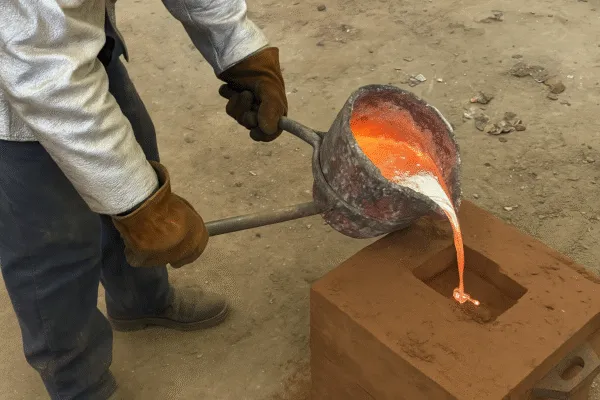
Cast aluminum is a metal created by pouring a specific molten aluminum alloy into a mold to form a near-net shape. This process is highly versatile, creating complex, lightweight, and corrosion-resistant parts that adhere to international standards for industries from automotive to aerospace.
You now know the basic definition. But that won't help you qualify a supplier. I'm the founder of Prime, and for over 30 years, my team and I have been on the factory floor, turning complex drawings into high-quality metal parts. I've seen firsthand how a deep understanding of casting methods, as defined by organizations like the American Foundry Society, alloy performance, and rigorous quality control separates a successful product from a costly failure. Let's get into the details that matter for your project.
What Are The Different Types of Aluminum Casting?
Feeling lost with terms like die casting, sand casting, or investment casting? Choosing the wrong process for your part's geometry and volume leads to wasted tooling costs and parts that don't meet spec right from the first article inspection.
The main types are die casting, sand casting, permanent mold casting, and investment casting. Die casting is best for high-volume, precise parts. Sand casting is for large, complex shapes or prototypes. Permanent mold offers a balance, and investment casting delivers exceptional detail for a premium.
Choosing the right casting method is a critical first step. It directly impacts your upfront tooling cost, cost-per-part, quality, and production speed. One of the first things I check on a new client's drawing is the draft angle and wall thickness. Forgetting these is a common DFM (Design for Manufacturability1) mistake that can make a part impossible to eject from a steel die, an issue we can spot and fix before a single dollar is spent on tooling.
A Deeper Look at Casting Methods
- High-Pressure Die Casting (HPDC)2: This is the workhorse for mass production. We use hardened steel molds and inject molten aluminum under immense pressure. The molds are a significant upfront investment, but if your annual volume is over 10,000 units, the low cost-per-part and high precision make it the undisputed choice. You can learn more about our specific capabilities at our Die Casting Services page.
- Sand Casting1: Classic and versatile, this is fantastic for very large parts (think pump housings) or prototypes where tooling costs need to be minimized for initial testing.
Here is a more detailed comparison from a buyer's perspective:
| Feature | Sand Casting1 | Permanent Mold Casting | High-Pressure Die Casting | Investment Casting |
|---|---|---|---|---|
| Annual Volume | 1 - 1,000+ | 500 - 20,000+ | 10,000 - 1,000,000+ | 100 - 10,000+ |
| Tooling Cost2 | Low | Medium | High | Medium |
| Key Advantage | Low initial cost, large parts | Good finish, moderate volume | Lowest cost per part, high speed | Utmost complexity |
| Common Use Case | Prototypes, pump housings | Automotive wheels | Electronic housings, engine parts | Turbine blades, medical implants |
What are the benefits of using cast aluminum?
Is aluminum really the best choice over steel, zinc, or even plastic for your part? A heavy, weak, or corrosive material can ruin your product's performance and reputation in the field.
Cast aluminum offers an unbeatable strength-to-weight ratio. It's naturally corrosion-resistant, has great thermal conductivity, and can be formed into complex shapes. These blend of features, governed by standards from organizations like The Aluminum Association, makes it a superior choice for modern manufacturing.
Our most successful clients leverage specific alloys—each with a unique profile defined by ASTM International standards—to solve complex engineering challenges. This is a critical step we guide them through early in the design process.
Choosing the Right Alloy
The specific alloy you choose is everything. For example, A380 is an excellent, all-purpose alloy known for its castability. For engineers who need the hard data, you can see its detailed mechanical and thermal properties on a material database like MatWeb. A marine application, however, might require a 500-series alloy for superior corrosion resistance.
| Alloy Designation | Key Features (per ASTM standards) | Common Applications |
|---|---|---|
| A380 / ADC12 | Best castability, good strength & thermal conductivity. The industry standard. | Engine brackets, electronic housings |
| A356 | High strength, excellent corrosion resistance, heat-treatable. | Aircraft wheels, high-performance parts |
| 535 (Almag 35) | Superior corrosion resistance (especially saltwater), high polishability. | Marine hardware, ornamental parts |
| AlSi7Mg | Excellent mechanical properties, good for welding and heat treatment. | Automotive chassis, structural parts |
What are the common applications of cast aluminum?
So you know the theory, but where is cast aluminum actually being used today? It's hard to apply it to your project without seeing real-world examples in action.
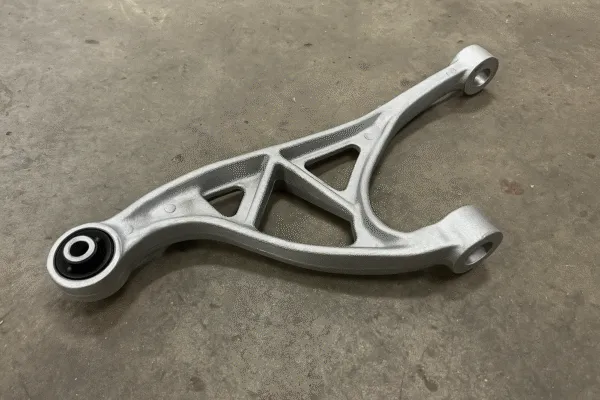
According to trusted industry publications like Modern Casting, the automotive sector remains the largest user. However, applications span from aerospace and electronics to medical devices and consumer goods, as highlighted by the North American Die Casting Association (NADCA).
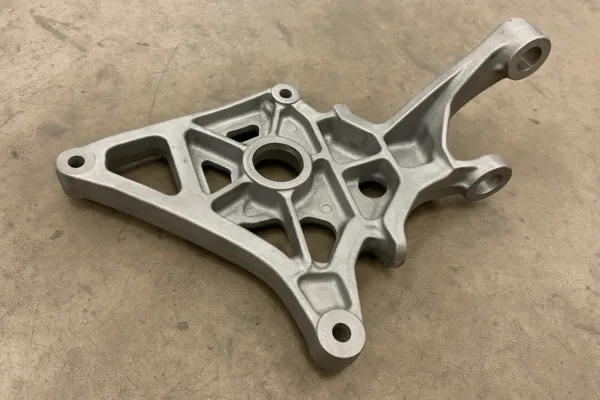
The automotive industry, in particular, relies on casting to reduce vehicle weight and improve fuel efficiency, a major initiative for organizations like SAE International. From our factory, we ship parts that meet these stringent requirements to clients worldwide, including telecom equipment for Europe and agricultural machinery components for Australia.
How Can I Ensure Quality in My Cast Aluminum Parts?
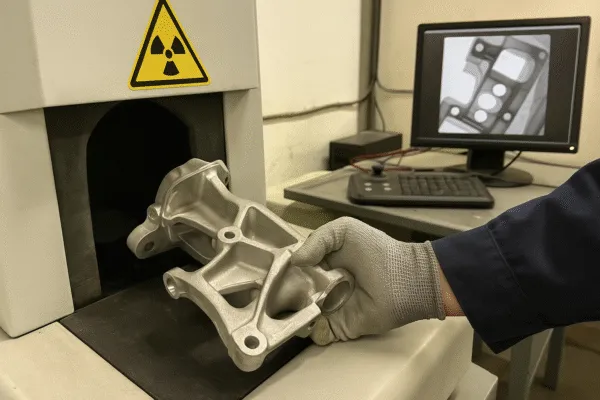
Worried about getting bad parts from a new supplier? Defects like porosity or cracks can lead to catastrophic product failures. This is the single biggest risk in offshore sourcing and can be avoided by demanding proof of a robust quality system1.
True quality comes from a certified process. You must partner with a supplier certified to ISO 9001:2015 who can provide full traceability, from raw material verification to final dimensional reports. For our automotive clients, we follow the Production Part Approval Process (PPAP), a framework established by the AIAG, to ensure every requirement is met and documented before mass production.
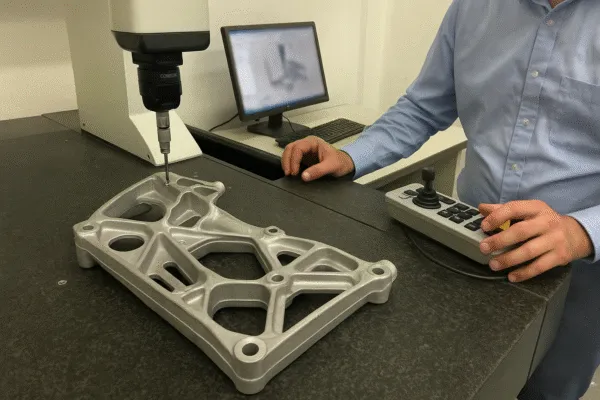
I can't stress this enough: a quality process prevents problems. I remember solving a critical field failure issue for a German automotive client. Their previous supplier wasn't verifying the raw material. Our standard procedure—spectrometer testing every raw material batch and providing the certificate—eliminated the problem completely.
Our Quality Control Checkpoints
| Step | Action | Buyer's Benefit |
|---|---|---|
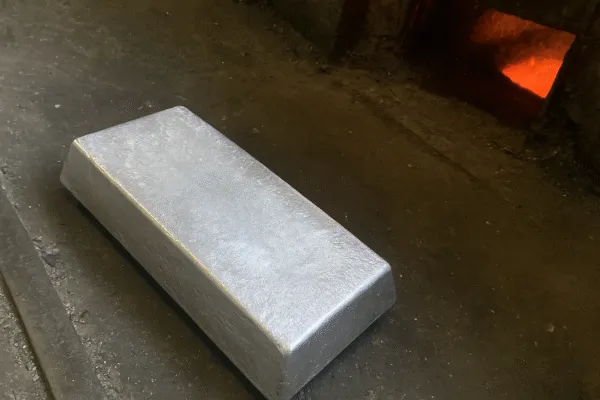
| 1. Raw Material | We use a Spectrometer to verify the chemical composition of every batch of aluminum ingot. | Guarantees the alloy you specified is the alloy you get. |
| 2. Mold Inspection | We inspect tooling for wear and tear using precision gauges before every production run. | Prevents defects and ensures dimensional accuracy. |
| 3. In-Process Checks | We use real-time process monitoring to control key variables like melt temperature and injection pressure. | Maintains consistency and prevents internal defects like porosity. |
| 4. Final Inspection | We use a Coordinate Measuring Machine (CMM)1 for final dimensional checks and provide a full PPAP report. | You receive documented proof that your part meets every spec on your drawing. |
Frequently Asked Questions About Cast Aluminum?
Still have questions? That's good. In my experience, asking the right questions is the first step to a successful project.
We've gathered answers to the most common questions about strength, cost, and process differences. This helps clarify if cast aluminum is the right choice for your specific project and budget before you commit to production.
What factors influence the cost of an aluminum casting project?
To give you an accurate quote, we always need a 3D model (STEP/IGS file) and your estimated annual usage (EAU). The main cost drivers are:
- Tooling Cost: A one-time investment in the mold or die.
- Part Complexity: More intricate designs require more complex, expensive tooling.
- Production Volume: Higher volumes justify the cost of high-speed die casting, dramatically lowering the price per part.
- Post-Processing: Costs for secondary operations like CNC machining, painting, or anodizing.
What's the difference between casting and CNC machining aluminum?
Casting is a "forming" process, while CNC machining is a "subtractive" process. We often use a hybrid approach: we cast the near-net shape and then use CNC to finish critical surfaces with tight tolerances.
Conclusion
Cast aluminum is a versatile material. By choosing the right alloy, process, and a quality-certified supplier who understands your industry's standards, you can create high-performance, cost-effective parts that you can trust to perform in the field.
About the Author
My name is Kevin, and I am the founder and lead engineer at Prime. We started as a small workshop in 1993 and have grown into a leading global supplier of custom metal parts. My passion is working directly with engineers and buyers to solve manufacturing challenges. With our ISO 9001:2015 certified processes and 30+ years of hands-on experience, my team and I are dedicated to delivering parts that meet your exact specifications, on time, every time.
Ready to Start Your Project? Upload Your RFQ to Contact Prime Today.