
Finding a CNC partner feels overwhelming. You worry about quality issues, missed deadlines, and hidden costs that ruin your budget. The right partner is the foundation of your project's success.
To find the best CNC machining partner, you must look beyond the price. Evaluate their technical expertise, quality control systems like [ISO 9001](https://www.salcoglobal.com/blog/iso-90012015-cnc-machining/), communication style, and track record. A great partner understands your specific needs for materials, tight tolerances, and finishes, ensuring a smooth process.
Choosing a supplier is a big decision that impacts your entire business. After more than 30 years in this industry, I've seen it all. I've helped major corporate buyers, like my friend Kevin from the U.S., navigate the challenges of global sourcing. It’s not just about making a part; it’s about building a reliable supply chain1. Let's break down exactly how you can find a manufacturing partner2 you can trust for the long haul, based on decades of real-world experience.
What Is CNC Machining and Why Is It Essential for Modern Manufacturing?
Are you confused by all the manufacturing jargon? This confusion can make it hard to choose the right process for your parts. Let me explain what CNC is and why it's so important.
CNC, or Computer Numerical Control, machining is an automated process where computers direct cutting tools to shape materials like metal or plastic. It's essential because it delivers unmatched precision, speed, and consistency, making it possible to create complex and high-quality parts for almost every modern industry.
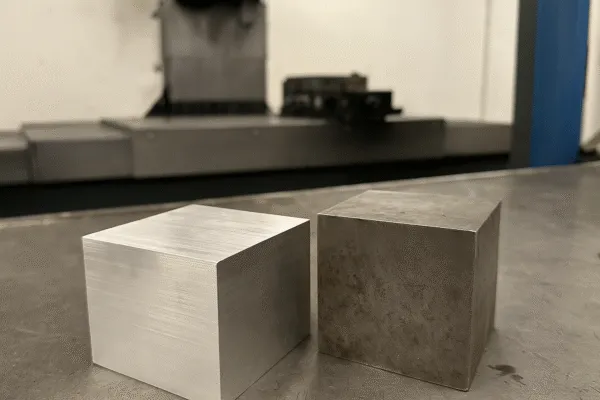
CNC machining is the absolute bedrock of modern precision manufacturing. It's a subtractive process, meaning it starts with a solid block of material and carves away what's not needed. At our facility, we leverage a full range of our CNC machining services to meet diverse client needs, from rapid prototypes to high-volume production runs.
The CNC Process Step-by-Step
From a buyer’s perspective, you want a process that is repeatable and reliable. Here’s how we ensure that from start to finish.
| Step | Action | Description |
|---|---|---|
| 1 | CAD Design Review | The process starts with your 3D CAD file. Our engineers review it for manufacturability (DFM) before anything else. |
| 2 | CAM Programming | The file is converted into machine instructions, known as G-code, by our CAM specialists. |
| 3 | Machine Setup | A skilled operator secures the raw material in the CNC machine and calibrates the tools. This step is critical for precision. |
| 4 | Execution & Machining | The machine reads the G-code and automatically executes the cutting paths to create your part. |
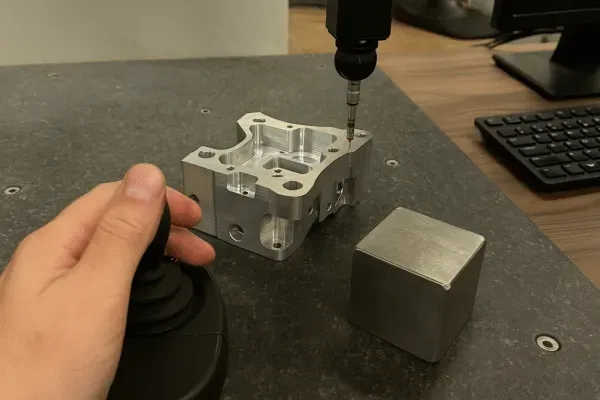
| 5 | Quality Inspection | The finished part undergoes rigorous inspection using CMMs, calipers, and other tools to verify it meets every specification on your drawing. |
This systematic approach is what allows us to produce thousands of identical parts, each meeting the exact same high standards.
What Key Qualities Define a Professional CNC Machining Company?
You found a company with a nice website and a low price. But how do you know if they are a truly professional partner? It's easy to be misled by promises that don't match reality.
A professional CNC machining company is defined by more than just machinery. Look for strong quality control, clear communication, deep material expertise, and a proven track record. These qualities, backed by certifications and robust processes, ensure you get reliable results.
A few years ago, a new client in the consumer electronics space came to us. Their previous supplier had caused a massive delay, threatening to make them miss the holiday sales season. The problem wasn't a lack of machines; it was a lack of professional systems and communication. We took over the project, provided a detailed PPAP submission within a week, and shipped the first 5,000 units within four weeks. That’s the difference a real partner makes.
Beyond ISO: The Importance of PPAP
For buyers in demanding industries like automotive or aerospace, a robust quality system is non-negotiable. While ISO 9001 provides the framework, the Production Part Approval Process (PPAP) is the tangible proof. It’s a detailed report we provide that proves our manufacturing process can consistently produce parts that meet all your requirements. Asking a potential supplier if they can provide a PPAP submission is a great way to gauge their quality maturity. Check out our approach to quality control for more detail.
Professional Partner vs. Cheap Supplier
| Quality | Professional Partner (like Prime) | Cheap Supplier |
|---|---|---|
| Quality | ISO 9001 certified. Can provide PPAP documentation. Full traceability and inspection reports. | No formal quality system. Unfamiliar with PPAP. Quality is a roll of the dice. |
| Communication | Proactive, fluent English-speaking project managers. Regular progress updates a standard practice. | Slow to respond. Language barriers cause critical misunderstandings. You constantly have to chase them. |
| Expertise | Offers Design for Manufacturability (DFM) feedback to improve your part and save you money. | Makes what's in the drawing, even if it's inefficient or flawed. Limited engineering support. |
| Reliability | On-time delivery is a core KPI. Transparent about production schedules from day one. | Misses deadlines frequently. Gives unrealistic promises to win the order, then under-delivers. |
How Can You Evaluate CNC Machining Capabilities for Your Custom Parts?
You have a complex part with specific requirements. How can you be sure a supplier has the right equipment and skills to make it? You can't just trust a company's sales pitch or a list of machines.
To evaluate a supplier's capabilities, review their case studies and ask for sample parts. Request a virtual or physical factory tour. This direct evidence is far more valuable than a simple equipment list and proves their ability to meet your quality standards.
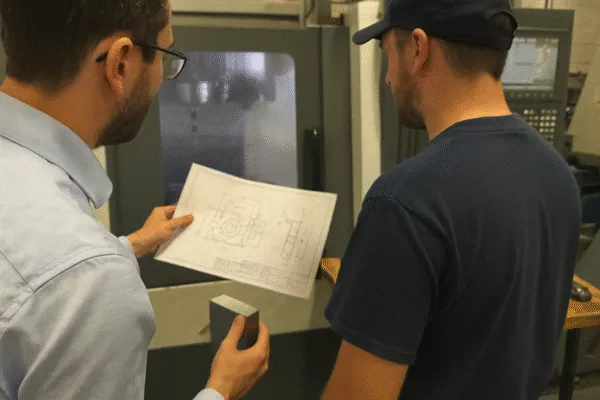
You must verify a company’s capabilities before committing. Ask specific questions about tolerances. A standard tolerance is often ±0.005 inches (0.127 mm). If your drawing calls for something tighter, like ±0.001 inches (0.025 mm), ask them to prove they can hold it consistently. A good supplier will happily share inspection reports from past jobs that demonstrate this capability.
Common CNC Material Comparison
Choosing the right material is critical. An experienced supplier can offer practical advice on cost versus performance. For deep technical data, a resource like the material database from a trade group such as the National Tooling and Machining Association (NTMA) can be valuable.
| Material | Key Properties | Common Applications | Machinability |
|---|---|---|---|
| Aluminum (6061) | Lightweight, good strength-to-weight ratio, corrosion resistant, excellent machinability. | Electronic housings, consumer products, prototypes, automotive parts. | Excellent |
| Stainless Steel (316) | High strength, excellent corrosion and heat resistance. | Medical devices, food processing equipment, marine hardware. | Moderate |
| Titanium (Grade 5) | Highest strength-to-weight ratio, extremely corrosion resistant, biocompatible. | Aerospace components, high-performance racing parts, medical implants. | Difficult |
| ABS Plastic | Good impact resistance, toughness, easy to machine, low cost. | Enclosures, functional prototypes, consumer electronics. | Excellent |
What Are Some Smart Tips to Lower CNC Machining Costs Without Sacrificing Quality?
Everyone wants a good price, but you're worried that cutting costs means getting a lower-quality part. Many buyers fall into the trap of choosing the cheapest quote, which often leads to expensive problems later.
You can lower CNC machining costs by simplifying your design and being strategic with tolerances. Choosing a standard material and increasing your order quantity also significantly reduces the per-unit price while maintaining high quality.
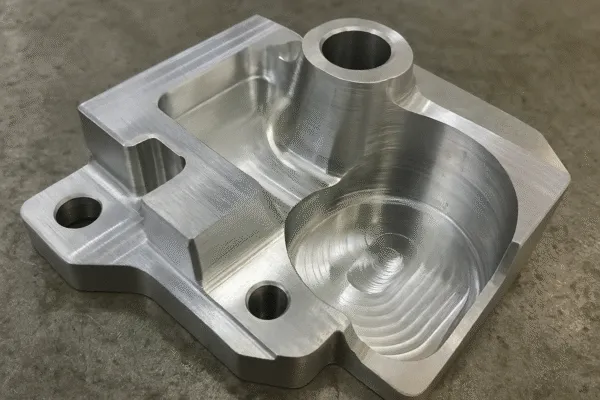
I recently worked with an engineer whose design required sharp, 90-degree internal corners. This is a classic DFM pitfall, demanding a very slow and expensive process. I explained that by allowing a small corner radius of 1mm, we could use a standard end mill. This one small change, which had zero effect on the part's function, cut the machining time for that feature by 70% and saved the client 15% on the total part cost. This collaborative DFM process is a core part of how we work.
Key Factors Driving CNC Machining Costs
| Cost Driver | Explanation | How to Save |
|---|---|---|
| Machining Time | The longer the machine runs, the higher the cost. Complex geometries, fine finishes, and tight tolerances increase time. | Simplify your design. Remove non-essential features. Allow for generous corner radii. |
| Material Cost | The price of the raw material itself. Exotic alloys are far more expensive than standard aluminum or steel. | Use a common, cost-effective material whenever possible. Consult your supplier for alternatives. |
| Setup Complexity | The time and effort to program the machine and prepare fixtures. This is a fixed cost per production run. | Increase your order quantity. Spreading the setup cost over 1,000 parts vs. 10 parts dramatically lowers the unit price. |
| Tolerances | Tighter tolerances require more precise (and slower) machining, plus more intensive inspection. | Only specify tight tolerances on critical features. Use standard tolerances everywhere else. |
Frequently Asked Questions (FAQs)
What is the difference between 3-axis and 5-axis CNC machining?
3-axis machines operate on the X, Y, and Z linear axes and are perfect for simpler parts. 5-axis machines add two rotational axes, allowing the cutting tool to approach the part from all directions. This is essential for highly complex shapes, as it increases precision and efficiency by avoiding multiple setups.
What file formats do you accept for a CNC quote?
We, like most manufacturers, prefer 3D CAD files in STEP (.stp) format. We also require a 2D PDF drawing that clearly indicates tolerances, materials, finishes, and other critical information. You can upload these directly on our contact page.
What is a typical lead time for custom CNC parts from China?
Lead times vary. For simple prototypes, it can be as fast as 5-7 business days. For production runs, a typical lead time is 3-5 weeks, plus shipping. A good partner will always provide a clear and realistic schedule upfront.
How do you ensure quality control for overseas manufacturing?
Our quality system is built on ISO 9001 principles. We start with raw material verification and conduct in-process inspections. Every part undergoes a final inspection with calibrated measuring tools before shipping. We provide full inspection reports and material certificates for every order.
Conclusion
Finding the right CNC partner is about building a relationship based on trust, quality, and communication. By focusing on verified processes and clear expertise, you can secure a supplier that helps your business thrive.
<br>