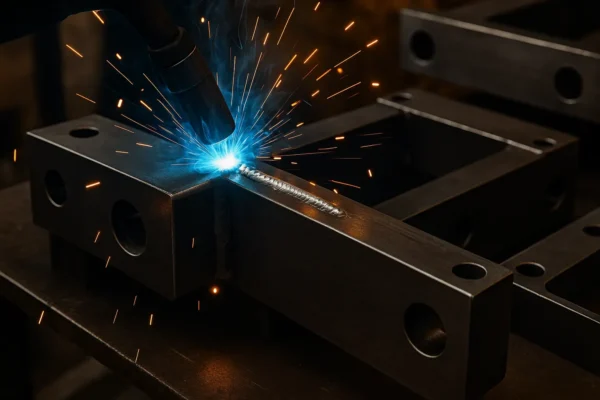
Shandong Prime (est. 1993) · B2B wholesale only · Custom fabrication for global buyers
Custom Precision Welding Parts & Welded Assemblies
Build-to-print welding with fit-up control, distortion management, and inspection evidence you can verify.
Note: welding method, fixture plan, and inspection scope are confirmed after drawing review (material, thickness, CTQs, and load/strength requirements).
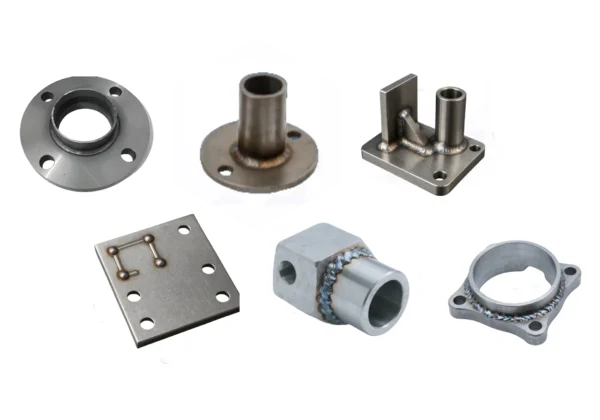
Common Products of Metal Welding Parts
Prime delivers precision-welded metal components tailored for structural, mechanical, and industrial applications across multiple industries.
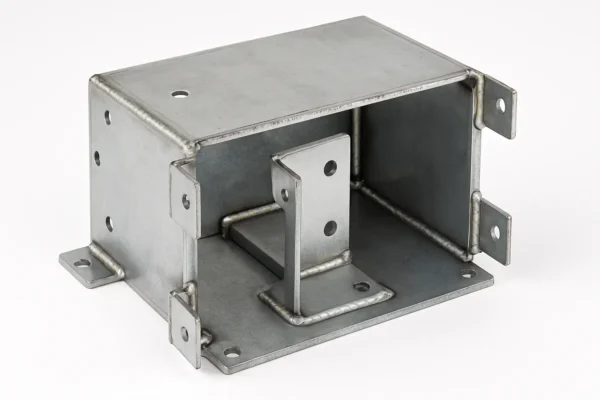
Sheet Metal Welding Assemblies
Welded enclosures and brackets crafted from thin sheet metal with high precision. Widely used in electronics, cabinets, and control boxes.
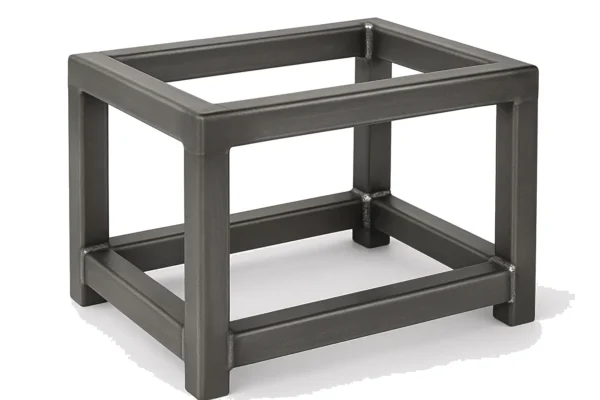
Welded Structural Frames
Heavy-duty frames and base structures welded from tubes and beams for equipment, machines, and automation systems.
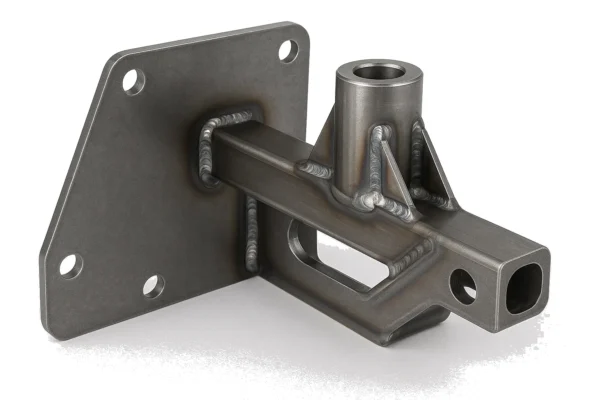
Robotic Welded Assemblies
Automated welding ensures consistency and strength for high-volume welded parts. Ideal for automotive and appliance industries.
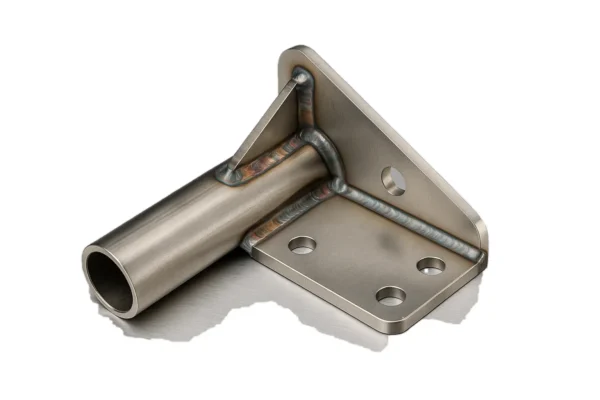
Stainless Steel Welded Parts
Corrosion-resistant weldments for food-grade, medical, or marine applications where hygiene and durability are critical.
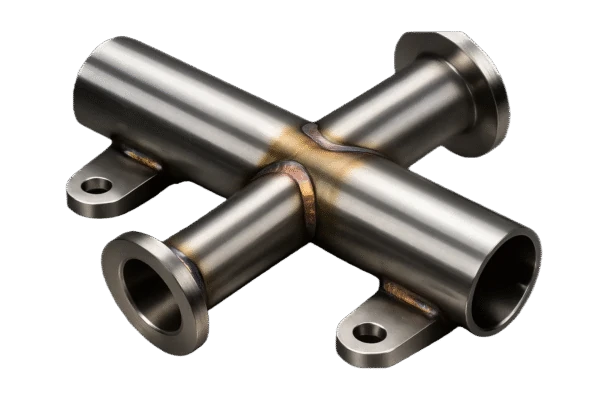
Pipe Welding Assemblies
Custom welded piping structures for fluid transfer, HVAC, and mechanical systems, ensuring leak-proof and stable connections.
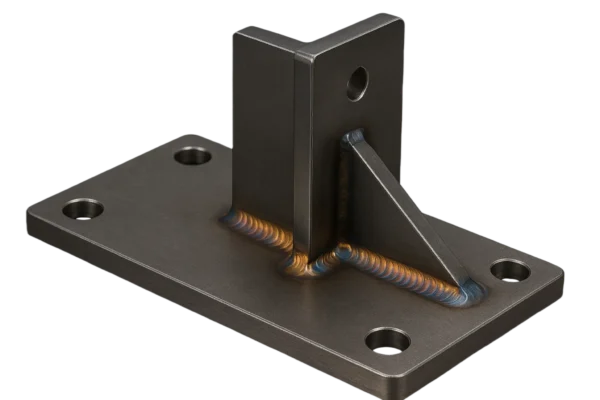
Welded Subassemblies
Integrated welded components designed to simplify final assembly and improve structural integrity in complex systems.
Why Prime: the strategic advantage of metal welding solutions
Choosing the right supplier for custom welded metal components is a strategic decision that impacts structural integrity, project timelines, and cost efficiency. With decades of fabrication expertise, advanced welding technology, strict ISO-certified quality systems, and a customer-first mindset, Prime has become the go-to partner across multiple industries. Our scalable production capacity, diverse welding capabilities, and global shipping support make us your ideal source for all custom metal welding needs.
- 30+ Years of Fabrication Expertise: Founded in 1993, Prime delivers proven performance in custom structural and precision welded parts across industrial applications.
- ISO 9001:2015 Certified Workflows: Our entire welding process—from raw material preparation to final inspection—complies with strict international quality standards.
- 10+ Dedicated Welding Lines: From MIG, TIG to robotic welding, we handle high-mix, high-volume demands with consistent quality and efficiency.
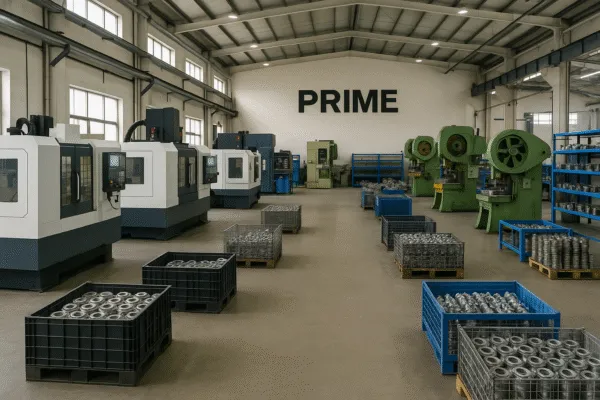
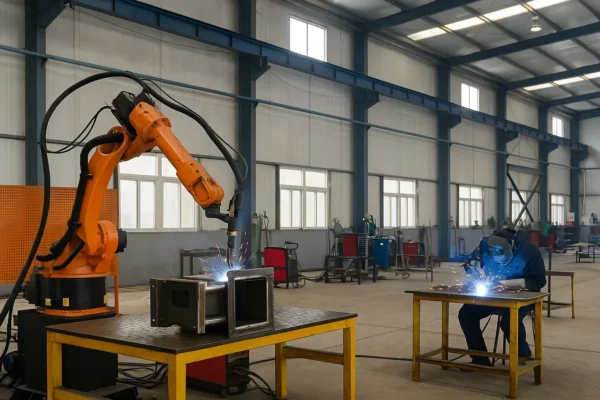
- Global Projects, Reliable Delivery: With customers across North America, Europe, the Middle East, and Australia, we offer efficient worldwide logistics and packaging solutions.
- Integrated Metal Fabrication: We combine welding with sheet metal forming, cutting, machining, and finishing—all under one roof to reduce lead times and communication gaps.
Ready to Build Stronger, Smarter Structures with PRIME?
Upload your drawings or technical specifications securely, and our welding engineers will conduct a feasibility review and provide a competitive quote within 24 hours.
Let’s bring your custom welded components to life—on time, on spec, and on budget.
Address Your Concerns: FAQ about Custom Metal Welding
To help our customers better understand our metal welding capabilities, we’ve compiled a list of frequently asked questions about custom welding services. These clear, practical answers are aimed at solving common concerns and guiding you to make informed decisions—avoiding delays, errors, and communication gaps in your projects.
What types of welding processes do you offer?
PRIME provides MIG, TIG, spot welding, robotic welding, and arc welding for different part sizes and material types. Each process is selected based on strength requirements, material thickness, and application environment to ensure the best balance of strength and appearance.
Can you fabricate large or structural welded assemblies?
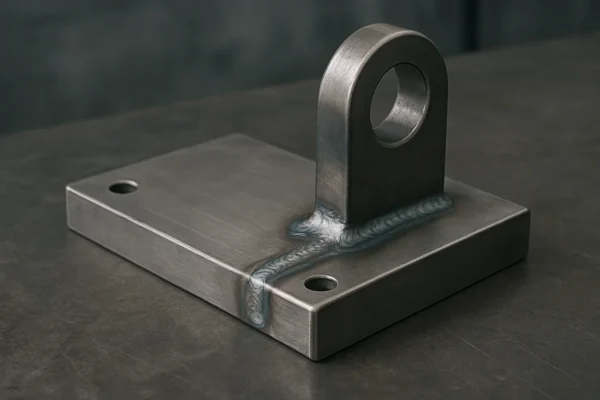
Absolutely. PRIME specializes in both small precision brackets and large-scale welded frames. We support batch fabrication of base frames, machine housings, pipe supports and other heavy-duty structures, including lifting lugs and assembly-level tolerance control.
What materials can you weld, and is certification available?
We weld mild steel, stainless steel, aluminum, carbon steel, and structural alloys. All raw materials are traceable and can be provided with certifications such as EN10204 3.1, RoHS, REACH, or mill test reports upon request. Welders are certified per project need (AWS D1.1, ISO 9606-1).
Do you support welding design optimization or DFM suggestions?
Yes. Our engineers provide DFM (Design for Manufacturability) feedback to simplify weld joints, reduce deformation risk, and improve structural integrity. We review drawings and propose changes that maintain function while reducing labor time or welding distortion.
How do you ensure welding quality and dimensional accuracy?
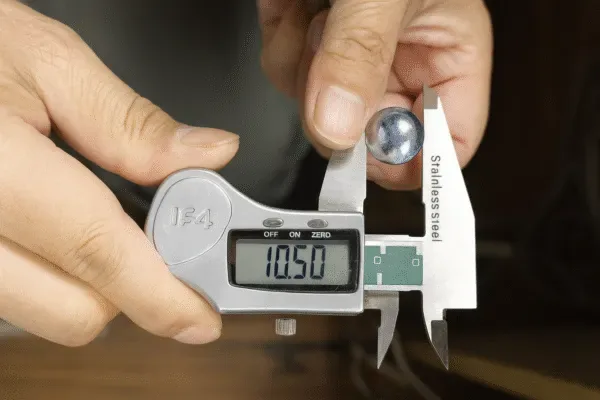
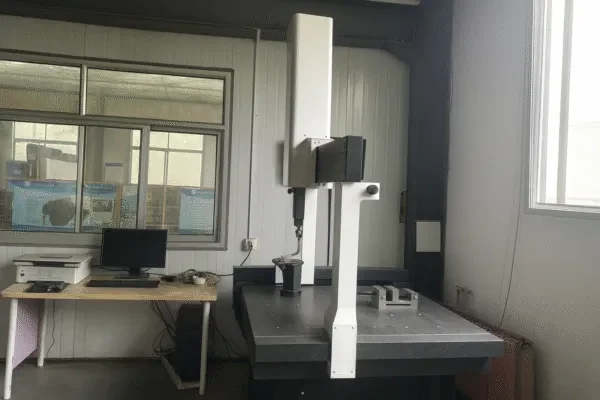
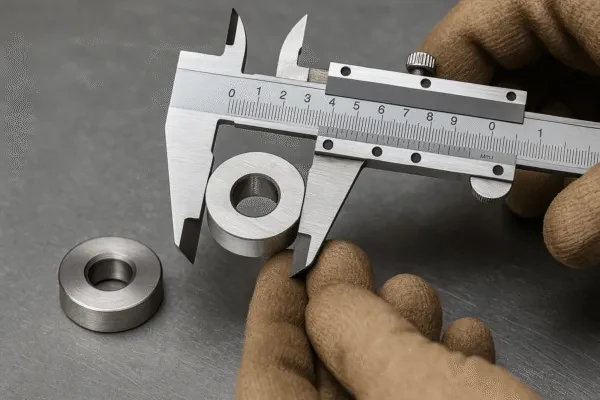
We follow WPS/WPQ welding procedure standards and conduct full in-process and post-weld inspections. Our QC team uses CMMs, gauges, and visual inspection methods. Dimensional checks and weld reports are issued per batch to guarantee every weld meets tolerance and visual quality standards.
Do you export welded assemblies internationally?
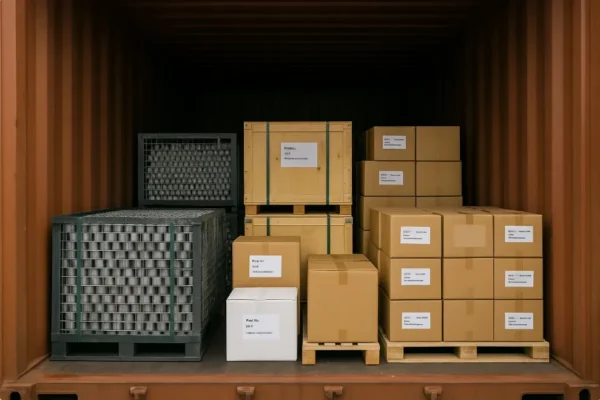
Yes, we export globally with support for FOB, CIF, and DDP terms. All welded parts are packed with rust prevention oil, PE foam, moisture-proof layers, and wooden crates if required. We assist with customs documentation and compliance for seamless delivery to your destination.
Our Factory Insight
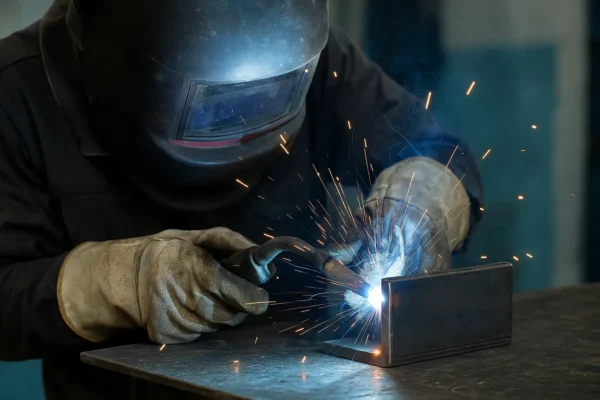
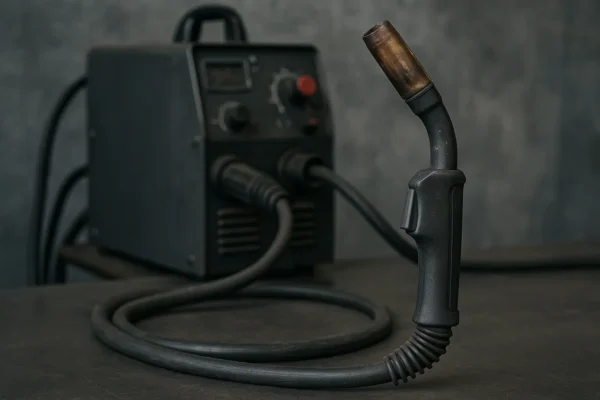
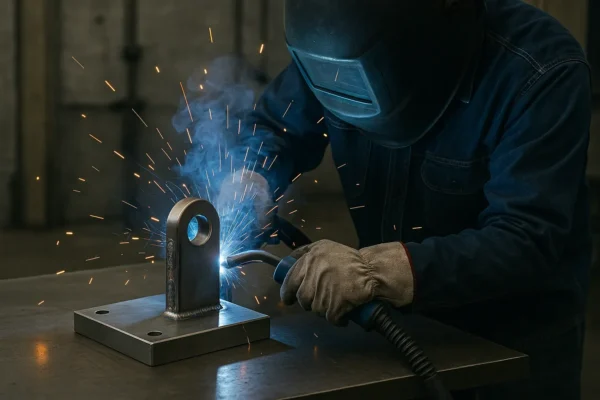
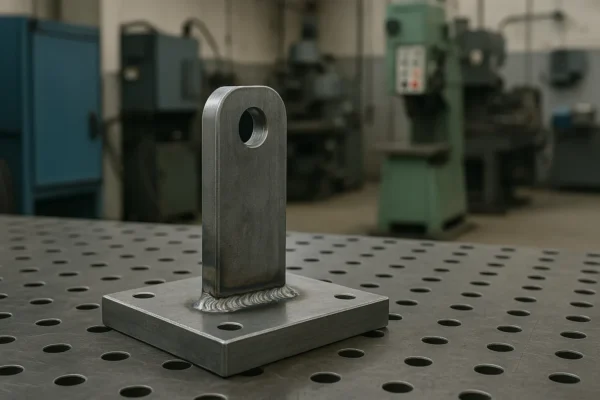
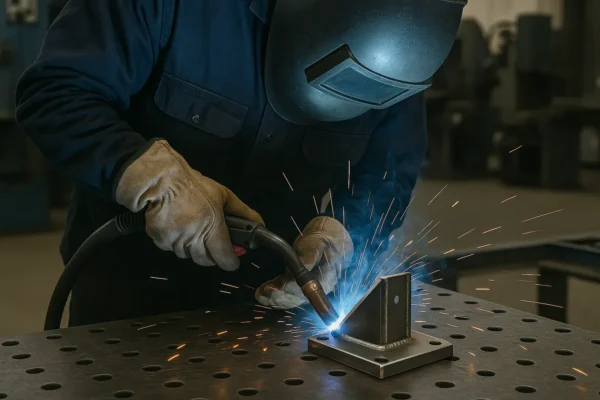
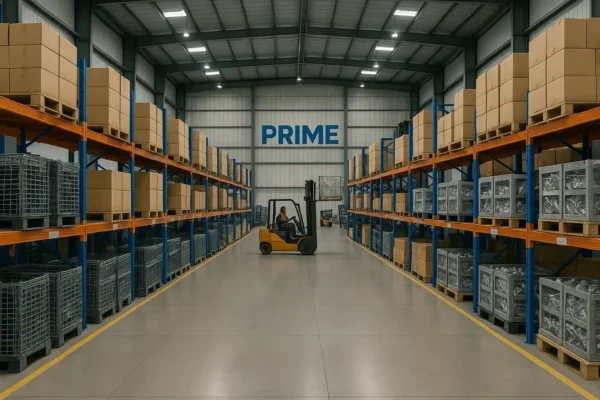
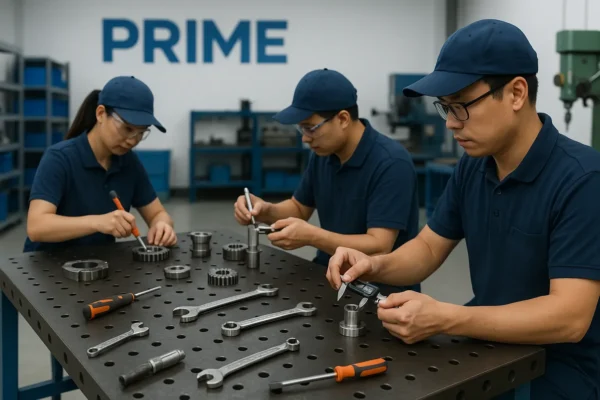
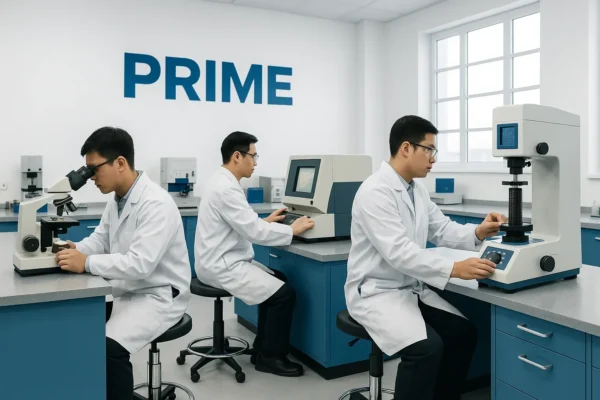
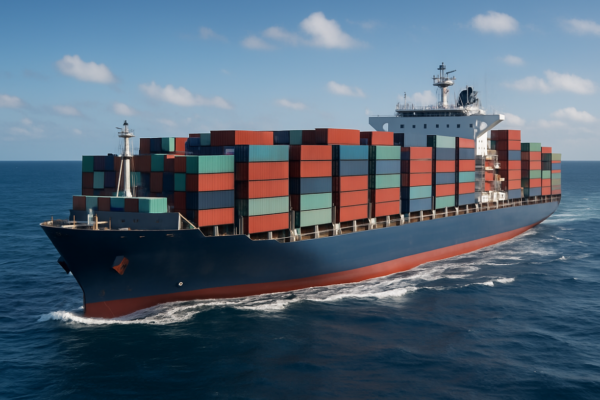
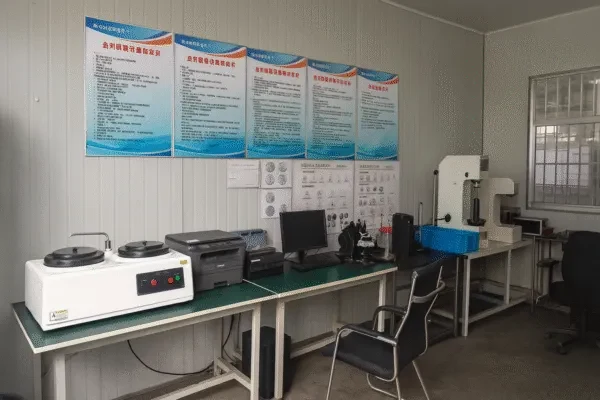
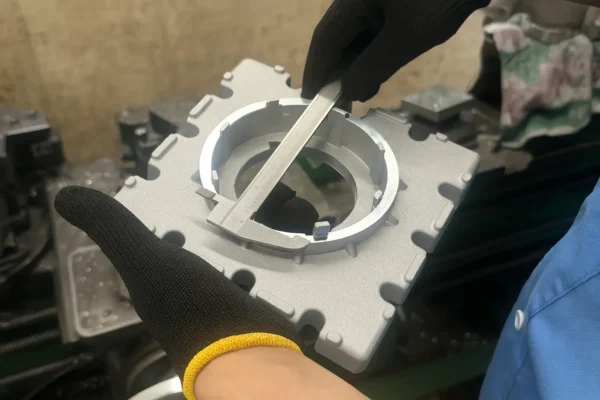
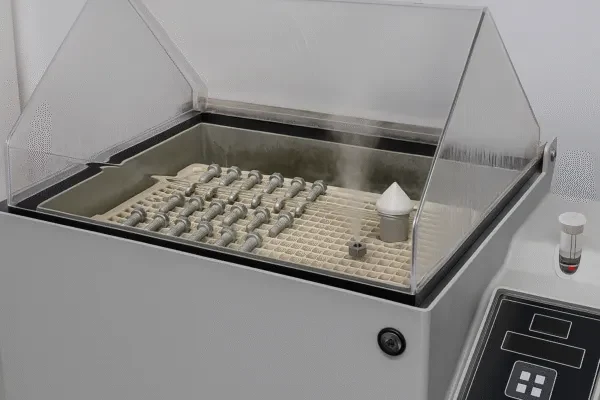
- Ⅰ: What is a Custom Metal Welded Part?
- Ⅱ: Reveal Custom Metal Welded Parts and Our Processes
- Ⅲ: Material Selection Guide for Custom Welded Metal Assemblies
- Ⅳ: Surface Finishing for Welded Metal Components
- Ⅴ: Joint Design & Fixturing: Precision from the Ground Up
- Ⅵ: Quality Assurance from Weld to Inspection
- Ⅶ: Common Welding Defects & PRIME’s Prevention Strategy
- Ⅷ:Versatile Applications — The Impact of PRIME Welded Metal Assemblies
- Ⅸ:How to Choose the Right Welded Parts Supplier
- Ⅹ:Design for Manufacturability (DFM) in Custom Welded Components
- Ⅺ:Explore Custom Metal Welded Parts – Strength Meets Precision
- Ⅻ:Global Logistics for Welded Metal Assemblies — Delivery You Can Rely On
- XIII: R&D and Innovation in Welded Assemblies – Building Smarter, Stronger Structures
- XIV: Value-Added Welding Services – From Fabrication to Final Assembly
- XV: More About Custom Welded Metal Parts
Ⅰ: What is a Custom Metal Welded Part?
Custom metal welded parts are fabricated by joining two or more metal components using controlled heat and filler (as required) to create a single, durable assembly. These parts are built to your drawing and performance requirements—such as load capacity, stiffness, leak-tightness, and fit-up—making them common in machinery, infrastructure, transportation, and industrial systems.
Fastest way to quote correctly (what we typically confirm):
- Base material, thickness, and standard (ASTM/EN/JIS or your internal spec)
- Weld type & location (symbol callouts), cosmetic side (A-side/B-side), and allowable weld profile
- Functional CTQs: flatness, squareness, hole position after weld, leak requirement (if any)
- Strength/inspection requirement: visual only, NDT (PT/MT/UT/RT), or weld procedure qualification needs
- Finishing: paint/powder coat/plating/passivation + masking areas + packaging protection
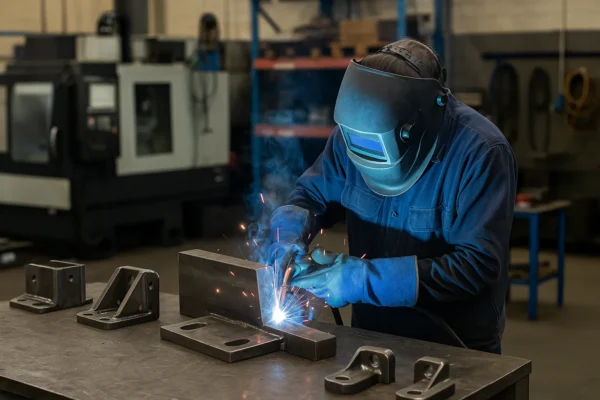
Welding enables strong, continuous joints and reduces the need for mechanical fasteners in demanding environments. When designed and controlled correctly, welded assemblies can achieve excellent strength-to-weight performance while maintaining predictable fit and function. Because welding introduces heat and potential distortion, we focus on fixturing, sequence control, and CTQ verification so parts assemble smoothly downstream.
Key Characteristics of Metal Welded Parts
• Strong Structural Integrity
Welding creates a metallurgical bond between components, supporting load-bearing designs and fatigue-prone applications when the joint type, prep, and process controls are correct. For high-risk parts, we align joint design and inspection expectations (visual / NDT) before production.
• Material Versatility
Compatible with carbon steel, stainless steel, aluminum, and selected alloys. Material choice affects distortion risk, cracking sensitivity, and corrosion behavior—so we confirm grade/temper/thickness and the finishing plan (paint/powder/passivation) during RFQ.
• Customized Geometries & Assemblies
Supports frames, brackets, enclosures, mounts, and reinforced structures tailored to your drawing. We pay close attention to datums and post-weld CTQs (flatness, squareness, hole position) that affect assembly and fit.
• Scalable Fabrication with Controlled Variation
Suitable for prototypes through volume production. Scalability depends on repeatable fixturing, weld sequence discipline, and defined checkpoints—so quality remains stable as quantities increase.
Common Welding Techniques We Use
- MIG Welding (GMAW): Productive process for mild steel and many structural assemblies; strong joints with good throughput.
- TIG Welding (GTAW): High-control method for thin materials, stainless, and cosmetic-critical welds; helps reduce spatter and improve appearance.
- Arc Welding (SMAW): Robust field-proven method often used for thicker sections and structural work.
- Spot Welding: Efficient joining method for sheet-metal assemblies; commonly used in brackets, panels, and enclosures.
- Laser Welding: Focused heat input for precise seams and reduced heat-affected zone (HAZ) when applicable.
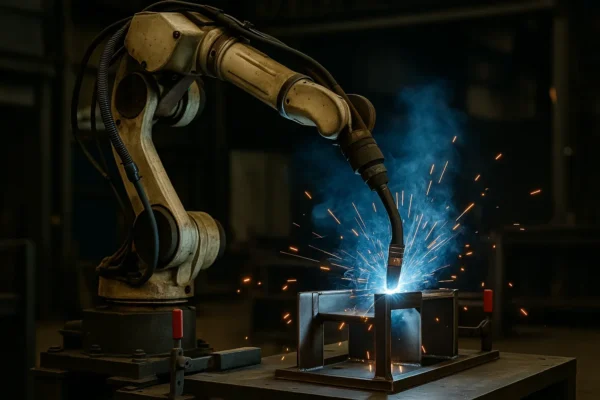
- Robotic Welding: Improves repeatability for higher-volume programs and consistent bead placement on repeat geometries.
Quality note (what defines “good” welding for buyers):
- Acceptance criteria (weld size/profile, undercut/porosity limits, cosmetic side) must be defined upfront.
- Distortion control (fixture + sequence + heat input) protects flatness and hole position after welding.
- Verification can include visual checks, dimensional inspection, and NDT when required.
Industries That Rely on Custom Welding
• Construction & Infrastructure
Brackets, frames, supports, and structural subassemblies where load capacity and corrosion protection drive requirements.
• Industrial Machinery
Machine frames, bases, guards, and weldments requiring stiffness, alignment control, and long service life.
• Agriculture & Heavy Equipment
Rugged welded parts designed for impact, vibration, and harsh outdoor conditions.
• Transportation
Trailer and rail components, mounts, and supports where fatigue performance and repeatable fit-up matter.
• Energy & Power
Supports, frames, and welded structures used in oil & gas, renewables, and power generation—often with defined inspection requirements.
For fastest response: include drawing revision, material spec, weld symbols/acceptance criteria, CTQs after welding, and finish/packaging requirements.
Ⅱ: Reveal Custom Metal Welded Parts and Our Processes
Whether you're new to custom welded components or seeking better fabrication solutions, this section provides a clear overview of how industrial welding works and how PRIME delivers robust and precise metal assemblies. We outline fundamental techniques, explain our capabilities, and show how we solve common pain points like strength, alignment, and scalability. Our goal is to help you make smart sourcing decisions backed by expert insight.
To avoid disputes and rework, we typically confirm in RFQ:
- Drawing revision + weld symbols/callouts + cosmetic side (A-side/B-side)
- Material grade + thickness + any pre/post heat treatment requirement
- Joint type (butt/fillet/lap), weld size/profile, and acceptance criteria
- Critical post-weld CTQs: flatness, squareness, hole position, fit-up datums
- Inspection requirement: visual only, dimensional report, or NDT (PT/MT/UT/RT) if needed
- Finishing + masking + packaging protection (rust prevention, scratch control)
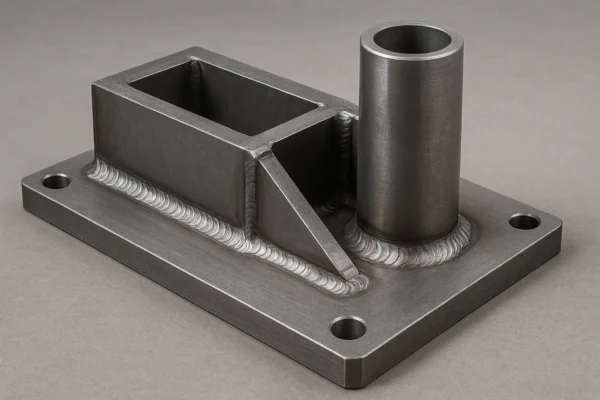
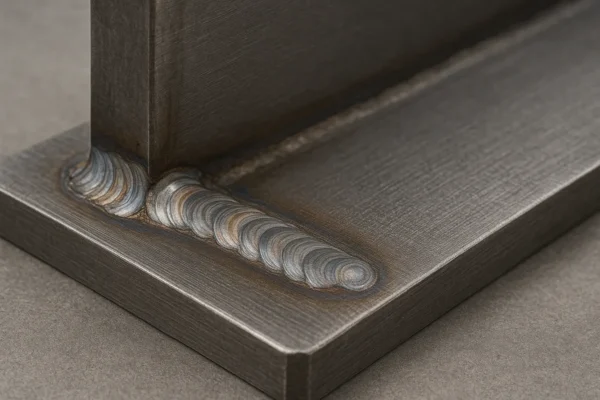
What is metal welding? A practical introduction
Welding is a fabrication process that joins metal parts by creating a controlled fusion zone using heat, pressure, or both (with filler metal as required). It’s commonly used for brackets, frames, enclosures, and structural assemblies in construction, machinery, transportation, and energy. At PRIME, we combine manual expertise with repeatable fixturing and robotic automation to deliver weldments with predictable strength, dimensional control, and stable production output.
Buyer reality (what matters most after welding):
- Distortion control: fixture design + weld sequence + heat input management
- Datum stability: CTQs checked against agreed datums after welding
- Repeatability: same bead placement, same penetration intent, same inspection checkpoints
Choosing the right welding technique: tailored strength for your application
Selecting the optimal welding method balances structural integrity, cosmetic expectation, distortion risk, and cost. At PRIME, we recommend a process based on your material, joint configuration, required weld profile, and post-weld CTQs—then align verification expectations before production. Below are our core welding capabilities:
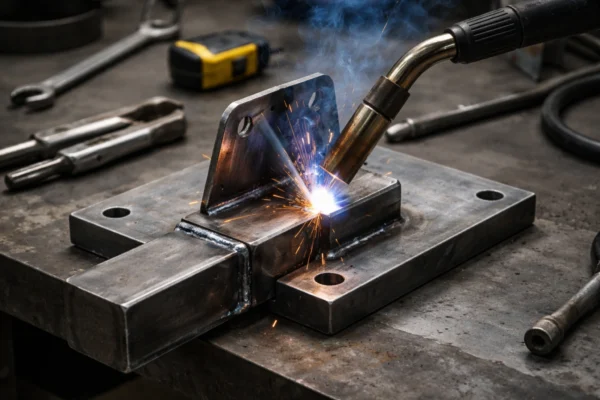
1. MIG Welding: fast and reliable
MIG (GMAW) welding is a productive method for medium-to-thick parts that need strong, consistent welds. PRIME uses semi-automatic and robotic MIG systems for repeat programs, supported by controlled parameters to reduce variation. This is commonly used for carbon steel and many stainless assemblies like frames, brackets, mounts, and supports.
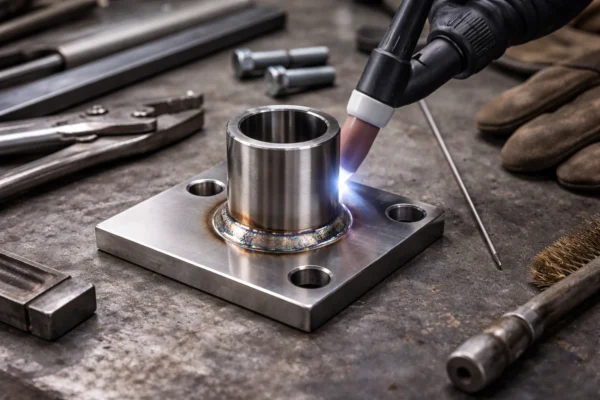
2. TIG Welding: high precision and clean finish
TIG (GTAW) welding offers high control for thin sections and appearance-critical welds. Our TIG specialists focus on stable bead profile and low spatter, helping reduce cleanup and protect cosmetic surfaces. It’s ideal for stainless/aluminum assemblies, sealed housings, and parts where distortion and appearance limits are tight.
3. Robotic Welding: speed meets consistency
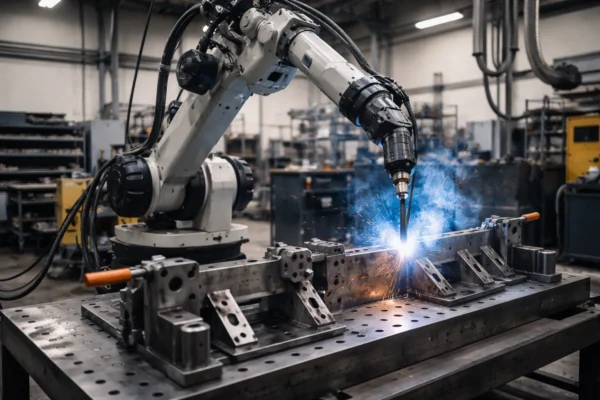
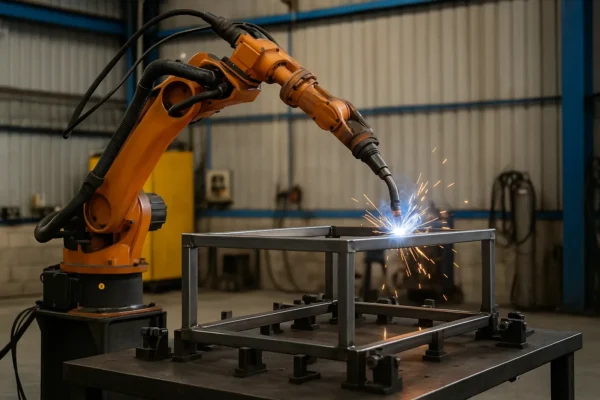
Robotic welding improves repeatability for high-volume or repeat geometries by controlling torch path, travel speed, and arc parameters. We use robotic cells for programs that benefit from consistent bead placement and cycle time control. This reduces rework risk and supports scalable quality when your demand increases.
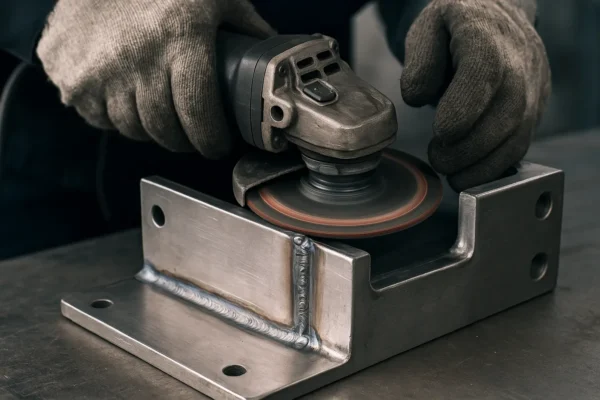
4. Post-Weld Finishing: clean, inspect, and protect
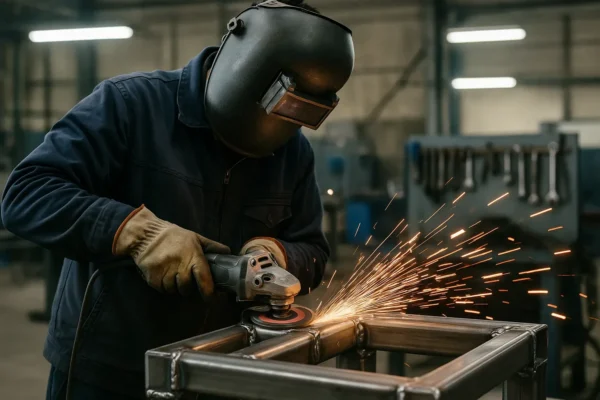
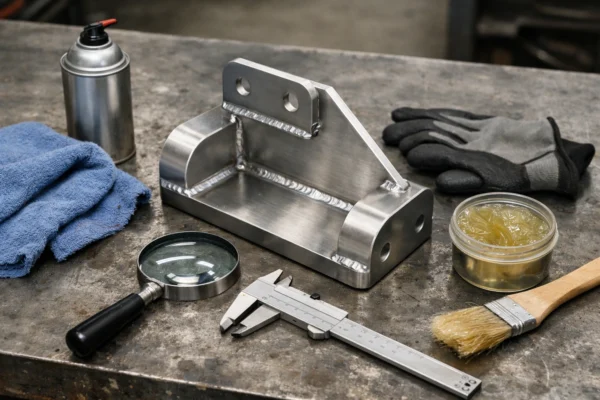
After welding, we apply finishing steps to match your functional and cosmetic requirements—such as grinding, blending, polishing, blasting, and cleaning. Dimensional checks focus on post-weld CTQs (flatness, squareness, hole position) and agreed datums. When required, we support inspection outputs (dimensional records, NDT reports, CoC) aligned to your acceptance criteria.
Common post-weld controls (selected by requirement):
- Bead blending / spatter removal to meet cosmetic grade
- Distortion correction strategy (fixture, sequence tuning, stress relief when specified)
- Rust prevention and surface prep before paint/powder coat
- NDT options (PT/MT/UT/RT) when required by spec
Expert advice for custom welded assemblies
For the fastest and most accurate quote, share your drawing revision, weld symbols, material specs, cosmetic requirements, and any post-weld CTQs (flatness/squareness/hole position). If the assembly is load-critical, include load cases or service environment so we can recommend the right joint strategy and verification plan.
Ⅲ: Material Selection Guide for Custom Welded Metal Assemblies
Material selection is the foundation of strong, reliable welded structures. At PRIME, we guide our clients in selecting the optimal metals for structural integrity, weldability, and end-use performance. Whether you're fabricating frames, enclosures, brackets, or high-stress parts — our experts help you balance strength, cost, corrosion resistance, and welding compatibility.
Common Welding Materials and Their Performance
| Material | Weldability | Strength (MPa) | Corrosion Resistance | Typical Applications |
|---|---|---|---|---|
| Carbon Steel (A36) | Excellent | 400–550 | Low | Frames, brackets, structural supports |
| Stainless Steel 304 | Good | 520–750 | High | Food equipment, enclosures, pipes |
| Aluminum 5052 | Moderate | 210–260 | Very High | Marine, transportation, decorative panels |
| Mild Steel (Q235) | Very High | 375–460 | Moderate | General fabrication, machine bases |
| Galvanized Steel | Low (requires prep) | 400–500 | Excellent (zinc coating) | Outdoor enclosures, ducts, cabinets |
Note: Strength ranges vary by exact grade/condition and standard. Final selection is confirmed by your drawing/spec and service environment.
Practical Buyer Notes (What Usually Causes Welding Problems)
- Corrosion vs. cost tradeoff: outdoor/chemical exposure often pushes toward stainless or protected carbon steel (paint/powder coat/galvanize).
- Distortion risk: thin sections, long weld runs, and asymmetric joints increase warping—fixture and weld sequence become critical.
- Mixed metals: dissimilar joints require correct filler choice and sometimes isolation to avoid galvanic corrosion.
- Galvanized welding: requires coating removal at the joint and controlled process to reduce porosity and rework.
- Stainless cleanliness: contamination control (tools/brushes dedicated for stainless) helps prevent surface defects and corrosion issues.
PRIME's Engineering Support for Welded Assemblies
At PRIME, we go beyond welding — our team ensures that the chosen materials meet your design intent, strength targets, and environmental requirements.
Material Certification & Welding Suitability
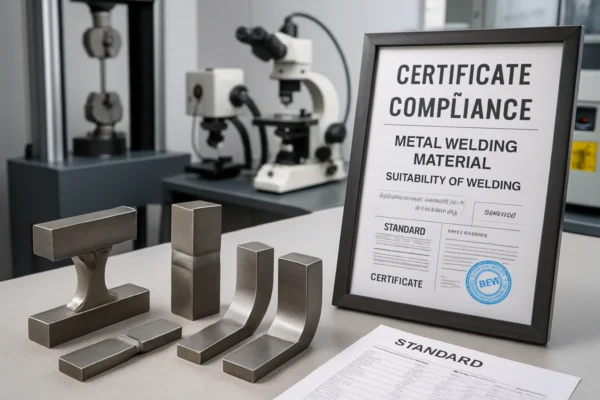
We support traceability options for raw materials (MTR/CoC as required) and confirm material condition and weldability assumptions early. For higher-risk applications, we can align additional verification expectations (e.g., chemistry confirmation, hardness, or procedure qualification requirements) based on your spec.
DFM Review for Welded Structures
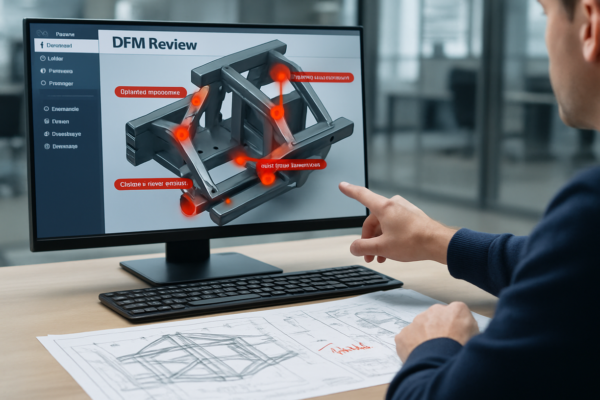
We review your assembly for distortion, access, and repeatability, then propose practical adjustments: joint type selection, edge prep, fit-up gaps, weld sequence notes, and fixture strategy assumptions. We also confirm post-weld CTQs (flatness/squareness/hole position) and define how they will be checked.

Total Cost & Weld Feasibility Evaluation
We help you balance performance and budget by evaluating the real cost drivers: fixturing complexity, weld time, filler consumption, distortion correction, grinding/blending for cosmetic grade, and finishing/coating requirements. This reduces “cheap quote → expensive rework” risk.
To Quote Material & Welding Correctly, Please Include
- Service environment: indoor/outdoor, salt/chemical exposure, temperature range
- Load expectations: static vs. cyclic/fatigue, any safety factor requirement
- Weld spec: symbols, size/profile, visual class, and whether NDT is required
- Post-weld CTQs: flatness, squareness, critical datums, hole position
- Finish requirement: paint/powder/galvanize/passivation + cosmetic standard
Ⅳ: Surface Finishing for Welded Metal Components
Surface treatments enhance performance, appearance, and corrosion resistance for welded assemblies. PRIME offers industrial finishing options matched to your service environment and cosmetic expectations—so protection and aesthetics are defined before production.
- Hot-Dip Galvanizing: Protective zinc coating for steel parts exposed to outdoor weather or high-corrosion environments.
- Powder Coating: Durable, uniform finish in custom colors—ideal for impact resistance and consistent appearance.
- Shot Blasting / Sandblasting: Removes scale and contamination, creating a clean profile for coatings and paint adhesion.
- Passivation (Stainless Steel): Enhances corrosion resistance by removing free iron and improving surface condition after fabrication.
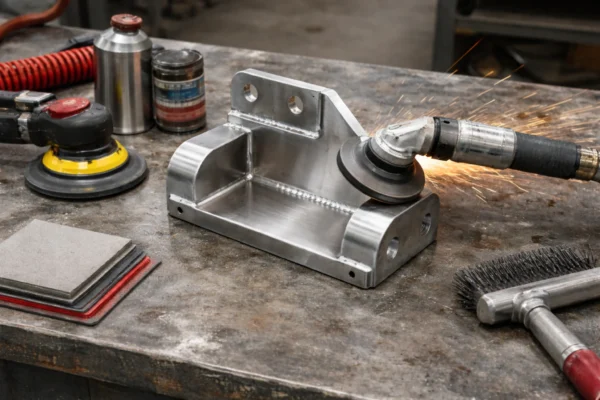
- Grinding & Polishing: Smooths weld seams and sharp edges for safety, fit, and cosmetic requirements.
- Marking & Special Coatings: Serial numbers, logos, and application-specific coatings (anti-rust, anti-wear) on request.
To avoid finishing disputes, we typically confirm:
- Finish/coating standard + thickness target (if applicable)
- Masking areas, grounding points, and functional surfaces
- Cosmetic grade (view surfaces) and acceptable defect limits
- Post-weld prep requirement (blast profile / smoothness level)
Ⅴ: Joint Design & Fixturing: Precision from the Ground Up
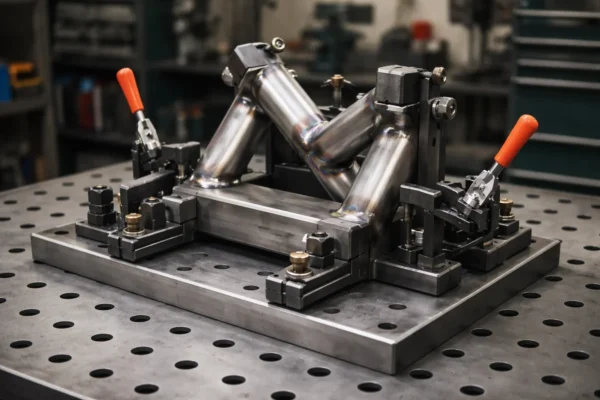
Repeatable weld quality starts with joint clarity and stable fixturing. PRIME supports weld-oriented DFM and purpose-built jigs so fit-up, access, and distortion control are engineered—not improvised.
- Weld-Oriented DFM: Joint type, bevel/edge prep, root gap, and access angles reviewed to reduce rework risk.
- Custom Fixtures: CNC-machined jigs and locating features support consistent datum control and repeatable assembly.
- Distortion Prevention: Sequencing, balanced weld strategy, and controlled clamping reduce warpage—especially for thin-wall and multi-pass welds.
- Validation Discipline: First article build + key CTQ verification (flatness/squareness/hole position) aligned to your drawing requirements.
Ⅵ: Quality Assurance from Weld to Inspection
Quality control for welded assemblies is about traceability + process discipline + verification. PRIME aligns inspection scope and documentation to your application risk and acceptance criteria—so requirements are verifiable, not assumed.
- Incoming Material Check: Material review against spec; traceability options (MTR/CoC) available as required.
- Welding Process Control: WPS/PQR alignment (when applicable), parameter tracking, and operator qualification control per project requirement.
- NDT Options (When Required): Dye penetrant (PT), ultrasonic (UT), magnetic particle (MT), or radiography (RT) per spec and weld class.
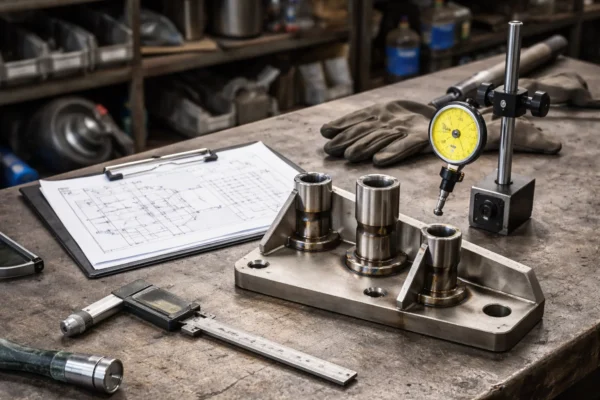
- Dimensional Control: Visual + gauge checks; CMM/fixture-based verification for CTQ datums and assembly interfaces.
- Documentation Package: CoC, weld maps/photos (as agreed), inspection records, and traceability terms per PO.
Fastest way to align quality expectations:
- Define CTQ dimensions + datums + acceptable distortion limits
- State weld class/standard and whether NDT is required
- Confirm finish/cosmetic requirements and inspection sampling scope
Ⅶ: Common Welding Defects & PRIME’s Prevention Strategy
Welding is a critical fabrication process where even small imperfections can compromise strength, alignment, or corrosion resistance. At PRIME, we reduce defect risk with defined welding procedures (WPS), trained welders, controlled fit-up/fixturing, and post-weld verification aligned to your requirements.
1) Porosity
Description: Gas pockets trapped in the weld metal that reduce strength and sealing reliability.
PRIME prevention: clean base material and filler control, verified gas type/flow, correct torch angle and travel speed, and preheat when needed to reduce moisture and contamination.
Verification options: visual acceptance per spec; PT/UT when required for critical joints.
2) Undercut
Description: A groove at the weld toe that reduces section thickness and becomes a stress concentrator.
PRIME prevention: tuned heat input and travel speed, correct electrode/torch manipulation, and multi-pass strategy where needed to maintain proper toe profile without edge erosion.
Verification options: visual profile check; weld gauge checks as requested.
3) Incomplete Fusion
Description: Lack of bonding between weld metal and base metal (or between passes), often from low heat input or poor access/fit-up.
PRIME prevention: joint prep and fit-up control (gap/bevel), calibrated equipment settings per WPS, controlled torch angles, and sequencing that ensures root access and proper penetration.
Verification options: UT/RT for critical welds (per requirement); section checks for validation builds when agreed.
4) Cracks (Hot or Cold)
Description: Fractures in the weld metal or heat-affected zone caused by restraint stress, hydrogen, poor joint design, or improper cooling.
PRIME prevention: weld-oriented DFM (joint design + access), controlled heat input, appropriate preheat/interpass control, and PWHT when required by material/spec to manage residual stress and hydrogen risk.
Verification options: PT/MT for surface cracks; UT/RT for internal discontinuities (per spec).
5) Weld Spatter
Description: Small droplets of molten metal that adhere to surrounding surfaces, impacting cosmetics, coating adhesion, and assembly.
PRIME prevention: tuned parameters (current/voltage/wire feed), stable shielding coverage, anti-spatter protection when needed, and defined post-weld cleanup based on cosmetic grade.
Verification options: visual standard alignment (A-side/B-side); surface prep confirmation before coating.
Fastest way to prevent weld defects (buyer checklist):
- Provide weld symbols/standard, material spec, and required NDT (if any)
- Define CTQs (flatness, squareness, hole position, sealing surfaces) and datums
- State cosmetic requirements (view surfaces) and finishing/coating expectations
Ⅷ: Versatile Applications — The Impact of PRIME Welded Metal Assemblies
Custom welded metal assemblies support industries where strength, alignment, and long-term durability matter. From structural frames to vibration-loaded brackets, PRIME adapts welding process, joint design, and finishing to your drawing requirements—so you get stable fit-up, consistent weld quality, and predictable performance in the field.
1) Construction & Infrastructure
Impact: Load-bearing parts must resist fatigue, wind/vibration loads, and outdoor corrosion.
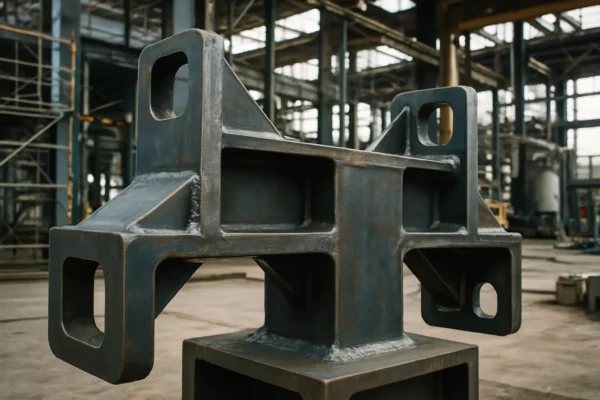
PRIME’s role: Fabricates supports, base plates, gussets, and connection brackets with controlled fit-up and weld sequencing. Welding procedures can be aligned to AWS/ISO requirements when specified, with hot-dip galvanizing or paint systems available for outdoor protection.
Typical controls: fixture-assisted squareness/flatness, weld visual standards, optional NDT per requirement.
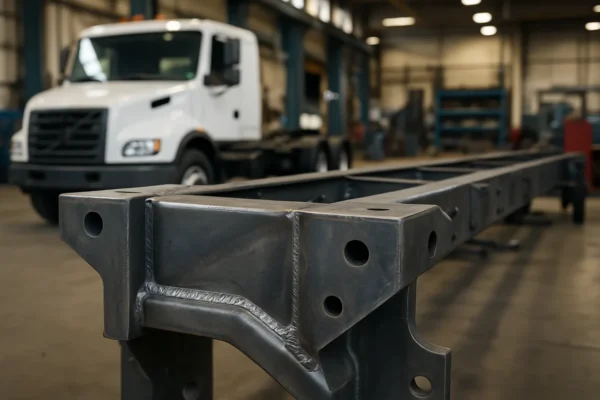
2) Transportation & Heavy Vehicles
Impact: Vibration and impact loads demand consistent weld penetration and stable dimensional control over time.
PRIME’s role: Produces crossmembers, mounts, brackets, and frame subassemblies using MIG/TIG (manual or robotic where applicable), with defined datums to protect critical hole patterns and assembly interfaces.
Typical controls: distortion management (sequence + clamping), gauge checks on CTQ points, optional CMM/laser verification for assemblies.
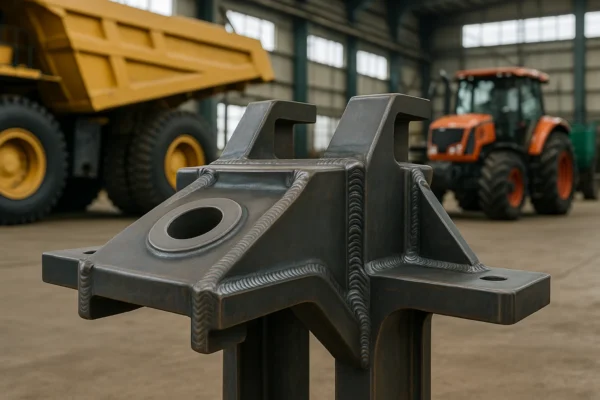
3) Agriculture & Mining Equipment
Impact: Abrasion, shock, and outdoor exposure create high wear and high rework risk if joints distort.
PRIME’s role: Builds heavy-duty brackets, frames, guards, and reinforcement weldments with wear-oriented material options (by spec) and robust fixturing. We help align edge prep, joint access, and finishing to reduce distortion and field failures.
Typical controls: weld access DFM, multi-pass control on thick sections, optional stress-relief/finishing per requirement.
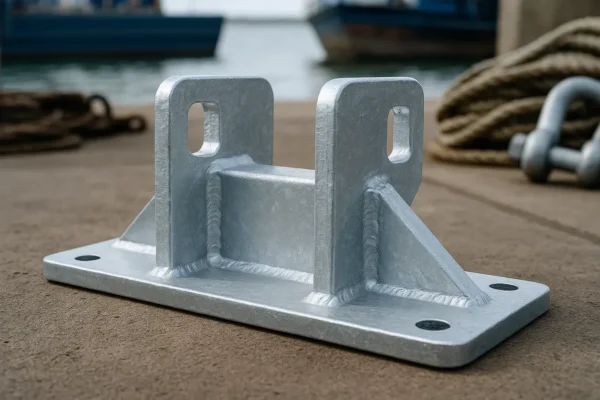
4) Marine & Offshore Systems
Impact: Saltwater exposure demands corrosion-resistant materials, coatings, and consistent weld quality at joints.
PRIME’s role: Supplies stainless and coated/galvanized structures for docks, supports, frames, and marine brackets. We align weld method (TIG/MIG), surface prep, and coating/packaging to reduce corrosion and transit damage risk.
Typical controls: material traceability options, coating process alignment, optional NDT for critical welds.
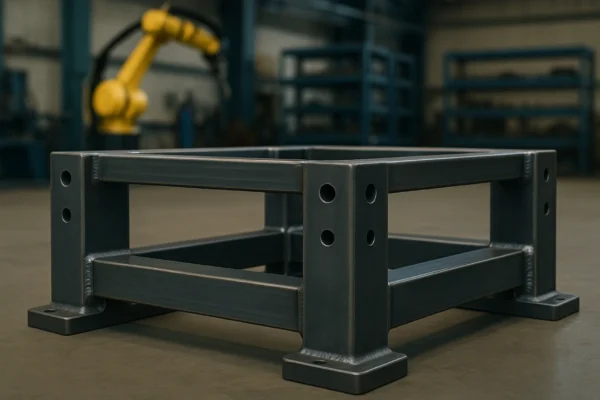
5) Industrial Automation & Robotics
Impact: Automation bases require low deflection, repeatable geometry, and stable datum surfaces for sensors/actuators.
PRIME’s role: Delivers machined weldments, sensor-mounted bases, and welded frames with post-weld machining where needed to protect CTQ interfaces (flatness, hole position, parallelism). Finishing and marking can be aligned to your line-side requirements.
Typical controls: fixture-controlled datums, post-weld machining strategy, optional laser/CMM verification on CTQs.
From load-bearing base plates to corrosion-resistant marine structures — PRIME builds welded assemblies that match your application’s real-world demands.
Share your drawings and CTQs (datums, flatness/squareness, hole position, finish/coating, and any NDT requirements). We’ll recommend the right material, joint design, and verification approach.
Request a Welding ConsultationⅨ: How to Choose the Right Welded Parts Supplier
Selecting a supplier for custom welded metal components is a risk decision—strength, alignment, corrosion resistance, and documentation matter as much as unit price. Use the criteria below to compare suppliers objectively and avoid rework, delays, and field failures.
1) Welding Certifications & Standards
- Can they meet the standards your industry requires (e.g., AWS D1.1, ISO 3834, EN 1090, or project-specific specs)?
- Do they control welding procedures via WPS/PQR and maintain welder qualifications (WQT/WPQ) by process/material?
- Do they understand special requirements (offshore, structural, fatigue-critical, corrosion-critical, traceability)?
🧪 Tip: Ask for a masked example of a WPS/PQR set and welder qualification coverage for your material + thickness range.
2) Material Handling & Welding Capability
- Do they regularly weld your materials (carbon steel, stainless, aluminum, HSLA/alloy) and your thickness range?
- Do they offer the right processes for your geometry and cosmetic/strength needs (MIG, TIG, spot, robotic)?
- Can they control heat input and distortion with fit-up standards, edge prep, and sequencing?
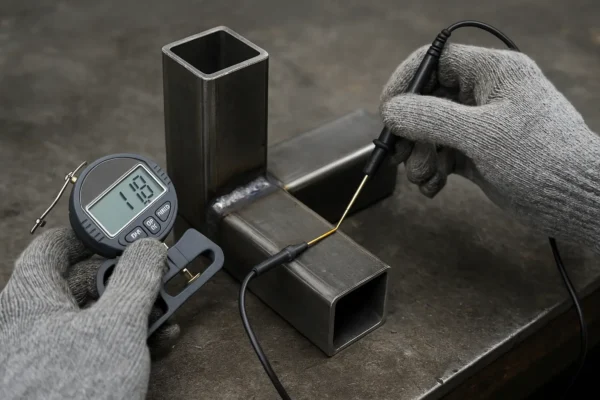
⚙️ Tip: Request sample weld photos for similar joints (fillet/butt) and ask how they control distortion (fixtures + weld sequence).
3) Inspection & Testing Protocols
- Do they have a defined inspection plan: visual + dimensional checks + optional PT/MT/UT/RT for critical welds?
- Are inspection personnel qualified to your requirement (internal procedure or third-party NDT as needed)?
- Can they provide weld maps, NDT reports, COC, and traceability options (heat/lot) when required?
🔍 Tip: Review a masked inspection pack: weld map + NDT report + dimensional checkpoint sheet for a similar assembly.
4) Production Scale & Project Flexibility
- Can they support both prototypes and repeat production with stable fixturing and consistent weld outputs?
- Do they build and maintain welding jigs/fixtures for repeatability and throughput?
- Can they scale capacity (shifts/lines) and communicate schedule risk early?
📈 Tip: Ask what changes between prototype and production (fixture strategy, checkpoints, packaging, documentation).
5) Engineering Support & CAD Collaboration
- Do they review your drawings for DFW (Design for Welding)—joint access, fit-up gaps, edge prep, and distortion risk?
- Can they help define CTQs for assemblies (datums, flatness/squareness, hole position) and a verification approach?
- Do they have change control for revisions (drawing rev, weld symbol updates, BOM changes)?
🖥️ Tip: Ask how they prevent tolerance stack-up (weld + post-weld machining strategy for datum surfaces).
6) Delivery, Export & Packaging Control
- Do they support export packaging to prevent damage (corner protection, separators, shockproof pallets)?
- Can they provide rust prevention (VCI, desiccants, oiling) and clear labeling/traceability?
- Are they experienced with export documents aligned to your Incoterms and destination requirements?
🚢 Tip: Confirm packaging standard + labeling format in RFQ/PO to avoid transit damage and receiving disputes.
At PRIME, we align welding process, fixtures, and inspection to your CTQs—and we support documentation and export-ready packaging when required. Share your drawings and requirements, and we’ll respond with a clear manufacturing plan and quote assumptions.
Ⅹ: Design for Manufacturability (DFM) in Custom Welded Components
Optimize structural integrity, simplify fabrication, and minimize rework with welding-oriented DFM—before you cut material or build fixtures.
What is DFM for Welding? Design for Manufacturability (DFM) for welded components is an engineering review that identifies weld risks and cost drivers early—so your assembly can be built with predictable fit-up, controlled distortion, and clear inspection criteria. It focuses on joint design, weld access, fixturing strategy, sequence planning, and how quality will be verified.
At PRIME, DFM is not a generic checklist. We return actionable deliverables that help engineering and procurement make confident decisions on process, inspection, and lead-time drivers—before production begins.
What you receive from our welding DFM (typical outputs):
- Joint + process recommendation: MIG / TIG / spot / robotic, with “why” based on material, thickness, and access
- Risk list + countermeasures: distortion, cracking, lack of fusion, porosity, spatter, cosmetic risks
- Fixture/sequence direction: locating strategy, clamp zones, weld order guidance (high-level, not proprietary fixture design)
- Inspection approach: what to verify (CTQs, weld acceptance) and how (visual / gauges / CMM / PT-UT-RT as required)
- Quote assumptions clarified: material spec, inspection scope, finishing, packaging, and lead-time drivers
Buyer’s concern: “My design includes thick-to-thin transitions, tight corners, and multiple welded joints. I'm worried about distortion, failed welds, and inspection challenges. How can I optimize the design before production?”
1) Joint Design & Welding Feasibility
We review joint types, access, fit-up gaps, and weld callouts to ensure your assembly can be welded consistently—without excessive grinding, rework, or distortion.
- Access optimization: confirm torch/robot clearance for consistent bead placement
- Right-size weld volume: reduce unnecessary weld metal while meeting strength intent
- Weld symbol clarity: align type/size/length, intermittent vs continuous, and cosmetic expectations
To complete DFM faster, please include:
- 2D drawing revision + weld symbols/notes + CTQ dimensions (datums, flatness, hole position)
- 3D model (if available) + assembly orientation or mating surfaces
- Material spec/grade + thickness + any dissimilar-metal interfaces
- Cosmetic standard (A-side/B-side) + grind/flush requirements if any
- Volume forecast + target lead time + documentation needs (COC/MTR/NDT reports)
2) Material Pairing & Weldability
- Compatible metals: flag combinations prone to cracking, galvanic corrosion, or unstable weld behavior
- Preheat/PWHT reality check: recommend when necessary—and remove it when not
- Process matching: MIG/TIG/spot/robotic aligned to thickness, access, strength, and appearance
3) Distortion Prevention & Fixture Planning
Most weldment issues are not “welding skill” problems—they’re heat + restraint problems. We focus on geometry, locating strategy, and sequence so you get stable alignment and repeatable CTQs.
- Sequence planning: weld order guidance to reduce heat buildup and movement
- Fixture integration: define clamp/locate zones and avoid weld interference with fixturing
- Balanced welding: symmetry and stitch strategy to reduce residual stress concentration
4) CTQ Control & Inspection Readiness
- CTQ-first review: keep tight tolerances where function requires it; simplify where it doesn’t
- NDT accessibility: ensure PT/UT/RT or visual access when your spec requires it
- Standards alignment: acceptance criteria aligned to AWS/ISO or your internal standard and inspection scope
- Traceability planning: lot/heat tracking and weld records when required by your program
What DFM can and cannot do (clear expectations)
- DFM reduces risk, but final capability depends on geometry, material behavior, and validation results.
- Final acceptance is confirmed by your drawing/spec (weld criteria + CTQs) and agreed inspection method.
- Document evidence (masked examples of weld maps/NDT/FAI/CMM/MTR/CoC) can be shared during RFQ when required.
Our welding DFM is built to prevent the expensive problems: distortion-driven scrap, gap-fit rework, cosmetic disputes, and inspection surprises. By aligning joint strategy, fixture direction, CTQ control, and verification early, you shorten the path from drawing to stable production.
Lower risk • Clear assumptions • Faster validation
For the fastest response: include drawing revision, weld symbols/notes, CTQs, material/thickness, volume forecast, and cosmetic/packaging requirements.
Ⅺ:Explore Custom Metal Welded Parts – Strength Meets Precision
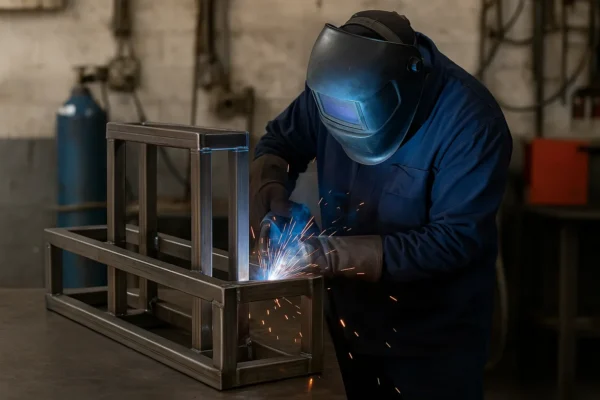
Custom welded metal assemblies are the backbone of structural stability and design flexibility across industries like construction, automotive, energy, and machinery. At PRIME, we specialize in delivering fully customized, high-strength welded components that match your drawings, performance requirements, and documentation needs—whether you’re building for durability, alignment accuracy, or repeatability at scale.
Why Choose PRIME Welded Assemblies?
- End-to-end customization: weld method selection (MIG/TIG/spot/robotic), joint design review, and finishing aligned to your functional intent.
- Strength you can verify: weld strategy built around load path, fatigue risk, and service environment (vibration, corrosion, outdoor exposure).
- Qualified procedures: WPS/PQR discipline available where required, with controlled parameters and traceability.
- Inspection options: visual + dimensional checks standard; NDT (PT/UT/RT) available for structural-critical programs.
- Integrated fabrication: welding combined with stamping, CNC, bending, and surface treatment—reducing vendor handoffs and revision risk.
To quote welded assemblies accurately, we typically confirm:
- 2D drawing revision + weld symbols/notes + CTQ list (datums, flatness, hole position)
- Material grade + thickness (and dissimilar-metal interfaces if any)
- Cosmetic requirement (A-side/B-side) + grind/flush expectations
- Volume forecast + target lead time
- Documentation scope (COC/MTR, weld map, NDT report if required)
Application Examples
From load-bearing structures to alignment-critical frames, we build welded parts to match your assembly needs and verification plan.
- Structural frames, base plates, and mounting brackets
- Battery enclosures and EV system supports
- Industrial machine housings and chassis
- Architectural steel components
- Railway undercarriage and reinforcement parts
- Oil & gas pipe supports and skids
- Medical equipment frameworks (per drawing/spec)
- Heavy-duty welded subassemblies
Our Welding Workflow
- Drawing review: joint feasibility, weld access, and CTQ risk scan
- Material + cut prep: controlled fit-up, edge prep, and cleanliness planning
- Fixturing direction: locating strategy to protect datums and reduce distortion
- Welding execution: manual or robotic process matched to volume and quality intent
- Post-weld finishing: grinding/cleaning/stress relief as required by spec
- Final verification: dimensional inspection + weld acceptance + documentation pack
Note: Final process steps depend on your material, weld standard, cosmetic requirement, and agreed inspection scope.
Quality You Can Trust
Welded assemblies fail when requirements are ambiguous: unclear weld symbols, undefined cosmetic limits, or no CTQ measurement plan. We reduce those risks by aligning weld acceptance criteria, inspection checkpoints, and documentation deliverables before production. When your program requires it, we support standards-aligned procedures and inspection options (including NDT) based on your spec and project scope.
Note: Specific code compliance and documentation packages are confirmed by PO/drawing requirements (e.g., AWS/ASME/ISO project scope).
To speed up: include drawing revision, weld symbols, material/thickness, CTQs, volume forecast, and any NDT/document requirements.
Ⅻ:Global Logistics for Welded Metal Assemblies — Delivery You Can Rely On
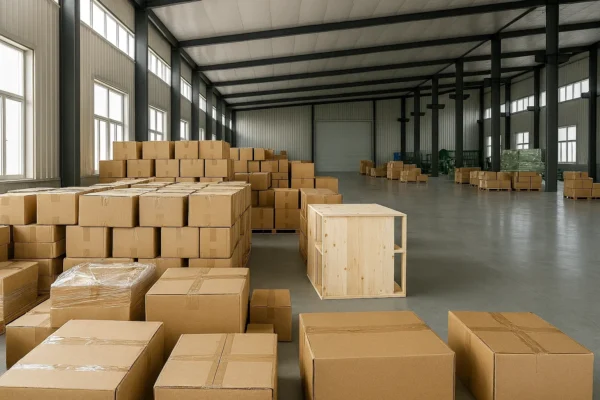
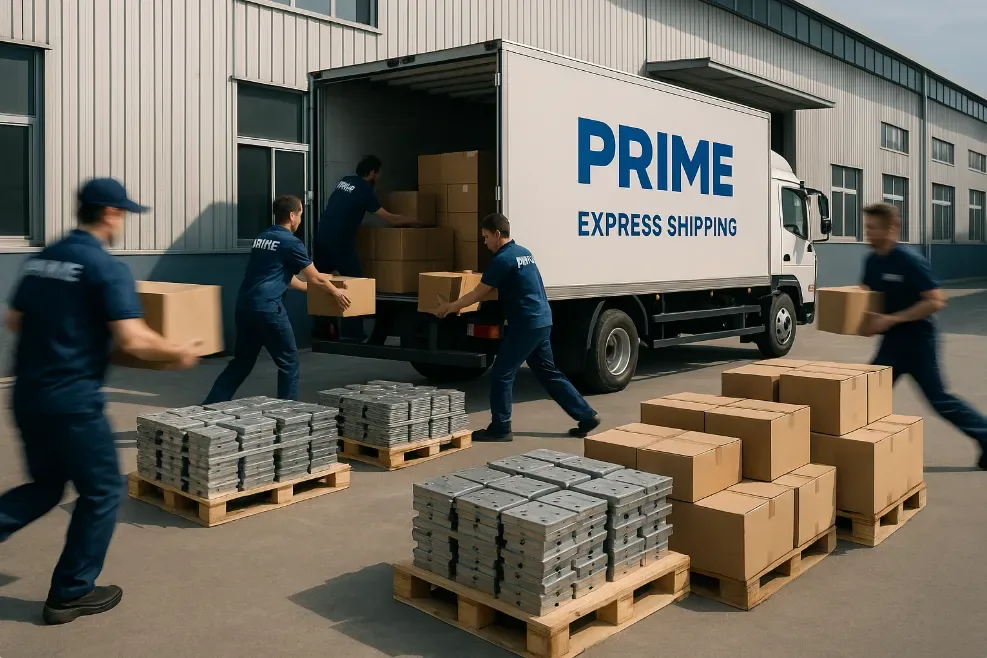
For custom welded parts, shipping isn't just about distance — it's about protection, timing, and traceability. At Prime, we combine precision welding with robust global logistics to ensure your fabricated components arrive on time, intact, and fully documented — no matter your location.
Buyer Concern
“Our welded frames are large, heavy, and critical to the assembly line. Can Prime support secure international delivery without delays or damage?”
To reduce logistics risk, we typically confirm in RFQ / PO:
- Incoterms (EXW / FOB / CIF / DAP, etc.) + destination details
- Part dimensions/weight + lift points + stacking limits (if any)
- Packaging level (cosmetic protection, corrosion protection, outdoor storage)
- Document package requirements (CoC/MTR, weld records, NDT reports if required)
- Labeling format, carton/pallet marking, and traceability needs
Prime's Welded Parts Shipping Solution
Whether you’re sourcing structural steel weldments or precision subframes, our logistics team aligns packaging, documentation, and shipping strategy to your program risk profile — from crating to customs coordination.
1. Freight Optimization for Bulky Weldments
- Crates & skids built to size: custom pallets for oversized frames and weldments.
- Reinforcement planning: internal blocking/bracing to prevent racking and impact shift.
- Mode selection: air for urgent schedules; ocean (FCL/LCL) for cost efficiency; multimodal for balance.
We communicate lead-time assumptions clearly (production + packing + transit estimate) so you can plan inventory and line readiness.
2. Documentation & Compliance for Cross-Border Clarity
- Commercial documents: invoice + packing list + shipment details aligned to your Incoterms.
- HS code & description consistency: reduce customs confusion and re-check risk (final classification may depend on importer/broker rules).
- Project documents (as required): CoC/MTR, weld map/WPS references, and NDT reports when specified.
Note: Importer/broker may require final confirmation of HS code and local customs rules. We cooperate fully with your broker instructions.
3. Damage-Resistant Packaging System
Welded parts are protected from corrosion, vibration, and impact:
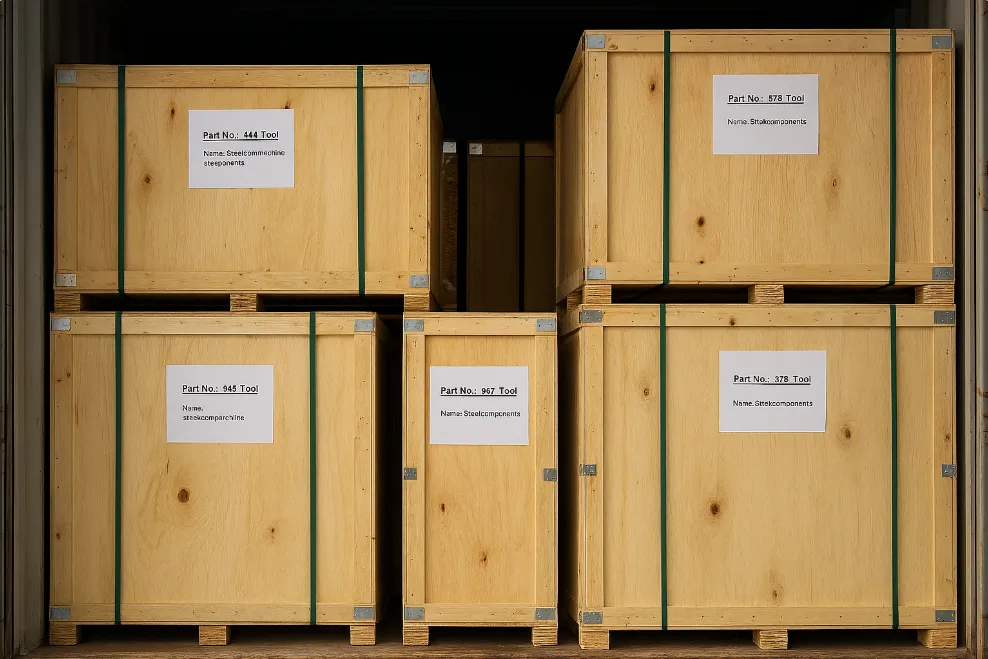
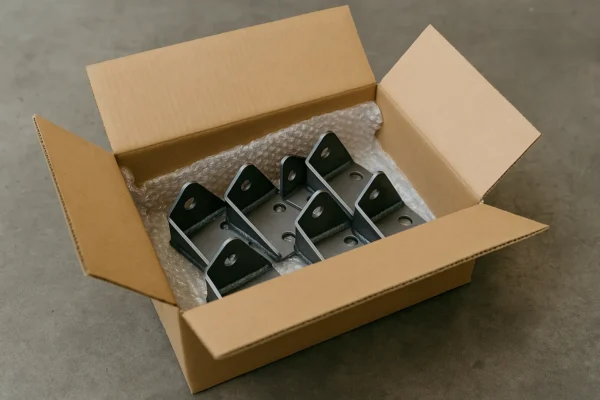
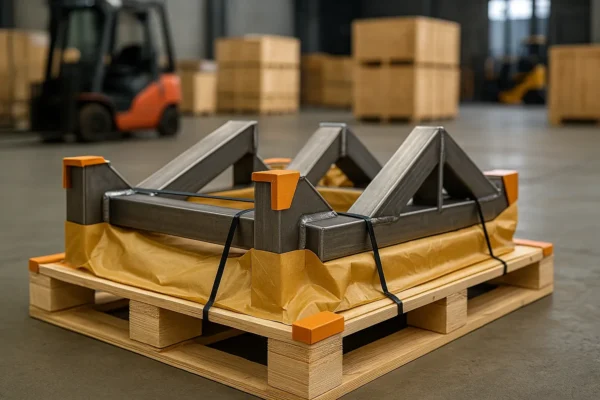
- Surface protection: VCI film, foam lining, edge guards, and separator planning for contact points.
- Restraint control: heavy-duty straps + shrink wrap to prevent movement during handling and transit.
- Seaworthy export crating: treated wood and moisture control (desiccant / barrier options when required).
Tip: For cosmetic-critical weldments, define A-side/B-side and acceptable defect limits so packaging and inspection align.
4. End-to-End Visibility & ETA Control
We provide shipment milestones so you’re not surprised:
- Tracking support: tracking codes or forwarder updates for all freight modes.
- Proactive alerts: if carrier schedule, port congestion, or inspection holds appear, we notify early with options.
- Single point of contact: coordinated communication from ready date to delivery confirmation.
5. Inventory & Buffer Programs (For Repeat Orders)
For recurring OEM programs, we can discuss staged shipments, safety stock planning, and packaging standardization to reduce line-stop risk and smooth demand fluctuations.
Availability depends on product type, forecast stability, and agreed commercial terms.
Make Shipping the Easiest Part
Prime doesn’t just fabricate — we deliver. From heavy-duty frames to precision welded housings, we align packaging protection, documentation, and shipping assumptions up front so your delivery risk stays controlled.
Include: destination, Incoterms, part dimensions/weight, packing expectations, labeling format, and whether anti-rust protection is needed.
XIII: R&D and Innovation in Welded Assemblies – Building Smarter, Stronger Structures
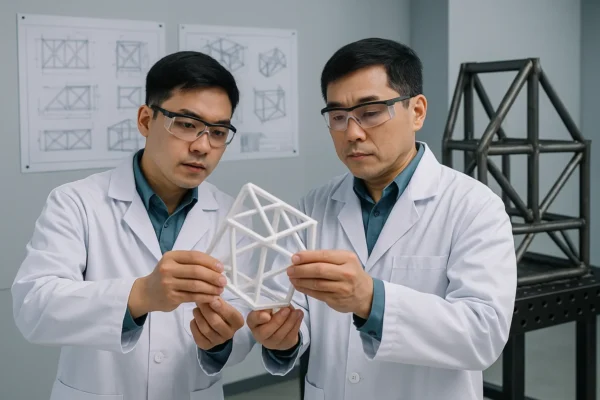
In today’s complex industrial landscape, metal welding is no longer just about joining parts — it’s about enabling high-performance structures that are lighter, stronger, and more cost-efficient. At PRIME, our welding-focused engineering work targets real production outcomes: reduced distortion, stable weld quality, and faster ramp to repeatable builds.
Buyer Concern: Can my supplier keep up with structural requirements, evolving welding standards, and application-specific challenges like distortion, fatigue, or corrosion?
What you can expect (typical engineering outputs):
- Weld-oriented DFM notes (joint access, distortion risk, inspection access) with countermeasures
- WPS/PQR alignment recommendations (process, filler, preheat/PWHT assumptions as needed)
- Fixture & weld-sequence proposal to control warpage and repeatability
- Quality plan suggestions (visual + NDT options) and sample documentation formats when required
1. Advanced Weld Process Development
We tailor weld procedures (WPS/PQR) to project goals and part risk. Development work focuses on controlling heat input, penetration consistency, and fatigue performance—especially for load-bearing structures where rework and distortion drive cost.
- Heat input control: reduce HAZ size and distortion sensitivity
- Penetration stability: parameter windows and joint prep guidance
- Repeatable execution: process choice (MIG/TIG/spot/robotic) matched to geometry and volume
2. Material Joining Innovation
- Dissimilar material strategies: when required, we align filler approach and joint design to reduce cracking and galvanic risk (subject to spec and validation).
- High-strength steel programs: practical sequences for UHSS (e.g., higher strength structural grades) to reduce cold cracking and residual stress.
- Nonferrous weld development: parameter tuning for thermal-sensitive materials where distortion and surface condition are critical.
Note: Final feasibility depends on material pairing, joint design, and acceptance criteria. We confirm assumptions during RFQ/DFM.
3. Simulation & Digital Welding Validation
Before fabrication, we use CAD-driven planning to reduce trial-and-error: fixture stress checks, warpage risk review, and weld-sequence logic that supports stable datums and measurable CTQs.
- Virtual weld sequence planning and distortion risk review
- Clamping/fixturing concept validation to reduce movement during welding
- DFM + DFA outputs focused on access, inspectability, and rework avoidance
4. Industry-Specific Customization
We adapt joint design, weld length, prep, and finishing to your use-case—so the build meets real-world performance and inspection expectations, not just “looks welded.”
- Transportation & off-road machinery (fatigue + vibration considerations)
- Medical / stainless assemblies (cleanliness, appearance grade, corrosion control)
- Energy equipment, racks, and supports (coating prep, traceability, documentation)
Why PRIME for Welding Innovation?
PRIME’s welding R&D is practical: reduce weld-related failure risk, shorten build cycles, and improve repeatability with clear assumptions and verification options. If needed, we can share masked examples of DFM notes, weld documentation formats, and inspection outputs relevant to your program.
Note: Capability depends on geometry, material behavior, required standards, and agreed inspection scope. We confirm assumptions before production.
Discuss Your Welded DesignXIV: Value-Added Welding Services – From Fabrication to Final Assembly
For buyers of custom welded parts, delivering a fully usable solution takes more than welding. PRIME provides a full range of post-weld processing, surface treatments, assembly, and packaging—so your structural components arrive exactly as needed, ready for integration or final use.
Buyer Concern
“After welding, I still need surface treatment, dimensional accuracy, labeling, and packaging. Can one supplier handle the entire chain with traceability and compliance?”
PRIME’s One-Stop Welding & Finishing System
From raw steel cutting to finished welded modules, PRIME offers full-process control and value-added steps. This reduces supplier handoffs, ensures repeatability, and helps you accelerate final product delivery.
1. Structural Welding & Joint Optimization
- MIG / TIG / Spot Welding: Adapted to geometry and load requirements.
- Multi-Material Jointing: Steel, stainless, aluminum, and brass integration.
- Full Weld Traceability: Certified operators and weld map documentation.
2. Surface Treatment & Appearance Control
- Sandblasting & Grinding: Cleaned, leveled, and burr-free surfaces.
- Powder Coating / Painting: Durable, aesthetic protection per RAL/Pantone.
- Galvanizing & Passivation: Long-term corrosion resistance for outdoor or industrial use.
3. Final Inspection & Dimensional Verification
- Coordinate Measurement (CMM): Verifying key dimensions and alignment.
- Weld Seam Testing: Visual, UT, or dye-penetrant inspection.
- Material Certificate + Reports: Delivered with each order when required.
4. Subassembly & Module Integration
- Threaded Inserts & Bushings: Installed post-weld.
- Machined Interface Plates: Added for hybrid assemblies.
- Fixture-Based Assembly: Accuracy maintained with calibrated jigs.
5. Cleaning, Deburring & Anti-Corrosion Prep
- Degreasing & Ultrasonic Wash: Removal of oils, spatter, and weld byproducts.
- Edge Rounding & Deburring: Safer handling and improved coating adhesion.
- VCI Film & Foam Wraps: Corrosion and impact protection during shipment.
6. Export-Grade Palletizing & Labeling
- Custom Pallet Frames: Designed for bulky welded items.
- QR Code & Batch Labels: Improve inbound traceability and tracking.
- ISPM 15 Certified Packaging: For global wood crate compliance.
Your One-Stop Welding Solution Provider
Whether you need ready-to-assemble racks, painted frames, or palletized welded kits—PRIME handles it all. We go beyond fabrication to ensure your project is delivered ready, reliable, and refined.
Simplify your sourcing, reduce risk, and deliver value at every stage of production.
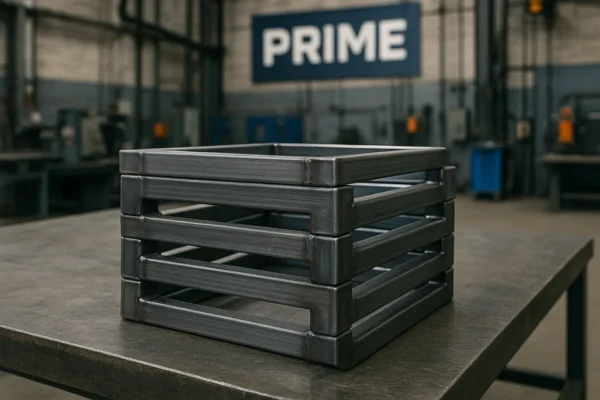
Commonly Welded Materials
| Mild Steel (Q235, S235) | Carbon Steel (Q345, S355) |
| Stainless Steel (304, 316L) | Aluminum (5052, 6061) |
| Galvanized Steel | High-Strength Steel (S700, HARDOX) |
| Brass / Copper Alloys | Bimetallic Weld Joints |
Surface Finishing Options
| Powder Coating | Hot-Dip Galvanizing |
| Bead/Sand Blasting | Brushing / Polishing |
| Passivation (Stainless) | Electroplating (Zinc, Nickel) |
| Anti-Corrosion Primer | Custom Paint (RAL / Pantone) |
Finish availability and verification depend on material and your requirement (standard, thickness, corrosion target, cosmetic limits).
XV: More About Custom Welded Metal Parts
Discover our advanced welding capabilities, integrated assembly support, and full-process control that delivers structurally sound, inspection-ready, and application-optimized welded components.
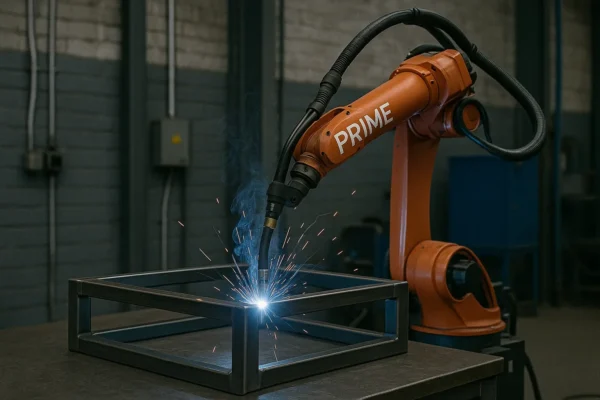
Welding Process Capabilities
- MIG Welding (Manual & Robotic)
- TIG Welding for Stainless & Aluminum
- Spot & Projection Welding
- Structural Welding with AWS Standards
- Multi-Station Jig Welding
- Prototype to Mass Production
Include: drawing revision, material, weld symbols/standard, inspection scope (VT/UT/PT/RT), finish requirement, and destination.
In Summary
Selecting the right welded component supplier isn’t just about cost—it’s about strength, precision, and dependability. This guide has explored PRIME’s end-to-end welding capabilities, from material selection and joint design to finishing and logistics. A reliable partner ensures not just compliance, but competitive advantage across every welded structure you deliver.
Key Insights for Welded Parts Buyers
- Structural Integrity First: The weld must hold under stress—choose a supplier skilled in distortion control, joint prep, and inspection.
- Finish & Functionality: Coatings, galvanizing, and polishing ensure both corrosion resistance and aesthetic value.
- Traceable Workmanship: Certified welders, WPS documentation, and third-party inspections matter—especially for safety-critical parts.
- Flexible Production: From small-batch prototypes to full-frame assemblies, agile capacity is essential.
- Packaging & Compliance: Export-ready packing, ISPM 15 crates, and proper labeling protect your investment during transit.
Why PRIME is Your Welding Partner
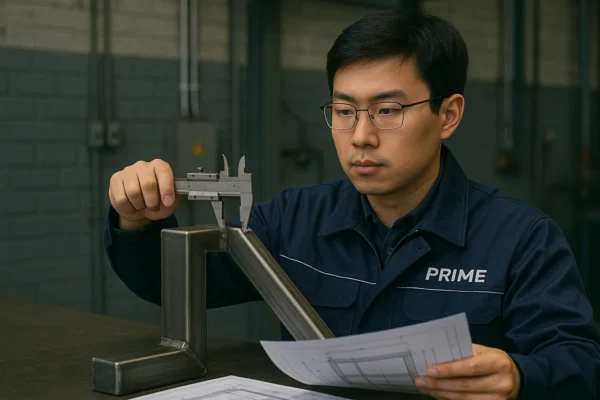
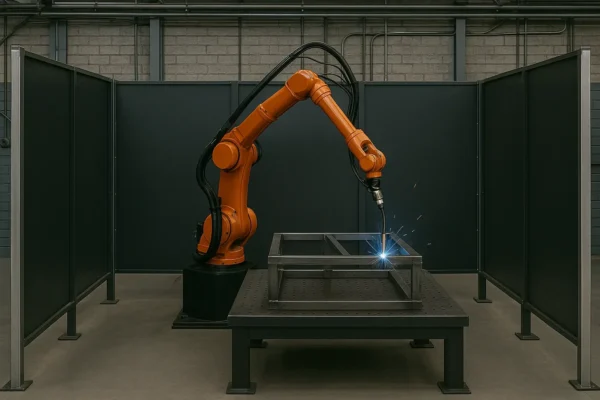
With over 30 years of fabrication expertise, PRIME delivers structural and cosmetic welds that meet global quality standards. From MIG to TIG and robotic lines, our engineers adapt processes for optimal strength, speed, and cost-efficiency.
We don’t just fabricate welded parts—we co-engineer your solutions, validate manufacturability, and ensure reliable delivery from blueprint to bulk shipment.
Global Fabrication, Local Precision
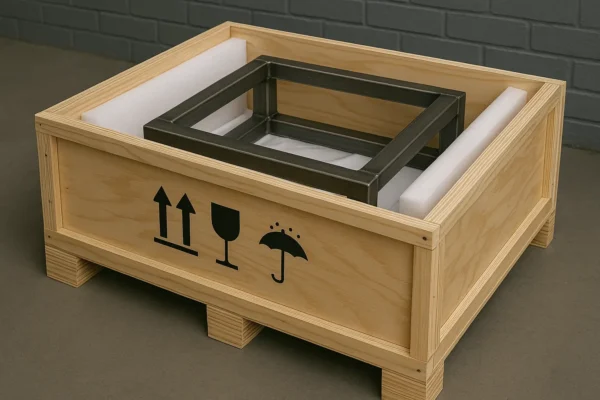
PRIME supports industrial clients worldwide—from construction and energy to medical and transport—with weldments that meet EN, AWS, and ISO standards. Our export-ready workflows include full customs documentation, batch traceability, and moisture-resistant packaging.
Wherever your project goes, PRIME ensures your welded structures arrive compliant, protected, and production-ready.
Let’s Build Better Welded Solutions
Whether you need precision-welded frames, protective housings, or full assemblies—PRIME delivers ready-to-install components backed by quality, speed, and experience. Share your project and get a weldability review and quote within 24 hours.
See why B2B buyers across industries trust PRIME for scalable welded solutions.
Get a Welding QuoteJust a Few of the Partners Who Trust Our Quality




*Logos are property of their respective owners.
What Our Customers Say
Real feedback from global buyers who trust us to deliver high-quality, customized industrial components.

Harry M., New York
Purchasing Manager – Metal Components
We’ve sourced CNC machined parts from Prime for over two years. The precision is consistently excellent, tolerances are spot on, and their team is responsive and professional. Fast lead times and secure packaging make them a reliable long-term partner.

Robert J., California
Strategic Sourcing Specialist – Industrial Hardware
The forged components we received from Prime were top quality — strong material integrity, accurate dimensions, and zero defects. Their team understood our specs clearly and delivered right on schedule. Great supplier for high-stress applications.

Emily T., Texas
Supply Chain Buyer – Custom Metal Parts
We ordered a batch of custom metal welded assemblies from Prime, and the quality was outstanding. The welds were clean, uniform, and met all our strength requirements. Communication was smooth, and delivery was faster than expected.

Hannah K., Ontario
Senior Buyer – Automotive
Prime supplies us with custom metal casting parts that meet strict automotive standards. Their ISO-certified quality, fast prototyping, and on-time delivery make them a trusted partner in our supply chain.

Luis R., Barcelona
Procurement Lead – Electronics
Prime has been a reliable partner for our custom plastic parts in consumer electronics. The injection-molded components are precise, durable, and always delivered on time, helping us stay competitive in the market.

Nadia P., Dubai
Category Manager – Industrial Projects
Prime delivers high-quality custom metal forgings for our industrial machinery. The parts are strong, reliable, and meet our exact specifications. With consistent quality and on-time delivery, Prime has become a trusted partner in our long-term projects.

Jon S., Munich
Operations Buyer – Machinery
Prime’s custom metal fasteners have proven to be durable and precise, perfectly fitting our heavy-duty machinery. Their consistent quality and reliable delivery help us maintain smooth production with fewer interruptions. Prime is a supplier we can count on for critical components.
Get Your Custom Solution & Quote
REPLY WITHIN 24 HOURS
Start a Conversation with Our Experts
When you contact us, you get more than just a price. You get a dedicated partner.
- ✔ 30+ Years of Manufacturing Excellence, Direct from Our Factory
- ✔ Custom-Engineered Solutions for Your Needs
- ✔ Global Shipping & Logistics Support
- ✔ A Transparent, No-Obligation Quote
- ✔ 100% Confidentiality Guaranteed
Your email information will be kept strictly confidential and our business staff will ensure that your private information is absolutely safe!