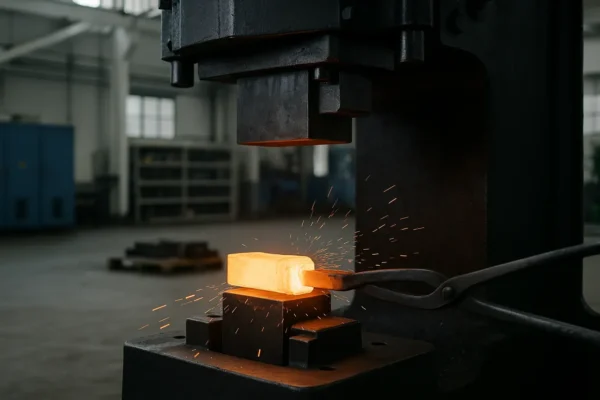
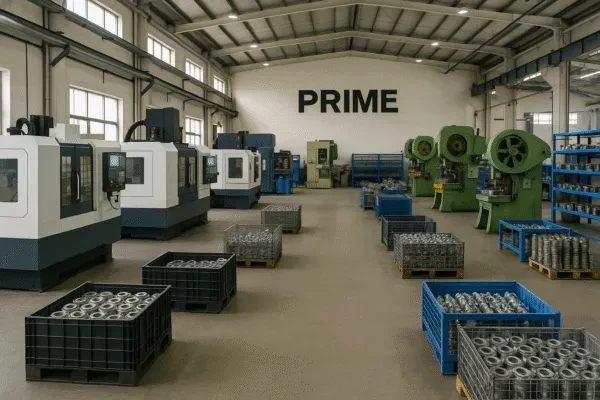
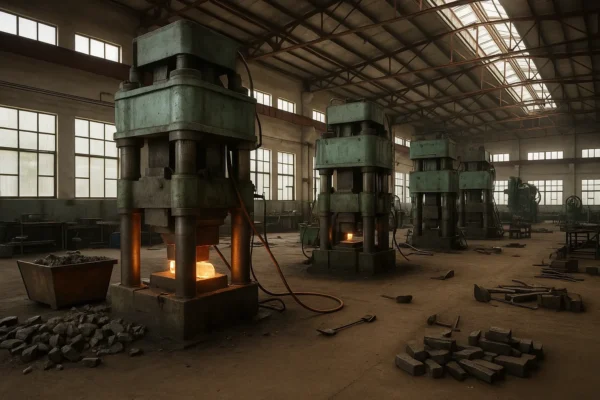
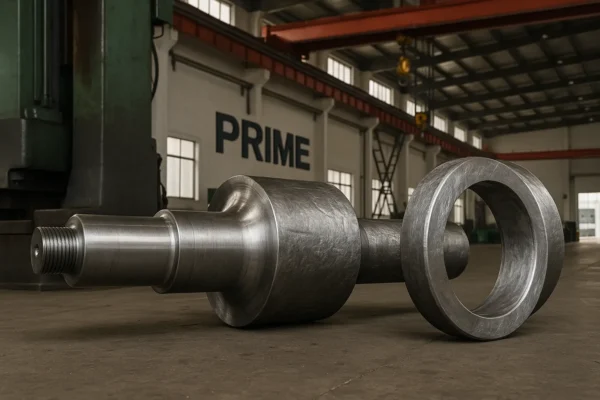
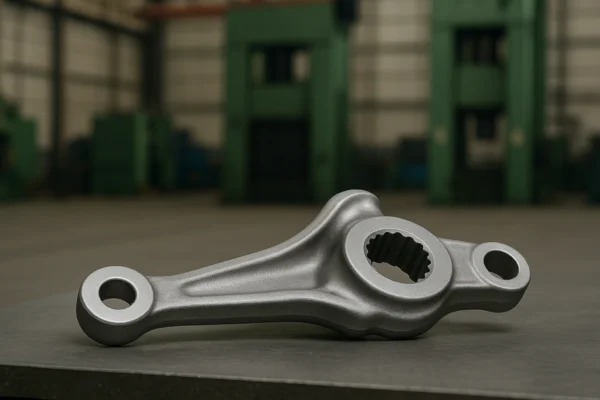
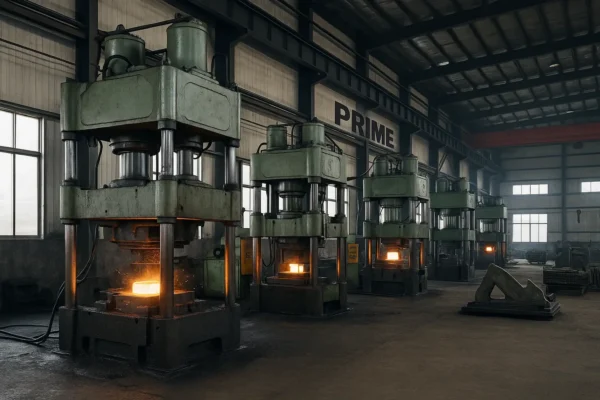
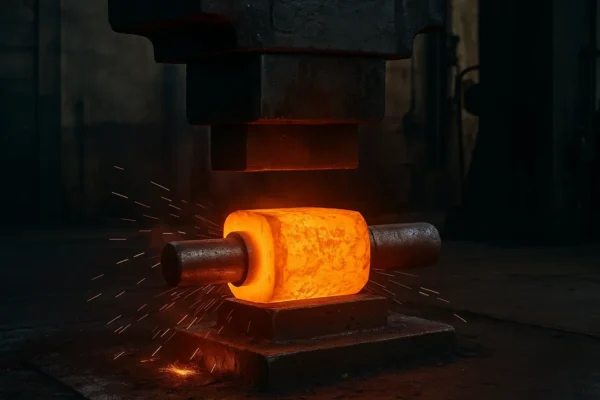
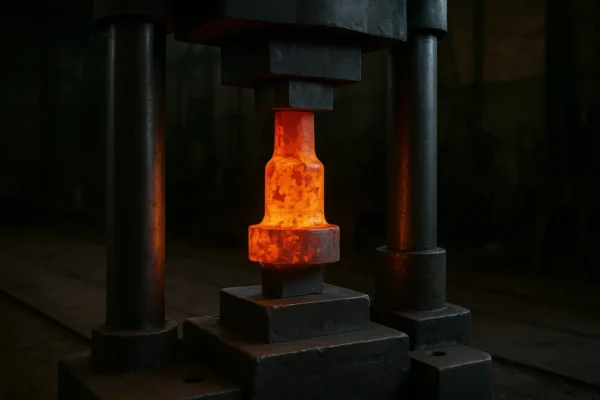
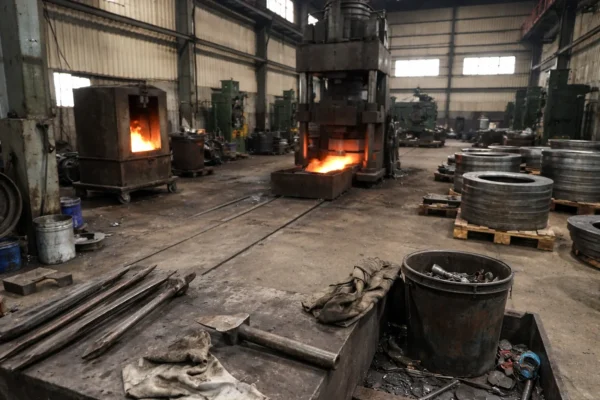
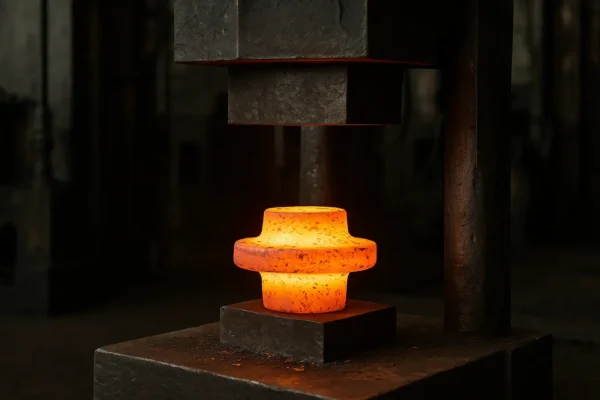
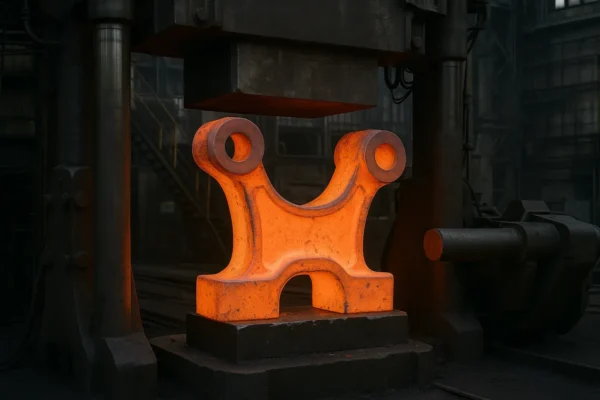
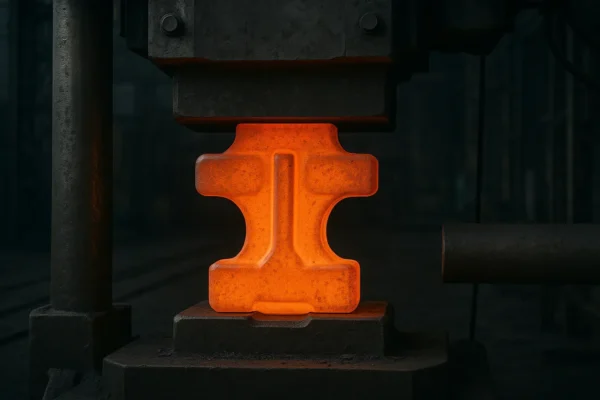
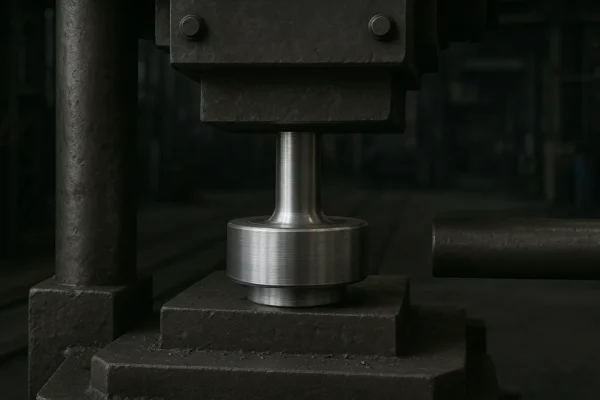
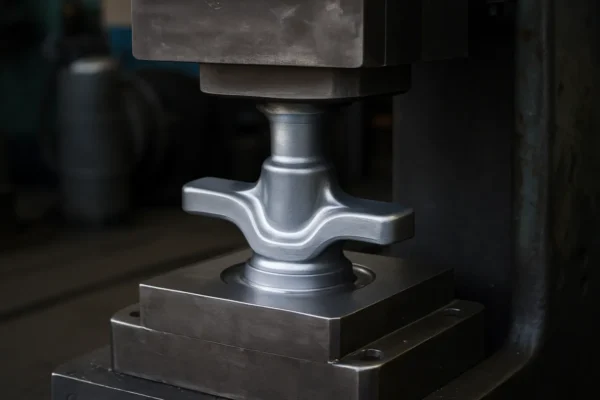
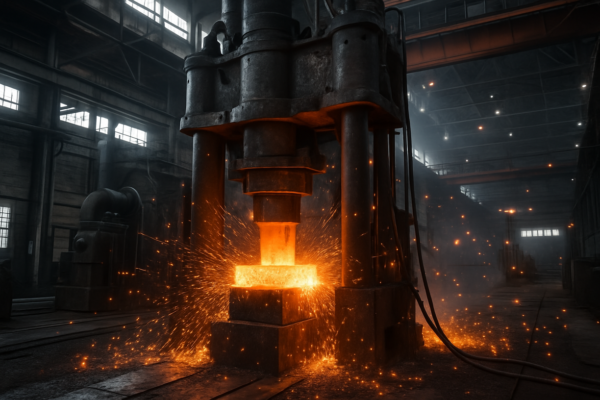
Industrial forging press with hot steel billet

Shandong Prime (est. 1993) · B2B wholesale only · Build-to-print forgings

Custom Metal Forgings for Demanding Applications

Forging + machining for strength-critical parts—focused on material standard, grain flow, and heat treatment consistency.

Note: final process route, heat treatment, and inspection scope are confirmed after drawing review and CTQ definition (load direction, critical radii, and machining allowances).

With complete RFQ info, we typically respond within 24 hours. Tooling/NDT requirements may need confirmation.

Custom forged metal parts for industrial applications
Deliverables: MTR/MTC · HT record · Mechanical test · NDT (if required)

Forged Parts — Choose by Load, Tolerance & Production Volume

Forging is selected when a part requires high strength, fatigue performance, or grain-flow integrity. We support open die, closed die, and cold-forming routes (as applicable) with drawing review and inspection evidence.

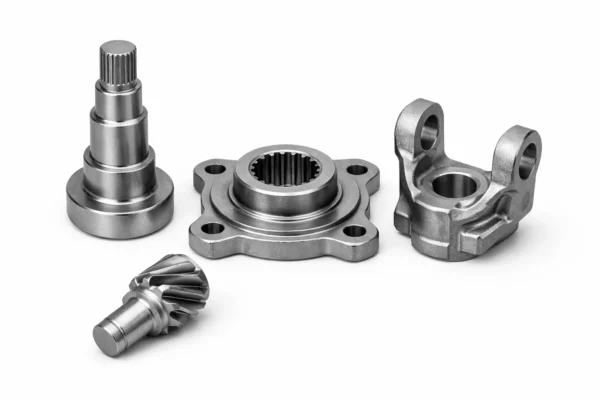
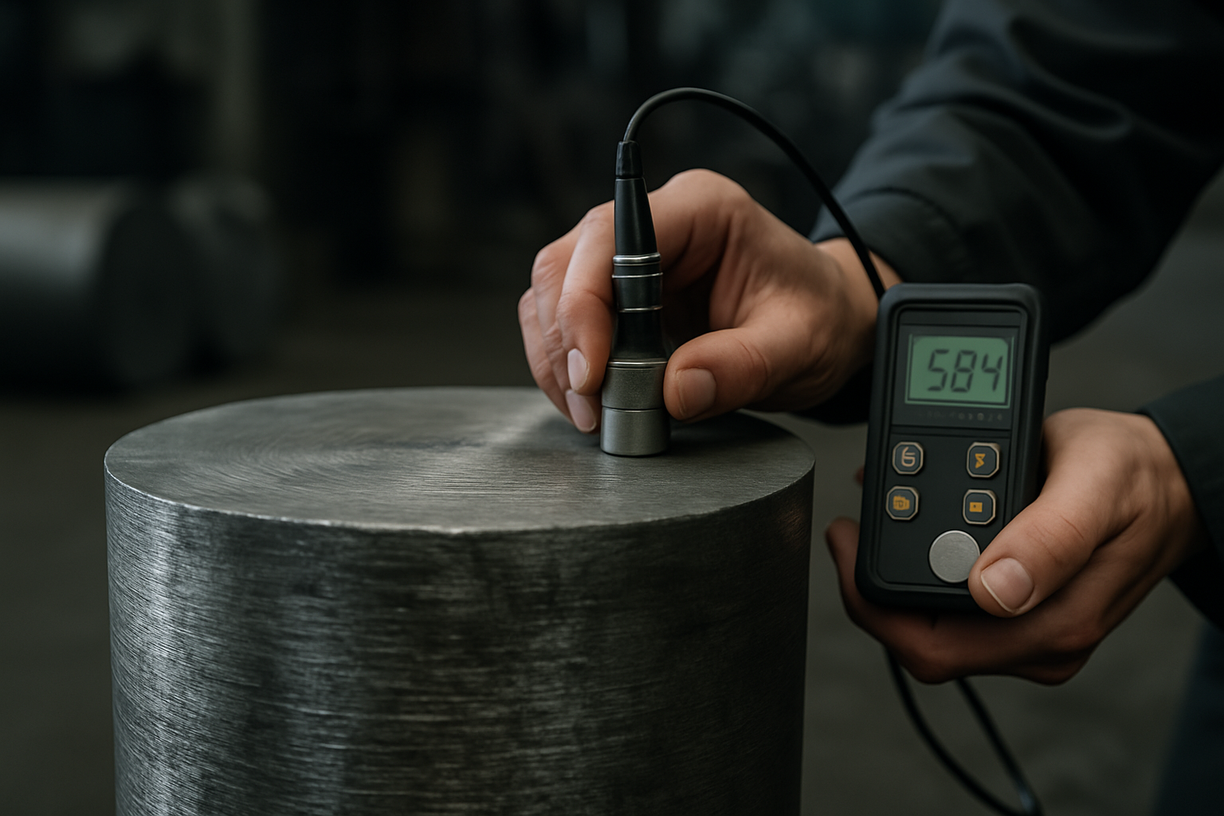
Open die forged metal parts including shaft, ring, and block

Open Die Forged Parts

Best for large sections and heavy-duty components where strength and soundness matter more than near-net shape.

  • Best for: shafts, rings, blocks, heavy hubs
  • Typical CTQs: straightness, ultrasonic soundness (if required), machining allowance
  • Typical risks: internal defects if spec/inspection not defined
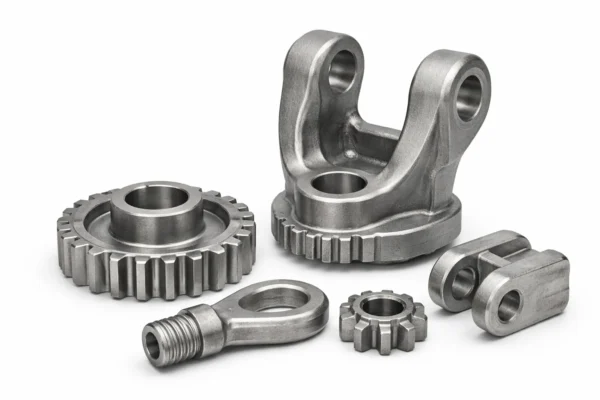
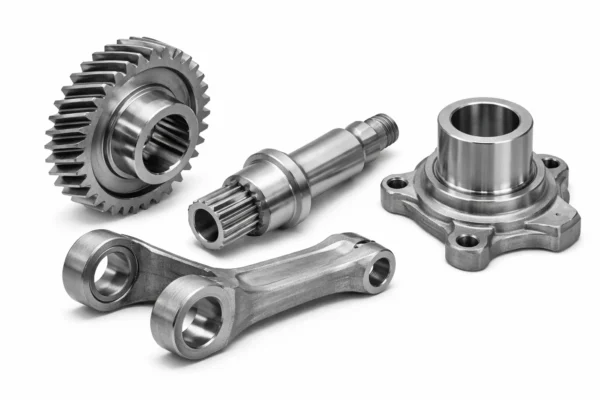
Closed die forged parts including gear blank and clevis

Closed Die Forged Parts

Best for higher volumes and complex shapes with stable repeatability before machining.

  • Best for: clevis, brackets, gear blanks, structural parts
  • Typical CTQs: die parting line control, draft/flash, critical datums
  • Typical risks: die wear & tolerance drift (controlled by QC plan)
Cold-formed or cold-forged precision components

Cold-Formed / Cold-Forged Components

Best for precision parts and fastener-like geometries where surface quality and dimensional consistency are critical.

  • Best for: fasteners, small gears, sleeves, precision blanks
  • Typical CTQs: concentricity, thread/fit features, surface integrity
  • Typical risks: material formability limits (confirmed by spec review)
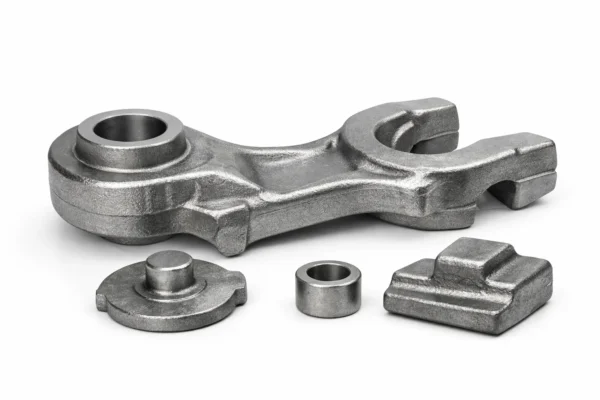
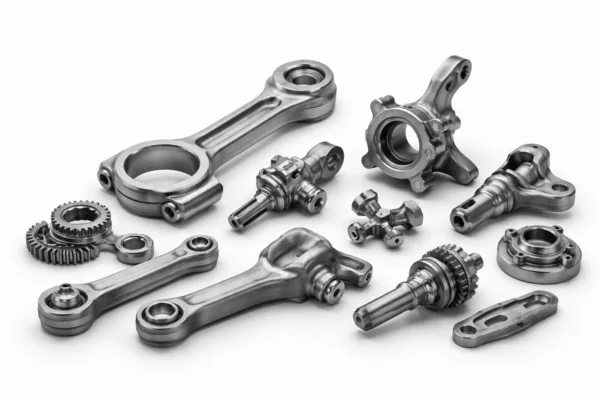
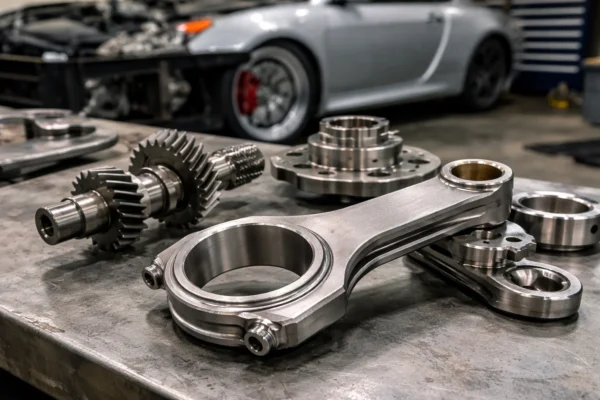
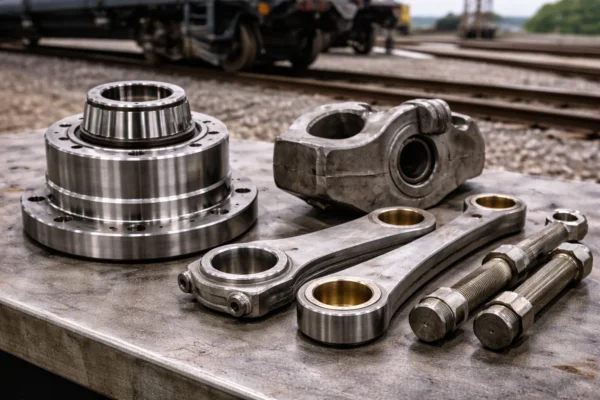
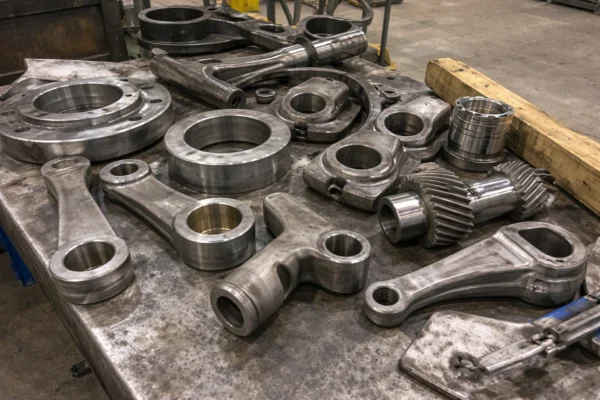
Forged automotive components such as connecting rod and clevis

Forged Automotive & Motion Parts

Selected for fatigue performance and grain-flow integrity in high-load, cyclic-duty applications.

  • Best for: connecting rods, knuckles, hubs, yokes
  • Typical CTQs: fatigue-critical fillets, heat treat spec, NDT if required
  • Typical risks: heat treat deviation (controlled via QC + reports)
Stainless steel forgings such as flange and valve parts

Stainless Steel Forgings

Selected when corrosion resistance must be maintained alongside mechanical strength.

  • Best for: valves, flanges, fittings, food/marine parts
  • Typical CTQs: material grade, surface integrity, traceability
  • Typical risks: wrong grade substitution (prevented via MTR/MTC)
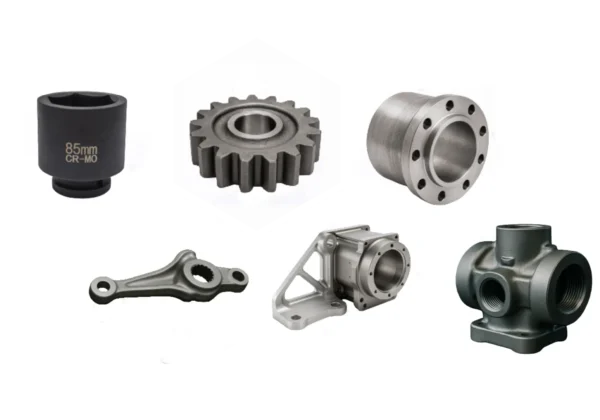
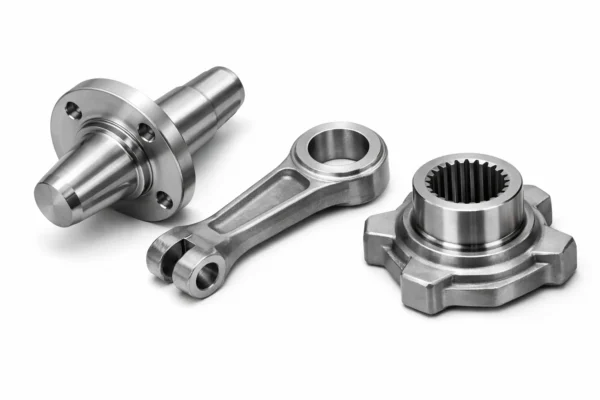
Various custom forged metal parts

Custom Forged Parts (Build-to-Drawing)

For non-standard designs: forging route, machining plan, and inspection scope are confirmed after drawing review.

  • Best for: unique geometries, multi-step processing, assemblies
  • Typical CTQs: datums, machining allowance, heat treat & NDT requirements
  • Typical risks: unclear CTQs → solved by feasibility/DFM review

Note: final route (open die / closed die / cold-forming), heat treatment, and inspection evidence are confirmed after drawing + CTQ review.

Why Choose PRIME for Custom Metal Forgings (Strength, Soundness & Evidence)

A forging supplier is not judged by “equipment lists”, but by how they control risk: mechanical properties, internal soundness, heat treatment stability, machining allowance & distortion, and the inspection evidence you can use for approval. PRIME supports open die, closed die, and cold-forming routes (as applicable)—confirmed after drawing + CTQ review.

Engineering review before production

  • DFM & feasibility review: confirm CTQs (datums, sealing faces, fatigue fillets), select forging route, and define machining allowance to reduce distortion risk.
  • Material & heat treatment alignment: match your specified grade/standard and heat treatment requirements (e.g., normalize / quench & temper) and define verification scope.
  • Quality planning (buyer-ready): inspection plan is agreed early—so you receive the evidence needed for internal approval.

Trust note: “strength” and “fatigue performance” depend on material grade, heat treatment route, section size, and required inspection. We confirm capability after drawing + CTQ review, then verify by reports as specified.

Forging workshop and inspection environment at PRIME

Typical deliverables: COC + MTR/MTC support + hardness & dimensional reports (per requirement).

Hot forging line with hydraulic presses and controlled billet processing

Process controls that reduce rejection & delays

  • Internal soundness control: UT/MPI or other NDT can be provided when required by spec, especially for safety-critical or thick-section parts.
  • Heat treatment stability: for parts requiring mechanical property targets, we align heat treat route + verification (hardness/mechanical tests as specified).
  • Export execution: experience shipping to North America, Europe, the Middle East, and Australia with export documentation and packing options.
  • One-stop execution: forging + machining + finishing + inspection planning to reduce vendor coordination and lead-time risk.
Common forging risks we address upfront
  • Distortion after heat treatment → machining allowance + process route planning.
  • Wrong material grade substitution → MTR/MTC traceability support.
  • Internal defects in thick sections → define UT/NDT scope when required.
  • Die wear / tolerance drift (closed die) → inspection plan aligned to CTQs.

Request a Feasibility Review + Quote

Send your drawings (STEP/PDF) or samples, plus material/standard, heat treatment, quantity, and CTQs. With complete RFQ info, we typically respond within 24 hours.

For critical parts, we align the evidence pack (MTR/MTC, hardness, dimensional report, and NDT if required) before production.

Note: final route, heat treatment, and inspection scope are confirmed after drawing + CTQ review.

Address Your Concerns: FAQ about Forged Metal Parts

To help you make informed purchasing decisions, we’ve compiled the most frequently asked questions regarding custom forged metal parts and our services. This section aims to resolve common concerns about materials, tolerances, packaging, and international delivery.

What materials can be used for metal forging at PRIME?

We offer forging services in carbon steel (C45, 1045), alloy steel (42CrMo, 4140), stainless steel (304, 316, 410), aluminum, brass, and other metals. Material certification and full traceability are available upon request.

What tolerances can PRIME achieve for forged parts?

Our forging tolerance typically ranges from ±0.3 mm to ±1.0 mm depending on part complexity and material. For tighter tolerances, we provide post-forging machining and CNC finishing down to ±0.01 mm.

What are the advantages of closed die vs open die forging?

Closed die forging enables higher precision and complex shapes with better surface finish. Open die forging is ideal for larger, simpler parts with superior grain flow and strength. We help you select the right process based on part size, material, and application.

Can PRIME provide post-forging machining and heat treatment?

Yes, we provide CNC machining, drilling, threading, and turning after forging, along with heat treatment services like quenching, normalizing, tempering, and annealing to meet final mechanical requirements.

What packaging and export services does PRIME offer?

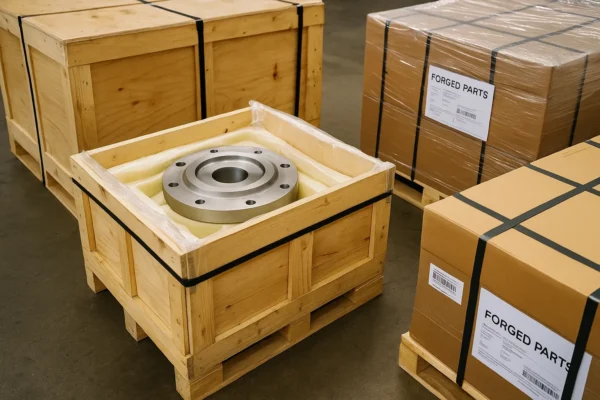
All forged parts are protected with rust-proof oil, packed in plastic bags, foam-lined cartons, and reinforced wooden crates or pallets. We provide CO, Form A/E, packing list, invoice, and can handle sea, air, or courier shipping to global destinations.

Our Factory Insight

Custom open die forged shaft and ring produced by PRIME
Precision closed die forged automotive components
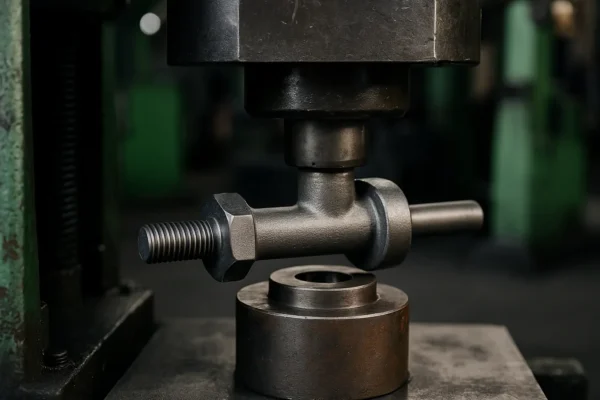
Cold forging process of a high-strength bolt being formed under a hydraulic press in an industrial workshop.
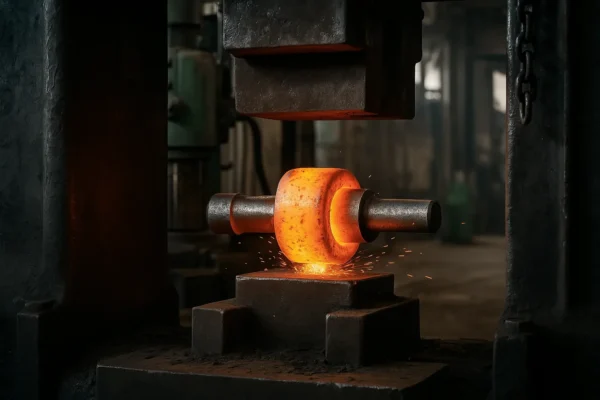
Red-hot metal billet being forged under a heavy hammer in an industrial workshop during the hot forging process.
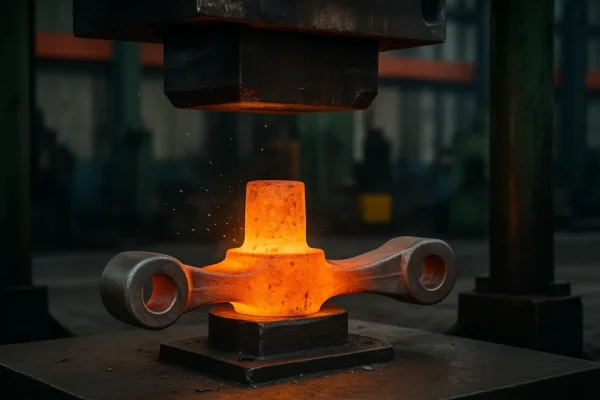
Closed-die forging process of a glowing hot automotive part being compressed by a forging press in an industrial factory.
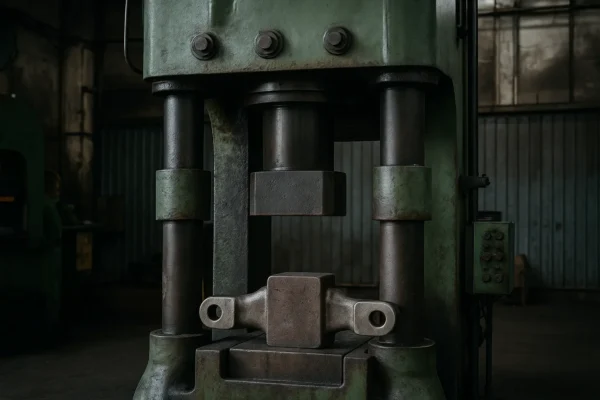
Heavy-duty vertical hydraulic forging press with green housing inside an industrial metal forging workshop.
Multiple hydraulic forging presses operating simultaneously inside PRIME’s forging workshop.
Glowing hot steel billet being compressed under a heavy forging hammer in a dimly lit industrial workshop.
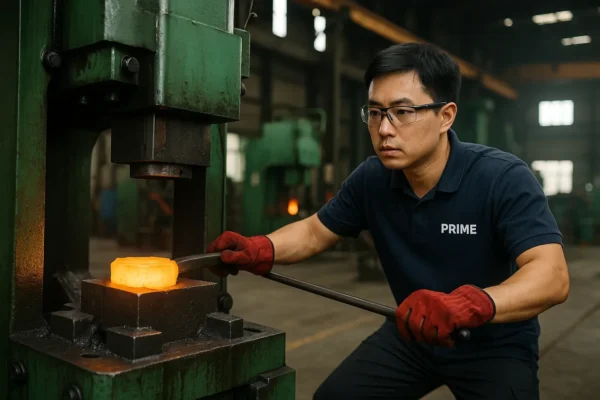
Asian PRIME technician operating a hydraulic forging press with a glowing steel billet in an industrial workshop.
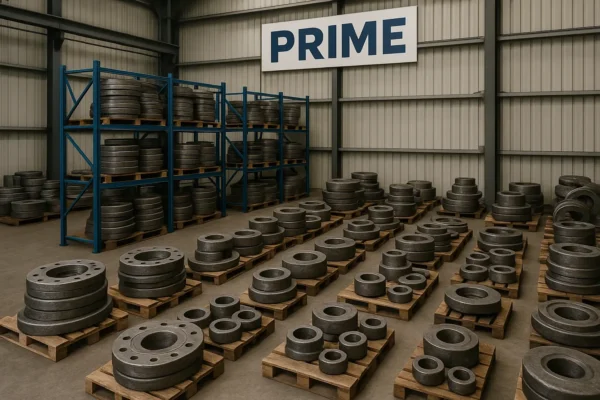
PRIME warehouse storing forged metal components neatly stacked on pallets beneath a large PRIME sign.
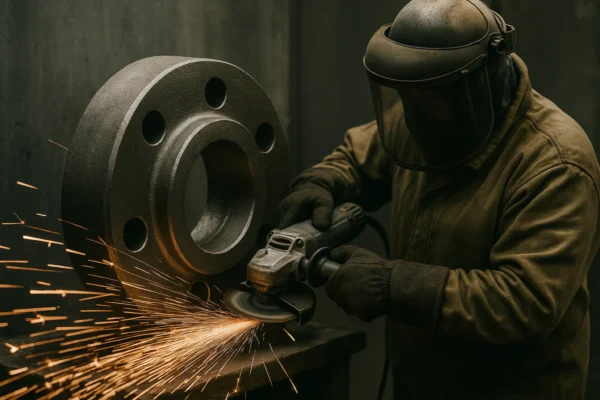
Worker using an angle grinder to finish the surface of a forged metal part, with visible sparks in an industrial workshop.
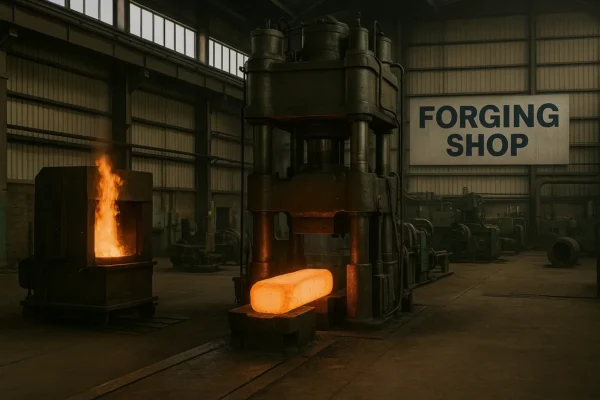
Interior of a forging workshop with hydraulic press and glowing hot metal billet beside an active furnace, no workers visible.
A large cargo ship loaded with colorful shipping containers sails across the open sea under a bright blue sky.
A spacious, well-lit warehouse interior with stacks of boxes and wooden crates arranged on a clean concrete floor.
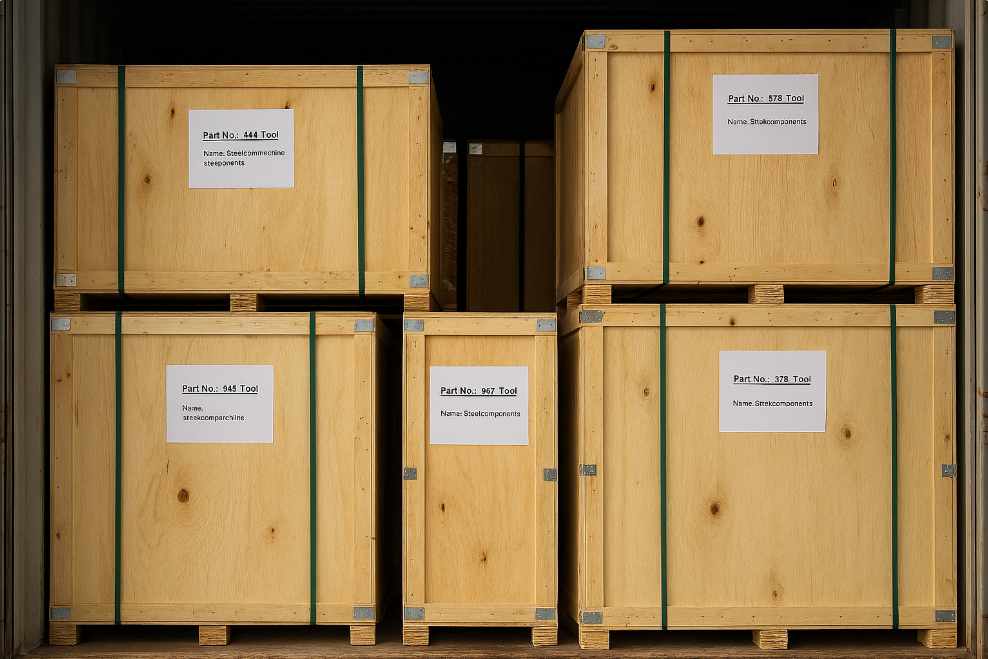
Six large wooden crates with labels and metal reinforcements stacked neatly for export shipment.
Workers load packed cartons and metal parts onto a delivery truck outside a warehouse for fast shipping.
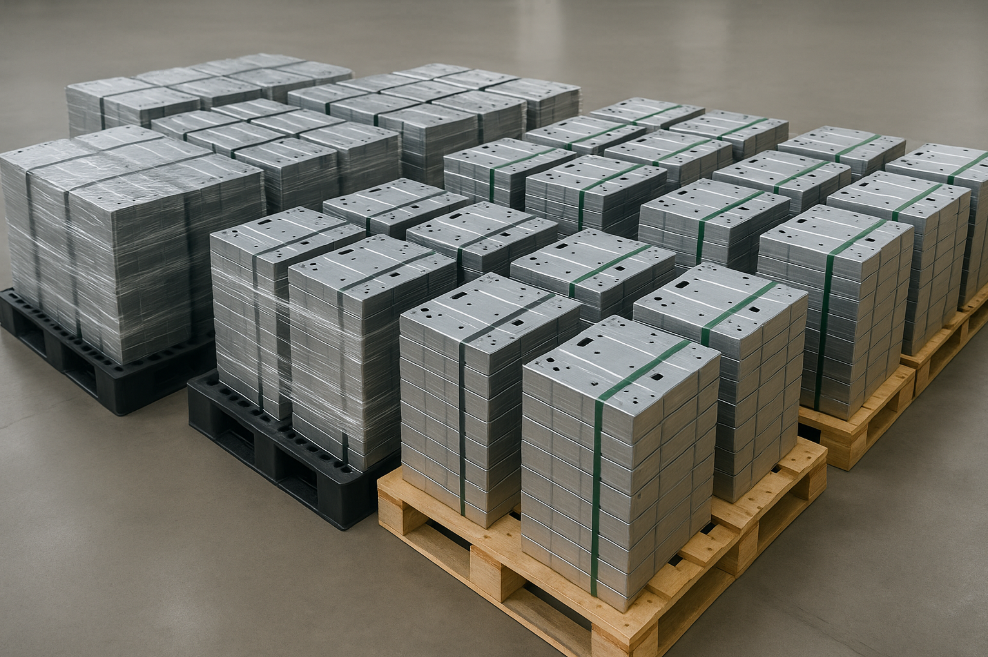
Metal parts stacked on pallets with strapping and protective wrap for secure export packaging.
Shipping container packed with mesh cages, wooden crates, and cartons for efficient LCL shipment.
High-resolution image of a digital caliper measuring the diameter of a polished metal ball.
High-resolution image of a coordinate measuring machine (CMM) scanning setup for custom metal parts in a quality lab.
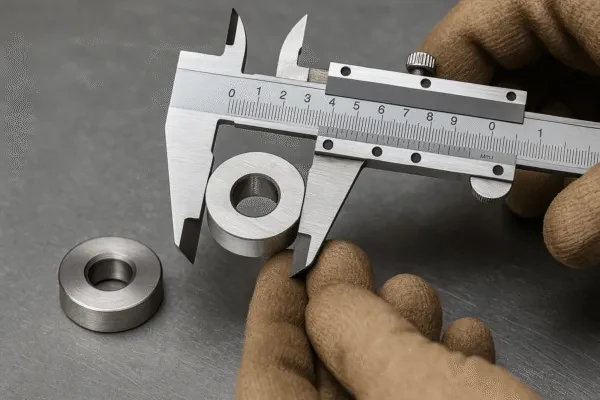
High-resolution image of a precision caliper measuring the outer diameter and thickness of a machined custom metal part.
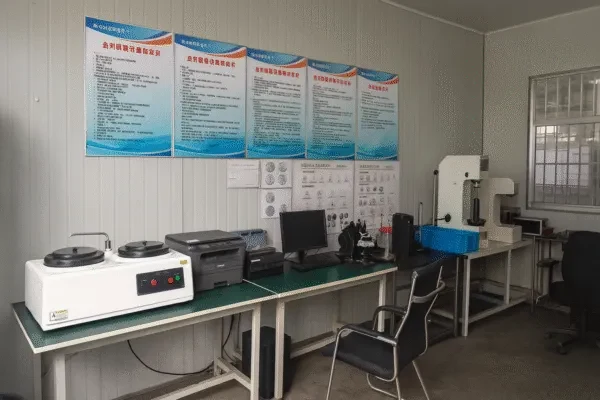
High-resolution image of a quality control laboratory with metallographic equipment, hardness tester, microscope, and precision instruments.
High-resolution image of a caliper measuring the inner diameter of a custom machined alloy component with safety gloves.
High-resolution image of a salt spray test chamber evaluating corrosion resistance of custom metal fasteners.

Ⅰ: What Is a Custom Forged Metal Part (and When Forging Is the Right Choice)?

A forged part is made by plastically deforming metal under high pressure (hot or cold), shaping it into a preform or near-net geometry. Buyers typically choose forging when the part requires high load capacity, fatigue resistance, and structural reliability—and when these requirements must be supported by inspection evidence.

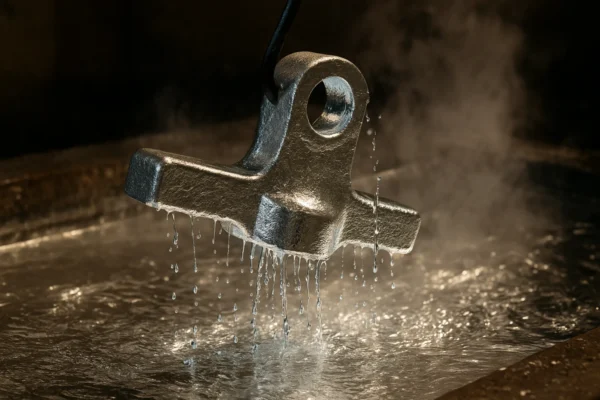
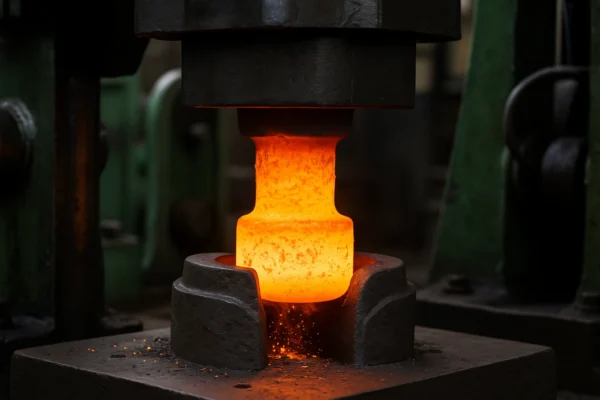
Hot forging: red-hot metal workpiece pressed under hydraulic forging equipment
Buyer note: final route (open die / closed die / cold-forming), heat treatment, and inspection scope are confirmed after drawing + CTQ review.

In real purchasing decisions, the key question is not “what is forging”, but: can we achieve the required properties and repeatability with controlled risks (distortion, internal defects, heat treatment deviation) and provide evidence for approval.

What you receive (typical deliverables)

  • Feasibility/DFM feedback: forging route + machining allowance recommendations for CTQs.
  • COC per shipment; MTR/MTC traceability support when specified.
  • Hardness report; dimensional inspection report (as specified).
  • NDT options (UT/MPI) for critical parts when required by drawing/spec.

Key Characteristics (Confirmed by Drawing Review)

Improved structural reliability

Compared with many as-cast routes, forging typically reduces internal discontinuities and supports better fatigue performance. Final property targets depend on material grade + heat treatment and are verified by the agreed QC plan.

Material options by standard

Carbon steel, alloy steel, stainless, aluminum and more—selected by your standard and duty requirements. Part weight/size capability is project-dependent and confirmed after drawing review.

Near-net shapes to reduce machining

Closed-die forging can form ribs, bosses, and profiles to reduce machining time—while CTQs are protected by datum planning and allowance control.

Scalable volume (by route)

Open-die suits low-to-mid volumes and large sections; closed-die and cold-forming (as applicable) support higher volume repeatability. We recommend the route based on annual quantity, tolerance needs, and total cost.

Common Forging Routes (How Buyers Use Them)

Open-Die Forging: larger sections, simpler shapes; define soundness/UT requirements early if critical.

Closed-Die Forging: repeatable shapes for higher volume; CTQs focus on datums, parting lines, and die wear control.

Hot Forging: common for many steels/alloys; balances formability and mechanical performance with heat treatment.

Cold-Forming / Cold Forging: for smaller precision parts when material formability allows; confirmed by spec review.

Upset Forging: often used for fastener-like geometries and shaft ends.

Precision / Near-Net Forging: reduces machining; requires early CTQ + allowance planning.

Industries & Typical Parts

Automotive & industrial motion

Connecting rods, yokes, hubs, brackets, and structural parts requiring fatigue performance.

Energy & power

Flanges, valve bodies/blanks, fittings—materials and inspection aligned to operating conditions.

Heavy machinery

Shafts, pins, couplings, lifting components—route chosen by section size and load.

Rail & marine

Axle-related parts, couplings, and drive components requiring consistency under dynamic loads.

Note: industry compliance requirements vary. If your project needs specific approvals, we confirm feasibility and documentation scope before quoting.

Final route, material, heat treatment, and inspection evidence are confirmed after drawing + CTQ review.

Ⅱ: Explore Forging Processes — How PRIME Controls Risk & Delivers Evidence

This section is written for buyers. Instead of only describing forging methods, we explain how the process is selected and how risks are controlled (distortion, internal soundness, heat treatment deviation, die wear) — and what evidence you can request for approval.

What we confirm before quoting

  • CTQs: datums, sealing faces, fatigue-critical fillets, fit features.
  • Material & standard: grade/spec + required heat treatment route.
  • Quantity & target cost: to choose open die vs closed die vs cold-forming (as applicable).
  • Inspection evidence: MTR/MTC, hardness, dimensional report, and NDT (UT/MPI) if required.
Custom forged metal components produced by PRIME
Hot forging under hydraulic press — forged preform

What is metal forging (buyer view)?

Forging shapes metal under compressive force (hot or cold), often improving grain flow for parts that must endure cyclic loads. In sourcing, the key is not “forging is stronger”, but whether the required properties can be achieved repeatably and verified by the inspection plan you specify.

Trust note: property and tolerance capability depend on material grade, section size, tooling, and heat treatment route. Final capability is confirmed after drawing + CTQ review.

Forging Solutions Tailored to Your Application

Choosing the right route is a cost-and-risk decision. PRIME engineers review geometry, material standard, CTQs, annual volume, and machining plan to recommend the best approach and define the evidence pack required for your approval process.

1) Open Die Forging — best for large sections

Open die forging uses simple dies to shape large workpieces with flexible sizing. It is commonly used for shafts, rings, blocks, and thick-section preforms.

  • Buyer CTQs: straightness, machining allowance, and internal soundness (UT if required).
  • How we reduce risk: route planning + controlled reduction steps + inspection aligned to CTQs.
Open-die forging under heavy press
Closed-die forging between matched dies

2) Closed Die Forging — repeatable shapes for production

Closed die (impression die) forging forms near-net geometry with better repeatability for mid-to-high volume programs. Final tolerances depend on geometry, die design, and machining plan.

  • Buyer CTQs: datums, parting line control, flash control, die wear monitoring.
  • How we reduce risk: tooling plan + trimming strategy + inspection plan aligned to CTQs.

Note: tolerance targets are confirmed after drawing review; we avoid fixed promises without CTQ definition.

3) Cold-Forming / Cold Forging — for small precision parts (as applicable)

Cold forming is suitable for smaller parts where material formability allows, often used for fastener-like geometries and precision blanks. Capability depends on material grade, part shape, and tooling.

  • Buyer CTQs: concentricity, fit features, surface integrity.
  • How we reduce risk: formability review + tooling approach + sampling/FAI if required.
Cold-forming / forging process for precision parts
Precision/near-net forging between high-accuracy dies

4) Precision / Near-Net Forging — reduce machining where it matters

Near-net forging aims to reduce machining while protecting CTQs. It is often selected when the machining cost is high and the geometry supports stable repeatability.

  • Buyer CTQs: datums, fillets, gear blanks or functional surfaces (as specified).
  • How we reduce risk: preform planning + tooling strategy + verification by sampling/inspection.

Advice for Buyers (RFQ Checklist)

To get an accurate quote and avoid delays, please share: drawings (PDF/STEP), material & standard, heat treatment (if any), annual volume, and CTQs (datums, sealing faces, fatigue areas). We will return a feasibility review + quotation typically within 24 hours.

Ⅲ: Material Selection for Forged Components — Standards, Heat Treatment & Approval Evidence

In forging, material choice is rarely “stronger is better”. Approval usually depends on the applicable standard, the service environment (medium/temperature/corrosion), the heat-treatment route, and the evidence pack required by your QA/engineering (MTR/MTC, hardness, mechanical tests when specified). Since 1993, PRIME has supported B2B buyers by aligning drawing CTQs with standard-compliant material + process + verification — so your internal review is faster and risk is lower.

Common Materials Used in Forging (Reference Only — Final Grade/Condition Per Your Standard + MTR/MTC)

Material / Standard What Buyers Usually Check Reference UTS (MPa) Condition / Verification Notes Typical Applications
Carbon Steel
ASTM A105 (forgings)
Cost-effective • widely accepted in pressure parts • general toughness (per spec) 485–620 (typ.) Properties depend on heat treatment and section size. Final acceptance is by your stated standard and verified by MTR/MTC and required tests. If impact/NDT is required, define it at RFQ stage. Flanges, valve parts, pressure-related components
Alloy Steel 4140
AISI 4140 / EN equivalents
High strength potential • fatigue-focused parts • heat-treat driven performance 650–1100 (range varies) Performance is strongly dependent on Q&T / normalizing and hardness target. To avoid “wrong condition” risk, specify required condition + hardness/mechanical test scope in RFQ. Shafts, gears/blanks, yokes, tooling components
Stainless 316L
ASTM / EN grades (per drawing)
Corrosion resistance • chloride exposure (confirm medium) • cleanliness/documentation needs 480–620 (typ.) Strength varies by solution condition and processing. Confirm by MTR/MTC; share service medium early so we don’t assume incorrectly. Food processing, marine hardware, chemical equipment components
Aluminum 6061
T6 (after heat treatment)
Lightweight • good machinability • general corrosion resistance 270–310 (T6) T6 requires solution heat treatment + aging. Confirm temper requirement, distortion risk points, and inspection plan in RFQ. Lightweight structural parts, robotics, enclosures, fixtures
Brass C37700
forgings (per spec)
Corrosion resistance • good machinability • surface/appearance requirements 300–420 (typ.) Final properties depend on condition and section. Confirm spec + surface finish + any dezincification concerns in your application. Plumbing fittings, decorative forged parts, valve accessories

* “Reference UTS” is for early feasibility only. Final grade, condition, and acceptance criteria are defined by your drawing/spec and verified by MTR/MTC and agreed test reports.

How PRIME Supports Material Decisions (Buyer-Ready Evidence, Not Guesswork)

We don’t “pick a grade” in isolation. We translate your service conditions + CTQs + applicable standard into a manufacturing + verification plan — so procurement and engineering can approve with fewer open questions.

What you receive (typical): MTR/MTC (chemistry + required properties), heat/lot identification in packaging, heat-treatment records when applicable, and inspection reports per your RFQ (hardness / mechanical tests / NDT when specified). For additional third-party testing, we can coordinate it when defined at RFQ.

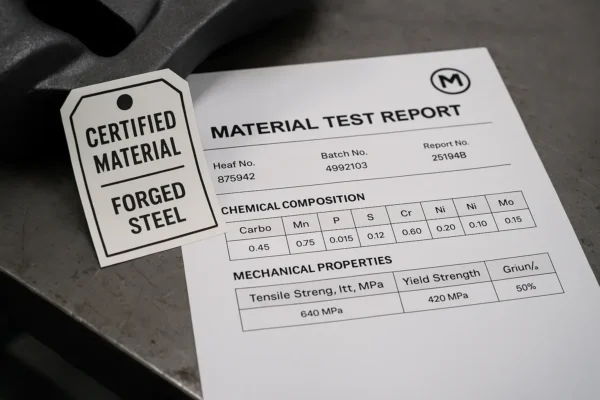
Redacted sample MTR/MTC showing heat number, chemistry, and test results for forged steel (traceability fields highlighted)

Material Certification & Heat/Lot Traceability

When specified, we provide MTR/MTC and keep heat/lot traceability through receiving, production, and packing — to reduce grade substitution risk and support audit-ready documentation.

Scope note (trust): Report items (chemistry / hardness / mechanical / NDT) follow your standard and PO requirements. If your spec is unclear, we list assumptions and ask before production — no “silent substitutions”.

Forge DFM review: fillets, grain flow direction, draft strategy, and machining allowance marked on drawing

Forge-Optimized DFM Support (CTQ-Driven)

We connect material choice with metal flow / fillet strategy and machining allowance to reduce cracking, laps, and distortion — especially for fatigue-critical features, sealing faces, or tight tolerances.

Deliverable example: annotated drawing notes (risk points + recommended radii/allowance) and a verification checklist aligned to your CTQs.

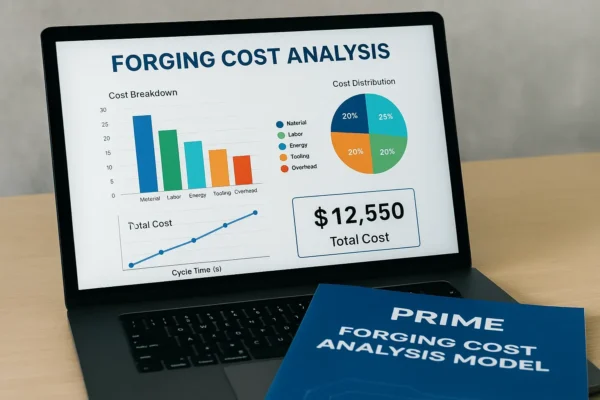
Total cost breakdown for forged part: material, heat treatment, machining time, inspection scope, scrap risk and logistics

Total Cost View (Material + Process + Risk)

Instead of only “price per kg”, we review cost drivers that change the real landed cost: heat-treatment route, machining time, scrap risk, inspection scope (FAI/NDT when required), plus packaging/logistics. When useful, we provide Option A/B with clear trade-offs so you can justify decisions internally.

Buyer Checklist: Inputs That Make Material & Approval Fast

  • Service medium: water/steam/oil/chemical + chlorides/corrosives if any (tell us what actually touches the part).
  • Temperature & duty: continuous temp, peak temp, thermal cycling.
  • Load type & criticality: static vs fatigue, impact, torque, sealing/safety-critical features.
  • Standard: ASTM/EN/ISO + acceptance criteria + required documents for your approval flow.
  • Heat treatment: required condition (e.g., Q&T hardness target) and any distortion-sensitive areas.
  • Inspection: MTR/MTC, hardness, mechanical tests, UT/MPI/other NDT if applicable, and FAI/ISIR if you need it.
  • Traceability & packing: heat/lot segregation, marking/labeling needs, and how you want parts identified on arrival.

Ⅳ: Surface Treatments for Forgings — Corrosion Protection, Fit Control & Inspection Evidence

Surface treatment is not a “final touch” — it affects corrosion life, wear/contact performance, and most importantly assembly fit (threads, bores, sealing faces). PRIME helps you choose the coating system based on the actual service environment and the standard on your drawing, then defines a measurable inspection scope so your QA can approve with fewer back-and-forth questions.

Common finishing options (selected by your spec / standard)

  • Hot-dip galvanizing (HDG): for outdoor/structural use. We confirm coating thickness requirement, fit allowance (holes/threads), and acceptance per your standard (e.g., ISO 1461) with a defined measurement method.
  • Black oxide / phosphate: often used where oiled corrosion protection and lubricity matter (assembly, sliding contact). We clarify oiling requirement and appearance criteria to avoid “looks OK but fails in storage”.
  • Powder coating: durable options for brackets, frames, housings. We confirm color/code, thickness range, and any masking areas (ground points, threads, sealing surfaces).
  • Shot blasting / sand blasting: scale removal + surface prep to improve coating adhesion. We define the prep level/visual acceptance when your spec requires it.
  • Pickling & passivation (stainless): for hygienic/marine applications per your spec. We confirm the medium and required documentation to avoid wrong assumptions.
  • Deburring & polishing: burr control for safe handling and functional edges (assembly), with cosmetic level defined when appearance matters.

What evidence can be provided (when required)

  • Coating thickness report (sampling + method per your standard/spec).
  • Masking / fit control notes for threads, bores, sealing faces (to prevent assembly issues).
  • COC and process records aligned to your PO requirements.
  • Salt spray / adhesion testing via third-party when you specify test standard and duration.

Scope note (trust): coating thickness, appearance, and test scope depend on part geometry and the exact standard. We confirm feasibility after drawing/spec review and list any assumptions before production — no “silent changes”.

Common risks buyers want to avoid (and how we address them)

  • Fit issues after coating: we confirm which surfaces must be masked or reworked (threads/bores/sealing).
  • Wrong thickness target: we lock thickness range + measurement method in the RFQ/PO.
  • Undefined appearance criteria: we clarify acceptable visual level (runs/orange peel/color variation) when relevant.
Forged parts under controlled process step (heat treatment stage prior to surface finishing), used to ensure stable properties before coating

Ⅴ: Forging Dies & Tooling — Repeatability Starts with the Die Plan + Trial Evidence

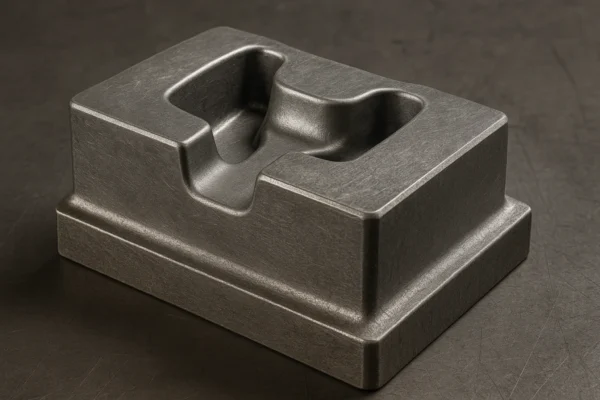
Forging die block with machined cavity used to control geometry repeatability and flash line consistency

Tooling is where repeatability is decided: parting line, flash control, grain flow direction, and stable output over production cycles. PRIME supports die development through tooling planning, process route definition, and trial validation — either in-house or via audited partner resources (project-dependent). For buyers, the key deliverable is not “a die exists”, but first-off samples verified to CTQs.

Tooling engineering controls (what we actually control)

  • Parting line + flash strategy: designed to protect CTQs and improve consistency.
  • Preform strategy: supports metal flow and reduces laps, underfill, and excessive machining allowance.
  • Die steel selection: common die steel options (e.g., H13/SKD61 or equivalents) chosen by temperature, load, and life target.
  • Machining method: CNC/EDM for cavity details; achievable die accuracy depends on size and geometry.
  • Die surface treatment: nitriding/coatings when required to reduce sticking and extend tool life.

Trial validation (evidence buyers typically ask for)

  • First-off samples with CTQ measurement results (CMM/fixtures as required).
  • Process notes: forging route + key parameters recorded per project needs.
  • Adjustment loop: feedback from trial to stabilize geometry before mass production.

Scope note (trust): tooling capability and die life are project-dependent. We confirm targets after reviewing drawing, quantity, material grade, and inspection scope. If tool ownership/maintenance rules are required, we align them in the PO before tooling starts.

Ⅵ: Quality Commitment — Traceability + Reports That Help You Pass Approval

For forgings, “quality” is not a slogan — it is a chain of checks from raw material verification to final packing. B2B buyers usually care about two things: traceability and inspection evidence that matches the drawing/spec. PRIME runs an ISO-certified quality system and prepares shipment documents according to your PO requirements.

Typical quality controls (per order/spec)

  • Incoming material: heat/lot identification, MTR/MTC review, and traceability tagging.
  • Process control: key process records (forging/heat treatment when applicable) + in-process checks tied to CTQs.
  • Dimensional verification: gauges / CMM measurement for CTQs as required; FAI/ISIR available when specified.
  • Mechanical tests: hardness and tensile/impact tests per ASTM/EN/ISO when required by spec.
  • NDT options: UT/MPI available for critical parts when you specify the standard and acceptance criteria.
  • Packaging control: rust prevention method + lot labeling + photo confirmation when requested.

Buyer-friendly “Quality Evidence Pack” (optional)

  • MTR/MTC (chemistry + required property fields) with heat/lot reference.
  • Hardness report + sampling plan notes (per your requirement).
  • CTQ dimensional report (FAI/CMM when required).
  • Pack-out photos: rust prevention + crate/pallet labeling before shipment.
  • Corrective action support (8D / CAR) when required by your supplier process.

Scope note (trust): report types and sampling plans are confirmed by your drawing/spec and PO. If any requirement is unclear, we list assumptions for approval before production — so your internal audit trail stays clean.

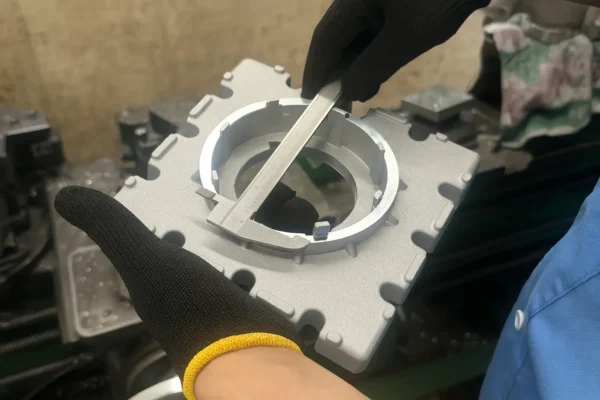
Inspection of forged parts: CTQ measurement and verification records prepared for buyer approval

Ⅶ: Common Forging Defects & How PRIME Prevents Them (Risk → Controls → Evidence)

Most forging defects are not “random” — they come from an avoidable mismatch between the temperature window, metal flow / preform, die condition, and the heat-treat + machining route. PRIME reduces buyer risk by running an upfront CTQ-based risk review, locking control points before tooling/trials, and preparing an approval-ready evidence pack that matches your drawing/spec.

Buyer note (trust): We don’t assume inspection scope. If NDT/FAI/mechanical testing is required, we align the standard + acceptance criteria in RFQ/PO first. If any requirement is unclear, we list assumptions for approval before production — no silent substitutions.

What we confirm first (to prevent wrong-route risk)

  • CTQs: sealing faces, fit surfaces, fatigue-critical zones, and any safety-critical notes
  • Standard + material condition: grade, required heat treatment state, and acceptance criteria
  • Route basics: volume/lot size, tooling approach, trimming plan, and machining allowance strategy

Typical control points (what we actually control)

  • Heating control: temperature window + soak time (avoid underheat/overheat)
  • Flow control: preform design + forging sequence (multi-step when needed)
  • Tooling control: die maintenance checks, wear monitoring, and trim consistency

Evidence pack (per your spec / PO)

  • MTR/MTC + heat/lot traceability
  • Hardness / mechanical tests (tensile/impact) when specified
  • FAI / CTQ dimensional report (gauges/CMM) when required
  • NDT reports (UT/MPI) when specified with acceptance criteria

1) Laps & Cold Shuts

Buyer risk: surface discontinuities can reduce fatigue life, and may become leak paths after machining (sealing features).

Typical causes: forging temperature too low, poor flow path, sharp corners / incorrect preform and fillet design.

Prevention controls: preform + fillet strategy, defined heating window, and sequence adjustments to keep flow stable.

Verification evidence: visual inspection after descaling/shot blast; MPI available when required by spec.

2) Incomplete Die Fill / Underfill

Buyer risk: missing features, undersize ribs/bosses, rework or scrap — often discovered late during machining.

Typical causes: stock volume not matched to route, tonnage/energy mismatch, preform not calibrated, flash strategy not stable.

Prevention controls: stock sizing by route, multi-step forming when needed, flash control + trimming plan to stabilize geometry.

Verification evidence: first-off dimensional checks; FAI/CTQ report when specified.

3) Scale Pitting & Surface Oxidation

Buyer risk: poor surface finish, coating adhesion issues, or extra machining allowance needed (cost + lead time impact).

Typical causes: overheating, excessive exposure time, inadequate descaling or prep before coating.

Prevention controls: time/temperature control, descaling/shot blasting, and defined surface-prep route before finishing.

Verification evidence: surface condition check before finishing; prep acceptance confirmed per spec (visual level / blast requirement if defined).

4) Internal Cracks / Hidden Discontinuities

Buyer risk: early failure under load; high consequence for safety-critical components.

Typical causes: unsuitable deformation route, temperature gradients, or heat-treatment route not matched to section size.

Prevention controls: route planning to avoid stress concentration, controlled heat treatment, lot-based inspection planning for critical zones.

Verification evidence: UT/MPI available per drawing/spec with acceptance criteria; mechanical tests per standard when required.

5) Dimensional Deviations (Die Wear, Springback, Thermal Effects)

Buyer risk: assembly mismatch, sealing failure, and high rework rate — especially on fit/CTQ surfaces.

Typical causes: die wear drift, thermal expansion effects, inconsistent trimming, and unstable machining allowance.

Prevention controls: die maintenance intervals, process compensation, and a CTQ-focused inspection plan that catches drift early.

Verification evidence: gauges/CMM inspection for CTQs; FAI/CMM report provided when specified.

Note: inspection scope (FAI/NDT/mechanical tests) is defined by your drawing/spec and PO requirements. We confirm feasibility and list assumptions before production when needed.

Ⅷ: Industries & Typical Parts — How PRIME Controls Risk by Application

Buyers choose forgings when performance depends on fatigue resistance, impact toughness, and grain flow. But in real sourcing, approval is decided by what you can control and prove: CTQs, route stability, traceability, and inspection evidence aligned to your drawing/spec. PRIME supports B2B projects by translating application needs into a repeatable forging + verification plan.

Typical buyer concerns

  • Fatigue life / crack risk in critical zones
  • Dimensional stability on fit/sealing CTQs
  • Material compliance + traceability documents
  • Lead time stability for ramps & replenishment

What PRIME delivers (buyer-ready)

  • DFM + route proposal tied to your CTQs
  • Tooling/trim plan + machining allowance strategy
  • CTQ inspection plan (FAI/CMM when required)
  • Export-ready packing + labeling/traceability (photos on request)

Evidence pack (optional)

  • MTR/MTC + heat/lot traceability
  • Hardness / mechanical tests (per spec)
  • NDT reports (UT/MPI) when specified with acceptance criteria
  • FAI / CTQ dimensional reports (gauges/CMM as required)
Forged automotive component used in suspension or drivetrain assemblies

1) Automotive

Typical parts: control arms, hubs, gear blanks, shafts, brackets.

What usually fails approval: fatigue-critical zones, CTQ drift at volume, inconsistent heat-treat condition.

How we control it: route + trim plan for repeatability, CTQ measurement plan, batch traceability through packing.

Evidence: MTR/MTC, hardness report, and FAI/CMM for CTQs when required.

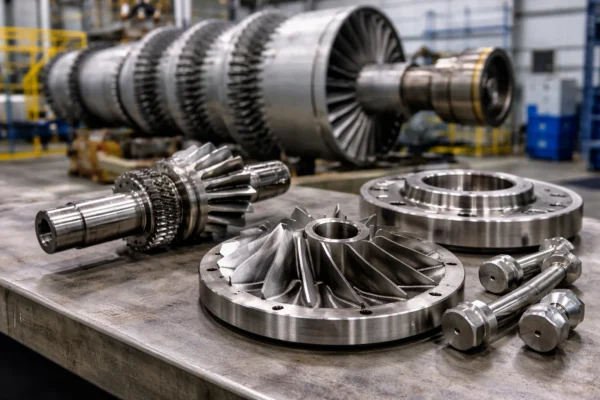
Forged turbine/valve-related component for power or industrial systems

2) Energy & Industrial Power

Typical parts: flanges, valve bodies/blanks, couplings, high-load connectors.

Buyer focus: standard compliance, correct heat-treat condition, and documentation that passes QA.

How we control it: material & heat-treat route aligned to standard, traceability maintained by heat/lot, inspection scope confirmed before production.

Evidence: MTR/MTC + COC; mechanical tests / NDT per drawing/spec when specified.

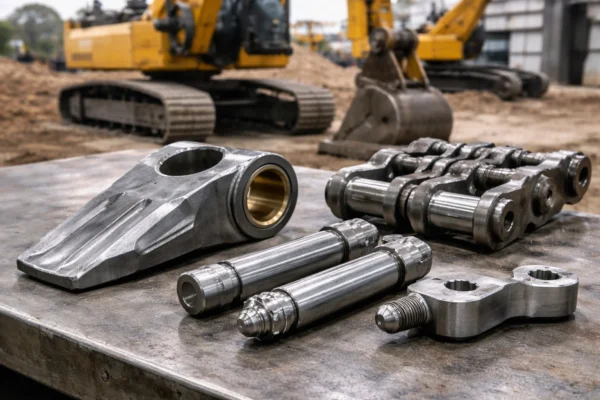
Forged gear blank or heavy equipment forging used under shock and abrasion

3) Construction & Heavy Equipment

Typical parts: gear blanks, shafts, track links, clevis/eye ends.

Buyer focus: impact toughness, wear life, and reliable replenishment lead time.

How we control it: alloy + heat-treat recommendation to hit hardness targets, machining allowance plan to protect CTQs after forging.

Evidence: hardness + CTQ dimensional reports; NDT available when specified.

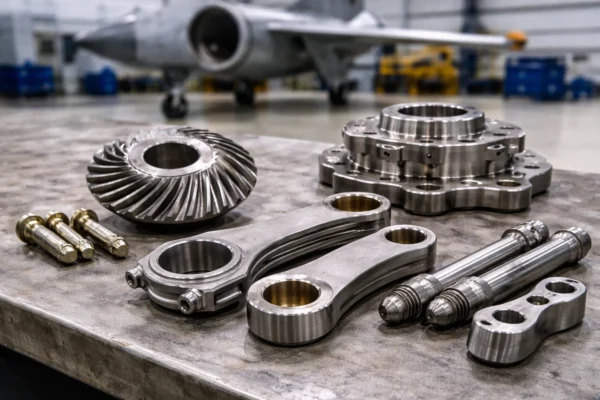
Precision forged alloy component for high-spec applications requiring strict CTQ control and inspection evidence

4) Aerospace & High-Spec Applications

Typical parts: structural blanks, high-strength connectors, precision forgings (project-dependent).

Buyer focus: strict CTQs, traceability discipline, and inspection evidence that matches the exact spec.

How we control it: CTQ-first inspection planning, heat/lot traceability, and NDT planning when required by your drawing/spec.

Evidence: UT/MPI and FAI/CMM available when specified. Note: final compliance is defined by your customer spec and PO requirements.

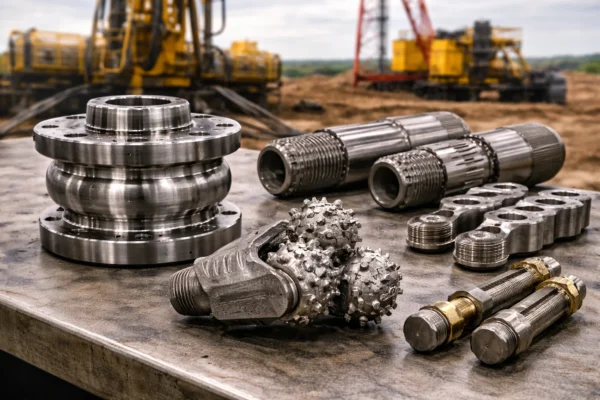
Forged high-pressure component for oil and gas service where documentation and material condition are critical

5) Oil & Gas

Typical parts: flanges, valve parts/blanks, fittings, connectors.

Buyer focus: pressure-service reliability, corrosion medium clarity, and strict spec/document alignment.

How we control it: confirm service medium + standard early, align heat-treat route and test scope to spec, keep traceability clean for audits.

Evidence: compliance documents per customer spec; NACE requirements supported when specified (standard + acceptance criteria needed).

Forged transportation component where crack-risk control and repeatability are required

6) Railway & Transportation

Typical parts: axles, couplers, wheel-related forgings (project-dependent).

Buyer focus: safety margin, crack-risk control, repeatability over long production cycles.

How we control it: inspection planning for critical zones, CTQ measurement plan, and lot traceability for long-cycle supply.

Evidence: UT/MPI available when specified; dimensional reports for CTQs.

Have a drawing or a sample? We can review CTQs, propose a forging route, and list the exact inspection evidence your approval process will need.

Note: applicable standards, material condition, and inspection scope are confirmed by your drawing/spec and purchase requirements. If any requirement is unclear, we confirm assumptions before production.

Ⅸ: How to Choose the Right Custom Forged Parts Supplier (Risk + Evidence Checklist)

The safest supplier choice is rarely the lowest quote — it’s the supplier who can show risk controls and approval-ready evidence. Use this checklist to compare capability, traceability, inspection outputs, and delivery execution. Tip: ask each supplier to respond to your drawing/spec with sample reports and a clear scope statement (what’s included vs. optional).

Ask for these proofs

  • Sample MTR/MTC + COC (anonymized is fine)
  • FAI / CTQ dimensional report (CMM/gauges)
  • Heat-treat route + hardness/mechanical evidence (if required)
  • Packing photos + export docs sample (invoice/packing list/marks)

Hidden risks that cause rejects

  • CTQs not defined → inspection gaps
  • Tooling wear unmanaged → dimensional drift
  • No heat/lot traceability → audit failure / grade-mix risk
  • Lead time “promises” without capacity explanation (tooling vs production mixed)

How PRIME reduces buyer risk

  • CTQ-first review + DFM feedback (marked-up notes)
  • Traceability support (heat/lot per order)
  • Inspection planning aligned to your drawing/spec
  • Export-ready packing + documentation coordination

PRIME: established in 1993 · B2B wholesale · ISO-certified quality system · 10 production lines (project-dependent route).

1) Certifications & Compliance (Ask for documents, not slogans)

  • Quality system: which ISO system do they run under, and can they share a valid certificate copy?
  • Traceability: can they provide MTR/MTC, COC, and heat/lot traceability for each PO line item?
  • Regulatory/customer standards: if you require RoHS/REACH, pressure equipment, or customer-specific specs, can they support it based on your stated standard + acceptance criteria?
📄 Buyer pass/fail: A mature supplier can send an anonymized “document pack” quickly and explain what triggers third-party testing (and who pays).

2) Material & Forging Expertise (Do they solve your CTQ risks?)

  • Material familiarity: which grades do they forge often (carbon/alloy, stainless, aluminum, copper alloys)?
  • Route clarity: can they explain the route they propose for your part (open/closed-die, steps, trimming) and why?
  • Engineering reasoning: can they connect grain flow, heat-treat condition, and machining allowance to your CTQs (fatigue zones, sealing faces, fits)?
🔧 Buyer tip: Ask them to mark CTQs + risk zones on your drawing. Forging-specific risks often include laps/cold shuts, cracking, distortion, and die-wear drift (porosity is more typical in castings).

3) Dimensional Accuracy & Quality Control (CTQ-first, evidence-driven)

  • CTQ plan: do they define how CTQs will be measured (sealing faces / fits / fatigue-critical zones)?
  • FAI maturity: can they provide FAI or dimensional reports (CMM/gauges) when required?
  • NDT clarity: for critical parts, can they support UT/MPI only when your spec defines the standard + acceptance criteria?
  • Record linkage: can inspection records link to heat/lot/batch identifiers (and tooling revision where relevant)?
🔍 Buyer pass/fail: Request one anonymized “first article package” example. It reveals supplier maturity more than any capability statement.
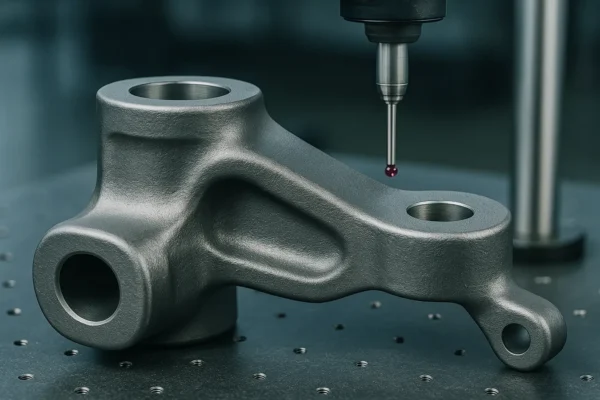
Dimensional inspection of a forged component using CMM
Evidence wins approvals: CTQ report + traceability beats generic “capability” claims.

4) Production Capacity & Scalability (Can they deliver on time — repeatedly?)

  • Stage separation: do they separate lead time into tooling, sample approval, and production?
  • Capacity explanation: can they explain lines/shifts and bottlenecks (heat treatment / machining / inspection) credibly?
  • Schedule risk handling: what happens if tooling iteration is needed — do they show a clear adjustment loop?
🏭 Buyer tip: Ask “What is your critical path?” Serious suppliers can name the bottleneck and how they protect your ship date.

5) Engineering Collaboration & DFM (Avoid expensive redesigns)

  • DFM feedback: do they comment on draft, fillets, flash/parting line, preform strategy, and distortion risks?
  • Near-net vs machining logic: can they recommend what to keep near-net and what to machine for CTQs?
  • Communication workflow: can they accept STEP/IGES and return marked-up feedback with assumptions clearly stated?
📐 Buyer pass/fail: Ask for 3–5 specific DFM suggestions tied to your drawing. Real engineers always have them.

6) Packaging, Export & Delivery (Where projects often fail)

  • Rust prevention: do they offer options like VCI, oiling, sealed bags, desiccants (as needed), and sea-freight packing?
  • Labeling discipline: can they label by SKU/PO/heat-lot and provide packing list + shipping marks that match your receiving process?
  • Export execution: are they comfortable working with your forwarder and providing document samples before shipment?
🚚 Buyer tip: Ask for recent packing photos + loading photos (anonymized). This is where “good factories” still lose projects.

What You Get When Working with PRIME (Since 1993)

  • CTQ-based feasibility review: route proposal + tooling/trim concept + machining allowance recommendations.
  • Traceability & documentation: heat/lot traceability support and shipment documents aligned to your PO requirements.
  • Inspection evidence: FAI/CTQ reports, hardness/mechanical testing, and NDT support when specified by your drawing/spec.
  • Export-ready delivery: packing options, labeling rules, and documentation coordination for smoother receiving.

Scope note (trust): compliance scope, inspection methods, and test frequency are confirmed by your drawing/spec and PO. If anything is unclear, we list assumptions for approval before production — so your audit trail stays clean.

Ⅹ: Design for Forging Manufacturability (DFM) — CTQ, Route & Approval Evidence

DFM is how buyers reduce risk before paying for tooling. At PRIME, DFM is a structured review that produces a decision package: recommended forging route, CTQs, machining datum/allowance strategy, and an inspection-ready outline — so engineering and procurement can approve with fewer unknowns.

What you receive (DFM decision package)

  • Marked-up drawing (CTQs + risk zones + assumptions)
  • Route proposal (open/closed die, stages, trimming concept)
  • Machining allowance & datum strategy to protect CTQs
  • Inspection outline (FAI/CMM/gauges; NDT only when specified)

What we check (what causes rejects)

  • Metal flow stability & risk of laps/folds/underfill
  • Parting line, draft angles, fillets/radii, transitions
  • Die stress / wear drivers and trim stability
  • Heat treatment & distortion sensitivity by section size

Buyer risks reduced

  • Tooling cost surprises and rework loops
  • Dimensional drift after die wear
  • Over-machining and material waste
  • Late-stage failures during sample validation

Buyer concern: “This part looks forgeable, but I’m worried about material flow, tooling investment, and whether CTQs can be verified reliably. Show me the risk points and the inspection approach before we commit to tooling.”

1) Early CAD Review & Feasibility Decision

We review your 3D model + 2D drawing to confirm whether forging is the right process and which route is most stable. The output is not only “yes/no” — it is a route + CTQs + risks + recommended revisions you can use internally.

What we typically mark in the review

  • CTQs: fits, bearing seats, sealing surfaces, fatigue-critical zones
  • Datum scheme: where to locate/measure after forging and after machining
  • Flow improvements: fillets/radii/transitions to reduce laps and cracking risk
  • Parting line & draft guidance: reduce die complexity and improve repeatability

Trust note: if any requirement is unclear (standard, condition, acceptance criteria), we list assumptions for your confirmation before moving forward.

2) Cost, Yield & Tooling Strategy (Total Cost, not only unit price)

Many “cheap quotes” become expensive after scrap, extra machining, or short die life. Our DFM highlights total cost drivers and shows trade-offs (Option A/B) when useful.

  • Preform strategy: reduce flash, improve fill, stabilize repeatability
  • Machining allowance: protect CTQs while avoiding over-machining
  • Die life drivers: radii, sharp corners, thin webs, stress concentration
  • Material/condition: balance strength, forgeability, and heat-treat distortion risk

Deliverable example: a short tooling/route note that separates tooling lead time, sample approval, and production.

3) Dimensional Control & Inspection Readiness (CTQ-first)

“Can you hold tolerance?” depends on CTQs, the forging route, and the machining plan — not marketing claims. We align CTQs with a measurable inspection approach so approval is straightforward.

  • FAI readiness: CTQ list + measuring method (CMM / gauges as required)
  • Traceability: batch identification and heat/lot support per PO requirements
  • NDT support: UT/MPI available when specified with acceptance criteria

Note: final tolerance capability is confirmed after CTQ definition + route + first-off sample validation.

4) Defect Prevention (Risks stated clearly, controls defined early)

Forging defects usually come from flow and forming conditions. We identify risk zones early and propose control actions tied to your CTQs.

  • Laps / folds: improve transitions, revise preform, adjust fill paths
  • Underfill: adjust feature thickness, staging, and flash control
  • Cracks: control temperature window, deformation route, and heat-treat route
  • Distortion: plan heat treatment + machining datum strategy to protect CTQs

When we may recommend NOT forging (to reduce your sourcing risk)

  • Very low volume where tooling cost cannot be justified (CNC / fabrication may be better).
  • Geometry with thin walls / deep pockets that drives high defect risk or extreme multi-stage tooling.
  • CTQs on most surfaces, where machining dominates and forging savings become minimal.

We tell you early if forging is not the best route — because a wrong process choice is often the biggest cost and schedule risk.

Collaborate early with PRIME and you get more than a quote — you get a DFM decision package that helps your team approve tooling with confidence and move into stable production with lower risk.

Recommended inputs: STEP/IGES + PDF drawing + target material/standard + annual volume + CTQs + required documents/tests (if any).

Ⅺ: Custom Forging vs. CNC Machining — How Buyers Choose the Lowest-Risk Process

When sourcing metal parts, the real question is not “forging or CNC?”, but: which route meets CTQs with the lowest risk and best total cost. PRIME supports both forging and CNC, so we recommend the best-fit process based on geometry, volume, material/standard, and the inspection evidence your approval flow requires.

Trust note: if forging is not cost-effective or too risky for the geometry/volume, we will say so early — before you invest in tooling.

Choose forging when…

  • CTQs depend on fatigue/impact performance along a load path.
  • Volume is repeatable mid–high, so tooling payback is realistic.
  • The part is large/heavy and machining-from-solid wastes material and time.

Choose CNC when…

  • You need low MOQ, fast iteration, or prototype speed.
  • Geometry includes deep pockets, complex internal features, or frequent revisions.
  • Tight CTQs are best controlled by machining datums and measurable inspection outputs.

Most common best-ROI route

Forging + CNC: forge for strength + near-net shape, then machine only CTQs (fits, sealing faces, datums). This often gives the best balance of performance, cost, and inspectability.

Custom Forging: Route stability + grain flow for load-path performance

Forging forms metal under compressive force (typically hot) to create a dense structure and beneficial grain flow. Buyers choose forging when performance is driven by impact/vibration/cyclic loads and when near-net shape can reduce waste. Approval depends on aligning material/condition, route controls, and verification evidence to the drawing/spec.

What buyers usually gain (when done correctly)

  • Fatigue & impact performance (grain flow aligned to load path)
  • Better material utilization vs machining-from-solid for large parts
  • Stable unit cost once tooling is validated and volume repeats

Scope note: forging capability is confirmed after CTQ definition, route selection (open/closed die, stages), and first-off validation.

Hot forging press shaping a heated billet into a near-net forged preform
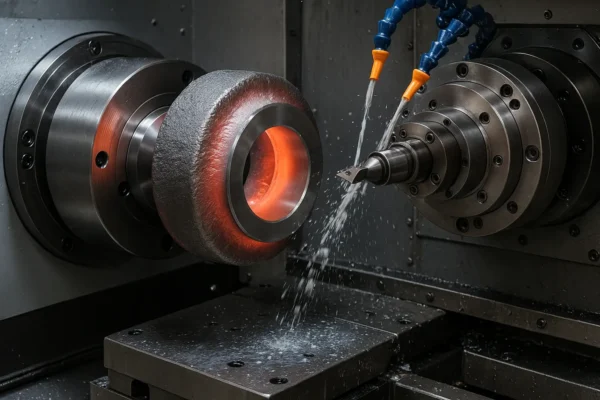
CNC machining center producing a precision metal component

CNC Machining: CTQ-driven precision + fast change control

CNC machining removes material to achieve final geometry with strong dimensional control. Buyers choose CNC for prototypes, frequent revisions, complex features, or tight CTQs that require a clear datum strategy and measurable inspection results. It is also the lowest-risk path when forging tooling can’t be justified yet.

What buyers usually gain

  • Speed for prototypes and engineering changes (no forging dies)
  • Complex geometry freedom (pockets, threads, internal channels)
  • Inspection readiness for CTQs (CMM/FAI when required)

Scope note: tolerance capability depends on part size, material, machining method, and CTQ measurement plan; confirmed by drawing review.

Buyer Decision Matrix (What matters in real approvals)

Decision Factor Forging CNC Machining Best Practice (lowest risk)
CTQ strength / fatigue Excellent for high-load paths (route + condition dependent) Good; depends on base material and heat treatment Use forging when load-path performance drives design
Geometry complexity Best for external forms; internal features usually machined Excellent for complex 3D and internal features Forge near-net + machine pockets/threads/CTQs
MOQ & design changes Tooling investment; changes cost time and money Fast revisions; no dies required Prototype in CNC, then convert to forging for scale
Unit cost at scale Lower at mid–high volume once validated Higher per-piece for heavy parts (machining time + waste) Compare total cost (scrap + machining + inspection + lead time)
Lead time risk Die design + trials add time Programming typically faster Use CNC for urgent samples; lock forging after approval
Material utilization Near-net, low waste Subtractive, higher waste Critical for large parts and expensive alloys
Approval evidence MTR/MTC + heat treat + CTQ reports (per spec) FAI/CMM + process traceability (per spec) Define evidence pack in RFQ/PO to avoid approval delays

Note: final capability is confirmed after drawing review, CTQ definition, and inspection plan alignment (FAI/NDT/mechanical tests per spec).

What to ask any supplier for (approval evidence)

  • FAI / CMM report for CTQs (when required)
  • MTR/MTC with heat/lot traceability
  • Heat treatment record + hardness / tensile / impact (as specified)
  • NDT reports (UT/MPI) for critical parts (as specified with acceptance criteria)
  • Packing photos + labeling rules (to protect traceability in receiving)

PRIME’s dual-capability advantage (lower risk, smoother scale-up)

Because we support both forging and CNC, we can recommend the route that best fits your timeline and approval needs: CNC prototype → forging conversion → CNC finish on CTQs. This reduces the risk of over-investing in tooling too early while keeping performance and repeatability predictable at volume.

We also help you define the evidence pack (documents + reports) up front, so your internal approval does not stall at PPAP/FAI/NDT stage.

Send your drawing and share your annual volume and CTQs. We’ll return a feasibility-backed recommendation (forging / CNC / hybrid) with a suggested datum strategy and inspection approach.

Request a Process Recommendation (Forging / CNC / Hybrid)

Recommended inputs: STEP/IGES + PDF drawing + material/standard + annual volume + CTQ list (if available) + required evidence (FAI/NDT/tests).

Ⅻ: Global Supply Chain & Logistics — Export Delivery You Can Audit

For international B2B buyers, logistics reliability is as critical as part quality. PRIME (est. 1993) supports export shipments with clear documents, traceable packing, and proactive updates — so your receiving team can clear customs smoothly and your production schedule stays protected.

Buyer Concern

“I’m ordering forged parts overseas. How do I avoid customs delays, unstable delivery schedules, damage in transit, and unexpected fees?”

PRIME’s End-to-End Export Delivery Support

We treat delivery as a controlled process — not a handoff. From pack-out to departure, we align documents, labeling, and packing to your PO requirements, then communicate milestones so you can plan receiving and production confidently.

Trust note: HS code, Incoterms, insurance, and destination requirements vary by country and customer. We confirm shipment terms and document scope in advance to reduce “surprise cost” and clearance risk.

1) Trade Compliance & Export Documentation (clearance-ready)

  • HS Code support: we provide the HS code used for export documentation (final confirmation is by importer/customs broker).
  • Document set prepared per Incoterms: commercial invoice, packing list, and shipment marks aligned to your PO.
  • Quality documents included when required: MTR/MTC, COC, and agreed inspection reports packaged with the shipment.
  • Country/customer requirements: we follow your stated requirements (labels, declarations, document format) to reduce rework at customs.

Scope note: document types and content depend on your PO and destination requirements. If anything is unclear, we confirm assumptions before shipment.

Export logistics support for forged parts: documentation, packing, and shipment coordination

2) Transport Strategy (cost vs urgency, explained upfront)

We recommend shipping methods based on weight, volume, and schedule risk — and we separate production lead time from transit time so you can plan accurately.

  • Air freight: for urgent shipments or lightweight/high-value components.
  • Ocean freight (FCL/LCL): for heavy forgings and cost-sensitive projects.
  • Multimodal: when balancing delivery time and cost across inland + sea/air legs.

Buyer tip: confirm Incoterms (EXW/FOB/CIF/DDP, etc.) and what is included (customs, duties, insurance) to avoid hidden fees.

3) Milestone Updates & Proactive Communication

We provide shipment milestones such as pack-out complete, documents ready, handover to forwarder, and departure. This reduces “black box” time and helps your team prepare receiving and production schedules.

  • Pack-out photos available on request (labels, rust prevention, crates/pallets).
  • Document pre-check (invoice/packing list/shipping marks) before dispatch when required.

4) Protective Packaging for Heavy-Duty Parts (damage + rust control)

  • Crating/palleting: export-grade wood crates or pallets as required (part protection + stable handling).
  • Rust prevention: VCI / oiling / sealed bags + desiccant when required for sea freight.
  • Shock & abrasion protection: separators, corner guards, and secure fixing to reduce movement in transit.
  • Traceable labeling: PO/SKU/lot labels to support receiving and internal traceability.

Scope note: packing method is chosen by part weight/geometry and your requirements. We confirm the packing plan before shipment.

5) Buffering for Repeat Orders (optional, project-dependent)

For repeat buyers with stable demand, we can support inventory buffering and shipment scheduling to reduce delivery risk during production ramps. Terms depend on part type, order frequency, and agreed stocking rules.

The PRIME Logistics Advantage

You focus on part performance — we make export delivery predictable with clear documents, traceable packing, and proactive updates. Ask for an anonymized sample of our packing photos and export document set for supplier qualification.

Recommended inputs: destination country + Incoterms + part weight/packing preference + required shipment documents (MTR/MTC/COC/FAI if applicable).

XIII: R&D & Engineering Innovation — What We Test, What You Receive

In custom forging, “innovation” only matters if it produces measurable outcomes: better repeatability, fewer defects, and faster approvals. At PRIME (est. 1993), our R&D work is tightly connected to production — we test process changes, capture evidence, and turn results into DFM notes, route updates, and inspection-ready deliverables for customer projects.

Buyer Concern: “Can this supplier support new designs, solve process issues, and provide evidence — not just promises — as requirements evolve?”

Trust note: R&D scope is project-dependent. We do not claim universal capability for every alloy/spec. We confirm feasibility based on your drawing, standard, volume, and required evidence (FAI/NDT/tests) before committing.

Engineer working on forging R&D: process validation, tooling trials, and inspection evidence preparation

1) Metallurgy & Heat Treatment Development (condition matters)

We focus on how material condition and heat-treatment route affect real CTQs (hardness, strength, distortion, fatigue-risk zones). For projects that specify mechanical properties, we align the route to your standard and define what evidence will be included.

  • What we improve: stability of hardness targets, distortion control, and repeatability by section size.
  • What you can request: heat-treatment records + hardness / tensile / impact reports when specified.

2) Forging Process Optimization (flow, fill, die life)

We run trials that target the most common forging failure modes: laps/folds, underfill, dimensional drift, and short die life. Changes are verified by first-off checks and captured as route controls.

  • Preform + flash strategy: improve fill and reduce scrap risk.
  • CAD/CAM-driven die details: support repeatability on near-net geometry.
  • Process prediction (project-dependent): simulation/experience-based planning to identify risk zones early.

3) Sustainable & Cost-Efficient Manufacturing (measurable benefits)

We improve sustainability by reducing energy waste and scrap — which also lowers total cost and stabilizes delivery. These improvements show up as better yield and fewer rework loops.

  • Energy reduction: optimize heating and press sequences where feasible.
  • Scrap minimization: near-net route refinement and tighter process control to reduce rejects.

Note: sustainability outcomes vary by part geometry, alloy, and route. We share what is feasible after review.

4) Customer Engineering Collaboration (from prototype to stable production)

Our engineering team works with your drawings and CTQs to move from feasibility to stable production. The goal is not “a prototype that looks OK”, but a route you can repeat with evidence for approval.

  • DFM mark-up: CTQs, risk zones, datum/allowance suggestions.
  • Option A/B proposals: trade-offs between cost, lead time, and verification scope.
  • Approval support: defined evidence pack (MTR/MTC, CTQ reports, NDT/tests when required).

PRIME’s Innovation Edge (practical, buyer-friendly)

Work with a supplier that turns engineering work into measurable control and approval-ready evidence. We don’t sell “innovation” as a slogan — we use it to reduce scrap, protect CTQs, and shorten the path from drawing to stable shipments.

Request an Engineering Review

Recommended inputs: drawing + standard/material condition + CTQs + target volume + required evidence (FAI/NDT/tests).

XIV: Value-Added Services — One PO, One Control Plan, One Evidence Pack

For global B2B buyers, “value-added services” matter only when they reduce risk: fewer handoffs, clearer responsibility, and consistent CTQ control. PRIME supports post-forging operations so you can purchase forging + machining + finishing + packing under one plan — with documents and inspection evidence aligned to your drawing/spec.

Trust note: in-house vs partner scope is project-dependent. We confirm what is included, what is outsourced, and what evidence will be provided before PO release.

Buyer Concern

“I need a forging supplier who can deliver finished, assembly-ready parts — without managing multiple vendors or losing traceability between steps.”

PRIME’s Integrated Support (what buyers actually get)

We consolidate post-forging steps under a defined route: machining datums/allowances, heat treatment condition, finishing requirements, and packing/labeling rules. The goal is simple: stable CTQs + approval-ready evidence + predictable delivery.

Reduce vendor handoffs

Less coordination, fewer failure points, and clearer ownership when issues arise.

Keep traceability intact

Heat/lot and batch identification can be maintained through machining, finishing, and packing.

Evidence for approval

MTR/MTC, COC, CTQ reports, and any specified tests packaged per PO requirements.

CNC machining of forged parts: CTQ surfaces finished with datum strategy and measurable inspection outputs

1) Precision CNC Machining (CTQ surfaces finished)

  • Finish machining on CTQs: fits, bearing seats, sealing faces, and functional datums.
  • Drilling / tapping / milling: threads, pockets, and features tied to assembly.
  • Inspection readiness: CMM / gauges and FAI reports available when required.

Scope note: achievable tolerances depend on part size/material and measurement method; confirmed after drawing review and CTQ definition.

2) Subassembly & Component Integration (when you need line-ready parts)

When specified, we can deliver parts as subassemblies to reduce your line work and receiving complexity:

  • Welded assemblies: MIG/TIG/arc welding per your WPS/requirements (project-dependent).
  • Mechanical assembly: pins, sleeves, and threaded fasteners with controlled torque/fit where required.
  • Functional checks: preload/fit checks when your spec defines the method and acceptance criteria.

Trust note: assembly scope and test methods are defined by your drawings/specs and PO. We do not assume “certified” welding unless requirement and documentation scope are agreed.

Export kitting and packaging for forged parts: rust prevention, separators, crates, and traceable labeling

3) Export Kitting & Custom Packaging (damage + rust + receiving control)

  • Kitting: group components by kit/SKU to support fast receiving and line use.
  • Protective packing: crates/pallets, separators, and moisture control chosen by weight/geometry and shipping mode.
  • Traceable labeling: PO/SKU/lot labels; QR/barcode/laser marking when required.

Pack-out photos and labeling samples can be provided on request for supplier qualification.

4) Heat Treatment (condition-controlled)

  • Normalizing: stabilize structure and improve property consistency (per standard).
  • Quenching & tempering: hit hardness/strength targets where required (with defined evidence scope).
  • Solution annealing: stainless and selected alloys when specified.

Scope note: heat treatment route and test evidence (hardness / tensile / impact) follow your drawing/spec and PO requirements.

5) Surface Finishing & Edge Treatment (fit + safety + coating readiness)

  • Shot blasting / pickling: remove scale and prepare surfaces for coating.
  • Deburring: remove sharp edges that affect assembly and handling safety.
  • Rust protection: VCI / oiling / passivation per material and shipping requirements.

The PRIME One-Stop Advantage (what it reduces)

By consolidating forging and post-forging steps under one route plan, we reduce delays, miscommunication, and traceability breaks between vendors.

You receive parts that are CTQ-ready, documented, and pack-out controlled for export receiving.

Recommended inputs: drawing + CTQ list + material/standard + required evidence (MTR/MTC, FAI, NDT/tests) + packing/labeling requirements.

Custom forged parts overview: multiple forged blanks prepared for machining and inspection

Materials (selected by standard + service conditions)

We don’t choose grades by “strength only”. We align standard compliance, service environment, and required evidence (MTR/MTC) to your drawing/PO.

Carbon steel (pressure/structural use) Alloy steel (fatigue & high-load parts)
Stainless steel (corrosion environments) Aluminum alloys (lightweight components)
Copper alloys (conductivity / corrosion) Titanium (project-dependent)
Brass (fittings / cosmetic parts) Custom alloys (by spec)

Scope note: final grade/condition is confirmed by your drawing/spec and verified by MTR/MTC and agreed test reports.

Post-Forging Treatments (route + evidence, not just options)

Post-forging steps are defined to protect CTQs (fits, sealing faces, fatigue zones) and provide buyer-ready documentation. Inspection and test scope follow your spec/PO.

Heat treatment (Q&T / solution, as required) Normalizing (structure stability)
Shot blasting (descale / coating prep) Machining (CTQ surfaces)
Surface coating (by standard) Hot-dip galvanizing (fit + thickness control)
Anti-rust packing (VCI/oil/sealed) QC inspection (FAI/CMM when required)

Trust note: we do not assume test scope. If FAI/NDT/mechanical tests are required, we align standards and acceptance criteria before production.

XV: More Information on Custom Metal Forgings

Engineered forged parts for industrial applications where buyers care about repeatability, traceability, and approval evidence — not just a catalog list.

What we can send on request: an anonymized sample of MTR/MTC, COC, a CTQ/FAI report, and pack-out photos — useful for supplier qualification.

Forging Methods (selected by geometry + volume + CTQs)

  • Open-die forging — large parts, simple sections, flexible sizing
  • Closed-die forging — repeatable geometry for mid–high volumes
  • Near-net forging — reduce machining time and material waste
  • Cold forging — high-volume small parts (project-dependent)
  • Upset forging — shafts, heads, and axial forms
  • Hybrid route: forging + CNC finish on CTQs

Scope note: route feasibility depends on material, size, and CTQs; confirmed after drawing review.

Recommended inputs: drawing + material/standard + annual volume + CTQs + required documents/tests.

Forging production process: controlled heating, forming, trimming, and inspection steps

In Summary

Choosing a forged metal parts supplier is a risk decision — not just a price decision. The safest suppliers are the ones who can show what they control (CTQs, route, traceability) and what they can prove (MTR/MTC, FAI/CTQ reports, agreed tests, pack-out records). In this guide, we covered how buyers reduce approval delays and field risk by aligning material/standard, forging route, inspection evidence, and export delivery execution.

Key Takeaways for B2B Buyers

  • CTQ-first wins approvals: suppliers should mark CTQs and define how they will be measured (gauges/CMM, FAI when required).
  • Evidence beats claims: ask for an anonymized sample pack (MTR/MTC, COC, CTQ/FAI report, packing photos).
  • Route stability matters: tooling/trim planning, heat treatment condition, and die-wear control drive repeatability.
  • Total cost is more than unit price: scrap risk, machining time, inspection scope, and delivery execution decide ROI.
  • Export delivery is part of quality: traceable labeling, rust prevention, and clearance-ready documents prevent downstream failures.

Buyer shortcut: when you compare suppliers, request the same 4 items from each: (1) marked-up drawing with CTQs, (2) route proposal, (3) sample FAI/CTQ report, (4) packing photos + document set sample.

Quality inspection of forged parts with CTQ measurement and shipment documentation
Forging production process with controlled forming steps and repeatable output

Why PRIME Fits Risk-Sensitive B2B Projects

PRIME (est. 1993) supports custom forged components with a practical approach: DFM → route → CTQ inspection → evidence pack → export-ready packing. Instead of generic capability claims, we focus on what your approval process needs — clear scope, traceability, and measurable CTQ outputs.

We can support forging and CNC finishing, which is often the lowest-risk route: forge near-net for performance, then machine only CTQs for inspectability. Inspection scope (FAI/NDT/mechanical tests) is aligned to your drawing/spec and PO requirements — not assumed.

Trust note: application claims (e.g., high-spec sectors) are project-dependent and must match your stated standards and compliance requirements.

Global Delivery, Clear Documents, Predictable Receiving

We support buyers in North America, Europe, the Middle East, and Asia-Pacific with export-ready packing and documentation. For repeat orders, we can align labeling/packing rules to your receiving process and provide milestone updates (pack-out, documents ready, handover, departure).

If your project is sensitive to customs clearance or receiving traceability, tell us the destination and Incoterms — we will confirm the document scope up front.

Export delivery of forged parts with protective packaging and documentation

Ready to Start?

Send your drawing + material/standard + annual volume + CTQs (if available). We’ll reply with a feasibility-based route recommendation and a quote — including what evidence can be provided for approval (MTR/MTC, CTQ report/FAI, tests/NDT when required).

Note: response time depends on drawing complexity and evidence requirements. If you need a 24-hour turnaround, please include CTQs, standard, and required documents/tests in your message.

Get a Quote + Evidence Plan

Just a Few of the Partners Who Trust Our Quality

  • MASTERMYUE
  • JET
  • SCI
  • Christiaens Group
  • AI

*Logos are property of their respective owners.

What Our Customers Say

Real feedback from global buyers who trust us to deliver high-quality, customized industrial components.

Customer

Harry M., New York

Purchasing Manager – Metal Components

★★★★★

We’ve sourced CNC machined parts from Prime for over two years. The precision is consistently excellent, tolerances are spot on, and their team is responsive and professional. Fast lead times and secure packaging make them a reliable long-term partner.

Custom CNC Parts
Customer

Robert J., California

Strategic Sourcing Specialist – Industrial Hardware

★★★★☆

The forged components we received from Prime were top quality — strong material integrity, accurate dimensions, and zero defects. Their team understood our specs clearly and delivered right on schedule. Great supplier for high-stress applications.

Forging Parts Of Metal
Customer

Emily T., Texas

Supply Chain Buyer – Custom Metal Parts

★★★★★

We ordered a batch of custom metal welded assemblies from Prime, and the quality was outstanding. The welds were clean, uniform, and met all our strength requirements. Communication was smooth, and delivery was faster than expected.

Metal Welded Parts
Customer

Hannah K., Ontario

Senior Buyer – Automotive

★★★★☆

Prime supplies us with custom metal casting parts that meet strict automotive standards. Their ISO-certified quality, fast prototyping, and on-time delivery make them a trusted partner in our supply chain.

Custom Casting Parts
Customer

Luis R., Barcelona

Procurement Lead – Electronics

★★★★★

Prime has been a reliable partner for our custom plastic parts in consumer electronics. The injection-molded components are precise, durable, and always delivered on time, helping us stay competitive in the market.

Plastic Parts
Customer

Nadia P., Dubai

Category Manager – Industrial Projects

★★★★☆

Prime delivers high-quality custom metal forgings for our industrial machinery. The parts are strong, reliable, and meet our exact specifications. With consistent quality and on-time delivery, Prime has become a trusted partner in our long-term projects.

Custom Forgings Of Metal
Customer

Jon S., Munich

Operations Buyer – Machinery

★★★★★

Prime’s custom metal fasteners have proven to be durable and precise, perfectly fitting our heavy-duty machinery. Their consistent quality and reliable delivery help us maintain smooth production with fewer interruptions. Prime is a supplier we can count on for critical components.

Custom Metal Fasteners

Get Your Custom Solution & Quote

REPLY WITHIN 24 HOURS

Start a Conversation with Our Experts

When you contact us, you get more than just a price. You get a dedicated partner.

  • 30+ Years of Manufacturing Excellence, Direct from Our Factory
  • Custom-Engineered Solutions for Your Needs
  • Global Shipping & Logistics Support
  • A Transparent, No-Obligation Quote
  • 100% Confidentiality Guaranteed

Your email information will be kept strictly confidential and our business staff will ensure that your private information is absolutely safe!