Struggling with standard parts that don't fit? This mismatch slows production, increases costs, and compromises the integrity of your final product. As an industrial buyer, you know that off-the-shelf components rarely meet the exact demands of a high-performance application.
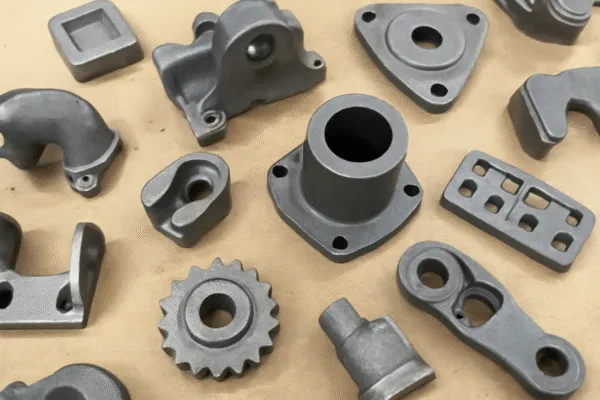
Top custom metal casting parts include engine blocks, pump housings, valve components, and gears. These are vital for automotive, aerospace, and construction. They offer superior strength, complex shapes, and precise fits that standard components cannot match, boosting equipment performance and longevity. Explore our custom casting services to see what's possible.
Finding the right part is crucial, but it's just the start. As someone who has been running Prime Fabworks, a custom parts factory, for over 30 years, I've seen firsthand how the right component can transform an entire production line. It’s not just about the part; it's about the partnership, the process control, and the documentation that backs it up.
How Do Custom Metal Casting Parts Improve Manufacturing Efficiency?
Are production bottlenecks and frequent assembly errors hurting your bottom line? Standard parts often require extra machining, welding, or shimming. Custom-cast components are designed for manufacturing and assembly (DFMA), fitting perfectly from the start.
Custom metal casting radically improves efficiency by creating complex parts in a single step. This reduces or eliminates the need for assembly and further machining, which lowers error rates and material waste. The result is faster production cycles, lower total costs, and a higher quality product that fits your exact specifications.
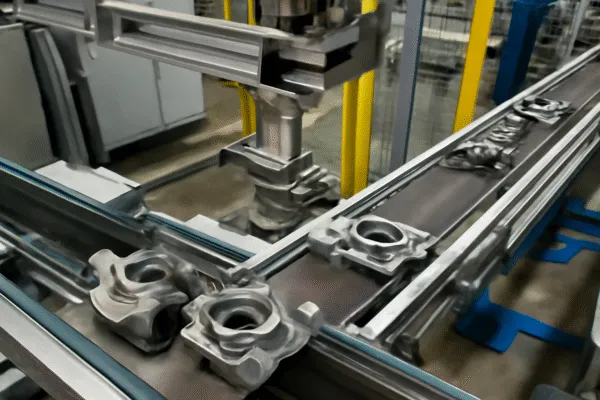
I remember working with a client, Kevin from the U.S., on parts for his agricultural machinery. He was using a welded assembly of five standard steel brackets. It was slow, costly, and inconsistent. The real issue for him, beyond the labor, was his own quality control. He couldn't get consistent performance. After discussing his needs, we designed a single ductile iron casting to replace the entire assembly. Not only did it cut his assembly time by 60%, but we also provided a full PPAP (Production Part Approval Process) submission. This gave him the documented proof—from material certifications to dimensional layouts—that our part would perform consistently every time, streamlining his receiving inspection process.
Quantifying the Efficiency Gains: Standard vs. Custom
| Metric | Standard Part Assembly | Custom Cast Part | Impact & Value for the Buyer |
|---|---|---|---|
| Component Count | 5 separate brackets | 1 single part | Simplified inventory, reduced purchasing overhead. |
| Assembly Time/Unit | 25 minutes | 5 minutes | 80% reduction in direct labor costs. |
| Secondary Operations | Cutting, Welding, Grinding | None | Lowered operational costs and process variables. |
| Quality Documentation | Self-certified, variable | Full PPAP Package | Assured quality, simplified internal approvals. |
| Strength & Reliability | Dependent on weld quality | Superior, uniform strength | Enhanced end-product durability and brand reputation. |
What Are the Top Casting Materials for Custom Metal Parts?
Choosing the wrong material can lead to catastrophic part failure under load or in a corrosive environment. You need a material that perfectly matches your strength, weight, and operational requirements.
The top casting materials are aluminum, steel, and iron alloys. Aluminum is valued for being lightweight and corrosion-resistant. Steel offers excellent strength. Iron is cost-effective and dampens vibrations. A deep understanding of material science, as outlined by authorities like the American Foundry Society (AFS), is critical for making the right choice.
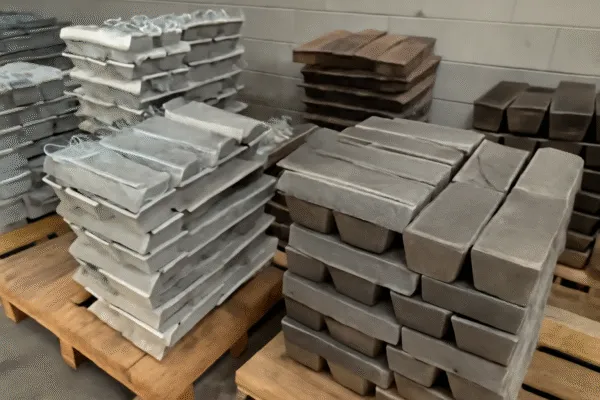
Selecting the right raw material is something I am incredibly strict about. At Prime, every batch of incoming material is quarantined until our spectrometer verifies its chemical composition against the material certification. This ensures we are using the exact alloy specified, like A380 Aluminum or 65-45-12 Ductile Iron. This isn't just about our internal process; it's about providing our customers with irrefutable proof of quality that they can rely on for their most critical applications.
Deeper Dive into Common Casting Metals
| Metal Family | Common Alloys | Key Properties | Common Applications |
|---|---|---|---|
| Aluminum Alloys | A380, 6061 | Lightweight, high corrosion resistance, excellent thermal/electrical conductivity. | Automotive parts, aerospace components, electronics housings. |
| Steel (Carbon & Stainless) | 1020, 4140, 304/316 SS | High strength, toughness, durability and heat resistance. Stainless offers superior corrosion resistance. | Gears, industrial machinery, custom fasteners and screws. |
| Iron (Ductile & Gray) | G2500, 65-45-12 | Good castability, high compressive strength, excellent vibration damping, lower cost. | Machine bases, heavy equipment housings, pump bodies. |
Die Casting vs. Investment Casting vs. Sand Casting: Which is Best?
Your project budget is tight, and deadlines are short. Picking the wrong casting process can lead to huge tooling costs or parts that don't meet your engineering prints.
The best casting process depends on your part's complexity, desired volume, and material. Die casting is for high-volume, precise non-ferrous parts. Investment casting is for complex shapes. Sand casting is best for large parts and prototypes. Each method presents a unique balance of cost, speed, and precision.
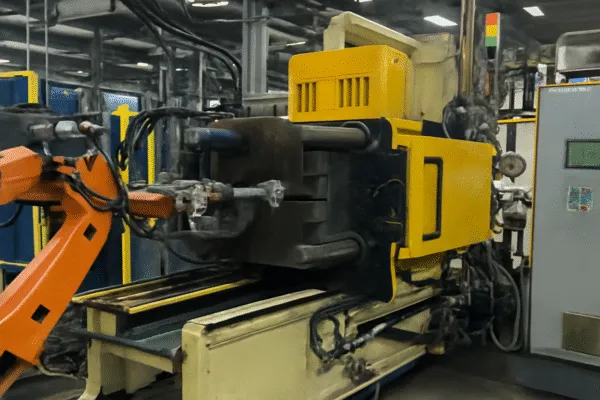
The reason tooling for die casting is a significant upfront investment is that the molds are precision-machined from hardened tool steel to withstand thousands of high-pressure injection cycles. Sand casting, by contrast, uses an inexpensive sand mold for each part. Understanding this cost-benefit trade-off is where an experienced partner provides immense value. We analyze your CAD models and annual volume projections to recommend the process with the best total cost of ownership.
Detailed Process Comparison
| Feature | Die Casting | Investment Casting | Sand Casting |
|---|---|---|---|
| Ideal Volume | 10,000+ units | 100 - 10,000 units | 1 - 500 units |
| Tooling Cost | Very High | Moderate | Low |
| Unit Cost | Very Low | High | Moderate-Low |
| Tolerances | Tightest (±0.05mm) | Very Tight (±0.1mm) | Loosest (±0.8mm) |
| Surface Finish | Excellent | Superb (Best) | Rough |
| Materials | Mainly Non-Ferrous | Any Metal | Any Metal |
How Can You Choose a Reliable Custom Metal Casting Supplier?
You need high-quality parts on time, but poor communication and inconsistent quality from suppliers are project killers. How do you find a partner you can truly depend on?
Choose a supplier with deep experience, robust quality control systems, and clear communication. Look for certifications like ISO 9001:2015, the international standard for a quality management system (QMS). A reliable partner acts as an extension of your team, providing expert guidance from RFQ to delivery.
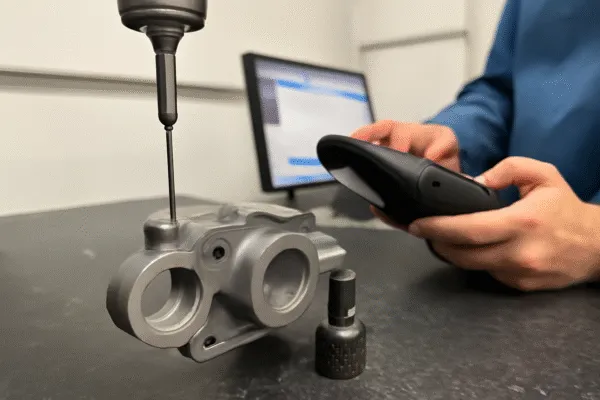
Finding the right supplier is about more than a low price. I've heard countless stories from buyers who were burned by suppliers that disappeared after the deposit was paid. This is why our ISO 9001 certification is so important. It’s not just a plaque on the wall; it’s the operating system for our factory. It dictates how we manage documents, control processes, handle non-conforming parts, and ensure traceability from raw material to the final shipped box. It's the system that guarantees we can deliver on our promises consistently. If you have questions about our process, please contact us directly.
Frequently Asked Questions (FAQs)
What is the typical lead time for custom metal casting?
Lead time depends on the process. For sand casting prototypes, it can be 1-2 weeks. For investment and die casting, creating the tooling can take 4-12 weeks. Once the tool is approved, mass production is much faster.
How much does a custom metal mold cost?
Mold costs vary dramatically. A simple sand-casting pattern might cost a few hundred dollars. A complex, multi-cavity hardened steel die-casting mold can cost tens of thousands of dollars but will produce millions of parts with a very low unit cost.
What tolerances can be achieved with different casting methods?
Die casting offers the tightest tolerances, often as good as ±0.05mm. Investment casting is very precise, around ±0.1mm. Sand casting is the least precise, typically ±0.8mm or more, often requiring secondary machining on critical surfaces.
Can you cast parts with internal features and undercuts?
Yes. Investment casting is excellent for parts with complex internal passages using soluble or ceramic cores. Sand casting also uses sand cores. For a deeper look at what's possible, check out this excellent technical overview on undercuts in castings.
Conclusion
Custom casting parts improve efficiency, and choosing the right material, process, and supplier is vital. Partner with an experienced, ISO-certified factory to get high-quality parts that meet your exact needs and are backed by professional documentation.
Ready to start your project? Let our 30 years of experience work for you.