
Trying to source castings from China can feel like searching for a needle in a haystack. You see endless lists of “top” suppliers, but you still worry about inconsistent quality, late shipments, and communication gaps that blow up your schedule.
The truth is, the best results don’t come from picking a random “Top 10 Foundries in China” list. They come from matching your specific alloy, process, and volume1 to a foundry’s real strengths, then locking everything in with a clear RFQ, quality plan, and cost structure2.
I’ve been on both sides of the table. Since 2010 I’ve sourced parts for US businesses in China, and today I work with the team at Prime Fabworks, a factory group that has been manufacturing castings and machined parts since 1993. Together, we help overseas buyers turn a risky sourcing project into a controlled, data-driven process. If you’d like a second opinion on your current RFQ, you can always send it to us for review.
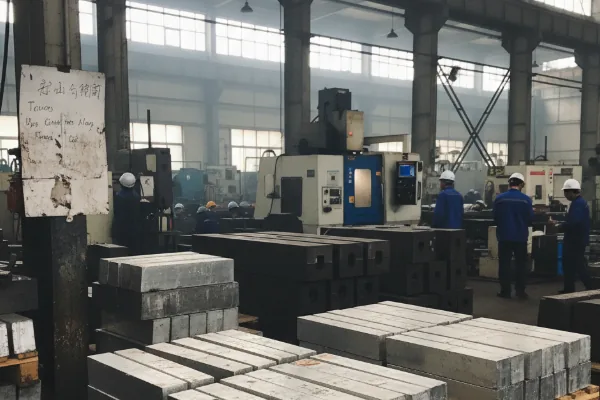
Which Alloys Actually Drive the Chinese Casting Market?
When a new RFQ lands in my inbox, the first thing I check is not the price target, but the alloy definition1. Many drawings simply say “cast iron” or “aluminum,” with no grade, standard, or performance requirement. That almost guarantees re-quotes, failed samples, and painful field issues later.
China’s casting industry is built on a few core alloy families: gray and ductile iron for heavy equipment, carbon and alloy steels for critical parts, and aluminum/magnesium/zinc alloys for lightweight and cosmetic components. Each group has very different behaviors in terms of strength, machinability2, corrosion resistance, and cost.
If you want reliable quotes and stable quality, your RFQ should spell out:
- The exact grade or standard (for example, HT2503, QT450-10, A380, Zamak 34).
- The environment and load conditions the part will see.
- Any special requirements such as low-temperature impact, corrosion life5, or cosmetic finish.
The table below summarizes how I typically classify the main alloy groups when I review RFQs for custom casting parts.
| Alloy Group | Common Grades | Key Advantage | My Sourcing Insight |
|---|---|---|---|
| Cast Iron | HT2503, QT450-10 | High strength, vibration damping, and low cost. | The workhorse of heavy industry. Always verify the grade. |
| Cast Steel | Carbon, Alloy, Stainless | Superior durability and impact resistance. | More expensive, but necessary for critical applications. |
| Aluminum/Magnesium | A380, ADC12, AZ91D | Lightweighting and complex, thin-walled designs. | Requires precise process control to avoid porosity. |
| Zinc Alloys | Zamak 34, Zamak 5 | Excellent detail, surface finish, and plating ability. | Ideal for high-volume, small parts where looks matter. |
A strong RFQ starts by choosing the right family and grade for the job, then letting the foundry suggest practical alternatives if they see a better fit. That is far safer than letting a low-cost supplier quietly downgrade material to hit a price.
Which Casting Process Is Right for Your Part?
The second mistake I see is buyers collecting quotes from several factories without realizing that each quote is for a different process. One shop suggests sand casting, another investment casting6, and a third offers die casting7. On the surface, the prices don’t match. In reality, you’re comparing apples to oranges.
Before you ask for a quote, you should decide (or at least narrow down) the process based on:
- Annual and lifetime volume
- Part size and weight
- Tolerance and surface finish requirements
- How much machining you are willing to do after casting
- Whether you need very thin walls or sharp cosmetic features
Here’s how I usually frame the main options when working with engineers and purchasers:
| Process | Best for Volume | Tooling Cost | Unit Cost | Main Advantage |
|---|---|---|---|---|
| Sand Casting | Low to Medium | Low | Medium | Versatile for very large parts and complex internal shapes. |
| Investment Casting | Low to Medium | Medium | High | Exceptional detail and surface finish for complex shapes. |
| Die Casting | High to Very High | High | Low | Extremely fast for precise, high-volume production. |
In practice, a smart sourcing plan often combines these options over the life of a project. For example, you might start with sand or investment casting6 to validate the design at low volume, and only move to high-pressure die casting7 once the design and demand are stable enough to justify a large tooling investment.
Not sure which alloy or process is right for your part? Upload your drawing, material preference, and expected annual volume, and our engineers will suggest 1–2 suitable combinations with pros, cons, and indicative pricing.
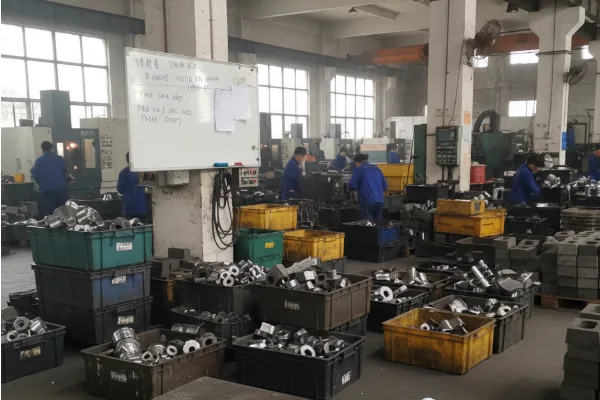
How Can You Verify the Quality and Technology of a Chinese Foundry?
Every overseas buyer knows this fear: samples look perfect, but the mass production batch is a disaster. Critical dimensions drift, porosity appears, or a different alloy quietly shows up in the material report—if you even get a report.
The only way to avoid this is to treat quality as a system, not a promise. For us, that system starts with a certified quality framework like ISO 9001:20151, but it doesn’t stop there. Before we release any casting into mass production, we lock a complete PPAP-style package:
- Drawings and specifications with clearly marked critical features
- A Process Flow and Control Plan for each operation
- First Article Inspection (FAI)2 with full CMM data on key dimensions
- Material certificates tied to each heat/batch
- Defined sampling plans for ongoing production
When I audit a new foundry in China, I use a simple, non-negotiable checklist:
- Material Certification3 – Can they provide heat-specific certificates from a recognized mill for the exact material used on my parts?
- Spectrometer Analysis – Do they have in-house or third-party spectrometer capability to prove the alloy composition matches the spec?
- CMM Dimensional Inspection4 – Can they measure and report critical dimensions (not just with calipers) and share a full FAI report?
- Internal Defect Testing5 – For safety-critical castings, can they perform X-ray, ultrasonic, or other NDT checks to control internal porosity and cracks?
- Traceability & Records – Do they maintain batch traceability (from raw material to finished part) and keep inspection records for a reasonable period?
If a supplier struggles to show these basic elements, I don’t move forward—no matter how attractive the unit price looks.
If you’d like to see what a typical FAI/PPAP package from us looks like, just mention it when you send your RFQ. We can share a redacted example so you know what to expect before you commit to tooling.
What Are the Hidden Costs When Sourcing Castings from China?
A very low quote can be tempting, but in castings, price is a snapshot—total cost is a story. I’ve seen projects where the initial offer looked 10–15% cheaper, only for the foundry to come back later with material surcharges, tooling “repair” fees, or expensive rework after defects appeared in the field.
To avoid this, you need to understand what really drives the cost of a casting program and make sure your quote captures each piece clearly:
- Raw material is usually the biggest component and is sensitive to global commodity prices.
- Tooling and patterns6 are a one-time investment, but they must be amortized realistically over your expected volume.
- Process and labor include melting, pouring, cleaning, heat treatment, and machining.
- Quality control7 (NDT, CMM, third-party testing) must be defined upfront, not added later as a surprise.
- Logistics and duties8 vary a lot depending on Incoterms and destination.
Here’s how I explain the typical breakdown when we discuss total cost with overseas buyers:
| Cost Factor | Percentage of Total Price (Approx.) | What You Need to Ask a Supplier |
|---|---|---|
| Raw Materials | 50% - 85% | “How do you manage price fluctuations? Is the material certified by heat/lot?” |
| Tooling Amortization | Varies by Volume | “What is the expected tool life? Do I own the tool outright, and where is it stored?” |
| Process & Labor | 10% - 20% | “Does this price include all cleaning, heat treatment, and secondary machining?” |
| Quality Control | 2% - 5% | “Is CMM/FAI/NDT included in the price or quoted separately?” |
| Logistics & Duties | 5% - 10% | “What are your shipping terms (FOB, CIF, DAP)? Who handles export paperwork and customs?” |
For medium- to long-term projects, I strongly recommend agreeing a price validity period and an adjustment formula for raw materials. For example, you can lock the conversion cost and allow material to move within a narrow band based on a transparent index. This protects both sides: your supplier does not need to cut corners on quality when prices move, and you are not surprised by sudden, unplanned increases.
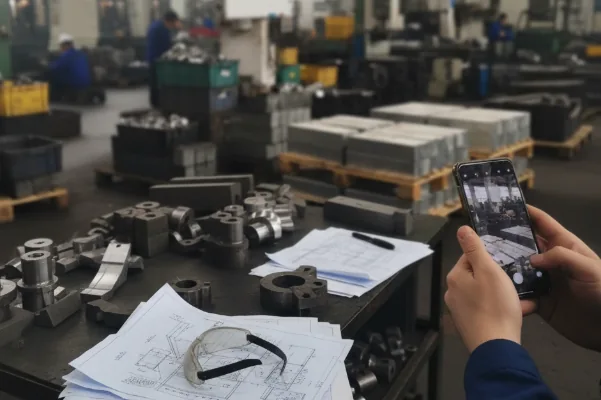
Why Many Overseas Buyers Work with Prime Fabworks
Many overseas buyers tell me they don’t just want a cheap supplier—they want a long-term technical partner1 who can grow with their projects. That’s the role we aim to play at Prime Fabworks.
A quick overview of who we are:
- Experience & History – Our group has been in metal manufacturing since 1993, serving OEMs and industrial customers in North America, Europe, the Middle East, and Australia.
- Processes Under One Roof – We integrate sand casting, investment casting, machining, and related processes such as CNC machining and surface treatments, so you can manage fewer suppliers.
- Material Coverage – Cast iron, cast steel, stainless, aluminum, and zinc alloys for a wide range of industrial applications.
- Flexible Volumes – From small prototype batches to stable serial production, with the ability to ramp up quickly when your demand grows.
- Quality & Traceability – ISO-based systems2, PPAP/FAI capability, CMM measurement, spectrometer analysis, and documented traceability from raw material to final packed pallet.
Instead of sending you a glossy brochure, here are two brief case examples that reflect how we usually work with overseas buyers.
Case Study 1 – Reducing Risk on a Safety-Critical Iron Casting
A US industrial OEM needed a ductile iron component for a safety-critical application. Their previous supplier had recurring issues with internal porosity and inconsistent mechanical properties.
- We reviewed the drawing and suggested a material upgrade within the same standard, along with a revised gating design.
- Implemented X-ray sampling3 and an enhanced control plan for the most defect-sensitive features.
- Within three batches, the customer’s incoming rejection rate dropped to near zero, and they standardized our PPAP template across similar projects.
Case Study 2 – Converting a Machined Block to a Near-Net Casting
A European customer was machining a complex housing from solid bar, which drove up both material waste and cycle time.
- Our engineers proposed a near-net cast aluminum housing4 with a combination of die casting and finish machining.
- The new design reduced raw material consumption by over 30% and cut machining time significantly.
- The total piece price came down while maintaining tolerance and cosmetic requirements.
If you’d like us to review your own quote comparison or casting design5, you can briefly describe your project and send your RFQ here:
Conclusion: Ready to Review Your Casting Project?
Choosing a Chinese casting supplier is not about finding the “best” factory on paper. It’s about finding the right partner for your alloy, process, volume, and total cost targets—and then backing that relationship with clear RFQs, robust quality systems, and transparent pricing.
If you’re working on a new casting RFQ—or re-evaluating an existing project—you don’t have to guess.
Upload your RFQ or drawing (https://primefabworks.com/contact/) and our team will review your alloy choice, process, and basic cost structure. In most cases, we can come back within 24 hours with suggestions, indicative pricing, and potential risks to watch for in your sourcing plan.
Explore how a long-term technical partner can enhance project growth and stability in manufacturing. ↩
Learn about ISO-based systems and how they ensure quality and consistency in manufacturing processes. ↩
Discover the role of X-ray sampling in enhancing quality control and reducing defects in manufacturing. ↩
Find out how near-net casting can reduce waste and costs while maintaining quality in production. ↩
Explore best practices in casting design to optimize production efficiency and product quality. ↩
Understand the strategies for aligning Western quality standards with manufacturing realities for better outcomes. ↩
Explore effective quality control practices to minimize defects and enhance product reliability. ↩
Learn how logistics and duties can impact your overall manufacturing expenses and planning. ↩