
Your steel grating meets every load standard. It feels solid under your feet. But a hidden weakness could cause catastrophic failure, right at its strongest point.
The welded joint, while strong, creates a brittle Heat-Affected Zone1 in the steel. This spot is prone to tiny fatigue cracks2 from vibration and is also a weak point for corrosion. This combination, not overload, is the leading cause of unexpected grating failure.
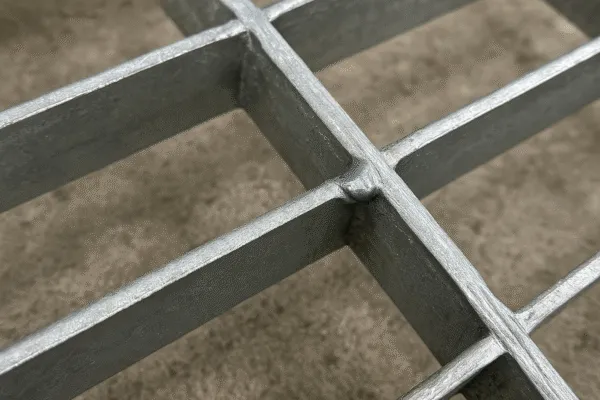
In my 30 years of sourcing industrial hardware, I’ve learned that spec sheets don't tell the whole story. I remember a client's petrochemical facility in Texas where a platform section failed, leading to an expensive emergency shutdown. The failure analysis confirmed it wasn't overload; it was fatigue from a nearby pump. This failure was a direct violation of basic safety principles outlined by bodies like OSHA regarding walking-working surfaces. That lesson proved that the real danger isn't what you can see, but the microscopic changes that happen during manufacturing.
An Old Engineer's Secret: The Truth About Metal Grating Failure They Don't Teach You?
You trust the spec sheets. The load capacity and the zinc coating check out. Yet, you hear stories of gratings failing without any warning or obvious overload.
The secret is the "metallurgical notch" created during welding. This microscopic, brittle zone in the steel becomes the perfect starting point for fatigue cracks under constant vibration, a factor that standard load tests completely ignore.
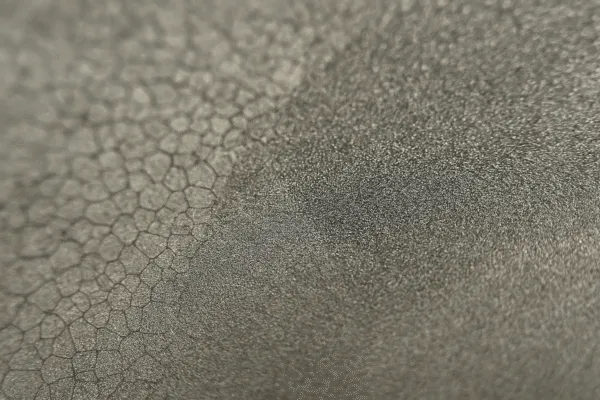
Let's dive deeper. During high-current resistance welding, the steel at the joint is heated and cooled rapidly. This transforms the steel’s normally tough internal structure into a hard, brittle structure called martensite. This area is known as the Heat-Affected Zone (HAZ). While extremely hard, martensite cannot flex under stress. This creates a microscopic "notch" effect where any vibrational stress will concentrate. On our factory floor, we perform destructive tests on sample welds from every batch, literally breaking them to measure the fusion depth and analyze the HAZ under a microscope. It's the only way to be certain our welding parameters are dialed in perfectly.
The Birth of a Flaw: The Heat-Affected Zone (HAZ)
| Property | Base Steel (Bearing Bar) | Heat-Affected Zone (HAZ)1 |
|---|---|---|
| Microstructure | Uniform, ductile ferrite-pearlite | Brittle, hardened martensite |
| Hardness | Normal | Higher |
| Toughness (Flexibility) | High | Extremely Low / Brittle |
| Fatigue Cracking Risk2 | Low | Very High |
Beyond Load Capacity: How Vibration & Micro-Corrosion Silently Destroy Steel Grating?
Your maintenance team looks for obvious rust and bent bars. But a silent killer duo—vibration and micro-corrosion1—is eating away at your grating's core strength, unseen.
High-frequency vibration starts microscopic cracks at the brittle weld joints. Moisture then seeps in, causing aggressive crevice corrosion that pries these tiny cracks open. This destructive partnership causes failure far below the grating's official load rating.
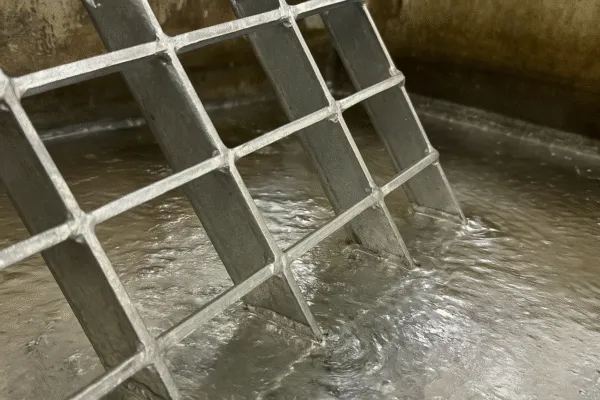
While hot-dip galvanizing, performed to a standard like ASTM A123, provides excellent protection, the complex geometry of a weld joint is its weakest link. As the American Galvanizers Association explains, achieving a perfectly uniform coating thickness in these crevices is challenging. When a micro-crack forms, it instantly breaches this thin layer of protection. Moisture gets trapped, creating an oxygen-starved environment inside the crack. This starts an aggressive electro-chemical reaction called crevice corrosion. The rust byproduct (iron oxide) then expands, acting like a wedge that forces the crack wider, accelerating the cycle until total failure.
How Can You Spot This Hidden Danger Before It's Too Late?
You know this hidden weakness is invisible during a normal inspection. A standard visual check for bent bars will miss the real danger until the moment of failure. Are you sure your people are safe?
You must train staff to look for fine, rust-colored lines that "bleed" out from the weld joints, even if the rest of the galvanizing looks perfect. This is the only visual clue that a micro-crack has already compromised the coating and internal corrosion has begun.
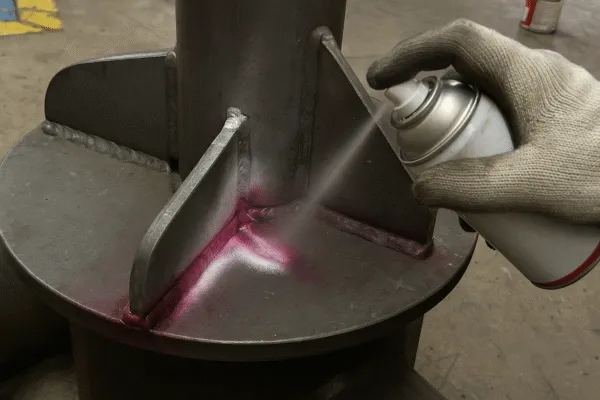
A proactive inspection program requires more than a passing glance. For critical areas, consider implementing more rigorous methods during planned shutdowns. As recommended by the American Society for Nondestructive Testing (ASNT), methods like Dye Penetrant Testing (DPT) or Magnetic Particle Inspection (MPI) will definitively reveal surface-breaking cracks that are completely invisible to the naked eye. Investing in this level of inspection is far cheaper than dealing with the aftermath of a failure.
Comparing Inspection Methods
| Inspection Method | Cost | Skill Level | Effectiveness for Micro-Cracks |
|---|---|---|---|
| Visual Inspection | Low | Low | Very Poor |
| Hammer Tap Test | Low | Low | Fair (Detects advanced cracks only) |
| Dye Penetrant (NDT) | Medium | Medium | Excellent |
| Magnetic Particle (NDT) | Medium-High | High | Excellent |
Welded vs. Press-Locked: Which Grating is Right for Your Dynamic Environment?
You're frustrated by the hidden risks of welded grating. You need a reliable alternative for critical areas, but choosing the right one can be confusing.
For high-vibration or corrosive environments, press-locked grating is a superior choice. It has no welds, eliminating the brittle Heat-Affected Zone. This makes it inherently more resistant to fatigue cracking, offering greater long-term safety and reliability.
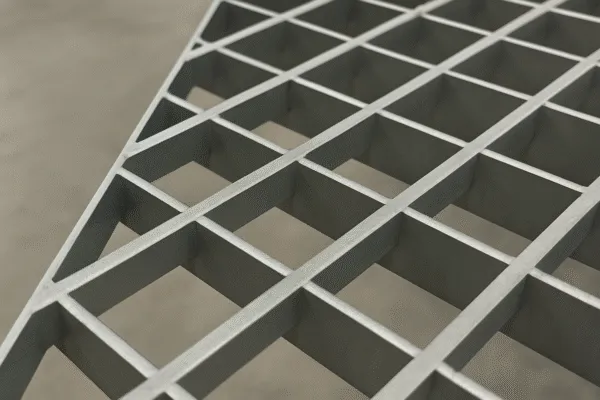
Press-locked grating is made by using immense hydraulic pressure to press the cross bars into notched bearing bars. This cold-forming process doesn't alter the steel's internal structure. It aligns with the manufacturing principles for high-performance grating found in standards from the National Association of Architectural Metal Manufacturers (NAAMM). I've seen projects for North Sea platforms where specifying press-locked grating from the start saved them millions in future maintenance and inspection costs. It's about choosing the right solution from our range of industrial grating products.
Is Your Grating Specification Actually Putting You at Risk?
You likely specify grating based on standard load charts. But these static specs don't account for dynamic forces, leaving you with a false sense of security.
Your specification is risky if it only considers static load. You must collaborate with your supplier and provide details on the dynamic environment to get the right product, backed by a robust quality process.
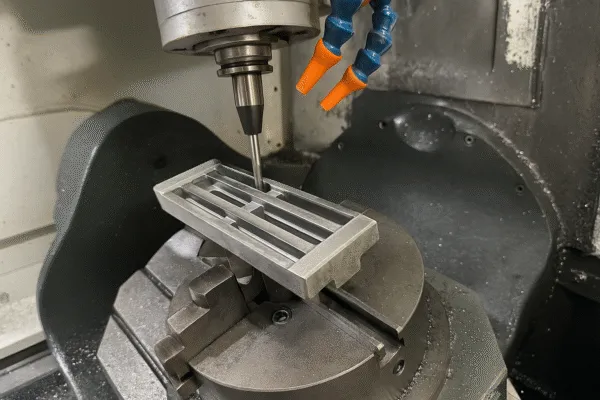
When you are sourcing, you need to have a deeper conversation. For new clients with critical applications, our ISO 9001 certified process1 includes running a full Production Part Approval Process (PPAP)2 to validate everything. Here are questions to ask your supplier:
- "What welding process do you use, and what are your QC procedures to minimize the HAZ, consistent with AWS D1.1 standards?"
- "Can you provide weld penetration test results from a recent production batch?"
- "For hot-dip galvanizing, what is your process for ensuring coverage at the weld joints?"
- "Based on my application, do you still recommend this product, or should we consider an alternative?"
A true partner will have the answers and ask these questions first.
Frequently Asked Questions About Grating Failure
What is the main cause of steel grating failure?
While extreme overload can cause failure, the most common and dangerous cause is fatigue cracking at the weld joints, initiated by vibration and accelerated by hidden corrosion.
Is welded grating safe for high vibration areas?
Standard welded grating can be a significant risk in areas with constant high-frequency vibration. For these applications, press-locked grating is a much safer alternative as it has no welds.
How long should galvanized steel grating last?
In a dry, static environment, it can last over 30 years. However, in a corrosive, high-vibration industrial plant, its effective safe lifespan can be reduced to just 5-10 years.
What is the difference between welded and press-locked grating?
Welded grating joins bars with heat, creating a strong but brittle weld point. Press-locked grating uses immense pressure to interlock the bars without heat, preserving the steel's toughness.
When should I use advanced NDT for grating inspection?
Non-Destructive Testing (NDT) like dye penetrant should be used for safety-critical applications during planned maintenance. This includes primary walkways and platforms supporting heavy machinery.
Take the Next Step
You've learned about the hidden risks. Now, partner with an expert who can deliver a safe, reliable, and cost-effective solution for your specific needs. Let our experience work for you.
> Upload Your RFQ / Contact Prime for a Consultation
Conclusion
The real danger in welded grating isn't a sudden overload. It's the silent partnership of vibration and corrosion attacking the welds. Understanding and planning for this hidden risk is the first step to true safety.