
Are you choosing between grating and grate bars? After 30 years in this business, I can tell you that a simple misunderstanding can lead to catastrophic failure. I've personally seen it cost companies millions in downtime and repairs.
The key difference isn't load capacity; it's their "failure philosophy1." Metal grating fails as a single interconnected system, where one break can cause a total collapse. Grate bars are independent, so a single failure is localized, protecting your operation from a widespread shutdown. This is the crucial distinction for any high-stress industrial environment2.
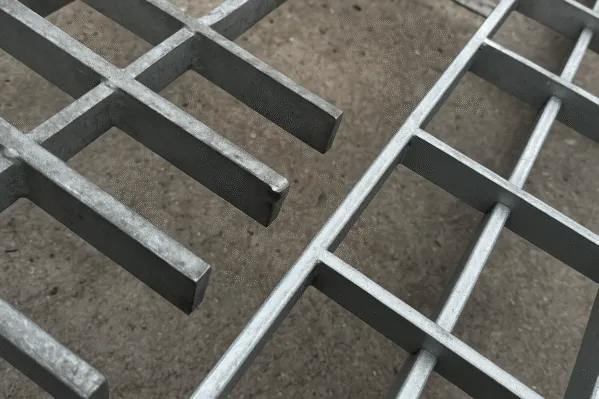
Over my three decades running Prime Fab Works, I've consulted on countless projects where engineers focused only on the static load ratings on a spec sheet. They sign off on the purchase, and a year later, I get a frantic call about a warped, failed floor. They miss the most important question: "How does it fail?1" The answer to that question is the key to reliability, safety, and long-term profitability.
Beyond Load Bearing: Why Grate Bars Outperform Grating in Extreme Conditions
Your brand-new grating meets all the load specs but fails spectacularly under intense heat. This unexpected warping causes unplanned shutdowns. The root cause isn't a faulty product; it's a faulty choice for the application.
Grate bars excel in extreme conditions2 because they are designed as individual components. The intentional gaps between them safely accommodate thermal expansion. This prevents the buildup of immense internal stress that causes interconnected grating panels to warp, suffer from thermal fatigue, and fail catastrophically.
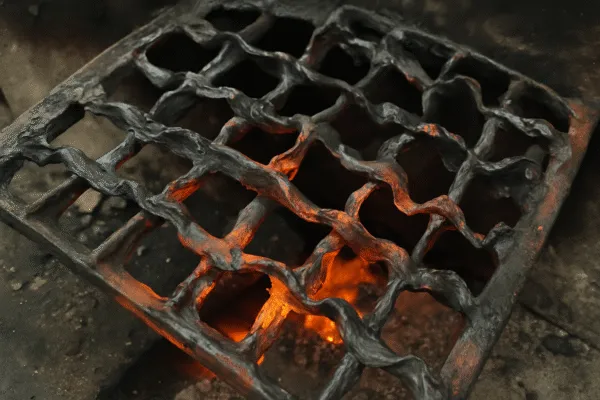
The science is straightforward. A material's tendency to expand is measured by its coefficient of thermal expansion. In a welded grating panel, this expansion has nowhere to go. This constant cycle of expansion and contraction leads to thermal fatigue1, which weakens the metal's microstructure over time. A product that was strong on day one becomes dangerously brittle. Grate bars completely sidestep this issue. Their "breathing room2" turns thermal expansion into a non-event.
Material Selection for High-Temperature Applications
The right design is useless without the right material. For high-heat environments, referencing established industry standards is non-negotiable for ensuring performance and safety, as outlined by leading industry resources like The American Foundry Society.
| Material | Industry Standard (Example) | Max Temp (Approx.) | Key Characteristics & Failure Points |
|---|---|---|---|
| Carbon Steel | ASTM A36 | 400°C (750°F) | Low cost. Loses strength rapidly at high temps; prone to oxidation. |
| Stainless Steel (304) | ASTM A240 | 870°C (1600°F) | Good corrosion resistance. Can become brittle from carbide precipitation. |
| High-Chrome Cast Alloys | ASTM A297 | >1200°C (>2200°F) | Superior resistance to heat, creep, and oxidation. See our Casting Capabilities. |
As you can see, choosing a grate bar made from a high-chrome alloy like ASTM A297 Grade HH is an engineered solution for a furnace, whereas a standard carbon steel grating is simply the wrong tool for the job.
Systemic vs. Localized Failure: What's the Real Impact of One Broken Bar?
You spot one broken bar in your grating floor. You think it's a small issue, but you're actually looking at the beginning of a progressive failure that could bring down the whole structure.
A single broken metal grating bar creates a point of high stress concentration, compromising the entire panel's integrity and leading to rapid, progressive failure. Conversely, a failed grate bar is an isolated incident. The surrounding bars remain secure, preventing a chain reaction and ensuring operational safety.
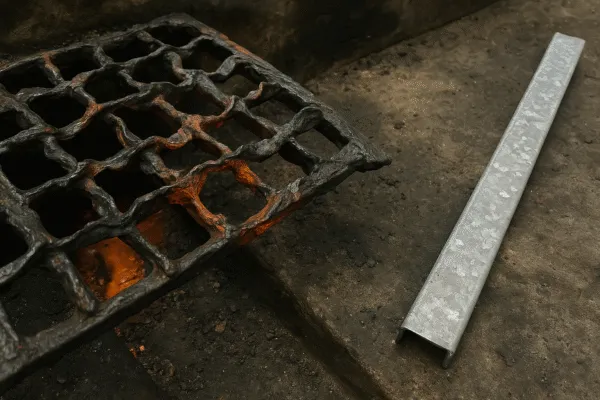
I learned this lesson the hard way early in my career. A mining client had a heavy piece of equipment impact a grated platform, snapping a single weld. Maintenance logged it for repair next week. Before they could get to it, the entire 10x20 foot section collapsed, halting operations for two days and costing them a fortune. Why? The initial break caused a load redistribution1 to the adjacent bars. A grate bar system is inherently resilient to this. Its "pillars" are independent. If one fails, the load is NOT transferred. The system is compromised at only one point, giving you a safe and stable window to schedule a simple replacement.
Total Cost of Ownership: A Smarter Financial Investment
Focusing only on the upfront price is the most common and costly mistake I see. A buyer saves 20% on the initial purchase from a trader, but then faces recurring repairs and crippling shutdowns.
While grate bars may have a higher initial purchase price, their vastly superior durability, near-zero maintenance needs, and prevention of costly downtime result in a significantly lower Total Cost of Ownership (TCO)2.
Our Quality Guarantee: Beyond the Spec Sheet
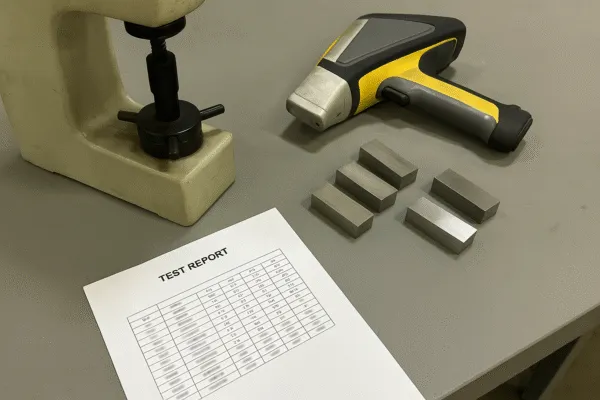
For critical components, a spec sheet isn't enough. Experienced buyers know the pain of receiving a full shipment that doesn't fit or fails prematurely. That's why we use the Production Part Approval Process (PPAP). Before we run your full order, we produce initial samples and provide a full quality report—covering material specs, dimensional accuracy, and testing results. You approve the part before we produce the batch. This eliminates risk and ensures what you receive is exactly what you ordered. It's a core part of our ISO 9001:2015 certified process.
This is the level of assurance that long-term clients like Kevin, who sources parts for major US distributors, have come to rely on. He doesn't just buy a part; he buys predictable, documented quality.
Frequently Asked Questions (FAQs)
1. What materials are best for high-temperature grate bars? For extreme heat, look to cast high-chrome and nickel-based alloys governed by standards like ASTM A297. These resist oxidation and creep failure at temperatures where standard steel grades would fail instantly. We can help you select the precise alloy for your specific operating environment.
2. Can I replace just one part of a welded grating panel? While technically possible, it is not recommended. Welding a patch creates Heat-Affected Zones (HAZ) that are often more brittle and become new weak points. It's a temporary fix that compromises the integrity of the entire system.
3. Is the upfront cost of grate bars1 much higher than grating? Yes, the initial material and fabrication cost is higher because they are engineered products made from superior alloys. However, our TCO analysis consistently shows that by eliminating replacement costs and preventing downtime, they are the more economical choice in the long run.
4. How do I order custom or replacement grate bars2? The best way is to provide the original engineering drawing. If that's not available, provide the exact dimensions and details of the operating environment (temperature, load, etc.). This allows us to engineer the perfect replacement. [Contact us to start the process].
Let's Build a More Reliable Solution
Tired of unplanned failures and unpredictable costs? Work with a partner that understands the difference between a cheap part and a reliable, long-term solution. Our team is ready to analyze your designs and provide a quote based on proven performance.