
Struggling to navigate the complex world of plastics? Making the wrong material or process choice for your components can lead to costly field failures, product defects, and significant budget overruns for your project.
General plastic parts are components made from polymers. Key factors for success include selecting a certified material, like ABS or Polycarbonate, and the best manufacturing process, such as injection molding. These choices, verified by a robust quality system, impact the part's strength, cost, and function across countless industries.
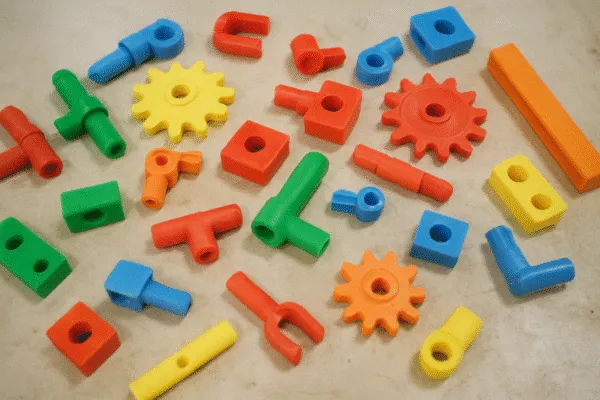
Choosing the right plastic part is more than just picking a shape; it's about building the foundation of your product. As the founder of a manufacturing facility with over 30 years of experience, I've helped countless engineers and buyers turn designs into reality. It always starts with the basics. Let's dive deeper into what makes a plastic part successful, so you can make informed decisions and avoid the common pitfalls I've seen over the decades.
What are the most common materials for plastic parts?
Picking a plastic material can feel overwhelming. Choosing the wrong one can cause your product to fail under stress, degrade in certain environments, or be too expensive for your budget. This is where factory experience is critical.
The most common plastics include ABS for its toughness, Polycarbonate (PC) for superior impact resistance, and Polypropylene (PP) for chemical resistance. While industry overviews from sources like the Plastics Industry Association are helpful, for detailed grade comparisons, professional engineers rely on technical databases like UL Prospector to ensure the exact performance characteristics are met.
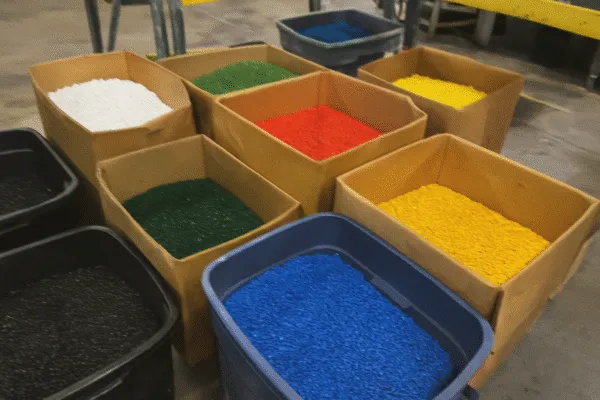
I've worked with countless materials over the past three decades. A client like Kevin, who sources electronic parts from the US, needs materials that are not only durable but also have excellent electrical insulation. For his projects, we specify a specific grade of ABS and provide the material traceability documents as part of our ISO 9001 process. This guarantees that the 10,000th part is identical to the first, a non-negotiable for serious buyers. We can manufacture a wide range of custom plastic parts to meet these exact needs.
Matching Materials to Your Needs
To simplify your choice, I've broken down the most popular materials1 we handle. This table is a starting point for your technical discussion2 with our engineers.
| Material | Key Properties | Ideal For |
|---|---|---|
| ABS | High impact strength, good rigidity, low cost | Housings for electronics, consumer goods |
| Polycarbonate (PC) | Excellent toughness, transparent, heat resistant | Lenses, machine guards, durable enclosures |
| Polypropylene (PP) | Chemical resistant, lightweight, flexible | Living hinges, containers, automotive parts |
| Nylon (PA) | High wear resistance, strong, good friction | Gears, bearings, high-wear components |
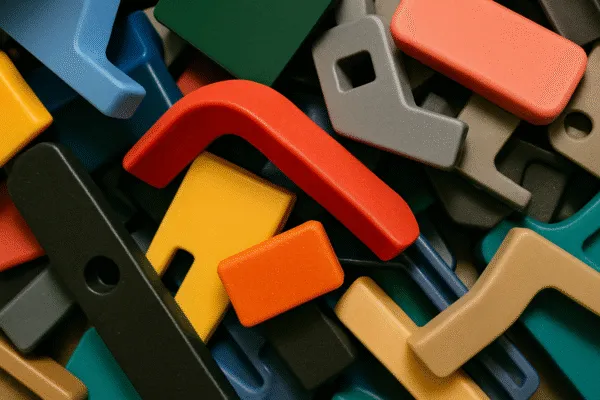
Which manufacturing process is right for your plastic parts?
You have a design, but how do you turn it into a physical part? Picking the wrong manufacturing method1 can waste your budget on slow production or high per-unit costs for large volumes.
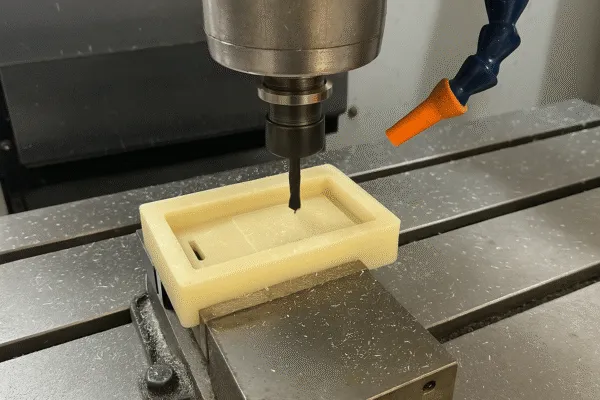
Injection molding is best for high-volume production with a low per-unit cost. For precise prototypes or low-volume runs, CNC machining is ideal. The right choice depends entirely on your project's quantity, complexity, and budget.
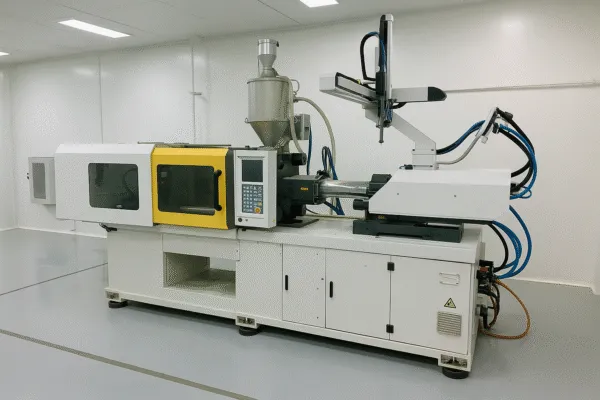
Selecting the right process is a critical decision. I remember a client struggling with the high per-unit cost of CNC machining for a run of 10,000 units. After a brief consultation, we switched them to injection molding. Their part cost dropped by over 70%. As leading publications like Plastics Technology often highlight, the initial mold investment pays for itself quickly on high-volume runs. We delivered a full PPAP to validate the new process before starting mass production.
A Closer Look: The Injection Molding Process
Injection molding1 is our most common process for large orders. Understanding the steps helps you appreciate the quality control2 involved at each stage.
| Step | Description |
|---|---|
| 1. Clamping | The two halves of the steel mold are securely closed under extreme pressure. |
| 2. Injection | Molten plastic resin is injected rapidly into the mold cavity. |
| 3. Cooling | The plastic cools and solidifies inside the mold, taking its precise shape. |
| 4. Ejection | The mold opens, and the finished part is pushed out by ejector pins. |
How can you ensure the quality of your plastic parts?
Receiving a shipment of low-quality plastic parts is a buyer's nightmare. It can halt your production line, ruin your product's reputation, and lead to expensive recalls.
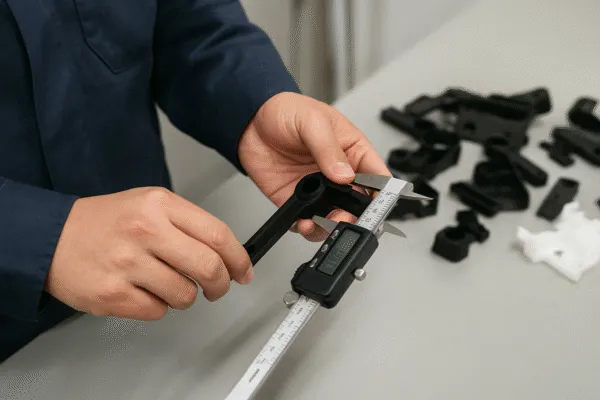
To guarantee quality, you must partner with an ISO 9001-certified supplier who lives and breathes a certified quality system. Our factory is certified to the ISO 9001:2015 standard, which means we provide documented proof of quality, from material sourcing to final inspection. For many clients, we provide full Production Part Approval Process (PPAP) documentation.
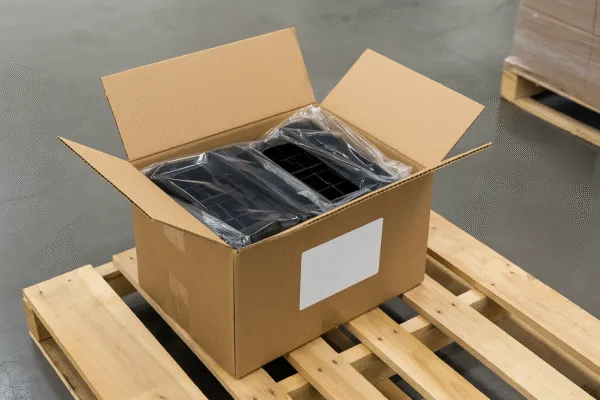
I can't stress this enough: quality is the bedrock of our partnership. Buyers like Kevin are extremely sensitive to quality because they've been burned by unreliable suppliers. He once received an order with such poor packaging that half the parts were damaged in transit. Our job is to eliminate that risk. A good supplier isn't just a manufacturer; they are an extension of your quality team.
The First Step in Quality: Design for Manufacturability (DFM)
Long before a single part is molded, quality begins with a DFM analysis. This is a collaborative process where our engineers analyze your design to identify potential manufacturing issues. We check for uniform wall thickness, proper draft angles for ejection, and the placement of gates. Addressing these issues early is the first critical step in building a successful PPAP submission and ensuring a smooth production run.
The Final Proof: The PPAP Report
For clients in demanding industries like automotive or medical, the PPAP report is the ultimate proof of quality. It's a comprehensive document that can include:
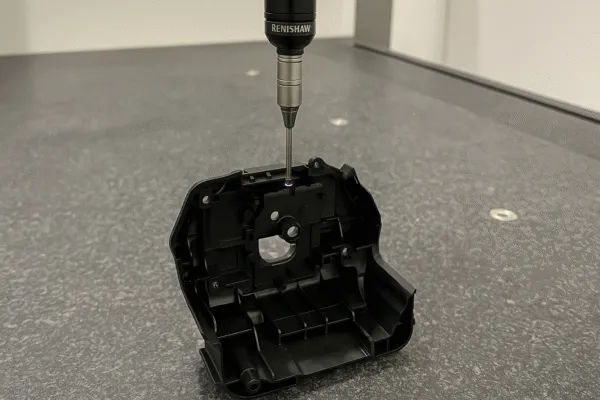
- Dimensional Results: Proof that the parts meet every specification on your drawing.
- Material Certifications: Traceable documents from the resin supplier.
- Process Capability Studies (Cpk): Statistical data showing that our process is stable and capable of producing conforming parts repeatedly.
- Material Testing: Verification of properties like tensile strength according to standards from organizations like ASTM International.
FAQ: Your Questions Answered
How much does a plastic injection mold cost?
Mold cost varies widely, from a few thousand to over $100,000. Key factors include the part's complexity, size, the steel used for the mold (e.g., P20 vs. H13), and the number of cavities. We provide a detailed cost breakdown in our quotes.
What is the difference between thermoplastic and thermoset plastics?
Thermoplastics, as detailed on Wikipedia, can be melted and reshaped multiple times, which is why they are used in injection molding. Thermosets undergo a chemical change when heated and cannot be remelted. We specialize in thermoplastics due to their manufacturing versatility.
What is your typical Minimum Order Quantity (MOQ)?
Our MOQ depends on the process. For injection molding, runs of 1,000 units or more are most cost-effective. For other processes, it can be lower. The best way to know is to contact our engineering team to discuss your specific project.
What file format do I need to provide for a quote?
For the most accurate quote, please provide a 3D CAD file in STEP (.stp) or IGES (.igs) format. A 2D drawing (PDF) with specified tolerances, materials, and finish requirements is also extremely helpful.
Conclusion
Choosing the right material, process, and supplier is vital for your product's success. We have the experience and certified systems to deliver quality you can trust.