
Worried rust will ruin your project's reputation and lead to costly field failures? The cost of a bad material choice is high. As a factory owner, I can tell you that understanding galvanized steel is your best defense against predictable corrosion and ensures your parts last as specified.
Yes, galvanized steel will eventually rust, but only after its protective zinc coating is completely depleted. This zinc layer acts as a sacrificial barrier, corroding first to protect the steel underneath. According to the American Galvanizers Association (AGA), this process can delay the onset of rust for 30 to 75+ years, depending on the environment.

The simple answer is "yes, eventually," but that doesn't tell the whole story for your critical OEM project. That answer won't help you write a proper spec sheet. At Prime, we've been producing millions of galvanized parts since 1993, and I've seen firsthand how a small specification detail can make or break a product's life. My goal is to share our factory experience so you can make a smart purchasing decision that protects your investment and reputation.
How Does Galvanization Actually Stop Rust?
You see "galvanized1" on spec sheets, but do you know why it's so incredibly effective? Misunderstanding this basic science can lead you to choose the wrong material, resulting in premature failure2.
Galvanization1 stops rust using a powerful, three-part system. It creates a physical barrier, provides sacrificial cathodic protection2 if the barrier is breached, and forms a stable zinc patina over time that further slows corrosion.
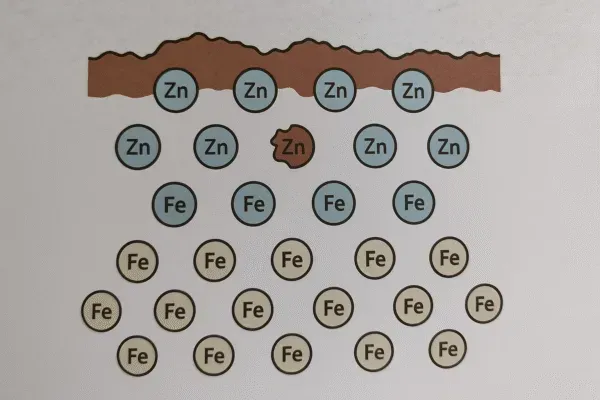
Let's look closer at these protective mechanisms. Zinc is a remarkable material; the International Zinc Association (IZA) provides extensive data on its use in protecting steel. Its ability to sacrifice itself is the key.
The Zinc Shield: A Physical Barrier
The most straightforward way galvanizing works is by creating a tough, bonded shield. This coating completely covers your custom stamping parts, preventing corrosive elements like water and oxygen from ever reaching the iron in the steel.
The Sacrificial Anode: An Electrochemical Hero
This is the real magic. Steel and zinc form a galvanic couple in the presence of moisture. Because zinc is more electrochemically active, it corrodes first. This means even if you gouge the part deep enough to expose the steel, the surrounding zinc will corrode to protect that exposed area.
The Zinc Patina: A Natural, Durable Surface
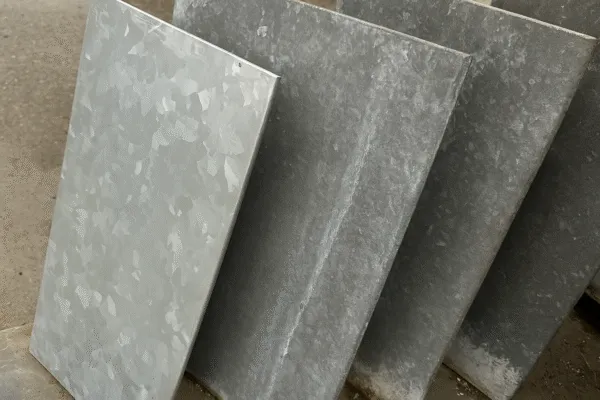
Over time, the zinc coating reacts with the atmosphere to form a tough, water-insoluble layer of zinc carbonate. This dull gray patina is extremely stable and further slows the corrosion rate, adding to the part's longevity.
What's the Difference Between Hot-Dip and Electro-Galvanizing?
Choosing the wrong galvanization type can wreck your budget and your product's lifespan. I've seen buyers specify the wrong finish, leading to early field failures.
Hot-dip galvanizing (HDG) creates a thick, durable coating by dipping the steel in molten zinc, forming a metallurgical bond. Electro-galvanizing (EG) applies a much thinner, more uniform layer using an electric current, making it better for parts requiring a fine, aesthetic finish like some consumer-facing screws and fasteners.
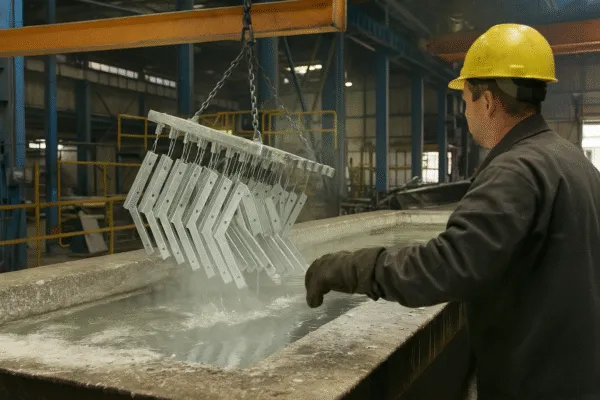
For our automotive clients, the choice is almost always HDG for underbody components. We submit a full Level 3 PPAP (Production Part Approval Process) warrant, which includes detailed coating thickness measurements, adhesion test results, and salt spray test data to validate corrosion resistance against specific engineering standards. This is a level of quality control you won't get from every supplier.
Comparison of Galvanizing Methods
| Feature | Hot-Dip Galvanizing (HDG) | Electro-Galvanizing (EG) |
|---|---|---|
| Process | Part is dipped in molten zinc (~450°C) | Zinc is applied via electrolysis |
| Coating Thickness | Thick & slightly uneven (45-100+ µm) | Thin & very uniform (5-25 µm) |
| Best For... | Structural steel, outdoor hardware | Indoor electronics, some CNC parts |
How Long Does Galvanized Steel Last in Different Environments?
Can your parts actually handle the real world? Guessing is a massive gamble. We need to look at real-world performance data to protect your investment.
The lifespan depends entirely on two factors: the thickness of the zinc coating and the corrosivity of the environment. For sheet steel, coatings are specified by weight per the international standard ASTM A653. A "G90" rating means 0.90 oz of zinc per square foot.
Estimated Lifespan of Galvanized Steel (Based on AGA data)
| Environment Category | Description | Avg. Zinc Corrosion Rate (µm/year) | Estimated Years to 5% Red Rust (G90) |
|---|---|---|---|
| Dry / Rural | Low humidity, low pollution | < 0.8 | 30+ years |
| Temperate / Urban | Moderate humidity, some pollution | 0.8 - 2.0 | 15 - 30 years |
| Industrial | High humidity, acidic pollutants | 2.0 - 4.0 | 7 - 15 years |
| Marine | High humidity, high salt content | 4.0 - 8.0 | 3 - 7 years |
What Are the Signs That Galvanized Steel is Starting to Fail?
Is that white powder on your parts a problem? Ignoring the early warning signs can lead to quality control issues down the line.
The first sign of corrosion is not red rust. It's "white rust." This is the zinc coating doing its job. Red rust only appears after the zinc in that area is completely gone.
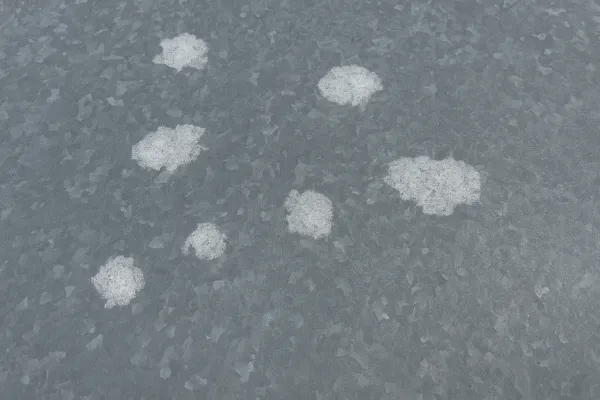
Stage 1: White Rust (Wet Storage Stain)
This bulky, white powder forms when newly galvanized parts are tightly stacked in humid conditions. It's a common concern for international shipments.
- Our Factory Solution: For a recent shipment of custom casting parts to a client in a humid climate, we implemented a specific passivation process post-galvanizing and used VCI paper in the packaging. This was documented in our quality plan and prevented any wet storage stain upon arrival.
Stage 2: Zinc Patina Formation
The coating weathers to a uniform matte gray. This is the stable zinc carbonate layer forming, and it shows the coating is performing perfectly.
Stage 3: Red Rust (Iron Oxide)
Red rust means the zinc layer in that spot is gone and the base steel is now corroding. This indicates the end of the part's service life.
Conclusion
Galvanized steel does rust, but its zinc coating offers decades of predictable protection. Choosing the right galvanizing method and coating thickness is critical for ensuring your product's long-term success.
Frequently Asked Questions About Galvanized Steel
Does welding damage the galvanized coating?
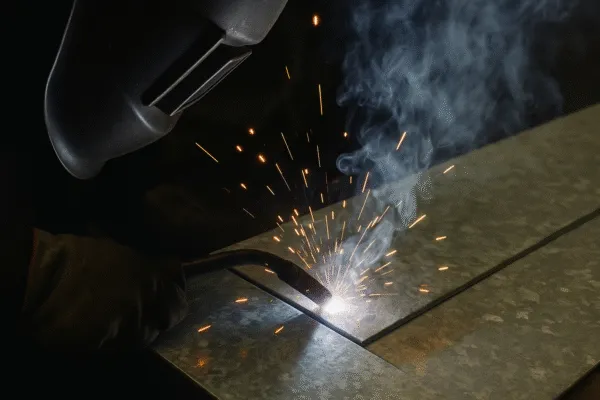
Absolutely. The heat of welding vaporizes the zinc coating around the weld zone. This area must be repaired. Worker safety is also paramount. According to the U.S. Occupational Safety and Health Administration (OSHA), welding galvanized steel requires proper ventilation and respiratory protection to prevent exposure to hazardous zinc fumes.
Is galvanized steel sustainable?
Yes, it's considered a highly sustainable choice. Both the base steel and the zinc coating are 100% recyclable without losing their physical properties. This creates a circular economy, reducing the need for virgin materials and lowering the overall environmental footprint.
What is the difference between galvanized steel and stainless steel?
Galvanized steel is carbon steel with a protective zinc coating. Stainless steel is an alloy where corrosion resistance is integral to the metal itself. Stainless is more expensive and used for aesthetic or food-grade applications.
Ready to discuss the right coating for your project?