Choosing the wrong steel casting supplier1 leads to project delays2, budget overruns, and parts that fail in the field. This wastes time and money, jeopardizing your reputation and your product's reliability.
To choose the right manufacturer, you must conduct a thorough evaluation of their technical capabilities, quality management systems, and production scalability. A true partner aligns their processes with your project's specifications to ensure consistent quality, on-time delivery, and long-term value.
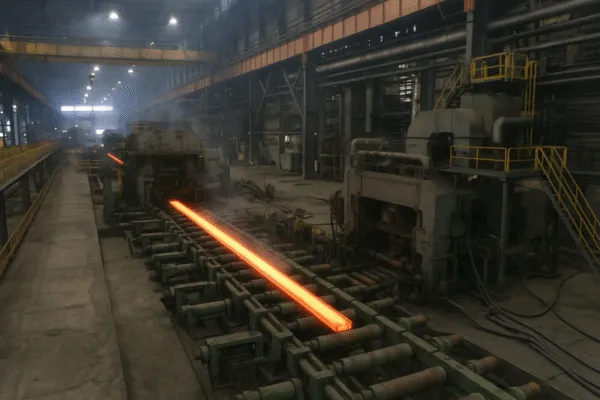
After more than 30 years in this industry at Prime, I've managed thousands of steel casting projects. I've seen firsthand how the initial choice of a manufacturing partner is the single most critical factor for success. It's not just about a low price; it's about finding a partner who mitigates your risks and acts as an extension of your own team. Let's walk through the essential questions and criteria you need to use to select a manufacturer you can trust for years to come.
How do you evaluate manufacturing capabilities like size, alloy grades, and process types?
A supplier's capabilities might not match your project's technical needs. This can result in parts that don't meet spec, forcing you to accept subpar quality or start the sourcing process all over again.
Evaluate their manufacturing capabilities by verifying their facility size, the specific alloy grades they are experts in, and the casting processes they offer. Ask for case studies or examples of similar parts to ensure their experience aligns with your project's complexity.
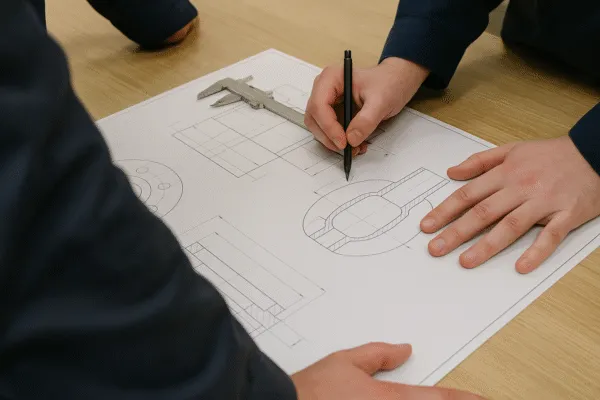
When you look for a partner, go deeper than their website claims. A few years ago, a client, Kevin from the U.S., needed complex parts for Siemens. He required a specific investment casting process for an intricate stainless steel grade. We went beyond just confirming our capability; we provided a detailed Design for Manufacturability (DFM) analysis. By suggesting a minor tweak to a draft angle and adding a small fillet, we simplified the mold design, which reduced his tooling cost by 15%, improved the molten metal flow to eliminate potential porosity, and ultimately resulted in a stronger, more reliable part. That's the value of experience—turning a blueprint into a better product.
Material and Process Expertise
Ensure the manufacturer has documented experience with your required alloy. Reputable sources like the Steel Founders' Society of America (SFSA) offer excellent technical resources that can help you cross-reference a supplier's claims.
| Common Steel Casting Alloy Types | Key Characteristics | Typical Use Case |
|---|---|---|
| Carbon Steels | Good strength and weldability; cost-effective. | General machinery, structural components. |
| Stainless Steels | High corrosion resistance, excellent surface finish. | Food processing equipment, marine hardware. |
| Alloy Steels | Enhanced hardness, strength, and heat resistance. | Automotive gears, high-stress parts. |
| Manganese Steels | Extreme impact and abrasion resistance. | Mining equipment, rock crushers. |
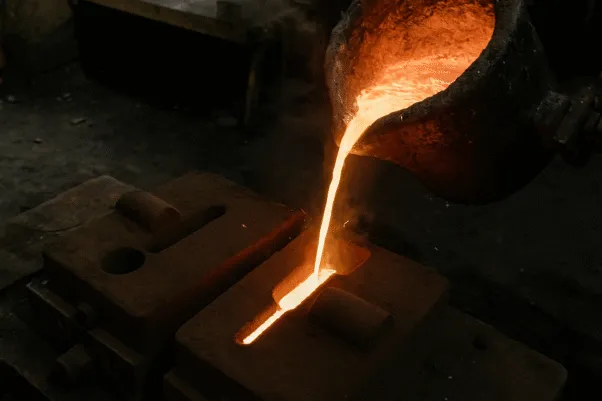
The casting process itself is just as critical. Each method offers different trade-offs in terms of precision, cost, and complexity.
| Casting Process | Best For | Complexity | Key Consideration |
|---|---|---|---|
| Sand Casting | Large, simple parts | Low | Lower tooling cost, rougher surface finish. |
| Investment Casting | Small, complex, high-precision parts | High | Excellent finish, higher tooling & part cost. |
| Die Casting | High-volume, non-ferrous parts | Medium-High | High tooling cost, very low part cost. |
What quality certifications and inspection standards should you look for?
You're worried about inconsistent quality and receiving defective parts1. Poor quality means costly rejections, production halts2, and potential failure of your final product, which can lead to warranty claims and brand damage.
Look for internationally recognized quality certifications like ISO 9001:2015. This proves they have a documented, audited quality management system. Also, ask for their specific inspection standards, methods, and a sample quality report.
An ISO 9001 certificate is the global standard for quality. For a buyer, this means the factory has robust systems for traceability (if a defect occurs, they can trace it back to the specific raw material batch) and process control (ensuring consistency from the first to the 10,000th part). It’s your first line of defense against poor quality. For critical applications, we often provide a full Production Part Approval Process (PPAP) package, giving objective evidence that all your engineering requirements are understood and met before we produce a single part for your main order.
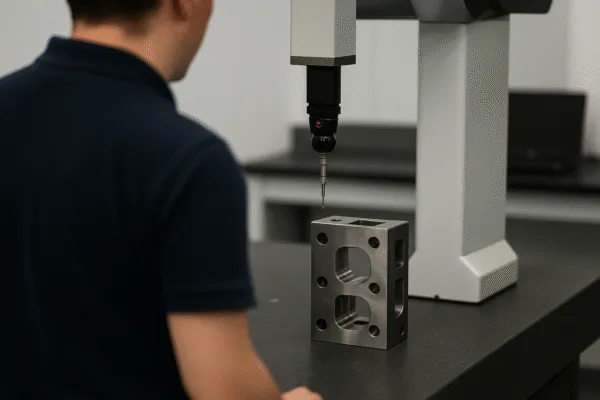
A reliable factory uses multiple inspection methods, with standards often governed by ASTM International, to ensure quality from raw material to finished part.
| Inspection Method | Purpose | Why It's Critical |
|---|---|---|
| Spectrometer Analysis | Verifies the chemical composition of the steel alloy. | Ensures the material meets strength and corrosion specs. |
| CMM (Coordinate Measuring Machine) | Checks complex dimensional accuracy to the micron level. | Guarantees the part will fit and function correctly in assembly. |
| Non-Destructive Testing (NDT) | X-ray finds internal voids; Magnetic Particle finds surface cracks. | Prevents catastrophic part failure under stress. |
| Hardness Testing | Confirms the part meets required strength specifications. | Verifies proper heat treatment and material integrity. |
What should you ask about lead time, custom tooling, and scalability?
Your project timeline is tight, and future order volumes might fluctuate. Long lead times1 can make you miss market opportunities, and a supplier who cannot scale2 can choke your growth just as you start succeeding.
Ask for a detailed project timeline1, including separate milestones for tooling, sampling, and mass production. Inquire about their production capacity2 and how they handle demand surges. A good partner will provide a clear schedule and a scalable plan.
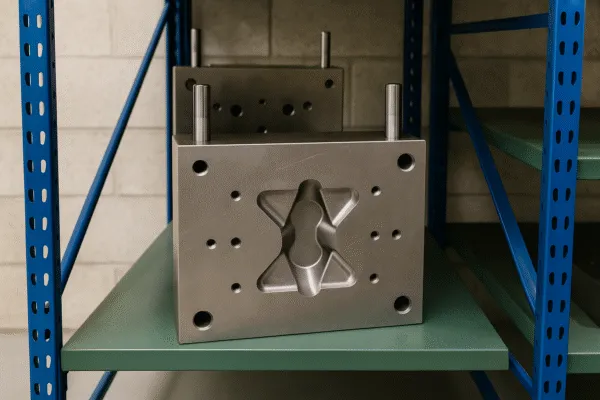
I always tell new clients to think about the entire production lifecycle. A detailed timeline is non-negotiable. A few years ago, a European client needed a large volume of parts for a product launch. We not only provided a timeline but also a capacity plan showing how we could ramp up production by 50% with only two weeks' notice. We also clarified shipping terms using Incoterms® rules defined by the International Chamber of Commerce, preventing costly delays at the port. This level of proactive planning is what separates a supplier from a true partner.
What are the main cost drivers like material selection, finishing, and secondary machining?
You receive a quote but don't understand the factors driving the final cost1. Hidden costs or misunderstood price components can destroy your budget and sour a supplier relationship.
The main cost drivers for steel castings are the raw material grade, part complexity (which affects tooling), required surface finishing, and any precision secondary machining. Always request a detailed cost breakdown to understand where your money is going.
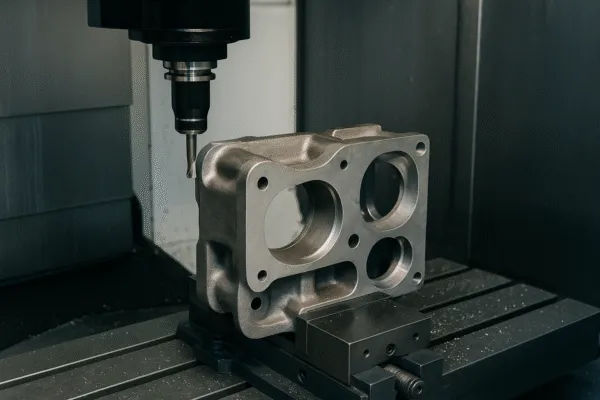
An experienced buyer looks for the best value, not just the lowest price. The per-piece price is only one part of the equation. As experts at publications like Supply Chain Management Review often discuss, you must consider the Total Cost of Ownership (TCO). This includes the cost of potential defects, shipping delays, and communication challenges. A low per-piece price is a false economy if you spend weeks dealing with customs or rejecting 10% of the shipment. We provide transparent quotes and help you find the sweet spot between performance and cost. Need help analyzing your part's cost? Contact our engineering team.
Conclusion
Choosing the right steel casting manufacturer is a strategic decision that impacts your project's success. By thoroughly evaluating capability, quality systems, and total costs, you can build a reliable partnership for high-quality parts every time.
FAQs about Choosing a Steel Casting Supplier
What information do I need to provide to get an accurate quote for steel casting?
To get the most accurate quote, you should provide a 3D CAD file1 (STEP or IGS are best), a 2D technical drawing showing tolerances and critical dimensions, the specific steel alloy grade2, the order quantity, and any required surface finishing or special inspection needs.
How can I verify a Chinese manufacturer's certifications?
Ask the manufacturer for a digital copy of their ISO 9001 certificate. The certificate will name the third-party certifying body. You can visit that body's website or contact them to verify the certificate's authenticity and expiration date. A legitimate supplier will provide this information without hesitation.
What is a 'first article inspection' (FAI) report and why is it important?
An FAI report is a formal document that proves a new production process can create a part that meets all your specifications. This process is a key part of a full Production Part Approval Process (PPAP), especially in the automotive and aerospace industries. Signing off on the FAI report gives the green light for mass production.
What is the difference between casting and forging?
Casting involves pouring molten metal into a mold to create a shape, making it ideal for complex or intricate designs. Forging uses immense pressure to shape a solid piece of metal, which aligns the grain structure and typically results in a stronger, more durable part, though it's less suitable for complex geometries.