
High CNC machining costs are eating into your margins. You worry that cutting costs means accepting lower quality parts, risking your product's reputation, and leading to expensive rework down the line.
To cut CNC parts costs by 18-35%, you must focus on four key areas: understand the main cost drivers, optimize your drawings based on Design for Manufacturability (DFM), use smart batching strategies, and choose a supplier with a robust, certified quality system like ISO 9001.
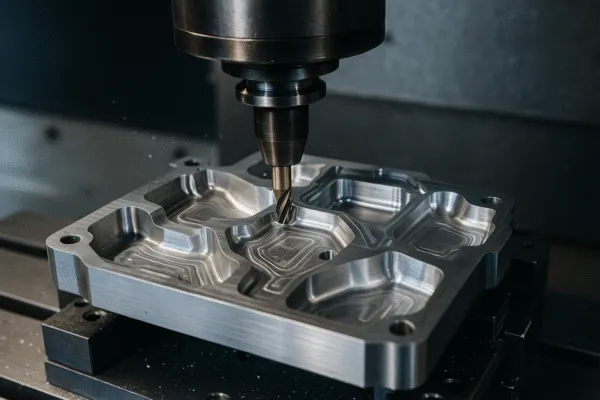
With over 30 years of hands-on experience in metal fabrication, I've seen countless buyers struggle with this exact problem. They feel stuck between paying high prices or rolling the dice on quality. But you don't have to choose. I remember a U.S. buyer, Kevin, who was sourcing high-precision electronic components. He was tough, confident, and very sensitive to quality, but was getting squeezed on price. He thought a quote was final. Once I walked him through where the costs actually come from, we cut his expenses by over 20% on the first order and ensured on-time delivery. This guide shares those same proven strategies.
What Are the Main Cost Drivers for CNC Parts and How Do They Impact Your Price?
You get quotes that vary wildly and don't understand why. This uncertainty makes budgeting difficult and planning impossible. Let me show you the key factors that control your final price.
Your final price is mainly determined by material choice, machine run time, and labor for setups and inspection. Tighter tolerances and complex geometries dramatically increase machine time, tool wear, and the need for specialized inspection, driving up your cost more than anything else.
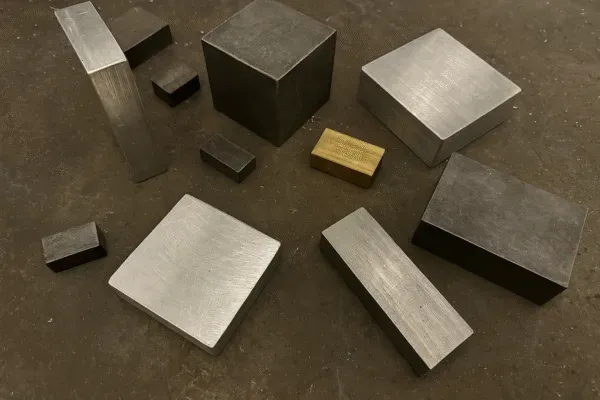
Many buyers focus only on material cost, but that's just the tip of the iceberg. The real expenses are hidden in the process. When a factory like ours provides a quote for our CNC machining services, we are calculating how long our expensive machinery will be tied up making your part.
Breaking Down the Core Cost Factors
To get a better price, you need to speak the factory's language. Here are the elements that make up almost the entire cost.
| Cost Driver | Impact on Final Price | A Buyer's Perspective + Factory Insight |
|---|---|---|
| Material Cost & Waste | Low to High | You're not just paying for the material in the final part; you're paying for the entire block it's cut from. Larger parts create more waste (swarf), increasing cost. |
| Machine Time | Very High | This is the single biggest factor. A complex part that takes 30 minutes to machine will cost roughly ten times more than a simple part that takes 3 minutes. |
| Tolerances & Complexity | High | Tighter tolerances require slower machine speeds, special tools, and more inspection time. This is a major, often hidden, cost multiplier. |
| Tool Life & Wear | Medium | Machining hard materials like Titanium wears out expensive cutting tools quickly. This cost is factored into your quote. |
| Labor & Inspection | Medium to High | This includes the skilled operator's setup time and the Quality Control technician's time to verify every critical dimension on your part. |
How Can Optimizing Your Drawings Save Money Without Affecting Performance?
Your engineers specify extremely tight tolerances on every single feature, just to be safe. This common practice of "over-engineering" secretly drives up your costs without adding any real value.
Relax tolerances on non-critical features. Following Design for Manufacturability (DFM) principles, as outlined by industry publications like Modern Machine Shop, can significantly reduce machine time and scrap rates.
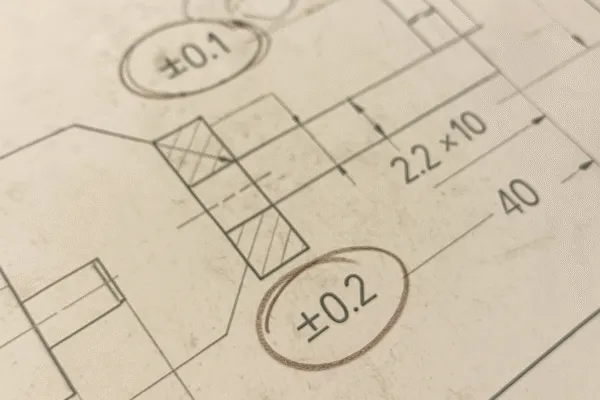
This is the biggest opportunity for savings most companies miss. The global standard for engineering drawings, ASME Y14.5, provides a language for what is critical. A good manufacturing partner will provide a DFM report with your quote to identify areas where tolerances can be safely opened up without affecting the part's function.
"Good Enough" is Often Perfect
| Feature | Standard (Cheaper) Option | Precision (Expensive) Option | Why it's Cheaper (The Factory Insight) |
|---|---|---|---|
| Hole Tolerance | Drilled hole (±0.005") | Reamed or Bored hole (±0.0005") | A single drill operation vs. multiple precision operations. |
| Corner Radii | Standard tool radius (e.g., 1/8") | Sharp internal corner | Can be cut with a standard endmill vs. needing a slow, expensive secondary process like EDM (Electrical Discharge Machining). |
| Threads | Standard UNC/UNF sizes | Custom or non-standard threads | Uses off-the-shelf taps vs. expensive custom tooling and complex programming. |
Can Better Fixturing and Batching Really Cut Cycle Time?
Your supplier charges a lot for non-recurring setup fees, especially on smaller orders. These constant changeovers for each part are killing your unit price and slowing down your delivery timeline.
Yes, absolutely. Instead of machining one part at a time, smart batching uses custom fixtures to hold multiple parts at once. While there may be an initial non-recurring engineering (NRE) cost for the fixture, it drastically slashes the setup time per piece, providing a massive return on investment for production runs.
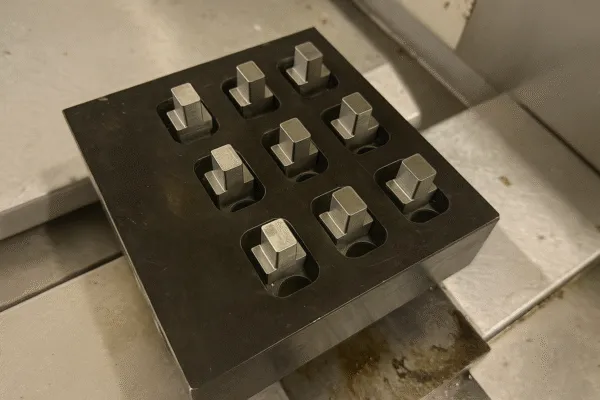
Every time a machine stops, you are paying for dead time. By machining a dozen parts in a single cycle, the setup cost is divided across all of them. For high-volume production of our stamping parts, this principle is even more critical, allowing us to produce thousands of parts per hour.
How Does a Strategic Supplier Partnership Reduce Costs and Risk?
You're stuck choosing between a trading company that adds a huge margin or a single factory with limited capacity. Both options expose you to major risks in quality and delivery. A better approach is a strategic partnership.
A strategic partner, like PrimeFabWorks, provides centralized project management and quality control certified to the ISO 9001:2015 standard. This model, as recommended by industry platforms like Thomasnet for supplier selection, ensures you get expert manufacturing at a direct price without the management headache.
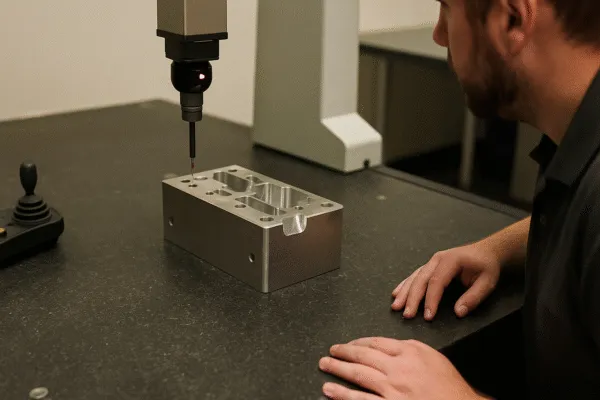
Our ISO 9001 certification isn't just a piece of paper. It is an independently audited proof that we have documented, repeatable processes. For a buyer, this means we can provide a complete Production Part Approval Process (PPAP) package before full production, including a First Article Inspection (FAI) report that dimensionally verifies your part against your drawing. This eliminates risk.
Frequently Asked Questions (FAQ)
Q1: What is the cheapest metal for CNC machining? Aluminum 6061 is typically the most cost-effective metal. The raw material is inexpensive, but more importantly, it is very fast to machine. This reduces valuable machine time, which is usually the biggest cost driver.
Q2: What is the difference between an FAI and PPAP? A First Article Inspection (FAI) is a formal report verifying that a sample part from the first production run meets all requirements on the drawing. A Production Part Approval Process (PPAP) is a more comprehensive package, often required by automotive and aerospace industries, that includes the FAI plus documentation on the entire manufacturing process, material certifications, and process capability studies.
Q3: What information should I provide to get an accurate CNC quote? To get a fast and accurate quote, provide a 3D CAD file (STEP or IGS), a 2D drawing (PDF) with tolerances and material specifications, the quantity needed, and any special finishing requirements. You can upload your files directly to our team here.
Conclusion
Cutting CNC machining costs is not about sacrificing quality. It's about working smarter with an experienced partner who understands manufacturing, focusing on DFM, efficient production, and a quality system you can trust.
Ready to Cut Your CNC Machining Costs?
Stop overpaying and start optimizing. Our team is ready to provide a free DFM analysis of your part and a competitive quote based on 30 years of manufacturing experience.
Upload Your RFQ and Contact PrimeFabWorks Today