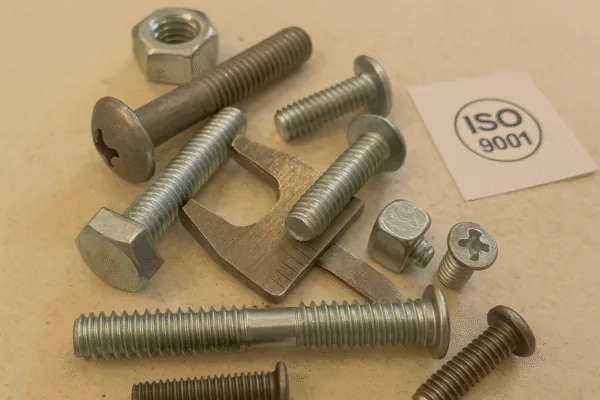
Choosing the wrong bolt can cause project failure1 or safety issues. You need a reliable fastener2, but the number of options can be overwhelming. We can help you simplify the choice.
To master bolt selection, first understand your project's load requirements, environment, and the materials being joined. Then, match these needs with the correct bolt type, material, strength grade, and dimensions. This straightforward approach ensures safety and durability.
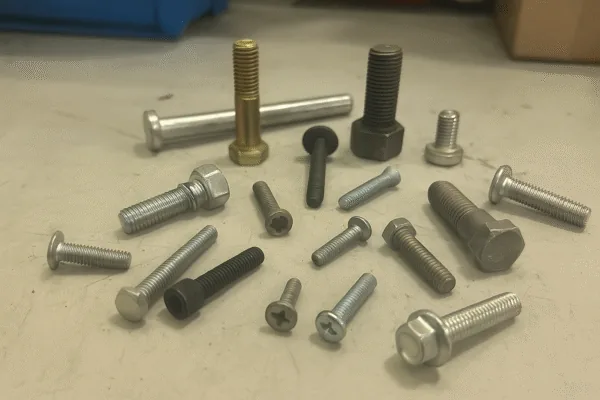
In my 30 years in the hardware industry, I've learned that a seemingly simple bolt can halt a significant project. It's more than just metal; it's the critical component holding everything together. A client once shared how a single batch of poor-quality bolts caused serious production delays. That's a problem that can be avoided. Let's break down what you need to know to make the right choice every time. This guide offers fundamental knowledge to help you select bolts with confidence.
How Do You Choose From Over 20 Types of Bolts?
With so many bolt types, picking the right one can feel uncertain. Using a standard bolt for a specialized job can result in a connection that is weak or unsafe.
Start by identifying the primary function. For general construction and machinery assembly, use Hex Bolts. For joining wood, Carriage Bolts are a good choice. For securing pipes, use U-Bolts. Matching the bolt's design to its specific task is the most important step.
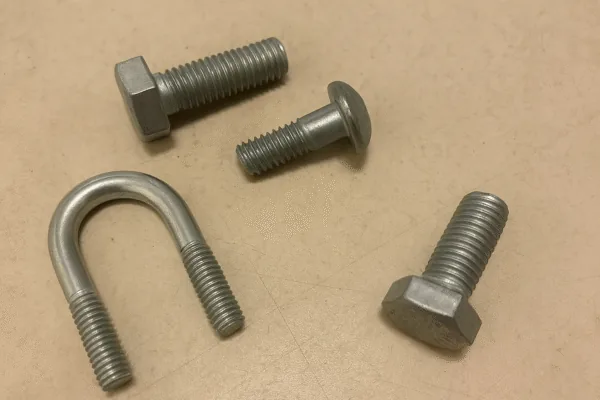
Choosing the right bolt type means matching its design features to the job. Each head shape and thread style was engineered to solve a specific problem. A hex head bolt, for instance, allows for high torque application with a standard wrench, making it a reliable choice for machinery and structural joints. In contrast, the smooth, domed head of a carriage bolt prevents tampering on one side, while its square neck grips the wood to stop it from turning as the nut is tightened. At our factory, we produce a wide variety of bolt types because we know our customers in the automotive, construction, and electronics industries have very different requirements. Understanding these basic differences is your first step to a secure assembly.
A Quick Guide to Common Bolt Types
| Bolt Type | Key Feature | Common Applications |
|---|---|---|
| Hex Bolt | Six-sided head for easy tool access. | Construction, machinery, automotive. |
| Carriage Bolt | Smooth, domed head with a square neck. | Wood-to-wood or wood-to-metal fastening. |
| U-Bolt | Shaped like the letter "U". | Securing pipes, conduits, and cables. |
| Flange Bolt | Built-in washer (flange) under the head. | Spreads load, used in automotive frames. |
| Anchor Bolt | L-shaped or with an expanding wedge. | Fastening equipment or structures to concrete. |
What Key Factors Determine the Right Bolt Material and Grade?
A bolt's material is as crucial as its type, but the technical specifications can be confusing. An incorrect material can lead to corrosion or mechanical failure under stress.
For outdoor or wet conditions, select stainless steel or hot-dip galvanized steel to resist rust. For high-stress parts, choose a high-strength alloy steel bolt (like ISO Class 10.9). Also, match the bolt material to the parts being joined to prevent galvanic corrosion.
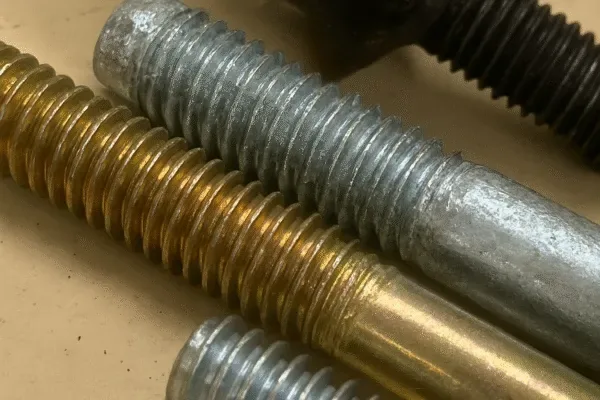
Once you've picked a bolt type, you must select the material and strength grade. This decision depends on two main things: the environment and the load. For any project exposed to moisture, like outdoor structures, corrosion resistance is the priority. Stainless steel is an excellent choice here. For a more economical solution, carbon steel with a thick protective coating like hot-dip galvanizing also performs well. The second factor is strength. Bolts are graded to indicate how much force they can handle. For light-duty assembly, a standard grade is fine. However, for industrial machinery or structural applications, you must use a certified high-strength bolt, such as an ISO Class 8.8 or 10.9. Using an underrated bolt in a high-load situation is a significant safety risk that should always be avoided.
Common Materials and Strength Grades
| Material/Grade | Key Property | Best For |
|---|---|---|
| Low Carbon Steel | General purpose, economical. | Light-duty, dry, indoor applications. |
| Stainless Steel (304/316) | Excellent corrosion resistance. | Outdoor, food-grade, or marine environments. |
| Alloy Steel (Quenched & Tempered) | Very high tensile strength. | High-stress applications (engines, frames). |
| ISO Class 8.8 | Medium strength, good toughness. | Most general automotive and machinery use. |
| ISO Class 10.9 | High strength, for heavy loads. | Heavy equipment, critical structural joints. |
How Do You Ensure You Get Certified, High-Quality Bolts?
You've found a supplier, but how can you be sure of their quality? Receiving a batch of non-compliant bolts can stop production and hurt your company's reputation.
Always request proof of quality management, like an ISO 9001 certificate. Ask for a Material Test Report (MTR) for your specific batch. Partner with established suppliers who have a clear and consistent quality control process, from raw materials to final inspection.
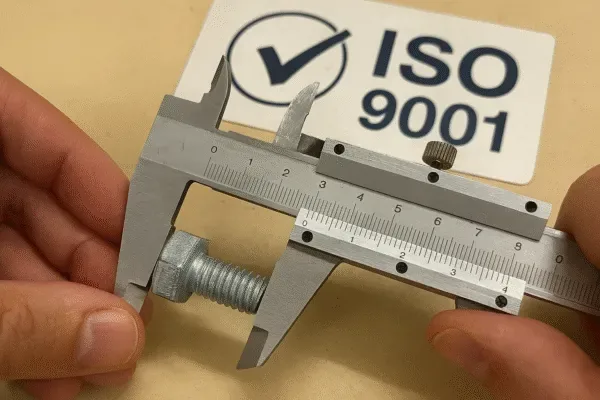
Verifying quality is a necessary part of professional purchasing. I remember a customer, Kevin, who came to us after a shipment of bolts from another supplier failed basic quality checks. That single bad batch caused significant delays and financial loss for his business. When you partner with a manufacturer, you are trusting them with your project's integrity. This is why international standards are so important. For our factory, our ISO 9001 certification is our commitment to a reliable process. It means we document everything, from inspecting raw steel to the final dimensional checks. We can provide full traceability for your order. A good supplier isn't afraid to prove their quality; they should welcome your questions and provide clear documentation.
Your Quality Verification Checklist
- Supplier Certification: Does the factory hold a current ISO 9001 certificate?
- Batch Traceability: Can they provide a Material Test Report (MTR) for your specific order?
- Process Control: Can they explain their in-process quality checks?
- Experience: Do they have a long-term track record of manufacturing your type of part?
Conclusion
Choosing the right bolt comes down to understanding your project's needs and partnering with a reliable supplier. This guide provides the tools to make sound fastening decisions.