Your line stops again, and each silent minute eats profit and reputation. I now treat every critical casting spare part as a performance tool, not just a replacement.
Custom casting spare parts1 match real loads2 instead of old assumptions. I tune alloys, wall thickness, and surfaces with data from your equipment. This method cuts unplanned downtime and keeps output stable across full seasons. Many plants then reduce lifetime cost even when unit prices look slightly higher.
Many owners still buy spare parts like office supplies, and they hope problems fade after each change. I learned the hard way that this mindset burns money slowly. So I now redesign key castings around real failure modes, real process windows, and real delivery risks.
How Do Custom Casting Spare Parts Actually Improve Equipment Performance?
Many plants only swap like for like after a failure, and they expect different results. I worked that way for years, and problems always came back. So I moved to custom casting spare parts and saw a clear, measurable shift in stability.
Custom casting spare parts1 start from field data, not only from old OEM drawings. I measure loads, temperatures, and failure zones on real machines. Then I redesign geometry and choose better alloys together with Prime engineers. This improvement cycle often lifts throughput, lowers vibration, and extends spare part life.
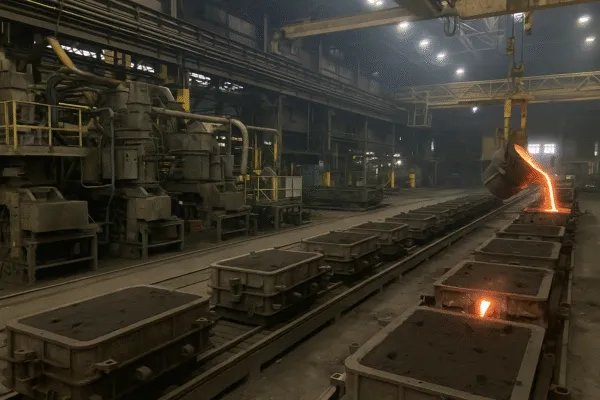
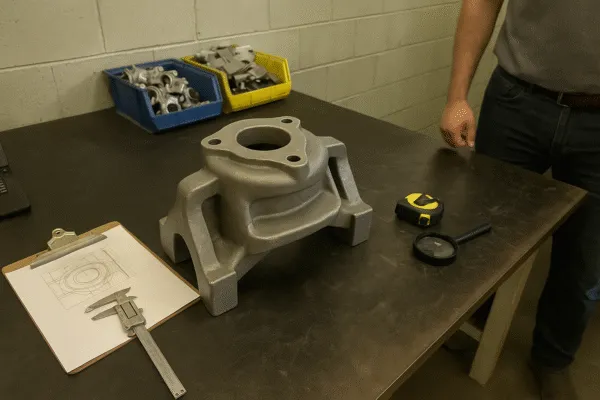
I never redesign a casting only from a CAD file, because real failures speak much louder. So I walk the line and talk with operators first. They show me leaks, strange sounds, and repeat cracks that frustrate them every week. Then I bring worn castings to a clean bench and map every defect carefully. These patterns reveal real load paths and hidden hot spots, so they guide each design change in the new custom casting spare part.
How I Read Failure Modes Before I Touch The Drawing
I use three simple checks that any maintenance team can copy today. First, I mark crack starting points and trace them back to sharp corners or sudden section changes. Second, I track erosion marks to see where flow hits hardest or where particles turn. Third, I measure plastic deformation to find zones that run above yield strength during operation. So I learn quickly if we face impact, corrosion, fatigue, or a mix.
Design guides for cast parts explain that sharp corners and abrupt section shifts create high stress concentration. They recommend smooth transitions and larger fillets to lower peak stress inside the metal. So I round corners, trim heavy overhangs, and align ribs with real stress lines. This small change alone often stops cracks in known weak zones.
Then I compare my field notes with FEM results or simple hand checks when data allows. I avoid heavy over design, but I refuse to ignore repeat failures on the same location. So each new design has one clear target, like lower peak stress, better flow, or easier alignment. This focus keeps cost reasonable while it still pushes performance higher.
How I Choose Materials For Custom Casting Spare Parts
I often see buyers use one “safe” material grade for every part in the plant. That habit looks simple on paper, but it hurts both life and cost in reality. So I run through a short material map with every client before we freeze any drawing.
| Material grade | Main strength | Main limit | Typical use case |
|---|---|---|---|
| Gray iron | Good damping and low price | Low tensile strength | Housings with low shock |
| Ductile iron | Good strength and toughness | Medium corrosion resistance | General OEM replacement casting components |
| Low alloy steel | High strength and wear resistance | Needs tight heat control | Gearbox and drive parts |
| Stainless steel | Strong corrosion resistance | Higher material cost | Food, chemical, and marine equipment |
| Heat resistant alloy | Stable at high temperature | Very high overall cost | Furnaces and hot gas applications |
We choose the leanest grade that still meets life targets and safety margins. Then we lock that grade into the drawing and into Prime’s process sheets. So each repeat batch uses the same alloy, the same heat treatment, and the same test plan, even after many years.
How Geometry, Tolerances, And Surfaces Work As One System
Material alone never rescues poor geometry, so I check wall thickness, ribs, and fillets with the same care. I round sharp corners, reduce sudden section jumps, and align sections with load paths. At the same time, I mark exactly where tight tolerances and fine surfaces truly matter.
| Feature type | Typical standard approach | Optimized custom approach |
|---|---|---|
| Bearing bores | One general tolerance | Tight tolerance plus precise CNC machining |
| Non critical faces | Same tolerance as bearing bores | Relaxed tolerance to save cost |
| Sealing faces | Basic machining only | Fine machining and surface roughness control |
| Flow passages | Straight channels with sharp turns | Smooth blends and controlled radii |
Prime links these design choices to our CNC centers and inspection tools. So casting, machining, and measurement work as one chain, not three separate islands. This system view often unlocks more gain than a pure “stronger alloy” mindset.
When Does It Make Real Sense To Switch From Standard To Custom Spare Parts?
I once bought only catalog castings for every breakdown, and I watched the same graphs each month. Unit prices stayed low, but downtime and scrap refused to drop. So I built a simple set of triggers that tell me when custom casting spare parts clearly win.
You should switch to custom casting spare parts when failures repeat, loads change, or growth targets rise. I track failure counts, downtime hours, and scrap over at least twelve months. If these numbers climb faster than output, standard parts no longer fit the reality of your line. Custom castings then protect both technical performance and business margin.
Over many projects, I saw the same warning signs before serious failures on key lines. So I now ask four short questions for each important casting. Does the same part fail more than twice in eighteen months? Did we raise speed, pressure, or temperature beyond the original design window? Did raw materials change and move wear to new zones inside the casting? Do technicians repeat the same repair steps after nearly every shutdown? If I answer yes to any two questions, I push hard for a custom casting spare part review.
How I Explain Standard Versus Custom To Owners And Buyers
Many owners like Kevin focus first on unit price, because that number sits clear in reports. So I compare standard and custom paths in one simple table. This view helps non engineers see the real drivers behind both risk and cost.
| Aspect | Standard spare parts | Custom casting spare parts |
|---|---|---|
| Design basis | Old OEM drawing | Updated geometry from field data |
| Failure pattern | Often repeats in same zone | Targeted change removes main weak spot |
| Inventory strategy | Large stock of low value items | Lean stock of higher value parts |
| Cost focus | Price per piece | Cost per operating hour or per ton |
| Supplier role | Catalog seller | Engineering partner and OEM replacement supplier |
When we walk through this table, most buyers quickly see where they lose hidden money. So they often accept a higher unit price once they see total cost per hour across a full season.
How I Break Down Cost Factors In Custom Casting Projects
To keep projects transparent, I break cost into clear blocks instead of one single price. This habit helps both Prime and the client avoid late surprises.
| Cost factor | What drives it | How I help control it |
|---|---|---|
| Pattern and tooling | Complexity and size of the casting | Simplify geometry and share tooling across families |
| Material consumption | Casting weight and alloy choice | Trim excess stock and choose efficient alloys |
| Machining time | Number of tight faces and operations | Reduce critical surfaces and combine operations |
| Inspection workload | Required reports and special tests | Standardize test packs for similar parts |
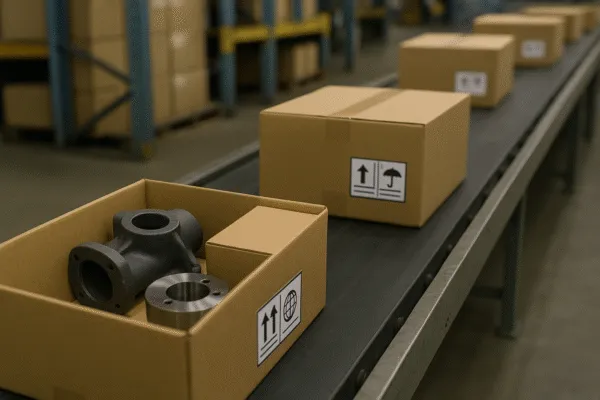
| Logistics and packing | Distance, mode, and packing design | Optimize pack size and protect key surfaces |
Independent research on manufacturing downtime shows very high losses when lines stop unexpectedly. One widely quoted article, “The Real Cost of Downtime in Manufacturing” from MachineMetrics, explains how unplanned downtime often becomes the single largest source of lost production time. Many studies that reference Aberdeen Research place average unplanned downtime loss near 260,000 dollars per hour for some plants. So even a modest increase in spare part life or reliability often repays tooling faster than anyone expects.
How I Handle Lead Time, MOQ, And Flexibility
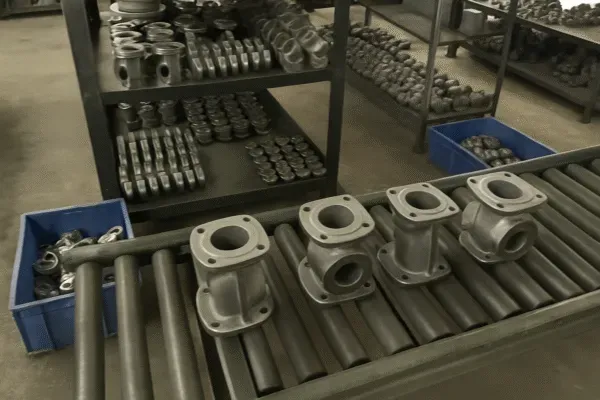
Many buyers worry that custom casting spare parts always mean long lead times and large minimum orders. In my work with Prime, we handle these risks with clear planning and flexible modes. We run ten production lines, so we split them between stable flow jobs and agile custom work. We also hold raw material for frequent alloys and key sizes when demand supports it.
I usually set three supply modes with each client at the start of the project. One mode covers stable volume with scheduled orders and fixed lead time windows. Another mode handles urgent gaps with smaller fast lots when safety stock drops below a set limit. The third mode supports development samples for new equipment or Siemens related spare parts. So we share stock risk and avoid a one sided model that hurts either side.
How Do I Control Risk With An ISO Certified Casting Spare Parts Manufacturer?
I once lost a major client because one bad casting batch slipped through a weak process. That painful lesson pushed me to rebuild my supplier model from the ground up. So I now work only with ISO oriented casting parts manufacturers that accept full traceability, audits, and clear improvement plans.
Real risk control starts with structured process and data, not promises alone. I confirm ISO certificates, control plans, and test records before I send any PO. Then I agree on inspection steps, packing rules, and logistics paths in writing. This system protects equipment, brand image, and long term profit for both sides.
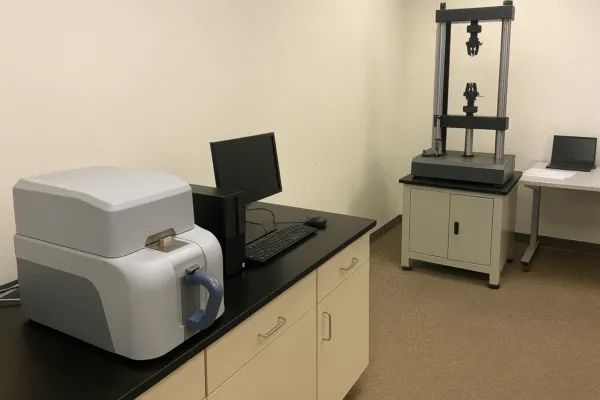
The ISO 9001 quality management standard from the International Organization for Standardization explains how a company should build a reliable quality system. It describes how to plan, operate, check, and improve processes, not just test finished parts. I read this standard early in my career, and I still use its logic when I review foundries and machine shops.
What I Check Inside The Foundry Before I Approve Custom Work
I use one practical checklist for custom casting spare parts, CNC parts, and stamping parts. This list keeps each audit visit focused, short, and still deep enough.
| Checkpoint | What I look for | Why it matters |
|---|---|---|
| Heat traceability | Heat numbers on castings and documents | Links every test result back to real parts |
| Process parameter logs | Recorded temperatures and key times | Proves real control, not only written procedures |
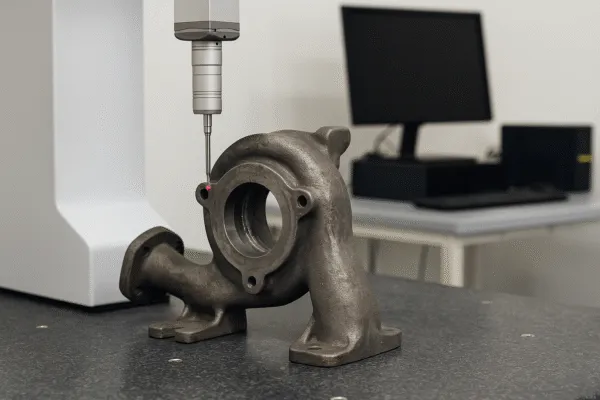
| In house test equipment | Spectrometer, hardness, and tensile testing | Reduces risk of wrong chemistry or weak material |
| Final inspection station | Clear OK and NG zones | Prevents mixed shipments and confusion |
| Calibration records | Up to date for gauges and main machines | Protects tolerance control and long term repeatability |
Prime passes these checks because we run ISO based quality systems on all ten lines. So customers in North America, Europe, the Middle East, and Australia feel safe with our reports and our traceability.
Industry groups such as the American Foundry Society share up to date resources for the metalcasting community.([American Foundry Association][5]) I read their technical content and buyer guides to keep my questions fresh when I audit gating, risers, and sand control. This habit keeps my expectations aligned with global practice instead of local habits.
How I Structure The Project Flow, Including PPAP When Needed
To keep projects clear for both buyer and factory, I use one simple project flow. This same flow works for custom casting spare parts, stamping parts, and precision CNC machining.
| Step | Action | Owner | Main output |
|---|---|---|---|
| 1 | Collect drawings, samples, and failure history | Client and me | Clear requirement pack |
| 2 | Propose design and alloy changes | Prime engineer | Updated drawings and quotation |
| 3 | Confirm tooling, cost, and delivery plan | Both sides | Signed technical and commercial agreement |
| 4 | Produce samples and full test reports | Prime | Approved first article and reports |
| 5 | Run mass production on dedicated lines | Prime | Stable batches with full traceability |
| 6 | Review field performance and refine if needed | Client and me | Continuous improvement and longer part life |
For automotive style projects or Siemens related series parts, I often build a full PPAP package with the Prime team. The public overview of the Production Part Approval Process (PPAP) on Wikipedia explains how this method builds confidence in suppliers and processes.([Wikipedia][6]) I use that structure as a base, and I add our own shop floor detail, test results, and control plans. So buyers receive not only parts but also clear evidence that our process can support long term series production.
Why One Stop Service And Real Delivery Cases Reduce Hidden Risk
In many projects, a casting works with stamping brackets, CNC shafts, and fasteners in a tight assembly. If I source these pieces from four different suppliers, I lose time and face fit issues on nearly every new batch. So I prefer one partner that offers a full metal components service under one roof.
Prime combines casting, welding, stamping, fasteners, plastic parts, and precision CNC machining in a single system. Our engineering team aligns tolerances, surfaces, and packing for the whole set. This approach cuts supplier count, reduces transport damage, and speeds up delivery to your warehouse.
Over the years, I have seen this model save full peak seasons for clients. One customer once faced late shipments from a scattered supplier base for castings and brackets. We moved the full set into Prime, aligned drawings and packing, and set one combined shipping plan. The client then caught their selling window with stable supply and has stayed with us since that project. Many similar delivery cases now shape the way I design new spare part programs.
FAQs: Custom Casting Spare Parts And One Stop Metal Components Service
What benefits do custom casting spare parts bring compared with standard parts?
Custom casting spare parts match your real loads, materials, and failure modes. Standard parts follow generic drawings that rarely reflect current process windows. So custom parts often run longer and protect uptime across full seasons. They usually reduce cost per operating hour even when unit prices look higher on paper.
How do I choose a reliable custom casting spare parts supplier?
I start with three checks before I trust any supplier with critical equipment. First, I confirm an ISO based quality system and review at least one formal audit. Second, I ask for batch reports and traceability for recent production lots. Third, I visit the plant or at least request detailed process photos and layout. I also like to see how their practices align with public guidance from groups such as the American Foundry Society.
What information should I prepare before I request a quotation?
You help yourself a lot when you send a complete requirement pack. I suggest drawings, material specs, expected annual volume, and any special standards. Then I add failure photos, old reports, and target life data when I have them. This information helps Prime design smarter custom casting spare parts from day one. You save time, you reduce revisions, and you control tooling risk much better.
Are custom casting spare parts only for large orders?
Custom casting spare parts also make sense for medium volume and high value equipment. I often run pilot lots for new machines or Siemens related spare parts that protect important lines. We discuss MOQ, lead time, and pattern cost in a simple and open way. Then we choose the right mix between flexibility and unit cost for your business.
How do custom casting spare parts affect my total cost?
Custom casting spare parts may raise unit price but reduce downtime, scrap, and urgent freight. So I always compare cost per hour or cost per ton instead of just part price. Articles like “The Real Cost of Downtime in Manufacturing” from MachineMetrics show how fast downtime losses grow in real factories. When you combine those numbers with a realistic life gain from each custom part, the business case often looks very strong.
Can one supplier handle casting, CNC machining, and stamping parts together?
Yes, and I now prefer this model for most critical assemblies. Prime runs casting, CNC machining, stamping, fastener production, and plastic molding as one system. We manage tolerance stacks, coating, packing, and logistics in a single plan. This one stop metal components service saves your time and reduces fit and damage risk across the full chain.
How fast can I move from idea to stable supply?
Timing depends on part complexity, tooling, and any PPAP or extra documentation. I share every step clearly, from drawing review and sampling to final shipment. Then we agree on each milestone and on the data you need before you approve mass production. With clear inputs and fast feedback on both sides, stable supply often starts faster than most buyers expect.
Conclusion
Custom casting spare parts turn repeated failures into controlled performance and lower lifetime cost across tough industrial equipment lines.
Ready to discuss your own castings and CNC parts? Share your drawings, photos of failed parts, and target life data with the Prime team. We respond quickly with free professional advice, clear quotations, and tailored solutions based on ISO experience, PPAP style control, and real delivery cases.