
Struggling to pick the right titanium for machining? Choosing the wrong grade can lead to high costs and tool wear. I will help you decide.
Ti-6Al-4V (Grade 5)1 is stronger and ideal for high-stress aerospace or medical parts. Commercially Pure (CP) grades2 are more ductile and easier to machine, making them better for chemical processing equipment where corrosion resistance is key. The choice depends entirely on your application's demands.
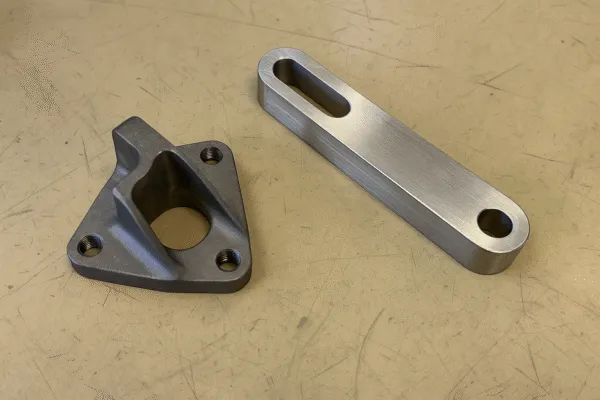
Choosing between these titanium types is not just about the spec sheet. It is about how they perform under pressure on the factory floor and how that affects your bottom line. I have learned this the hard way over 30 years in this business, running a factory that ships custom metal parts worldwide. As the International Titanium Association (ITA)1 notes, titanium's unique properties2 require specialized knowledge. Let's break down the real-world differences to help you make the right call for your next project.
What Are the Key Differences in Material Properties?
Confused by titanium spec sheets? The wrong choice can lead to part failure. I will simplify the key properties you need to know for your project.
Ti-6Al-4V1 is a heat-treatable alpha-beta alloy, making it much stronger but less ductile than Commercially Pure (CP) titanium2. CP grades are unalloyed alpha-phase titanium, making them softer and more formable. Choose Ti-6Al-4V1 for strength-critical applications; choose CP grades for corrosion resistance and ease of forming.
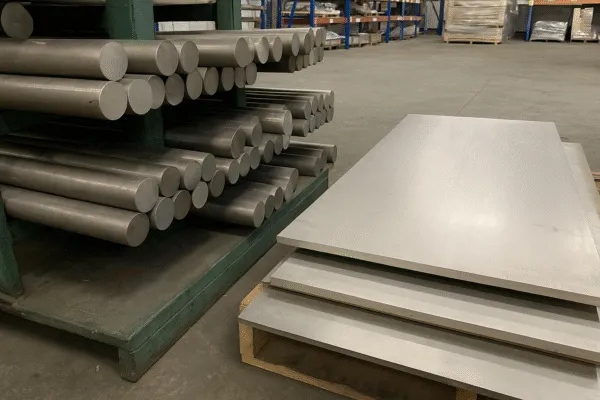
From my vantage point on the factory floor, I see engineers over-spec or under-spec materials all the time. Understanding the metallurgy is the first step to avoiding costly mistakes. Ti-6Al-4V1 contains 6% aluminum and 4% vanadium. These additions create a two-phase "alpha-beta" crystal structure. This structure is what allows it to be heat-treated for incredible strength, a topic covered in depth by industry authorities like ASM International. Commercially Pure (CP) titanium2 is over 99% pure. Its four grades are differentiated by their oxygen content, which strengthens the "alpha" phase structure. I remember a project for Siemens where we initially chose CP Grade 4 for a structural bracket. It failed during cyclic stress testing. We switched to heat-treated Ti-6Al-4V1, and it passed with flying colors. That was a clear lesson that for fatigue life and high stress, there is no substitute for an alloy.
Strength vs. Purity Comparison
| Property | Ti-6Al-4V (Grade 5) | CP Grade 2 | CP Grade 4 |
|---|---|---|---|
| Metallurgy | Alpha-Beta Alloy | Alpha Phase | Alpha Phase |
| Tensile Strength (psi)1 | ~138,000 | ~50,000 | ~80,000 |
| Ductility (Elongation %) | ~14% | ~20% | ~15% |
| Corrosion Resistance2 | Very Good | Excellent | Excellent |
| Heat Treatable | Yes (Annealing, Solution Treating) | No | No |
| Primary Advantage | High Strength-to-Weight Ratio | Formability, Cost | Highest strength of CP grades |
How Does Machinability Differ Between Ti-6Al-4V and CP Titanium?
Worried about high machining costs and tool wear with titanium? These materials are tricky. Let's look at how to handle them without breaking your tools.
CP titanium1 is significantly easier to machine than Ti-6Al-4V2. Its softness results in less tool wear and allows faster cutting speeds. Ti-6Al-4V2's high strength, low thermal conductivity, and tendency to work-harden make it very challenging, requiring specific tools, slow speeds, and high feed rates.
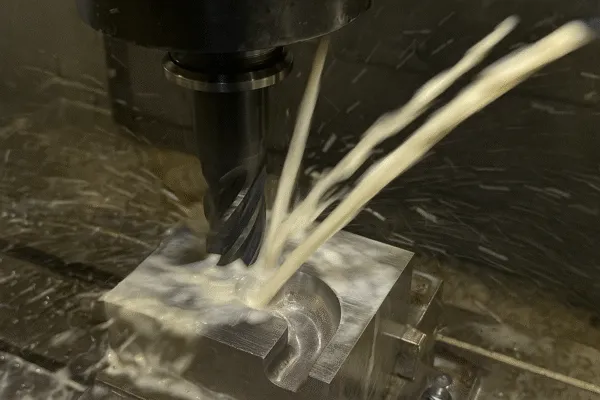
The difference in machining these two is night and day. Ti-6Al-4V is a machinist's nightmare if you don't respect the material. The core problem is its extremely low thermal conductivity. Unlike aluminum or steel that pull heat away from the cut, titanium concentrates it right on the tool's cutting edge. It also work-hardens, meaning if your tool rubs instead of cuts, the surface becomes even harder to machine. This is why tooling leaders like Kennametal have extensive guides on preventing built-up edge. We burned through a set of expensive carbide end mills early in my career trying to machine Grade 5 like it was stainless steel. Now, our process for custom CNC machining of titanium is rigid and precise.
Basic Machining Process Steps
| Step | Ti-6Al-4V (Grade 5)1 Approach | CP Grades Approach |
|---|---|---|
| 1. Machine Setup | Use the most rigid, high-torque machine available. Minimize tool overhang. | Standard rigid setup is sufficient. |
| 2. Tool Selection | Use sharp, positive rake micro-grain carbide tools with AlTiN or similar coatings. | High-Speed Steel (HSS)2 can work for drilling, but coated carbide is best. |
| 3. Cutting Speed | Very low (60-120 Surface Feet per Minute). | Higher speeds are possible (150-250 SFM). |
| 4. Feed Rate | High and constant to stay ahead of work-hardening. | Moderate and constant feed rate. |
| 5. Coolant | Essential. High-pressure (1000+ psi) flood coolant is ideal. | Recommended to prevent gummy buildup and improve surface finish. |
Which Grade is Right for Your Application and Budget?
Trying to balance performance and cost for your titanium parts? Making the wrong choice can waste your budget. I will guide you to the most cost-effective solution.
Choose Ti-6Al-4V1 for performance-critical applications like aerospace structures or medical implants (per ASTM F136). Use cost-effective CP grades2 for industrial applications like chemical tanks or marine hardware where corrosion resistance is the primary driver.
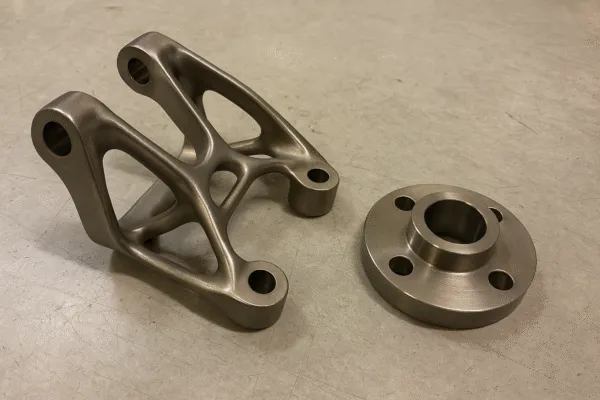
The final choice always comes down to the part's job and your budget. Ti-6Al-4V1 is a premium material. But for an airplane landing gear component, its strength-to-weight ratio is non-negotiable. For most industrial applications I see, however, CP titanium is the workhorse. I had a client, Kevin from the U.S., who wanted titanium fasteners for a marine application. He specified Ti-6Al-4V1 because he thought it was the "best" titanium. I explained that in saltwater, the primary failure mode is corrosion, not stress. We suggested CP Grade 22, which has superior corrosion resistance in that environment. This switch saved his company nearly 40% on the project. It proves that the "best" material is always the one that is right for the job.
What Should I Look for in a Supplier for Titanium Parts?
Afraid of delays and poor quality from your supplier? A bad partner can ruin your project. I will tell you the non-negotiables when choosing a titanium machining partner.
Look for a supplier with a documented quality management system like ISO 90011. They must be able to provide full material traceability and quality documentation, such as a Production Part Approval Process (PPAP)2 package, upon request.
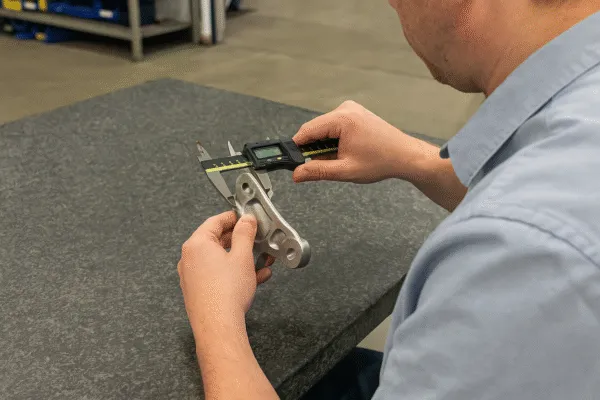
Finding a good supplier is about mitigating risk. A low price from an inexperienced shop can cost you dearly. When you vet a supplier for titanium, experience is not just a buzzword. Ask for specific examples of parts they have made. At Prime Fab Works, our certified quality system is the foundation of our entire operation. For every order, we can provide a Certificate of Conformance (CoC)1 and the original Material Test Report (MTR)2 from the mill. For clients with stringent requirements, like those in the automotive or aerospace sectors, we can also provide full PPAP documentation. This level of transparency is essential for building a reliable supply chain.
Supplier Vetting Checklist
| Area | What to Ask / Look For | Why It's Important |
|---|---|---|
| Experience | "Can you show me similar titanium parts you've machined?" | Proves they understand the specific challenges and have a process. |
| Quality System | "Are you ISO 9001 certified1? Can you provide MTRs and PPAP?" | Guarantees a repeatable process and authentic, traceable material. |
| Equipment | "What kind of CNC machines2 do you use for titanium?" | They need rigid, powerful machines and high-pressure coolant systems. |
| Communication | "Who will be my point of contact? How often will I get updates?" | Ensures clarity, prevents errors, and keeps your project on track. |
Start Your Titanium Project with an Expert Partner
Choosing the right material is the first step. The next is finding a manufacturing partner who can deliver on time and to your exact specifications. My team has the experience and the certified processes to make your project a success.
Ready to get a quote?