
Choosing the right stainless steel self-tapping screws seems straightforward. But then you see unexpected failures, stubborn staining, or even damage to the materials you're fastening. In my 30 years helping industrial buyers solve these exact problems, I've seen that the issue almost always goes deeper than simple corrosion resistance1.
Stainless steel's main benefit is corrosion resistance1, but this alone is not enough. The specific grade (304 vs. 316), the mechanical properties determined by manufacturing, and the risk of galvanic corrosion2 are critical. As a buyer, specifying a screw by its "stainless" label alone can lead to costly product failures and assembly line downtime.
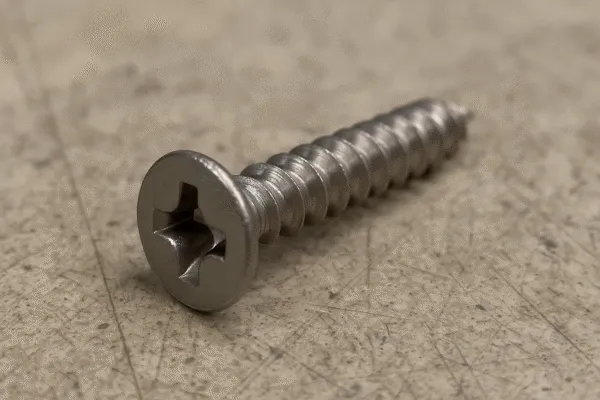
I'll never forget a call from a client, Kevin, a U.S. business owner who builds high-end marine equipment. He was using what his previous supplier sold as "316 stainless screws," but they were failing in baffling ways. The real issue? His supplier's lack of material verification meant he was getting inconsistent batches. This is a classic example of why our factory’s rigorous quality process is so critical. The small details in manufacturing and material science are what separate a reliable fastener from a future liability.
Why Does the Stainless Steel Grade Matter So Much for Screws?
On a spec sheet, the difference between 304 and 316 stainless steel looks minor. But in the real world, choosing the wrong one can lead to premature failure and voided warranties.
The grade of stainless steel dictates its chemical composition and performance. As detailed by material science authorities like AZoM (AZo Materials), the addition of 2-3% molybdenum in Grade 3161 is what gives it superior resistance to chlorides. This makes it the mandatory choice for marine and chemical environments, a fact well-documented by industry bodies like the British Stainless Steel Association2 (BSSA).
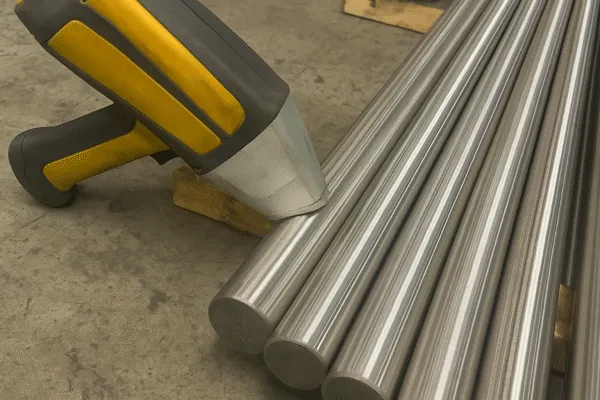
At Prime, the first step in our ISO 9001 certified process is using an XRF (X-ray fluorescence) analyzer to verify the chemical composition of all incoming raw material. This data becomes part of the documentation for our clients who require a PPAP (Production Part Approval Process). This guarantees that when you order 316, you get 316—with the correct molybdenum content. This traceability is your insurance against the material failures Kevin experienced.
Technical Comparison of Common Stainless Grades
| Feature | Grade 304 (A2) | Grade 316 (A4) | Grade 410 (C1) |
|---|---|---|---|
| Key Elements | 18% Cr, 8% Ni | 16% Cr, 10% Ni, 2-3% Mo | 11.5-13.5% Cr |
| Corrosion1 | Good atmospheric resistance | Excellent resistance to chlorides | Fair, susceptible to surface rust |
| Mechanical Property | Soft, ductile, work-hardens | Soft, ductile, work-hardens | Hard & strong (Heat-Treatable) |
| Best Use Case2 | General construction, architecture | Marine, chemical, food processing | Self-drilling into steel, high-stress |
| Magnetism | Non-magnetic (becomes slightly magnetic when cold-worked) | Non-magnetic | Magnetic |
Can Stainless Self-Tapping Screws Fail Under Pressure?
You assume a stainless screw is strong enough, but heads are snapping during automated assembly, or threads are seizing in harder materials, grinding your production line to a halt.
Yes, they can fail, often due to "galling1." This phenomenon, where the surfaces of threads essentially weld themselves together under pressure, is a well-known issue with austenitic stainless steels2. The Industrial Fasteners Institute (IFI) publishes technical guides that detail how friction and work-hardening contribute to this costly failure mode.
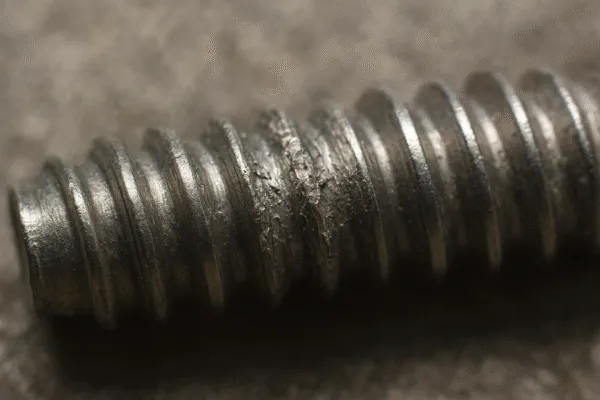
Galling is a massive headache for any buyer concerned with production efficiency. I have personally visited client facilities where this single issue caused significant downtime. We often work with clients to find a holistic solution. For one automotive client, we solved their field-failure issue by developing a screw with a specialized wax coating and providing precise torque specifications for their assembly tools, which they validated in their facility before rollout.
Preventing Mechanical Failure: An Engineer's Step-by-Step Guide
| Step | Action | The Engineering Reason |
|---|---|---|
| 1. Calculate Pilot Hole1 | Drill a pilot hole based on the material's hardness and the screw's root diameter. | Reduces driving torque, minimizing the friction and heat that cause work-hardening and galling. |
| 2. Control Drive Speed | Use a slower RPM during installation, especially with automated equipment. | High speed generates excessive heat, a key catalyst for galling between stainless steel surfaces. |
| 3. Use Lubrication | Specify screws with a pre-applied lubricant (like a wax finish) or an anti-galling coating2. | Creates a barrier between mating threads, preventing metal-on-metal friction and seizing. |
| 4. Select Hardness | For self-tapping into steel, use a heat-treated martensitic grade like 410 stainless. | Grade 410 can be hardened to a level that allows it to cut its own threads into metal without deforming. |
Is Galvanic Corrosion a Hidden Risk with Stainless Screws?
You specified stainless steel screws to fasten an aluminum component, expecting long service life. A year later, the aluminum around the screw is blistering and turning to white powder.
Absolutely. This is galvanic corrosion1, a predictable electrochemical reaction. When two dissimilar metals are in contact with an electrolyte, the less noble metal corrodes. The relative potential of different metals is clearly defined in galvanic series charts2 provided by trusted resources like The Engineering Toolbox.
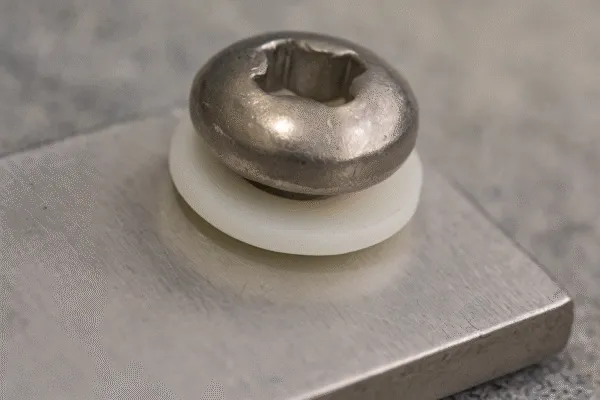
The "electrolyte" doesn't have to be saltwater; it can be rain, humidity, or industrial wash-down fluids. I consult on architectural projects where ignoring this simple principle causes multi-million dollar remediation work. Using stainless steel fasteners directly on an aluminum structure without proper isolation is a classic, and entirely preventable, design failure. This is why we don't just sell parts; we provide application support to ensure the entire system is designed for longevity.
FAQs for Engineers and Professional Buyers
Q1: Why do my 304 stainless screws sometimes seem slightly magnetic? A: This is due to the cold-forming (work-hardening) process used during manufacturing. As explained by the Specialty Steel Industry of North America (SSINA), this process can change some of the steel's non-magnetic austenitic microstructure into magnetic martensite. This is normal and does not degrade the screw's corrosion resistance.
Q2: What is passivation and why should I specify it? A: Passivation is a crucial post-manufacturing chemical treatment, governed by standards like ASTM A967. It removes free iron from the surface and helps build a robust, passive chromium-oxide layer. A non-passivated screw can have microscopic iron particles from tooling embedded in its surface, which act as initiation sites for rust. Specifying passivation is a critical quality control step.
Q3: For outdoor use in a non-coastal city, is 304 stainless sufficient? A: Generally, yes. For most atmospheric conditions away from salt spray or heavy industrial pollution, Grade 304 provides an excellent balance of performance and cost. However, for critical applications, it's always best to consult material selection charts or contact our technical team to validate the choice for your specific project environment.
Ready to Solve Your Fastening Challenges?
My team and I have spent decades helping companies like yours avoid these common pitfalls. We don't just sell screws; we provide reliable, traceable, and expertly engineered components that protect your product's reputation.
➤ Upload Your RFQ or Contact Prime to Discuss Your Project