
Ever felt lost in the technical jargon1 of manufacturing? You know you need a metal part, but suppliers start talking about "tools," "dies," and "progressive stamping2," and it's easy to get confused. This can lead to miscommunication, quotes that are hard to compare, and costly errors in your final product.
Stamping tools and dies are the heart of the metal stamping process. The "tool" or "die set" is the complete assembly that mounts into a stamping press. The "dies" are the specific, custom-machined components within that tool which cut and form a sheet of metal into your desired part, stroke after stroke.
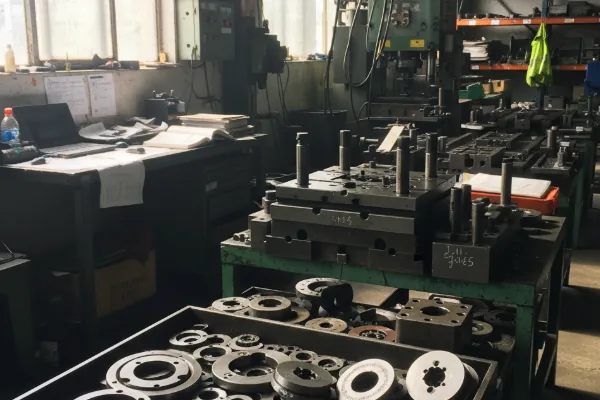
Understanding the tooling is the first step to a successful stamping parts project. For anyone evaluating Custom Sheet Metal Stamping Services, if you don't know the basics, it's hard to have a meaningful conversation with your supplier about getting the best quality and price.
I once worked with a buyer, a confident business owner like yourself, who was sourcing electronic components1 and was shocked by the initial tooling invoice2. He saw it as a cost, not an investment.
I walked him through our factory, showed him the block of D2 tool steel being precision-machined, and introduced him to a senior tool and die maker who was hand-finishing a cavity. He saw the engineering, the skill, and the quality materials. He understood he was buying a production asset, a machine built to run for millions of cycles reliably. This guide is my way of giving you that same clear insight.
What's the Difference Between a Stamping Tool and a Die?
Are you unsure about the correct terminology when submitting an RFQ? Using "tool" and "die" interchangeably can sometimes cause confusion, leading to quotes that don't quite match your expectations.
Think of it this way: the stamping tool is the entire machine that fits into the press, while the dies are the custom parts inside that machine doing the work. The tool (also called a die set) includes the base, punches, strippers, and the dies. The dies are the specific blocks that cut or form the metal.
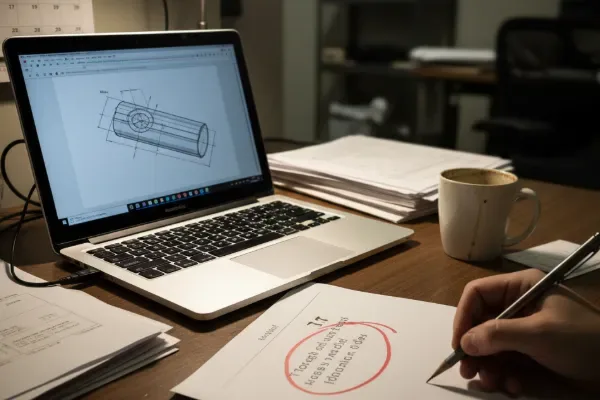
Deeper Dive: The Anatomy of a Stamping Tool
To really understand the difference, let's break down the components. During a press stroke, all these parts work together in a very precise sequence with tolerances measured in microns. For you as a buyer, this precision is what guarantees that the millionth part is identical to the first.
| Component | Function | What It Means for Your Parts |
|---|---|---|
| Die Set / Tool1 | The entire assembly holding all components. | The foundation for consistent quality. |
| Die Block | The female part that cuts or forms the metal. | Defines the final shape and accuracy. |
| Punch | The male part that penetrates or forms the metal. | Creates holes and bends; critical for long-term wear. |
| Stripper Plate | A spring-loaded plate that pushes the finished part off the punch after the stroke. | Prevents part damage and allows for high-speed operation. |
| Guide Pins2 | Hardened pins that ensure perfect alignment between the top and bottom halves of the tool. | Prevents defects and premature tool wear. |
| Heel Blocks | Absorb side thrust during forming operations, protecting the guide pins. | Ensures longevity, especially when forming high-strength steel. |
What Are the Main Types of Stamping Dies Used in Manufacturing?
Do you need one simple part, or millions of complex ones? Choosing the wrong type of tooling for your project's volume and complexity can lead to either excessive costs or inefficient production.
The type of die you need depends on your part's design and your production volume. The main types are line dies (for low volume), compound dies (for simple, flat parts), and progressive dies (for high-volume, complex parts). A progressive die is often the most efficient for mass production.
Deeper Dive: Choosing the Right Die for Your Project
Choosing the right type of die is one of the most critical decisions in a stamping project1. It's a balance of upfront investment versus the long-term cost per part. For a complex electronic shield that needs to be produced by the million, a progressive die2 is the only way to go.
In a progressive die, a strip of metal is fed through the tool, and at each "station," a different operation (cutting, bending, coining) is performed until a finished part comes out at the end. The real engineering magic is in the "strip layout" design, where we arrange these operations to use the least amount of raw material possible, minimizing scrap and saving you money on every single part. The Precision Metalforming Association (PMA) is a great resource for learning more about these technologies. Our expertise in designing these tools for custom metal stampings is a key reason clients partner with us for the long term.
What Materials Are Used to Make Stamping Tools and Dies?
Worried about your tool wearing out prematurely? The material used to build your stamping tool directly impacts its lifespan, the quality of your parts, and the overall cost of your project.
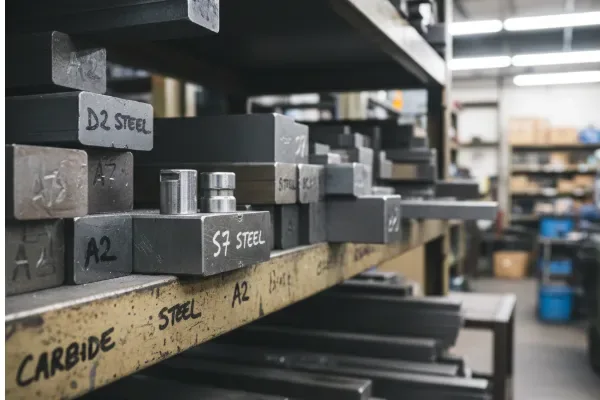
Stamping tools are made from hardened tool steels or carbide. The specific material choice depends on the material you are stamping (e.g., soft aluminum vs. abrasive stainless steel), the expected production volume, and your budget. The right material choice is a critical investment.
Deeper Dive: Comparing Tool Steels and Carbide
I always discuss these options with my clients. For a project with a 5-year production forecast, investing in better tool steel and perhaps a coating upfront saves a lot of money on maintenance and replacement tools down the line. It's about looking at the Total Cost of Ownership, not just the initial tooling price.
| Material | Key Properties | Typical Lifespan (Strokes) | What This Means for You |
|---|---|---|---|
| A2 Tool Steel | Good balance of wear resistance and toughness. | 250,000 - 1,000,000 | Good for moderate production volumes. |
| D2 Tool Steel | High carbon, high chromium. Excellent abrasion resistance. | 1,000,000 - 5,000,000 | Best choice for long-run stamping of steel parts. |
| Tungsten Carbide | Extremely hard and wear-resistant, but more brittle. | 5,000,000 - 20,000,000+ | The ultimate choice for ultra-high volumes or abrasive materials. |
| Coatings (e.g., TiN) | Applied to steel punches/dies to increase surface hardness. | Extends tool life by 2-5x. | A cost-effective way to get more life from a steel tool. |
How Does the Tool and Die Design Process Work?
Concerned that your supplier might not understand the critical features of your part? A poor design process can result in a tool that doesn't produce parts to your specifications, leading to costly rework and delays.
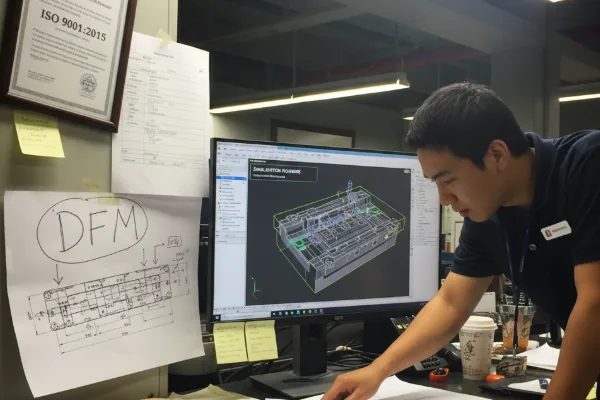
The tool design process is a multi-step engineering effort. Our process is built around our ISO 9001:2015 certified system. This isn't just a plaque on our wall; it's the daily blueprint for how we manage everything from your initial quote to final packaging, ensuring total traceability and accountability.
- RFQ & DFM: You send us your drawings. My engineers immediately perform a Design for Manufacturability (DFM) review. We look for potential issues that could cause problems in mass production.
- Tool Design & Simulation: We design the progressive strip layout and the 3D tool model, then simulate the metal forming process to prevent issues before any steel is cut.
- Tool Manufacturing: The design is approved, and we begin meticulously machining, heat-treating, grinding, and assembling your tool.
- Testing & PPAP: The tool is tested in our presses. For sensitive applications, we provide a full Production Part Approval Process (PPAP) package.
Frequently Asked Questions (FAQs)
What is PPAP and why is it important for me as a buyer? PPAP is your insurance policy. It's a structured process that provides you with documented proof that our production process can consistently produce parts that meet every single one of your specifications. You get hard data, not just promises.
What is preventative tool and die maintenance? This is a scheduled plan of cleaning, inspecting, and sharpening the tool components after a set number of press strokes. We handle this for you. It prevents unexpected breakdowns, extends the tool's total life, and ensures every part you receive is as good as the first. This protects your investment.
Conclusion
Stamping tools and dies are a significant investment, but they are the foundation for producing high-quality, cost-effective metal parts at scale. Understanding the basics helps you have a more productive partnership with your supplier.