
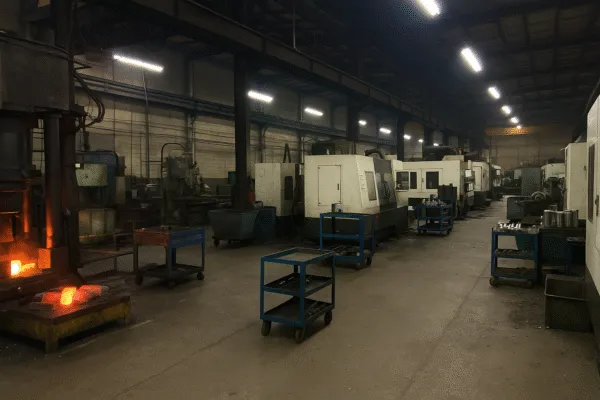
Many buyers feel stressed when they choose a custom metal forging supplier, because each wrong step hits profit. I see buyers lose full seasons due to bad process choice, weak quality systems, or slow response, so I want to give you a clear, simple roadmap today. I speak as a factory person, but I think from your side as a buyer.
When you choose a custom metal forging parts supplier, you should check four core things. You match open-die, closed-die or flash-forging to shape and volume. You choose the right alloy and heat treatment for real loads and environments. You confirm ISO 9001 quality control, surface treatment and packing strength.(International Organization for Standardization) Finally, you balance tooling cost, lead time and supply chain risk, so your business stays safe and profitable.
I work with owners like Kevin, who buys Siemens electronic parts and forged steel parts together, so I see both technical and business pain. I see drawings without clear materials, suppliers without process control, and containers that arrive with damaged boxes. So in this guide I combine buyer questions, factory practice and public standards, not just nice marketing words. If you follow these steps, you can cut risk and still keep competitive prices.
Choosing the Right Forging Process: Open-Die vs Closed-Die vs Flash-Forging?
Many buyers start with a process name, not with a clear need, so cost and risk grow quietly. They ask for closed-die forging because another project used it, but their own volumes stay small. They ask for casting, but their part really needs forged strength and better grain flow.(Wikipedia) So I always start with part size, shape and yearly demand before I choose any process.
Open-die forging suits large and simple shapes with flexible quantities. Closed-die forging suits small and medium parts with repeat orders. Flash-forging helps complex ribs, pockets and safety parts because the flash zone forces full fill. Forging shapes metal with strong compression and often gives better fatigue strength than many cast parts, especially when we add smart heat treatment.(Wikipedia)
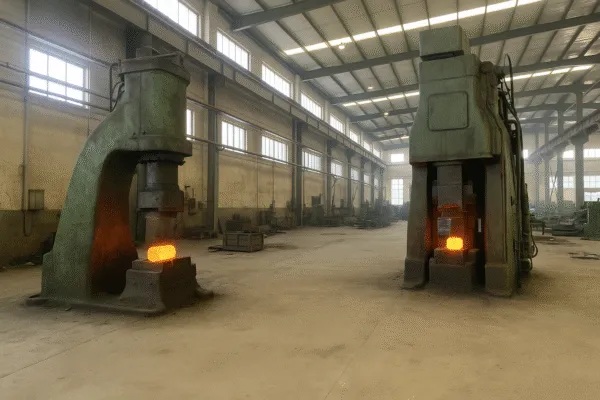
I first look at your drawing and ask three simple questions. I ask how big the part is, how complex the outline is, and how many pieces you need each year. Then I link these answers to open-die, closed-die or flash-forging. I also invite buyers to review neutral introductions like the forging overview on Wikipedia, so basic terms stay clear before deep talks start.(Wikipedia) In this way you understand the logic, not only my quote.
How part size, shape and volume really guide the process choice
First, I look at size and weight. For very large shafts, rings and blocks, I normally choose open-die forging. In Prime we use presses and manipulators, then we move parts to our CNC machining parts line for precision faces. Second, I look at shape. For smaller brackets, flanges, levers and yokes, closed-die forging makes more sense, because the dies hold shape well. Third, I look at volume. When your demand is stable and medium or high, die cost spreads nicely over many pieces.
For very complex safety parts with pockets and thin ribs, I often move to flash-forging. The flash region acts like a pressure ring and helps metal flow into every corner, so we reduce cold shuts and voids. After trimming, we machine critical areas to final size, then we control grain flow and strength where you need them. This logic matches many public guides from groups like the Forging Industry Association, which promote forging for strength and reliability in tough parts.(Foundry Industry Association)
| Process | Best size range | Typical volume range | Typical use case |
|---|---|---|---|
| Open-die | Very large, simple sections | Low to medium volumes | Shafts, blocks, rings |
| Closed-die | Small to medium, more complex | Medium to high volumes | Brackets, hubs, levers |
| Flash-forge | Complex ribs and pockets | Medium volumes | Safety parts, tricky geometries |
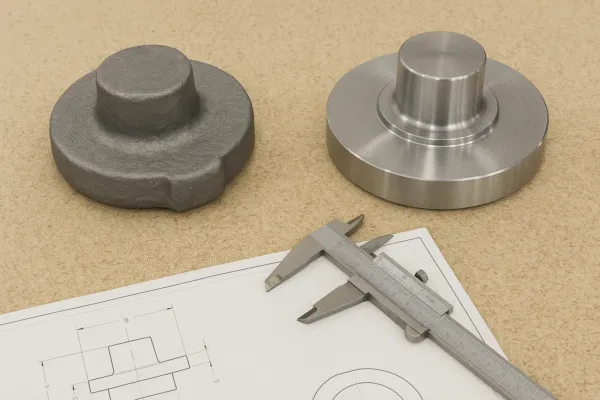
I also compare forging with other forming routes in each project. For example, I may place load-bearing levers in forging plus machining. I place light brackets in stamping parts, and I place complex housings in casting parts. This mix lets you reach the best value per function. And because Prime handles forging, stamping, casting and CNC under one roof, you work with one team instead of many small shops. So your process map stays simple, and search engines also see clear internal links between our forging and product pages.
Material Selection & Mechanical Properties: How to Match Forging Alloy to Application?
Many RFQs arrive with only a vague note like “steel, heat treat” and nothing more. So suppliers guess real loads, temperatures and corrosion risk, and this guess often hurts you later. Parts may bend, crack, or rust faster than expected, and then both sides lose money and time. I learned to slow this step down and ask a short but clear set of questions.
I always start from how the part works, not from my stock list. You describe static load, shock, vibration, working temperature and environment. Then we choose between carbon steel, alloy steel, stainless steel or aluminum forging alloy. We match heat treatment and tests to target strength, toughness and hardness, using standards like ASTM steel forging requirementsimefabworks.com/metal-forgings/) requirements as a reference when needed.(ASTM International | ASTM)
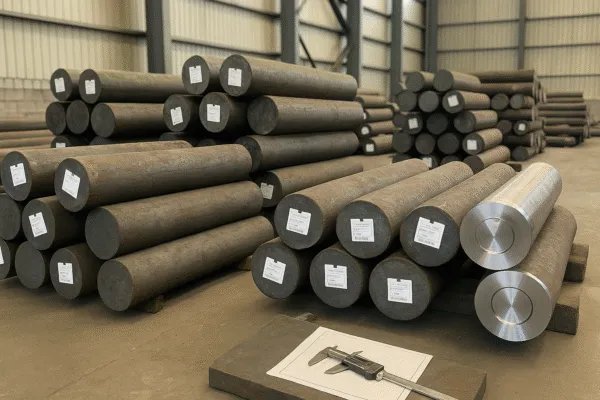
First, I ask where the part sits in the machine, and who gets hurt if it fails. Second, I ask which media touch the part, such as oil, salt water or chemicals. Third, I ask about weight limits and life targets. For low risk, steady load parts, we may use simple carbon steel and keep cost low. For high impact or safety parts, I move to alloy steels with better toughness. For harsh environments, I choose stainless or aluminum alloys with strong corrosion resistance.
How I connect real jobs, alloys and test methods in practice
I like to show buyers a simple table that links part type, material family and cost level. In this way both engineers and owners can see clear trade-offs.
| Alloy family | Typical parts | Main benefit | Cost level |
|---|---|---|---|
| Carbon steel (e.g. 1045) | Shafts, gears, flanges | Good strength with low cost | Low |
| Alloy steel (e.g. 4140) | Axles, rods, safety parts | High strength and toughness | Medium |
| Stainless steel (e.g. 304/316) | Valves, fittings, outdoor parts | Corrosion resistance | Higher |
| Aluminum forging alloys | Light brackets, housings | Low weight with good strength | Medium |
Then I link these families to property targets and test methods. I explain yield strength, tensile strength, elongation, hardness and toughness in very simple words. I also connect them to public introductions on metalworking and forming, so your team can review neutral theory later if needed.(Wikipedia) Together we finally fix not only the grade, but also the property window and test plan.
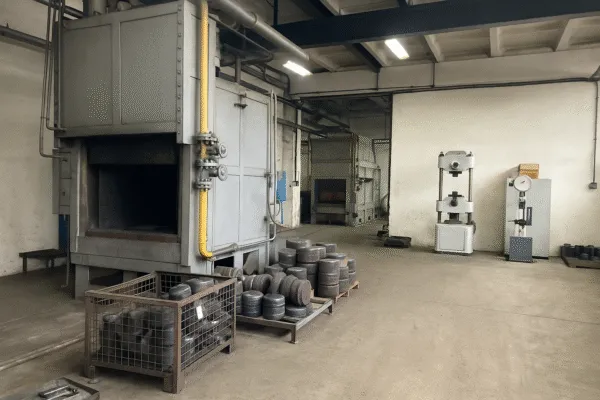
Next, we talk about heat treatment and actual tests. For many power train parts, we choose quench and temper to reach a strong yet tough state. For wearing parts, we may allow higher hardness but protect impact zones. We decide which tests we do for every batch, such as tensile tests, hardness checks or Charpy impact tests. Then we link these tests to a clear report format that travels with each shipment. I also keep machining in mind, because very hard steels increase tool wear and cycle time on our custom metal forging parts and CNC lines.
| Property | Why it matters | Typical test method |
|---|---|---|
| Yield strength | Controls permanent bending | Tensile test |
| Tensile strength | Shows maximum load before break | Tensile test |
| Hardness | Shows wear resistance | Rockwell or Brinell test |
| Toughness | Shows impact resistance | Charpy impact test |
| Corrosion behavior | Shows life in wet environments | Salt spray or field testing |
This complete sheet becomes part of your project file. So later, when you add new related parts, we can reuse many rules and keep your system clean.
Quality Assurance & Surface Treatment: What to Expect from an ISO-Certified Supplier?
Many importers only see an ISO logo on a website, and they feel safe too fast. Later, they receive mixed heats, wrong hardness or rough plating, and they must sort parts by hand. I believe an ISO 9001 certificate is only useful when the factory really follows the system every day. So I always explain how our quality management works, step by step.
Standards like ISO 9001 quality management systems describe how factories should plan, run and improve processes.(International Organization for Standardization) A serious forging supplier applies these ideas to material receipt, forging, heat treatment, machining, surface treatment and packing. You should see real records, clear work instructions and stable inspection habits, not only one tidy shelf of documents.
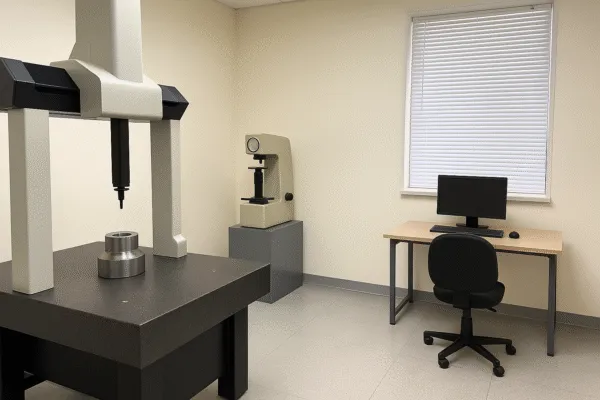
At material receipt, we check grade and heat numbers against mill certificates. We also check surface condition and size, and we mark each bundle clearly. During forging, we monitor furnace settings and temperatures and keep process logs. After heat treatment, we check hardness, and sometimes we check micro structure on reference samples. In machining, we use CMM and gauges for critical dimensions, and we log results by batch.
How I design a practical control plan1 and connect it to PPAP style2 thinking
For each new project, I write a short control plan1, not a huge novel. The plan lists each stage, what we check, and how often we check. It also links to forms and tools. Many ideas come from the ISO 9000 family, which explains how to build a complete quality loop from planning to improvement.(International Organization for Standardization)
| Stage | Main focus | Typical documents |
|---|---|---|
| Material receipt | Grade, heat, surface | Mill cert, incoming record |
| Forging and heating | Temperature, deformation, grain flow | Process sheet, photos |
| Heat treatment | Time, temperature, cooling mode | Furnace charts |
| Machining | Key dimensions, runout, threads | Dimensional report |
| Surface treatment | Coating type and thickness | Plating or paint report |
| Packing and loading | Label, protection, pallet strength | Packing list, photos |
For some customers, I also prepare PPAP style2 files. We include process flow, PFMEA, control plan1, full dimension report and capability data where needed. We keep these files linked to your project code inside our ISO system. So when we add new similar parts, we can use the same logic again and save time.
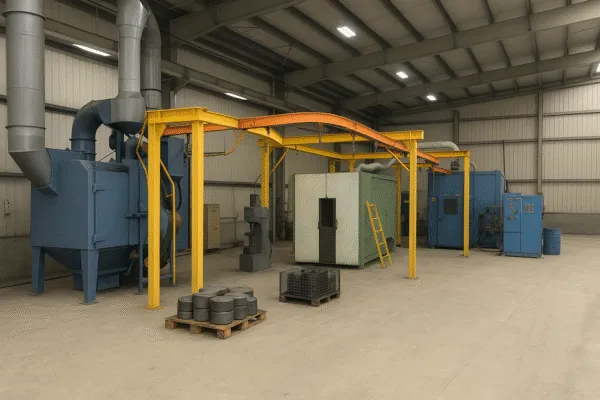
Surface treatment and packing sit inside this system, not outside it. For outdoor parts, we may choose zinc plating or strong paint systems. For food and chemical systems, we work with stainless steels and clean surfaces. Then we design packing that matches your transport route and warehouse height. We use strong cartons, inner bags, rust protection materials and tested pallets. We print clear labels with part codes and barcodes, and we keep photos as part of the record. In this way quality becomes a complete chain, not one final gate.
Lead Time, Tooling Cost & Supply Chain: How to Balance Speed, Cost and Customization?
Every buyer wants fast delivery, low cost and full flexibility at once, but real projects always involve trade-offs. If we do not talk about these trade-offs early, someone suffers later, often you. So I try to put all main factors on the table at the RFQ stage.
Total lead time includes design, tooling, sampling, PPAP or FAI, mass production and shipping. Tooling cost and MOQ depend on process and part complexity. Open-die forgings need simple tooling and higher unit cost. Closed-die and flash-forging need more tooling but give lower unit cost at volume. A stable supplier also protects you when demand jumps or slows.

First, I check if we can reuse any existing dies, inserts or fixtures. Reuse saves both money and weeks. Second, I split lead time into stages and show you realistic ranges, not perfect numbers. Third, we talk about batch size and warehouse capacity on your side. We decide if you prefer more batches at higher unit cost, or fewer bigger batches at lower cost.
How we plan a realistic project timeline and keep buffers under control
I often draw a simple table, then adjust each row with your team.
| Step | Main tasks | Typical time range |
|---|---|---|
| RFQ and DFM | Check drawing, choose process, quote | 3–7 days |
| Tooling design | 2D and 3D die design, feedback | 5–10 days |
| Tooling making | Die machining, fitting, first trials | 10–20 days |
| Samples and FAI | Produce samples, test, ship for approval | 7–15 days |
| Mass production | Stable batch runs with checks | 10–30 days |
| Sea shipment | Packing, booking, sailing | 25–40 days |
Then we talk about safety stock and emergency plans. Sometimes we prepare one early batch that stays in our warehouse for you. When your sales grow faster than expected, we ship this buffer to you and start new production at the same time. With ten lines for forging, custom metal forging parts, stamping, CNC and castings, we can move capacity when needed. This flexibility matters more than a tiny unit price difference in many real export cases.
Cost also has several layers, and you can control more than you think. Tooling cost mainly follows part size and shape. Material cost depends on weight and grade. Machining cost depends on tolerances, surfaces and cycle time. Packing and freight depend on volume and route. So we adjust design and planning to reduce full landed cost, not just ex-works price.
| Factor | Description | How you can influence it |
|---|---|---|
| Tooling cost | Dies, fixtures, gauges | Simplify shapes, add fillets |
| Material weight | Kilograms per part | Remove excess, optimize sections |
| Machining time | CNC, drilling, tapping hours | Relax non-critical tolerances |
| Inspection load | Features to measure | Focus on safety and key functions |
| Packing | Box and pallet design | Standardize carton sizes |
| Freight | Volume and weight per shipment | Use full containers and stable schedules |
Because we can ship forged parts together with stamping parts and casting parts, you also gain better freight efficiency. You receive one container, one packing list and one set of customs documents. That makes life easier for your warehouse and for your accountant as well.
FAQs About Custom Metal Forging Suppliers
How do I find a reliable custom metal forging supplier in China?
I suggest you combine search engines, B2B platforms and industry associations. You search Google with clear terms like “custom metal forgingg parts supplier China](https://primefabworks.com/what-are-the-top-10-metal-casting-parts-made-in-china/)” and compare several factory sites. You check platform badges but also ask for licenses and factory photos. You also read public resources from groups like the Forging Industry Association to understand basic process options.(Foundry Industry Association) Then you talk by video, so you see real people and real workshops.
What is the usual MOQ for custom forged parts?
MOQ depends on process, size and material. Open-die forgings plus machining often allow small batches, because tooling is simple. Closed-die and flash-forging normally start from a few hundred pieces, because we must spread die cost and setup time. At Prime, I try to keep trial batches smaller and flexible, then we move to standard MOQs once your sales numbers look stable.
What affects forging price per kilogram the most?
Material type and weight set the base cost. Process choice, press tonnage and number of blows add more. Machining time, tool wear, inspection and packing add further cost, especially for tight tolerance parts. To control price, you can relax non-critical tolerances, avoid sharp corners, and group orders to reach full batches. I often send two or three quote options, so you see how each choice changes the price curve.
Should I choose forging or casting for my industrial hardware parts?
Forging works best when you need high strength, tough grain flow and strong fatigue life. Casting works best when you need complex shapes at moderate loads and want lower tooling cost for some forms. Public standards like ASTM steel forging specifications remind us that forged parts often serve high duty jobs in power and fluid systems.(ASTM International | ASTM) When you work with Prime, I compare both options with real numbers and risks before you choose.
Can one supplier handle forging, CNC machining, stamping parts and fasteners together?
Yes, one integrated factory group can handle all of these, and this model often reduces risk. Prime runs forging, CNC, stamping, casting, welding and fastener lines on one site or in one network. So we can build a package that covers forged blanks, precision CNC parts, stamped brackets, fasteners, and even matched plastic parts, all inside one ISO 9001 quality system. This structure saves your time on audits and follow-up.
How do I check if an ISO forging supplier really follows the standard?
You should ask for more than a scanned certificate. You request example control plans, inspection reports, furnace charts and CMM reports. You also ask for a short online tour that shows receiving, forging, heat treatment, machining, inspection and packing. Proper ISO 9001 guidance, like the ISO 9000 family overview, supports this full process view, not only one final check.(International Organization for Standardization) If a supplier shares such details easily, you can trust them more.
What payment terms and shipping options work best for custom forging projects?
For new projects, we often start with T/T advance plus balance against documents. After several good shipments, we can discuss better terms. For logistics, we use air freight for urgent samples and sea freight for stable mass orders. Sometimes we send one small air batch to save a season while the main volume moves by sea. Together we choose the mix that matches your forecast and cash flow.
High-Quality Reference Domains for Further Study
I know many buyers like to double-check ideas with neutral sources. So I list a few high-quality domains that share useful knowledge about quality, forging and steel:
- ISO 9001 quality management systems – iso.org (International Organization for Standardization)
- Forging Industry Association – forging.org (Foundry Industry Association)
- ASTM general requirements for steel forgings – astm.org (ASTM International | ASTM)
- Forging process overview – Wikipedia (Wikipedia)
Besides these, you can also learn from strong domains like asminternational.org, sae.org and steel.org for wider material and standards topics.(ASM材料信息) I use these sites for background reading, then I translate key ideas into simple, practical steps that fit your project.
Conclusion
Smart process, material, quality and supply choices, plus a proven ISO factory, keep your forged parts safe and profitable.