
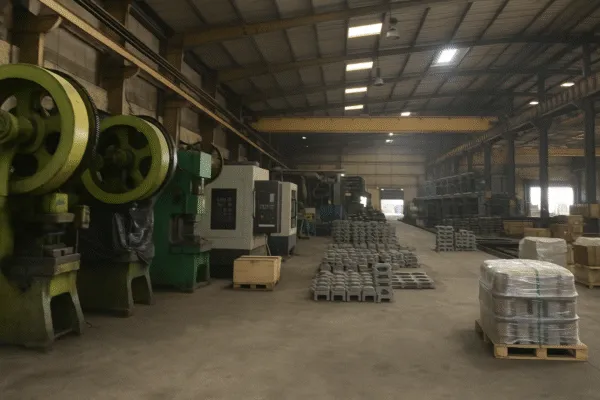
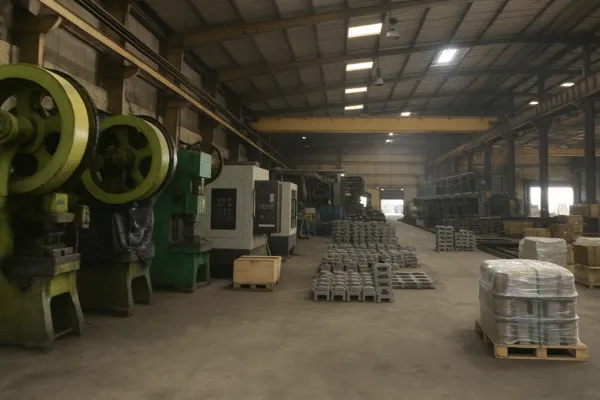
US buyers feel real pressure when they choose a China forging supplier1. One bad batch can destroy profit and damage reputation fast.
This guide gives a 23-question checklist that US purchasing managers should use before choosing a China forging supplier1. It explains how to verify factory identity, technical strength, ISO quality systems, cost structure, lead times and export packing. It also shows how an ISO certified metal parts factory2 in China supports forgings with Precision machining of CNC parts, stamping parts, casting parts and fasteners for global buyers.
I want you to feel calm and in control after you read this guide. So I write from both sides, buyer and factory. I use my real projects with Kevin and other US customers to turn theory into simple, direct steps you can follow now.
How can I screen a China forging supplier1 in the first call?
Many buyers rush to RFQs and samples without a strong first call. Then they discover the “factory” works as a tiny broker with no control. I saw this many times before I changed my way of working.
You should use the first call as a quick audit, not a friendly chat. Clear questions about start year, factory ownership, export markets, equipment and contact structure remove weak China forging supplier1s fast. A strong custom forging parts manufacturer in China answers with numbers and proof. A weak one jumps straight to cheap prices and stories.
- What year did you start forging production and export business1?
- Are you a real factory, a trader, or a mixed model with own lines?
- What are your main forging processes and material grades for export orders?
- Which regions do you serve most today, for example US, Europe or the Middle East?
- Can you share typical customer profiles or reference industries and parts?
- How many forging lines and presses do you run, and what tonnage range?
- Do you offer one-stop service2 like machining, heat treatment or basic assembly?
- Who will be my main contact and backup contact for daily work and emergencies?
I ask similar questions when buyers review Prime as a Custom stamping parts supplier or casting partner. We started in 1993 and now run 10 production lines with ISO control3. So I expect the same level of clarity from any China forging supplier that I trust.
How I score first-call answers like a mini audit
I do not stop at the answers. I convert them into a small internal scorecard. Question focus Why it matters Red flag answer Strong answer Start year Shows stability and experience “Around ten years, I think” “Forging since 2005, export since 2010” Factory or trader Impacts control and cost “We are both, it depends” “We own two plants, licenses ready to share” Export markets Shows export readiness “We mainly sell domestic” “60% export to US and Europe customers” Lines and presses Shows real scale and flexibility “Enough capacity, do not worry” “Four lines, 400T–1600T presses, three shifts” One-stop ability Cuts interfaces and risk “We only forge, others machine” “We forge and manage CNC and casting partners” Contact structure Reduces communication risk “Just text me on WhatsApp” “Sales engineer plus project coordinator for you” If I see more red than green, I stop and protect the buyer. If I see strong answers, I move to the next step and ask for factory profile and documents. At this point I also introduce Prime’s stamping parts, CNC parts and casting parts capability, so the buyer sees how we can combine forged blanks and finished parts in one project.
How do I verify technical and quality strength4 before approving a China forging supplier?
Nice workshop photos do not prove real quality. Kevin learned this in a hard way. His forged parts looked fine on arrival. After machining, many pieces failed on tolerance and hardness. He lost money and time. I do not want you to repeat that story. You must look deeper than tonnage and floor area. Strong suppliers run ISO based systems, use proper inspection equipment and link every heat of material to final parts. ISO explains that the ISO 9000 family, including ISO 9001, helps companies control processes and consistently meet customer expectations.(International Organization for Standardization) The Forging Industry Association5 also stresses that proper control of material, temperature and die design is key for sound forgings.([Forging Industry Association](https://primefabworks.com/top-cost-factors-of-custom-metal-forging-parts-manufacturing-a-complete-guide/)5)
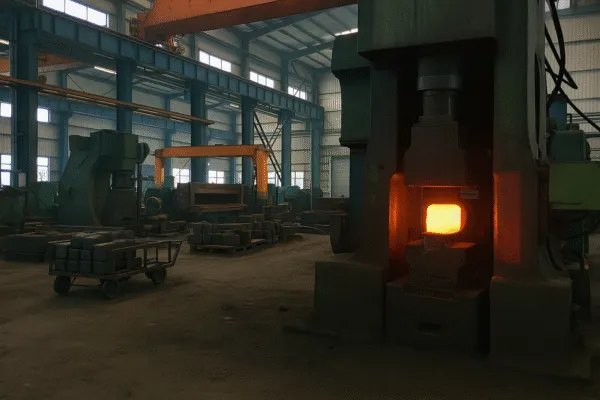
The eight background questions I always ask suppliers
I now use one simple script in every first call. It protects my time and my buyer’s money.
- What year did you start forging production and export business1?
- Are you a real factory, a trader, or a mixed model with own lines?
- What are your main forging processes and material grades for export orders?
- Which regions do you serve most today, for example US, Europe or the Middle East?
- Can you share typical customer profiles or reference industries and parts?
- How many forging lines and presses do you run, and what tonnage range?
- Do you offer one-stop service2 like machining, heat treatment or basic assembly?
- Who will be my main contact and backup contact for daily work and emergencies?
I ask similar questions when buyers review Prime as a Custom stamping parts supplier or casting partner. We started in 1993 and now run 10 production lines with ISO control3. So I expect the same level of clarity from any China forging supplier that I trust.
How I score first-call answers like a mini audit
I do not stop at the answers. I convert them into a small internal scorecard.
| Question focus | Why it matters | Red flag answer | Strong answer |
|---|---|---|---|
| Start year | Shows stability and experience | “Around ten years, I think” | “Forging since 2005, export since 2010” |
| Factory or trader | Impacts control and cost | “We are both, it depends” | “We own two plants, licenses ready to share” |
| Export markets | Shows export readiness | “We mainly sell domestic” | “60% export to US and Europe customers” |
| Lines and presses | Shows real scale and flexibility | “Enough capacity, do not worry” | “Four lines, 400T–1600T presses, three shifts” |
| One-stop ability | Cuts interfaces and risk | “We only forge, others machine” | “We forge and manage CNC and casting partners” |
| Contact structure | Reduces communication risk | “Just text me on WhatsApp” | “Sales engineer plus project coordinator for you” |
If I see more red than green, I stop and protect the buyer. If I see strong answers, I move to the next step and ask for factory profile and documents. At this point I also introduce Prime’s stamping parts, CNC parts and casting parts capability, so the buyer sees how we can combine forged blanks and finished parts in one project.
How do I verify technical and quality strength4 before approving a China forging supplier?
Nice workshop photos do not prove real quality. Kevin learned this in a hard way. His forged parts looked fine on arrival. After machining, many pieces failed on tolerance and hardness. He lost money and time. I do not want you to repeat that story.
You must look deeper than tonnage and floor area. Strong suppliers run ISO based systems, use proper inspection equipment and link every heat of material to final parts. ISO explains that the ISO 9000 family, including ISO 9001, helps companies control processes and consistently meet customer expectations.(International Organization for Standardization) The Forging Industry Association5 also stresses that proper control of material, temperature and die design is key for sound forgings.([Forging Industry Association](https://www.forging.org/fia/content/technical-library/technical-library-home.aspx)5)
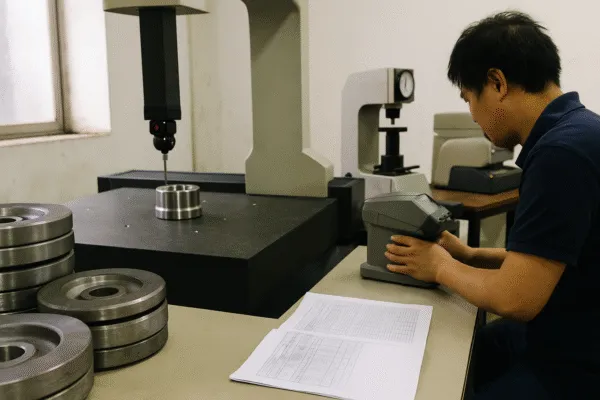
The eight technical and quality questions that protect your brand
I now run every candidate forging factory through a technical and quality filter.
- Can you share valid ISO 90011 certificates and recent audit or customer assessment reports?
- How do you control raw material quality and trace each heat from billet to final part?
- Which inspection tools do you use, for example spectrometer, CMM, hardness tester and impact tester?
- What tolerances can you hold after forging and after CNC machining2 on critical surfaces?
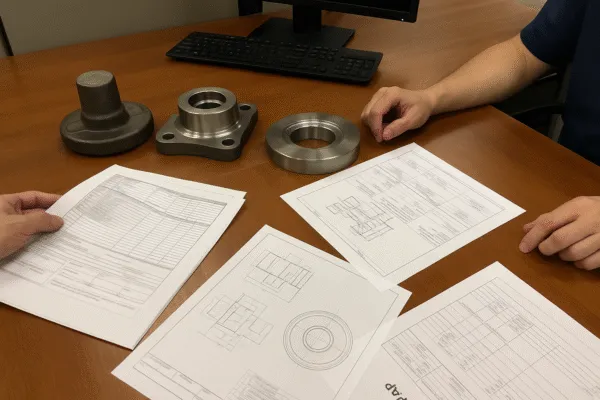
- Can your engineers review my drawings and suggest design or tolerance changes to cut risk and cost?
- How do you handle samples, PPAP3 and first article inspection reports for new parts?
- What steps do you follow when defects appear in mass production, and how do you stop them from repeating?
- How do you store, maintain and track tooling and gauges for my project across many years?
Prime holds ISO quality certification for stamping, CNC and casting processes, so I know how a serious system looks. We use PPAP3 style documentation on critical projects for North America and Europe. I expect any ISO certified forging factory in China to show similar discipline.
Dive deeper: linking standards, process and material choices
How ISO and forging know-how work together
When I check a forging supplier, I do not look only at one certificate. I read how they turn ISO 90011 requirements into daily routines. ISO describes ISO 90011 as a globally recognized quality management standard that guides organizations to establish, maintain and improve a quality management system.(International Organization for Standardization) I want to see this system reflected in work instructions, training records and real inspection logs, not only on the office wall.
At the same time, I study their forging process knowledge4. The Forging Industry Association’s technical library and design guides explain how forging process choice, die design and temperature control influence final properties.(Forging Industry Association) General resources, like the forging overview on Wikipedia, also help new buyers understand open-die, closed-die and other forging types in simple language.(Forging Industry Association) I use these industry references as a benchmark when I read a supplier’s process flow charts.
To simplify buyer decisions, I often summarize material options5 in a table like this:
| Material grade | Typical use case | Main advantage | Main trade-off |
|---|---|---|---|
| Carbon steel | General brackets and simple forgings | Low cost and easy processing | Lower corrosion resistance |
| Alloy steel | High strength shafts and gears | Higher strength and fatigue resistance | Higher material and heat treatment cost |
| Stainless | Outdoor or corrosive environments | Strong corrosion resistance | Tougher machining and higher price |
| Aluminum | Light weight structural components | Low weight and good machinability | Lower strength than steel |
I also compare forging with casting and pure machining. Cases from FIA and technical media show that forged crankshafts and similar parts often reach higher yield and fatigue strength6 than cast versions, thanks to refined grain flow.(Forging Industry Association) For light metals, sources like Azom explain how forging and thermo-mechanical processing improve strength and fatigue resistance in aluminum alloys.(AZoM)
So when I talk with a China forging supplier, I ask them to explain why they choose a specific route and material for my part. Then I see whether they speak in the same language as ISO, FIA and other authorities. At Prime, we link this with our CNC machining2, stamping and casting lines. We align tolerances and control plans, so forged blanks move smoothly into Precision machining of CNC parts, and final assemblies reach the buyer without drama.
How can I balance cost, delivery and risk with a China forging supplier?
Unit price looks simple, but real cost hides everywhere else. Kevin once picked the lowest offer from a new China forging supplier. The unit price looked perfect in Excel. The supplier then missed two sailing dates and used weak cartons. Kevin paid for re-packing and some air shipments. The “cheap” supplier turned into his most expensive lesson.
You must look beyond the price column. Real value comes from a mix of cost, lead time, delivery reliability7 and packing quality. Strong China forging suppliers explain their cost drivers8 and show how they protect deliveries. They talk about batch size, tooling, material, logistics and export packing. Weak suppliers say yes to everything and quietly cut corners later.
The seven commercial and logistics questions I add to every RFQ
My RFQ template for forging always includes these questions:
- What is your standard quotation format1, currency and validity time for forging projects?
- Which cost drivers2 can you adjust, for example material grade, batch size or process route, without hurting function?
- What are your normal lead times3 for tools, samples and mass orders in low and peak seasons?
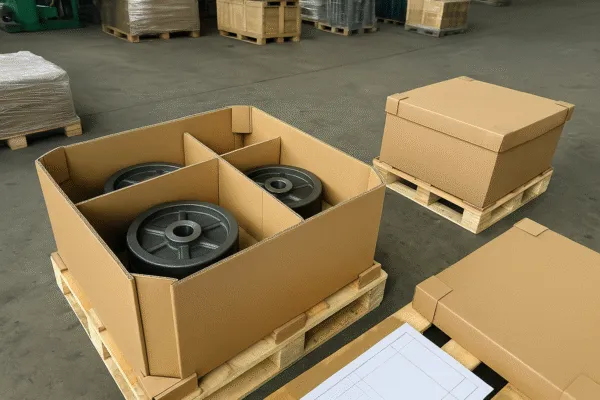
- How do you design and test export packing4 for heavy forged parts shipped by sea and air?
- Which Incoterms and ports do you use most often for US buyers?
- How do you handle urgent orders, schedule changes and partial shipments when demand jumps?
- What after-sales support5 do you provide, including claim handling, credit notes and corrective actions?
I request a breakdown quotation that separates tooling, raw material, forging, machining, inspection, packing and logistics suggestions. Then I can compare real structure, not only the final number.
Dive deeper: understanding cost drivers2, packing and one-stop setups
How I read forging cost beyond the unit price
I like simple tools, so I use a basic cost driver table when I compare suppliers: Cost factor What I check with supplier Impact on total cost and risk Material grade Carbon, alloy, stainless or aluminum choices Changes part cost and performance Process route Open-die or closed-die, rough or finish machining Affects tooling, cycle time and scrap Batch size Quantity per batch and shipment Larger batches cut unit price but risk Tooling Die cost, life, maintenance and replacement rules Influences long-term price stability Packing Carton strength, pallet design, internal protection Drives damage rate and claim cost Logistics Sea, rail, air or express routes and port choices Changes landed cost and lead time Technical sources on press forging note that closed-die press forging can create less flash and need less draft than open-die forging.(AZoM) This often reduces machining stock and improves material yield, which directly impacts cost. I ask suppliers to quantify such effects when they claim “better process”. Packing deserves its own view, especially for heavy forging parts. After Kevin received several damaged cartons from another vendor, Prime redesigned our export packing4 for stamping parts, casting parts and forging-related components. We upgraded carton thickness, pallet quality and corner protection. Damage claims dropped sharply. Now I always request packing photos, stacking plans and simple test results. When I plan full projects, I also connect forging with other hardware. Many buyers now prefer one-stop industrial hardware supply6, instead of many single-process vendors. Prime can combine forgings from stable partners with our own stamping, CNC, casting and fastener lines. So one shipment can include forged blanks, machined parts, screws and plastic parts under one set of documents. That structure cuts bank fees, reduces communication load and often improves overall logistics cost. For internal SEO and user navigation, I usually guide buyers toward three key pages on our site:
- Prime Stamping Parts product page for brackets and sheet metal.
- Prime CNC Machining Parts page for high-precision components.
-
Prime Casting and Forging Integration page for complex housings and heavy parts. I also place clear links to the Prime Contact page across these sections. This internal linking helps both users and search engines understand our full solution, not only one product family.
What FAQs and expert resources should US buyers know about China forging suppliers?
What is a realistic lead time from a China forging supplier1 to a US warehouse? I usually plan 3–5 weeks for tooling and samples after we freeze drawings. Then I plan 4–6 weeks for the first mass batch, plus sea transit. So many projects reach a US warehouse in about 10–14 weeks, depending on port and season.
What MOQ should I expect from a custom forging parts manufacturer in China? Most forging factories prefer higher volumes, but I often see MOQs from 300 to 1,000 pieces per part. For new projects, I like to start with a smaller, paid pilot batch. That batch gives real data on quality, packing and logistics before we lock in big volumes.
How do I choose between open-die and closed-die forging2? I look at size, geometry and required accuracy. Open-die forging fits large, simple shapes. Closed-die forging fits complex geometries and higher accuracy and usually needs dedicated dies. Resources from industry groups and technical sites explain these options in detail, including warm and cold forging variations.(Forging Industry Association) I often ask suppliers to quote both routes for key parts and then compare tooling, price and risk.
Can my forging supplier also handle machining and coating? Some forging plants run full machining and coating lines. Others focus on forging only and rely on partners. At Prime, we often manage the full chain. We combine forged blanks from selected partners with in-house CNC machining, stamping, casting and assembly. So buyers receive ready-to-use parts under one schedule and quality system.
How do I check if a forging factory understands US and European standards3? I ask which material and testing standards they follow, for example ASTM, DIN, ISO and SAE references. I also ask for real inspection reports from export jobs. If the reports look clear and match our drawings, I feel more confident. To help their team, I sometimes point them toward high-authority domains like iso.org for quality standards and forging.org for process guidance, instead of random blogs.(International Organization for Standardization)
How can I reduce risk on my first order with a new China forging supplier? I keep the first order small and focus on one or two key parts. I define clear PPAP or first article inspection requirements. I ask for packing photos before shipment and detailed labels. I also link future price talks to performance on quality and delivery. This way I give trust step by step and protect my buyer at the same time.
Conclusion
Use these 23 questions with Prime’s ISO-backed support to secure reliable China forging and metal parts supply for your business.
Understanding CNC parts can help you make informed decisions when sourcing precision components. ↩
Understanding ISO certification can help you ensure quality and reliability in your supply chain. ↩
Familiarizing yourself with material specifications ensures you select the right components for your projects. ↩
Learning about quality management can help you implement best practices in your operations. ↩
Exploring forging processes can enhance your knowledge of metalworking and improve sourcing decisions. ↩
Exploring fasteners and plastic parts can broaden your sourcing options and improve product design. ↩
Understanding delivery reliability is crucial for maintaining production schedules and reducing costs. ↩
Identifying cost drivers can help you evaluate supplier pricing more effectively. ↩