
Nighttime driving is disproportionately dangerous. According to the U.S. Federal Highway Administration (FHWA)1, the traffic fatality rate is 3 times higher at night than during the day. This risk skyrockets on poorly lit roads. The problem is a lack of clear guidance, but a proven technology is changing that.
Solar-powered road studs2 are self-contained, active LED illuminators that define the road ahead. They charge by day and automatically light up at night, providing drivers with up to 900 meters of visibility—a tenfold increase over traditional reflectors—dramatically improving road safety.
For over 30 years, I've been on the factory floor, overseeing the production of industrial hardware. I've seen countless components, but few have the direct life-saving impact of a well-made solar road stud1. It's a simple concept that solves a complex problem. A client of mine, Kevin from the U.S., sources components for large infrastructure projects. He put it best: "Reflectors are passive. They wait for you to find them. These solar studs actively show you the way." That shift from passive to active illumination2 is the core of this safety revolution.
How Do Solar-Powered Road Studs Improve Road Visibility and Reduce Nighttime Accidents?
Dark, winding roads create high cognitive load for drivers. Their brains are working overtime to find the road's edge. What if the road itself could communicate its path, reducing that mental strain?
Solar road studs1 use powerful LEDs to create an illuminated path2 visible from almost a kilometer away. This advanced warning reduces driver reaction time and stress, especially in adverse weather like rain or fog.
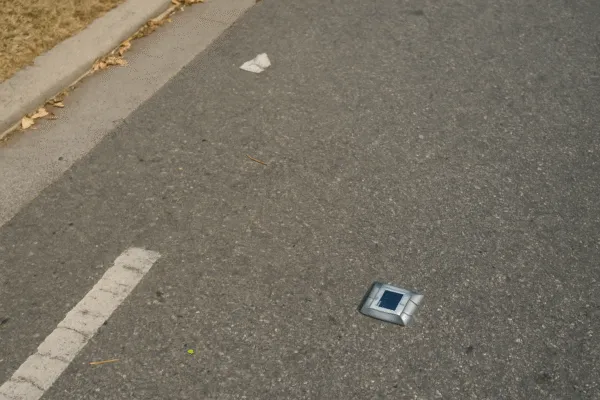
This isn't just about seeing farther; it's about providing the brain with clear, unambiguous visual cues. I recall a project for a foggy mountain region where the client's requirements were extremely strict. As part of their Production Part Approval Process (PPAP)1, they required specific luminosity tests2 to ensure the studs performed under simulated heavy fog. Our studs passed, and the client reported a measurable drop in single-vehicle accidents within six months. That's the real-world impact of quality-assured manufacturing.
Comparing Solar vs. Traditional Reflective Road Studs: Which Is Better for Your Project?
You need to mark your roads, but budgets are tight. Choosing the wrong stud can mean wasted money and compromised safety. How do you decide between a modern solution and a traditional one?
While solar studs1 have a higher initial cost, their superior performance, longer lifespan, and immense safety benefits offer a significantly lower Total Cost of Ownership (TCO)2 and a better long-term investment.
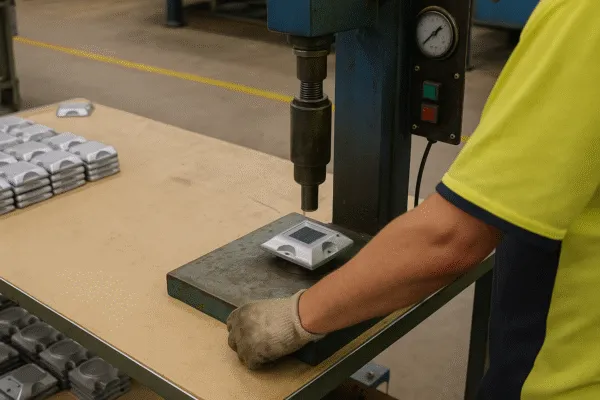
When I talk to experienced buyers like Kevin, we don't just discuss the per-unit price. We discuss the cost over a five-year project lifecycle. Our commitment to the ISO 9001 quality management standard1 means our lifespan and performance claims are backed by rigorous, documented testing. This ensures that the TCO calculations2 we provide are reliable, protecting your investment and, more importantly, the public. Explore our commitment on our Quality Assurance page.
What Key Technical Specifications Must You Check Before Purchasing Solar Road Studs?
You're ready to buy, but the market is flooded with options that look identical. Choosing based on price alone is a guaranteed path to failure. You must know which technical details define a stud's survivability.
Focus on a die-cast aluminum casing1, a compression capacity over 30 tons, an IP68 waterproof rating, and a high-quality Lithium-ion (LiFePO4) battery. These are the non-negotiable specs for highway applications.
The Heart of the Stud: Battery and Solar Panel Deep Dive
- Battery: A Lithium Iron Phosphate (LiFePO4)2 battery is the premium choice. Compared to older Ni-MH batteries, it offers 3-4 times more charge cycles and a wider operating temperature range. This is the single most important component for a long service life.
- Solar Panel: Monocrystalline solar panels have a higher efficiency rating, meaning they charge faster, especially on overcast days, ensuring the stud works reliably every single night.
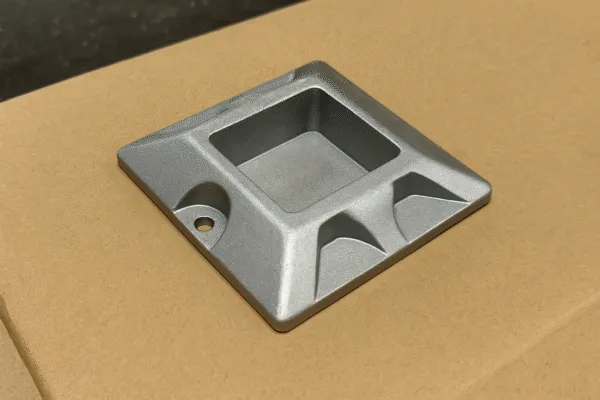
In our factory, we see where others cut corners. A weak plastic casing, a poor seal, or an old-tech battery will fail within a single season. A road stud is a sealed electronic device that lives in one of the harshest environments imaginable. Our aluminum alloy solar road studs1 are specifically engineered to withstand these conditions for years, not months.
The Heart of the Stud: Battery and Solar Panel Deep Dive
- Battery: A Lithium Iron Phosphate (LiFePO4)2 battery is the premium choice. Compared to older Ni-MH batteries, it offers 3-4 times more charge cycles and a wider operating temperature range. This is the single most important component for a long service life.
- Solar Panel: Monocrystalline solar panels have a higher efficiency rating, meaning they charge faster, especially on overcast days, ensuring the stud works reliably every single night.
Breaking Down the Cost: What Really Influences the Price of a Solar Road Stud?
You see a wide range of prices and wonder why. Is a more expensive stud always better? How can you get a competitive price without sacrificing the quality your project demands?
The final price is a direct reflection of component quality (battery, solar panel, casing, LEDs) and certifications (CE, RoHS, IP68). Cheaper studs use inferior components that lead to early failure.
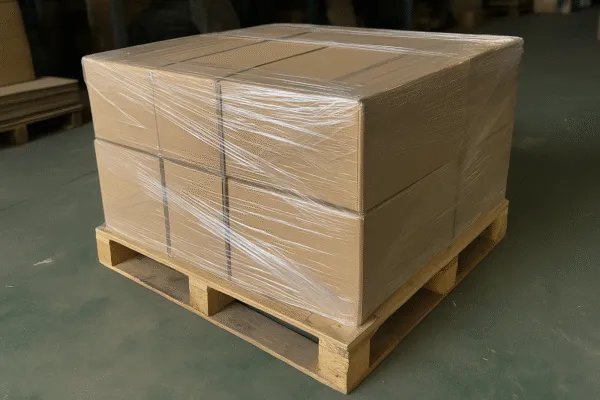
When a buyer receives a quote, they need to know what's behind the numbers. For every large order, we can initiate a PPAP1 to ensure the components you've specified are exactly what you receive, locking in quality from the first unit to the last. A supplier's willingness to be transparent about these trade-offs and quality processes is the sign of a trustworthy partner.
What Are the Top Installation Mistakes That Shorten the Lifespan of Solar-Powered Road Studs?
You’ve invested in top-quality solar studs. But a few months later, some are dark or missing. A premium product can fail if the installation process is flawed, wasting your entire investment.
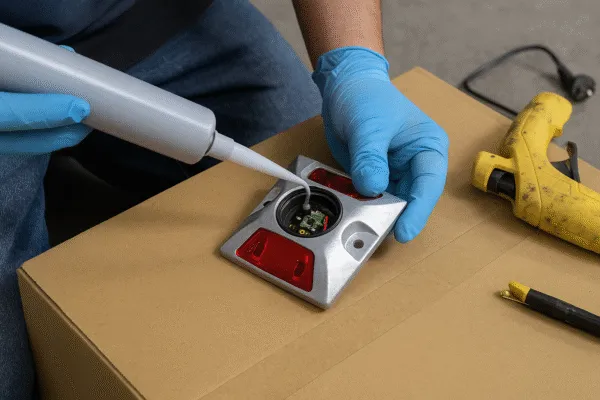
The most common failures stem from improper surface prep, using the wrong adhesive, and incorrect curing time. A clean, dry surface bonded with a high-strength two-part epoxy2 is non-negotiable for longevity.

A loose road stud doesn't just fail; it becomes a dangerous projectile. This is why we are so strict about installation guidelines1. It’s a simple process, but every step is critical. Skipping the cleaning step or installing on a damp day can reduce the bond strength2 by over 50%.
Frequently Asked Questions About Solar Road Studs?
You have more questions, and that's good. A serious buyer needs to be sure. Here are the answers to the most common questions I get from clients around the world.
How long do solar road studs last?
A high-quality stud with a LiFePO4 battery1 and aluminum casing will last 3 to 5 years. Cheaper models with Ni-MH batteries may only last 1-2 years before the battery degrades.
Can the LED colors be customized?
Absolutely. We manufacture them in standard MUTCD (Manual on Uniform Traffic Control Devices)2 colors: white, yellow/amber, red, blue, and green, each serving a specific traffic guidance purpose.
What is the typical MOQ for a factory order?
For direct B2B orders, our MOQ is typically 500-1,000 units. This allows for competitive pricing. However, we are flexible for new clients. To discuss a trial order, please get in touch with our team.
Ready to Improve Your Project's Safety and Durability?
Take the next step. Our team is ready to review your project requirements and provide a detailed, no-obligation quote.