
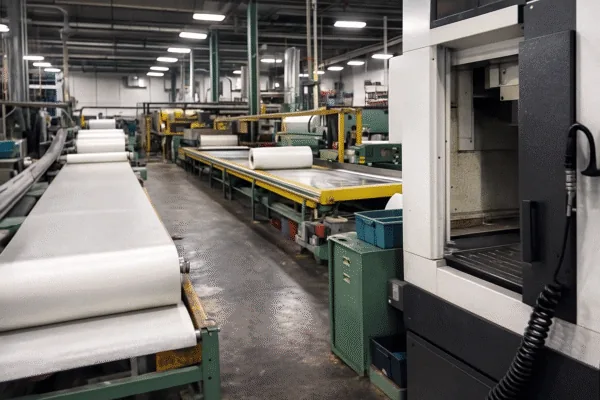
You already know this: one unstable glass cloth batch can wipe out years of margin and damage your brand. The first samples look perfect, but real voltage and heat expose hidden weaknesses. Field failures start, your customer’s line stops, and you pay for scrap, replacements, and lost trust.
This page is written from both sides of the table – factory and buyer. I want you to see exactly how we turn glass cloth parts1 from “cheap plates from China” into controlled, documented insulation components2 you can approve in a serious system.
Upload Your Drawing – Get a Technical Review in 2–3 Days Upload RFQ / Drawings
Why One Bad Glass Cloth Batch Can Destroy Your Profit
When buyers only write “FR-4 OK” or “glass cloth per drawing” on a PO, I know trouble may come later. The first samples often look fine. But after months in the field, real voltage, creepage paths, humidity, and temperature cycles show the weak points:
- Partial discharge around sharp edges or thin areas
- Cracking or deformation near hot components
- Carbonized tracks from poor CTI or contamination
- Random RoHS / REACH test failures at customs or key accounts
The drawing stays the same, yet someone in the chain quietly changes:
- Laminate supplier
- Resin formulation or flame retardant
- Curing profile or press / oven settings
So you start paying for:
- Field failures and warranty claims
- Extra lab work on every batch
- Emergency air freight and premium prices
- Internal meetings and supplier changes1
You do not control this risk by asking for “best price” and a shiny catalog. You control it by freezing a clear specification, proving it on real parts, and locking change control and compliance into a simple system with your factory.
Step 1 – Freeze the Right Specification Before You Buy
You verify electrical, thermal, and mechanical properties by turning your idea into a frozen technical file2 before mass orders. We start from your system requirements, not from our material stock.
I treat each glass cloth insulation part as a small safety system. We start from:
- Working and surge voltage
- Creepage and clearance distances3
- Operating and hotspot temperatures
- Pollution degree and environment
- Expected lifetime and safety class
Then we map each risk to one property and one test method. We align limits with insulation coordination concepts in IEC 60664-14, which covers clearances, creepage distances, and solid insulation in low-voltage systems. [[1]]
Property checklist we freeze together
When I talk with engineers and buyers, we always complete a simple checklist first.
| Property group | What we freeze in the spec | Evidence or reference |
|---|---|---|
| Base glass style | 7628, 2116, or mix, with supplier code | Supplier datasheet, ISO certificate |
| Resin or binder system | Brand, flame class, halogen status, filler content | UL datasheet, resin TDS |
| Curing profile | Press or oven curve, time, temperature steps | Process sheet, SPC charts |
| Glass / resin ratio | Thickness window and density range | Laminate supplier report |
| TG and thermal class | Minimum TG and continuous use temperature | Thermal analysis report |
| Dielectric strength / CTI | Target values and test methods | IEC or ASTM based lab report |
| Breakdown voltage | Margin vs. system voltage and pollution degree | Withstand test on real parts |
| Mechanical strength | Peel, flexural, torque or clamp force as needed | Mechanical test report |
So when you ask for quotes on our glass cloth insulation parts, we do not send only unit prices. We first place your required voltage, temperature, and lifetime into this table and select suitable materials together.
Comparing material choices for cost and risk
We keep the comparison simple and honest.
| Material option | Typical use case | Cost level | Field risk comment |
|---|---|---|---|
| Standard FR-4 glass epoxy | General PCB, light insulation plates | Low | Limited TG and CTI, OK for easy duty |
| High TG glass epoxy | Drives, inverters, hotter motor areas | Medium | Better heat, resin batch control required |
| Halogen-free high CTI laminate | Safer, “green” applications | Medium | Good CTI, strong formulation control needed |
| Thick glass cloth plus epoxy casting | Custom blocks and spacers | Medium | Many variables, needs tight process |
| Special high temp resin system | Very hot, long-life insulation | High | Best life, highest material cost |
For most B2B customers, I recommend the middle options. Then we adjust thickness, glass style, and machining process to balance cost and margin.
Micro-CTA: Want a quick material sanity check? Send us your drawings and basic data (voltage, creepage, temperature, lifetime). We will plug them into this checklist and suggest 1–2 suitable laminate options with risk comments. Upload RFQ / Drawings
Step 2 – Verify Electrical, Thermal, and Mechanical Properties on Real Parts
We do not rely on small, perfect lab coupons that never see your screws or terminals. We verify properties on real production parts.
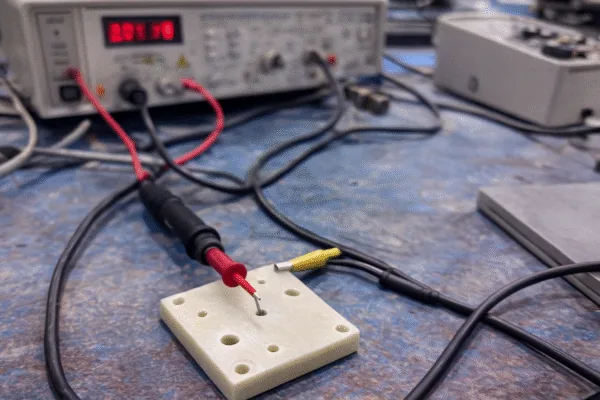
Our typical verification flow
-
Collect your system requirements We write down system voltage, surge level, peak and steady temperature, creepage distance, torque or clamp forces, and safety class. We note which standards guide your design, for example IEC 60664-11 for insulation coordination or a drive maker’s insulation design note. [1] [2]
-
Select laminate with approved partners We avoid unknown sources. We work with stable laminate suppliers that also support our stamping and CNC projects, because these relationships have passed audits already. We lock glass style, resin family, and thickness and record supplier codes in the specification.
-
Run a pilot batch on serial equipment We machine parts on the same CNC centers and presses we use for our CNC and stamping lines, so stress, heat, and tolerances match mass production. You receive machined parts plus spare plates for dielectric, CTI, TG, and mechanical tests.
-
Create golden samples2 We define “golden samples2” together. You keep one signed set; we store one set in our golden sample room. We measure and document dimensions, appearance, and assembly with your screws, terminals, or cast parts. These samples become a physical contract.
-
Build a re-test plan We agree which properties to re-test and at what frequency (for example, every 10th lot for dielectric and TG at a third-party lab). We link every test to specific batch numbers in our ERP.
-
Summarize in a PPAP-style file We create a short PPAP-style summary3 that links each drawing requirement to one test, one frequency, and one record. Your team can see very quickly how we protect electrical, thermal, and mechanical performance over time.
Quality & Reliability System for Glass Cloth Insulation
Prime is ISO 9001:20154 certified across stamping, CNC machining, casting, welding, fasteners, plastic parts, and insulation parts. We translate ISO language into concrete controls for glass cloth projects. [5]
How the system looks in practice
-
Incoming control
- Batch-based checks for laminate thickness, TG, visual defects, and supplier COA before release.
- Only approved laminate supplier codes are allowed in our ERP for your project.
-
In-process control
- SPC on curing temperature and time, drilling and routing parameters.
- Clear work instructions and checklists at each operation.
-
Final inspection
- Dimensional and appearance checks on every lot.
- Dielectric / torque tests according to the control plan.
-
PPM and 8D
- We track PPM and close issues with full 8D reports and permanent corrective actions where needed.
-
Retention & records
- Retain samples and inspection records are kept for [X–Y] years (we adapt to your industry requirements).
This means your drawings are not just “run on machines”, but controlled by a documented, repeatable system.
Step 3 – Keep RoHS, REACH5, and the Whole Material Tree Under Control
I often receive emails that say only “RoHS / REACH OK, right?” with no extra detail. Then I see buyers shocked when random tests fail because a sub-supplier changed a flame retardant or pigment.
You ensure RoHS, REACH5, and environmental compliance by controlling the entire material chain6, not only final parts.
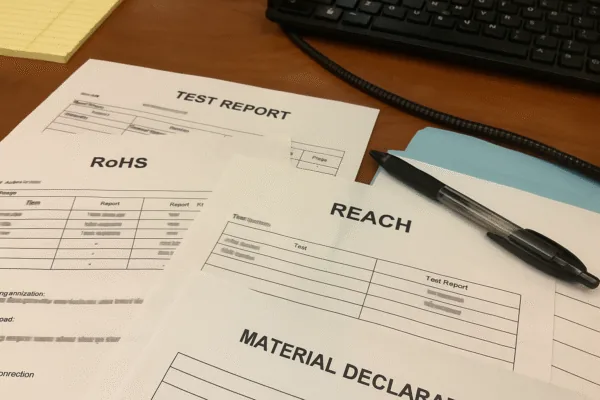
The EU RoHS Directive1 restricts certain hazardous substances in electrical and electronic equipment. [3] REACH2 defines how companies register, evaluate, and control chemicals, and it places the burden of proof on industry. [4]
Our RoHS / REACH2 control flow for insulation projects
| Step | Factory action | Your action as buyer |
|---|---|---|
| 1. Material selection | Choose declared RoHS / REACH2 compliant resin and glass | Approve detailed material list |
| 2. Document collection | Gather SDS3, declarations, and historical test reports | Store in your compliance system |
| 3. Initial third-party test | Test laminate stack and, if needed, whole assembly | Confirm test scope and lab credibility |
| 4. Lot traceability | Link material batches with labels and COA | Check labels and COA on every lot |
| 5. Periodic re-testing | Re-test by time or shipped quantity | Approve plan and request extra tests if needed |
| 6. Regulation monitoring | Track RoHS and REACH2 updates from official sources | Issue updated requirement sheet in writing |
| 7. Change control | Block material / process changes until approved | Review changes and demand new tests |
We also track typical risk substances in glass cloth systems and related hardware.
| Substance group | Common risk area | Control method |
|---|---|---|
| Lead, cadmium, mercury | Pigments, solder, some connectors | XRF screening4, supplier declarations |
| Hexavalent chromium | Plated metal parts and brackets | Process control and lab tests |
| PBDE / PBB flame retardants | Legacy resin systems | Careful resin selection and screening tests |
| SVHC under REACH | Plasticizers, additives, special modifiers | CAS mapping and updated SVHC checks |
How we keep RoHS and REACH2 under control in real projects
-
Draw the material tree6 We include glass cloth, resin, adhesive, paint, screws, castings, stamping parts, and plastics. This shows all possible risk points.
-
Collect detailed declarations from upstream suppliers We request CAS-based lists and clear RoHS / REACH2 statements. Our QA compares them with official RoHS information from the European Commission and the “Understanding REACH2” guidance from ECHA. [3] [4]
-
Send representative samples to an accredited lab We use IEC 623217-type approaches for RoHS screening. Reports show measured values and detection limits, so you can share them with your own customers or authorities.
-
Lock material codes in ERP Our buyers must select approved resin, glass, and chemical codes for your project. The system blocks unapproved codes to avoid accidental changes.
-
Plan re-tests We agree on a schedule (for example once per year or after a fixed shipped quantity). We also trigger new tests whenever SDS3 files change or when RoHS / REACH2 lists grow.
-
Build a one-page compliance summary8 We list material codes, last test dates, next planned dates, and responsible people in Prime. Many customers simply attach this page to their internal compliance file.
Micro-CTA: Need a clean RoHS / REACH2 file for your next audit? We can build a one-page compliance summary8 and test plan for your glass cloth project based on your market and customer requirements. Ask for Compliance Review
Step 4 – Lock Batch Consistency, Change Management, and Documentation (PPAP-Style)
Many failures do not start with the first shipment. They appear after the third, fifth, or tenth batch, when someone quietly changes resin, glass supplier, or curing settings.
You control batch consistency and long-term reliability by locking the system, not by trusting memory.
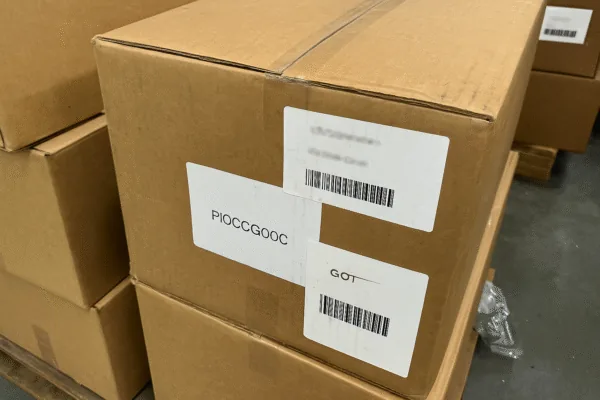
What goes into our PPAP-style package
For every critical glass cloth project, we assemble a compact PPAP-style set1:
| Item or document | Purpose | Who keeps it |
|---|---|---|
| Signed drawing and spec | Freeze all key properties and tolerances | You and Prime |
| Material list | Lock glass style, resin brand, and sources | You and Prime |
| Process flow diagram | Show every production step | Prime process team |
| Control plan | Define checks, frequency, and records | Prime quality team |
| FMEA or risk checklist | Rank major process and design risks | Prime and you together |
| Golden sample set | Visual and functional reference | One set each side |
| Capability report | Show stability of key dimensions | Prime, shared with you |
| Initial lab reports | Prove electrical and thermal performance | You and Prime |
Lot structure and traceability that really works
We design lot structure and traceability2 with you:
| Design choice | What it means in practice | Benefit for you |
|---|---|---|
| Lot size definition | One press day or oven load | Limits impact of any defect |
| Unique batch numbers | Code on label, packing list, COA, invoice | Fast isolation of suspect stock |
| Material batch linkage | ERP links lot to resin and glass batches | Full backward trace |
| Machine and operator logs | Lot record includes machine and operator IDs | Easier root cause and training |
| Retained samples | Samples from every lot stored in Prime | Comparison with field returns |
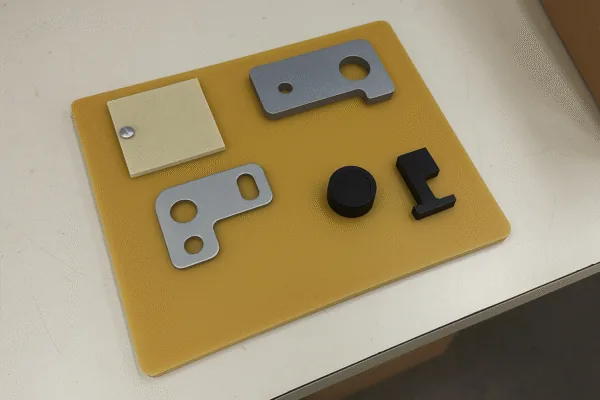
Using systems instead of promises
- We freeze your specification (glass styles, resin brands, laminate suppliers, curing profiles, key dimensions and tolerances) and sign it on both sides.
- We create and maintain golden samples1, compare them regularly with mass parts, and attach photos to the control plan2 so line inspectors always have a reference.
- We write a detailed control plan2 with incoming, in-process, and final checks, including frequency and record location.
- We implement strict change control3: no change in material, process, machine, tool, or factory without written approval and re-test. This rule appears in the quality agreement and in each PO.
- We design lot traceability4 with unique codes on cartons, packing lists, and COAs, linked in ERP to material batches, machines, operators, and test results.
- We maintain a shared digital folder5 for your project: PPAP-style documents, ISO certificates, test reports, shipment COAs, photos.
So your auditors see that you work with a factory that treats glass cloth parts as safety components, not as cheap plates.
Lead Time and Expedite Options
Even with perfect quality, unreliable lead time6s kill projects. So we define clear time frames from the beginning.
Typical timing for glass cloth insulation projects
- Drawing review & DFM feedback: within 2–3 working days after receiving your RFQ and 2D/3D files.
- Tooling / fixture build (if needed): typically [1–2] weeks depending on complexity.
- First article / PPAP samples: [7–10] days after material is in house.
- Regular mass production orders: [3–4] weeks for repeat batches under a long-term agreement.
- Expedite window: for urgent line-down situations, we can pull from reserved material and ship within [7–10] days, subject to technical review.
We confirm a realistic lead time6 in writing with each quotation, so your planning team can rely on it.
How We Work With Your Engineering and Purchasing Teams
Whether you need 50 pcs for a validation build or 10,000+ pcs per month for serial production, we follow the same structure.
-
Technical intake You send drawings, 3D models, and basic data (voltage, creepage, temperature, lifetime). We propose material options with risks and cost explained in simple language.
-
Prototype & validation We run a pilot batch on serial equipment, deliver machined parts plus test coupons, and support your lab tests and PPAP documentation7.
-
Ramp-up After your approval we lock the specification, create the control plan2, and set up lot traceability4 and COA packages.
-
Serial supply & optimization We support engineering changes, cost-down ideas, and combine glass cloth plates with brackets, screws, and plastic housings in one shipment.
Micro-CTA: Get a quick feasibility check – upload your drawing or describe your glass cloth parts. We will reply with feasibility, suggested material, and indicative lead time6. Upload RFQ / Drawings
Prime at a Glance – Factory Behind Your Glass Cloth Parts
Prime is a B2B factory, not a pure trader. Despite the word “Trade” in our legal name, we operate our own production facilities and lines in Shandong, China.
- Founded: [YEAR] in Shandong, China
- Production area: [X,000] m² with 10 dedicated production lines
- People: [X] engineers and [Y] skilled operators focused on electrical insulation and metal parts
- Equipment: [X] CNC machining centers, [Y] stamping presses, [Z] cutting and routing lines for glass cloth laminates
- Capacity: Up to [X,000] sets of machined glass cloth parts per month, plus brackets, fasteners, and plastic housings
- Export markets: North America, Europe, Middle East, Australia
Within Prime we run a dedicated insulation team focusing on glass cloth and other electrical insulation parts, while our metal and plastic lines provide brackets, fasteners, and housings as a package. This model reduces your supplier count and simplifies packaging, labeling, and logistics.
Case Study – Stabilizing Glass Cloth Insulation for a 690 V Drive Platform
Customer type: European OEM in industrial automation Scope: Machined glass cloth plates and spacers, brackets, and fasteners in one package
Challenge The previous supplier changed laminate formulation without notice, causing partial discharge and field failures. The customer faced warranty claims and had to run extra lab work before every shipment.
Prime approach
- Mapped insulation needs against IEC 60664-18 and customer internal rules.
- Selected a high-TG, high-CTI laminate with controlled resin batches.
- Ran a pilot batch on serial CNC centers and validated dielectric strength on real parts.
- Implemented PPAP-style documentation, golden samples1, lot traceability4, and annual RoHS / REACH re-testing9.
Result
- More than [X] years of serial supply with zero reported field failures on this platform.
- Reduced supplier count and logistics complexity by shipping glass cloth, brackets, and fasteners together.
What our customers say “Prime took our glass cloth parts as seriously as our safety relays. They pushed us to freeze the right spec, documented every change, and reacted fast when we needed extra batches. Today they are one of our few approved suppliers in China for insulation parts.” — Purchasing Director, European drive manufacturer, customer since [2017]
FAQs: Glass Cloth Sourcing, Reliability, and Compliance
1. How can I quickly screen a glass cloth parts supplier in China?
I first check ISO 90011 certificates, main export markets, and typical customer type. Then I review real dielectric and TG reports2, not only catalogs. I also ask if they already support PPAP-style projects3.
If a factory fails these simple checks, I do not treat it as a long-term glass cloth or custom stamping partner.
2. How often should I request RoHS and REACH tests4?
I recommend full tests before the first mass shipment. Then repeat:
- Once per year, or
- After a fixed shipped quantity, and
- Whenever any material or process changes.
This keeps your RoHS and REACH file current, not frozen at project start.
3. How do I balance cost and reliability when choosing materials?
I always look at lifetime cost5, not only price per piece.
| Option | Material cost | Testing cost | Failure risk in field | Best scenario |
|---|---|---|---|---|
| Very cheap unknown laminate | Very low | Low | Very high | Non-critical, short-life items |
| Standard known FR-4 | Low | Medium | Medium | General, lower-heat projects |
| High TG, high CTI laminate | Medium | Medium | Low | Drives, inverters, safety circuits |
| Premium special resin system | High | High | Very low | Very hot, long-life insulation |
For most B2B buyers I recommend standard or high TG laminate, plus a clear test and re-test plan.
4. What batch documents6 should I request from a Chinese factory?
For each batch you should at least receive:
- COA with batch number and measured key values
- Latest lab reports summary
- Brief RoHS / REACH compliance sheet
- Packing photos to confirm labels and protection
I use the same habit for fasteners, plastic parts](/products/plastic-parts/), and other hardware.
5. Which external references does Prime follow when setting systems?
For quality systems we follow core ideas in ISO 90011 and the ISO 9000 family. [5] For insulation decisions we read IEC 60664-17 and also refer to technical notes from industry players such as Texas Instruments, who explain how to map board insulation to this standard. [1] [2] For environmental rules we follow RoHS information from the European Commission and REACH guidance from ECHA. [3] [4]
6. Can one factory handle glass cloth, metal, and plastic parts together?
Yes. We run production lines for stamping, CNC machining, casting, welding, fasteners, plastic parts, and insulation parts. We can supply glass cloth plates plus brackets, screws, and plastic housings in one shipment. This reduces your supplier count and simplifies labeling and logistics.
7. How do I reduce risk when starting with a new Chinese factory?
Start small but serious:
- Place a pilot order with full drawings, PPAP requirements, and clear RoHS / REACH rules.
- Watch how the factory communicates, documents, and delivers.
- If they follow the process well, grow volume.
- If they fail early on documentation or timing, stop before risk grows.
Ready to Lock Your Next Glass Cloth Project into a Controlled System?
If you are tired of surprise material changes and “RoHS OK” emails with no data, let us help you freeze the specification and documents for your next project.
- We map your requirements into a clear specification.
- We validate performance on real parts.
- We keep RoHS, REACH, and batch consistency under one system.
Send us your drawings and basic project data today.
- Primary CTA: Upload RFQ / Drawings
- Secondary CTA: Book a 30-min Technical Call
ISO 9001 certification is vital for quality management and can enhance your supplier's credibility. ↩
Understanding these reports is crucial for ensuring material quality and compliance in manufacturing. ↩
Learn about PPAP to ensure quality assurance in your manufacturing processes and supplier relationships. ↩
These tests ensure compliance with environmental regulations, crucial for global trade. ↩
Calculating lifetime cost helps in making informed decisions that balance quality and budget. ↩
Knowing essential batch documents ensures transparency and quality assurance in supply chains. ↩
Understanding IEC 60664-1 helps in ensuring safety and reliability in electrical insulation. ↩
Explore the role of custom stamping suppliers in manufacturing and how they can meet specific needs. ↩
Understanding RoHS and REACH is essential for compliance in manufacturing; exploring these can safeguard your products. ↩