
Are you worried your shipment will be held up by customs? Non-compliance with environmental rules can cause huge delays and massive fines, creating major problems for your business.
Yes, screws can meet regulations like RoHS, REACH, halogen-free, and cadmium-free1. But it requires a deep commitment to material selection, process control, and documentation. Working with a supplier who has a mature quality system2 is non-negotiable for entering global markets without issues.
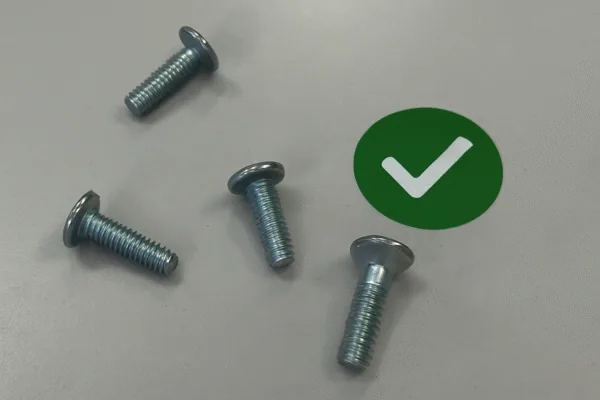
Ensuring your products are compliant is not just about checking a box. It is a critical part of modern manufacturing and international trade. After more than 30 years running this factory, I've seen firsthand how a small oversight on a chemical specification can lead to a huge financial disaster. It's the difference between a smooth delivery and a container of goods getting stuck at a port for weeks. Let's break down how you can guarantee your fasteners are environmentally safe and ready for any market in the world.
Does environmental compliance1 directly affect whether goods can be shipped?
Do you fear your shipment being rejected at the border? This results in lost revenue and angry customers. A common mistake I see among new buyers is assuming compliance is just paperwork. It's a fundamental product attribute.
Absolutely. Regulations like the EU's RoHS Directive2 and REACH3 are legal requirements. Non-compliant goods will be impounded, fined, or returned. This halts your supply chain and seriously hurts your business reputation.
I remember a new client who came to us in a panic. Their previous supplier had shipped a large order of electronic components to Germany. The shipment was stopped, and a random test found the zinc plating on the screws contained hexavalent chromium, a substance strictly forbidden by RoHS. Their entire container was held. They missed a critical deadline, faced huge fines, and had to pay for the return and disposal of the non-compliant parts. This is a classic case where the supplier's quality system failed to control its own sub-contractors (the plating company).
Key Regulations and Their Impact
Different markets have different rules, but some major regulations apply almost everywhere if you're in the electronics, automotive, or medical industries.
| Regulation | Full Name & Authoritative Source | Primary Goal & Scope | Examples of Restricted Substances (not exhaustive) |
|---|---|---|---|
| RoHS | Restriction of Hazardous Substances (EU Directive) | Restricts 10 specific substances in electrical and electronic equipment (EEE) to protect health and reduce environmental pollution. | Lead (Pb), Mercury (Hg), Cadmium (Cd), Hexavalent Chromium (Cr6+), PBBs, PBDEs (flame retardants) |
| REACH3 | Registration, Evaluation, Authorisation and Restriction of Chemicals (ECHA) | Manages risks from a very long list of chemicals. Manufacturers must report any "Substances of Very High Concern4" (SVHCs). | Over 200 SVHCs, including some phthalates, lead compounds, and specific chromium compounds. |
| Prop 65 | Safe Drinking Water and Toxic Enforcement Act (CA OEHHA) | Requires businesses selling in California to provide warnings about significant exposures to chemicals that cause cancer or birth defects. | A list of over 900 chemicals, updated annually. |
Must materials and coatings be traceable?
Can you prove exactly where your materials came from? If you can't, auditors and customers will question your products' quality and safety. Full traceability5 builds trust and protects you from liability.
Yes, complete traceability5 is the backbone of compliance. It is the only way to definitively prove where materials and processes came from, providing a verifiable evidence trail if authorities ever ask.
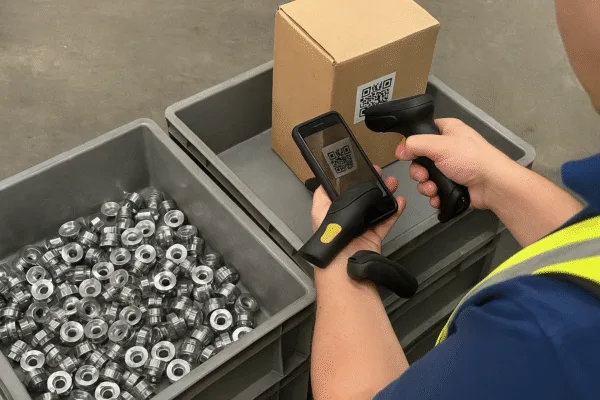
Having an ISO 9001 certification isn't just about a certificate on the wall. For us, it means having a documented, repeatable process for everything, which is fundamental to our quality control system. This traceability1 is essential. For automotive or high-spec electronics clients, we formalize this entire process into a Production Part Approval Process (PPAP)2 package. As a buyer, asking a potential supplier if they can provide a Level 3 PPAP is a great way to quickly gauge their quality maturity. If they don't know what you're talking about, it's a major red flag.
The Traceability Workflow: A Chain of Custody
This system creates a verifiable chain for every part we make.
| Step | Action | Key Document Generated | Purpose |
|---|---|---|---|
| 1. Raw Material | Receive and test steel coils. Cross-reference with supplier's MTC. | Material Test Certificate (MTC); Internal QA Report. | Confirms chemical composition meets spec. |
| 2. Production | Assign a unique lot number with a QR code. | Production Work Order. | Links raw material to the specific job. |
| 3. Processing | Parts are formed and threaded, tracked at each station. | Traveler Document with lot number. | Tracks parts through every manufacturing stage. |
| 4. Finishing | Surface treatment applied by our certified plating partner. | Plating Bath Log & Certificate of Conformity3 (CoC). | Records chemical batches and confirms RoHS/REACH compliance. |
| 5. Final QC & PPAP | All parts inspected, and all documents are compiled. | Final Inspection Report, compiled into a PPAP submission if required. | Confirms all specs are met and provides full documentation to the customer. |
Should you conduct regular spot checks4 instead of just looking at statements?
Are you just relying on your supplier's promises and paperwork? I've seen this mistake cost companies dearly. One bad batch can ruin your product and reputation.
Definitely. A supplier's Certificate of Conformity3 is important, but you must verify it periodically. Regular, independent testing is the only way to confirm that a supplier's processes are consistently compliant.
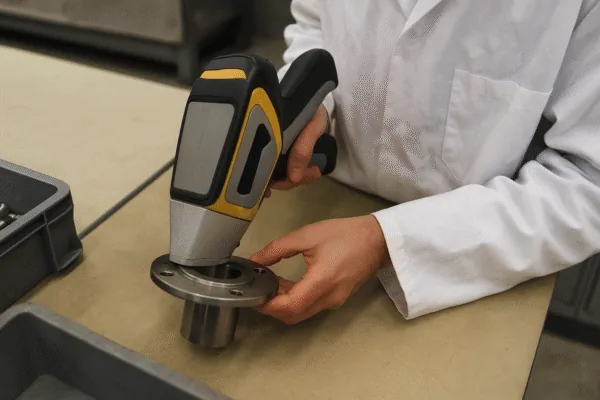
We use our own handheld X-Ray Fluorescence (XRF) analyzer to screen incoming raw materials and randomly check finished parts. It’s a great first line of defense for detecting restricted elements like lead and cadmium. However, it’s important to know the limits of the technology. An XRF analyzer gives a great elemental breakdown, but it can't distinguish between harmless trivalent chromium and banned hexavalent chromium from plating. For that, you need a different kind of chemical test. This is why working with a factory that has a multi-layered quality approach is so important.
Should you write environmental protection requirements into drawings and standards?
Are you getting inconsistent parts from your suppliers? The most common mistake I see is keeping critical requirements in emails. When you put compliance standards on your engineering drawings, they become official and legally binding.
Yes, you absolutely must. When you specify compliance directly on your engineering drawings, it becomes a non-negotiable part of the contract. This removes all ambiguity and makes it an engineering requirement, not just a purchasing request.
I once had a new buyer who was frustrated with inconsistent finishes from his previous supplier. Some batches were a shiny blue-ish zinc, others were a yellowish zinc (which hinted at the use of older, non-compliant hexavalent chromate). The moment we helped him standardize his drawing notes to specify the exact plating standard and chromate type, the problem disappeared. It’s that powerful.
Drawing Notes: The Power of Clarity
Look at the difference a clear note makes on a drawing.
| Vague Note (Before) | Clear & Enforceable Note (After) | Outcome |
|---|---|---|
| "Zinc plate." | Finish: Zinc Plate, Clear Trivalent Chromate per ASTM B6331, Type III, SC1. <br> Note: Part must be RoHS 3 (EU 2015/863) Compliant. | Eliminates banned substances like Hexavalent Chromium and creates a clear, auditable trail based on an international standard. |
| "Use standard steel." | Material: Steel, Grade 10B21. <br> Note: Material must be free of all substances on the current REACH SVHC list2 above 0.1% w/w. | Prevents use of materials with hazardous impurities and makes the supplier legally responsible. |
Conclusion
To secure your supply chain, you must embed compliance into every step: demand full traceability, conduct spot checks, and—most importantly—write precise environmental requirements directly into your engineering drawings.
→ Upload Your RFQ / Contact Prime Fabworks
Understanding ASTM B633 is crucial for ensuring compliance and quality in plating processes, enhancing your product's reliability. ↩
Exploring the REACH SVHC list helps you avoid hazardous materials, ensuring safety and legal compliance in your supply chain. ↩
Explore the significance of a Certificate of Conformity in quality assurance and supplier verification. ↩
Discover the importance of regular spot checks to maintain supplier compliance and protect your brand. ↩
Discover the significance of traceability in building trust and ensuring product safety in the supply chain. ↩