
Struggling to find a reliable Chinese plastic parts supplier? You worry about quality, delays, and communication issues. Get the right partner to ensure your project's success and avoid costly mistakes.
To find the best plastic parts manufacturing in China, you must verify their certifications like ISO 9001. Review their past projects and request samples. Prioritize clear communication and ensure they have expertise in the specific plastic materials your product requires. This reduces risk and ensures quality.
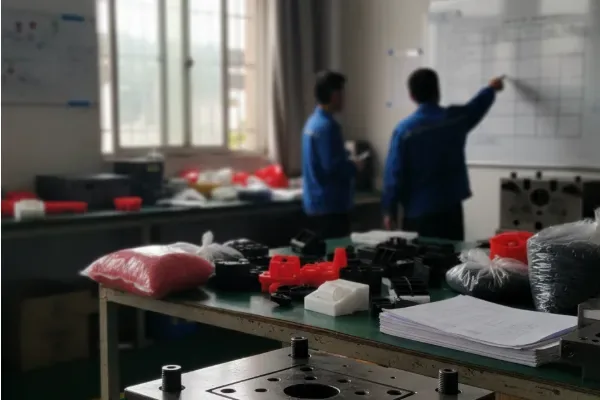
I've been in this business for over 30 years, and I've heard countless stories of projects gone wrong. A client once came to me after his previous supplier in China delivered a whole container of parts that didn't fit. The communication was poor, and the material was wrong. It was a complete disaster for his production schedule. For a buyer, situations like this are a nightmare. This is why finding a trustworthy partner is not just important; it's the foundation of a successful product launch. Let's break down how you can make sure you choose the right factory for your needs.
What Are the Best Plastic Materials for Your Project?
Choosing the wrong material can lead to product failure. You might waste thousands on tooling and production. Selecting the right plastic from the start saves time, money, and protects your reputation.
The best plastic material depends on your product's function. For strength and impact resistance, consider ABS or Polycarbonate (PC). For flexibility and low cost, Polypropylene (PP) is excellent. Always discuss your application's specific requirements, like heat or chemical resistance, with your manufacturer.
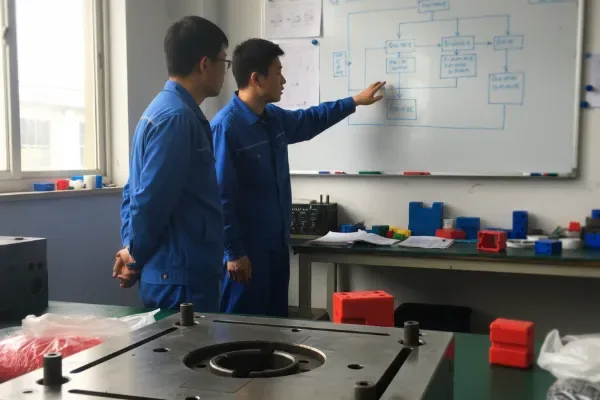
Choosing the right plastic is the first critical step in your manufacturing journey. It directly impacts your product's performance, lifespan, and cost. In my three decades of experience, I've seen that the most successful projects begin with a detailed conversation about materials. We don't just ask for a spec sheet; we want to understand the entire life cycle of the part. Is it a component for a medical device requiring an ISO 10993 biocompatible grade of polycarbonate? Or is it an automotive part that needs to withstand engine bay temperatures? For detailed material specifications, resources like UL Prospector are invaluable, but nothing beats the hands-on experience of a seasoned engineer.
Common Plastic Materials Comparison
To help you get started, I've broken down some common materials. High-performance plastics are for extreme conditions, while thermoplastics like ABS are great all-rounders.
| Material Category | Examples | Key Properties | Common Applications |
|---|---|---|---|
| Commodity Thermoplastics | ABS, POM, PA, PC | Good balance of properties, easy to process | Consumer electronics, automotive interiors |
| High-Performance Plastics | PEEK, PTFE, PVDF | Extreme heat/chemical resistance, high strength | Aerospace, medical implants, industrial seals |
| Filled/Reinforced Plastics | Glass-Fiber PA, Carbon-Fiber PEEK | Enhanced stiffness, strength, and thermal stability | Structural components, metal replacement parts |
How Can You Control Costs When Manufacturing Plastic Parts?
Your budget is tight, and every penny counts. Hidden fees, tooling mistakes, and inefficient processes can quickly inflate your costs, putting your project's profitability at risk. Getting a clear cost structure is vital.
To control costs, optimize your design for manufacturability (DFM) before production. Choose a cost-effective material that still meets your needs and increase your order volume for better per-unit pricing. Working directly with a factory like Prime eliminates middleman fees, offering significant savings.
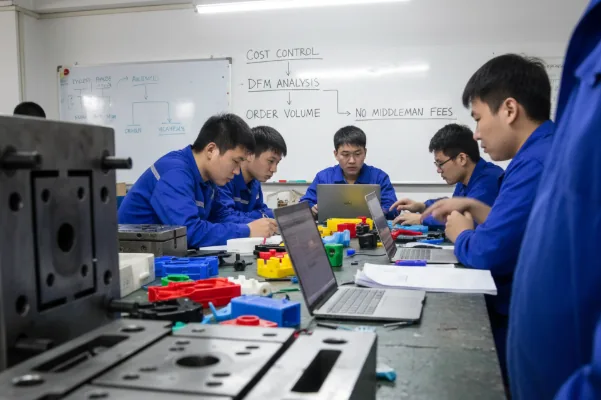
I remember working with a U.S. buyer, Kevin, who was very quality-sensitive but also needed a competitive price. His initial design for an electronic housing had sharp internal corners and inconsistent wall thickness. Our engineers provided a free Design for Manufacturability (DFM) analysis, a critical process detailed by industry leaders like Plastics Today. We suggested adding fillets and standardizing the wall thickness. These minor changes not only made the part stronger and prevented cosmetic defects but also dramatically simplified the mold design. This collaborative approach from our plastic injection molding service saved him thousands on the mold and lowered his per-unit cost.
Key Factors Driving Your Costs
Understanding what makes up your final price is the first step to controlling it. Here is a breakdown of the main cost drivers and how a good partner can help minimize them.
| Cost Factor | Description | How We Help You Save |
|---|---|---|
| Mold Manufacturing | The upfront cost of the steel mold. Complexity and the type of steel (e.g., P20 vs. hardened H13) are key drivers. | Our in-house mold center and DFM analysis simplify your design to reduce mold cost and ensure long life. |
| Raw Material | The price per kilogram of the chosen plastic resin. High-performance plastics cost more. | We recommend the most cost-effective material from trusted suppliers that meets performance needs without over-engineering. |
| Production Volume | Higher quantities spread the setup and mold costs over more units, reducing the per-part price. | We support everything from small-batch runs to mass production, with no MOQ, offering flexibility. |
| Complexity & Finishing | Intricate designs or secondary processes like plating, polishing, or ultrasonic welding add cost. | Our one-stop shop includes a wide range of services, including CNC machining for high-precision features. |
What Are the Key Steps for Customizing Plastic Parts?
You have a unique design, but turning it into a physical product feels overwhelming. You worry about miscommunication, incorrect specifications, and ending up with a part that doesn't match your vision.
Customization follows a clear path: provide a detailed 3D CAD file, create a prototype for testing, select the right material, and give final approval on the production mold. Clear communication with your manufacturer at each stage is essential for success.
Customization is at the heart of what we do. Our entire process is certified to the ISO 9001:2015 standard. For a buyer, this isn't just a plaque on the wall; it's your guarantee that we have a documented, repeatable system for everything from quoting to shipping. For clients in demanding sectors like automotive, we follow the Production Part Approval Process (PPAP). As outlined by the Automotive Industry Action Group (www.aiag.org), PPAP is a comprehensive framework that ensures the 50,000th part is identical to the first one you approved. It eliminates the risk of receiving a bad batch.
Our Customization Workflow
Here is the step-by-step process we use to bring a custom plastic part from concept to mass production. This ensures a smooth, efficient, and risk-free project.
| Step | Our Process at Prime | What We Need From You |
|---|---|---|
| 1. Design & DFM | We analyze your 3D CAD files (.STEP, .IGES) and provide a free DFM report with optimization suggestions. | Your initial 3D design file and a list of your performance requirements (e.g., strength, temperature). |
| 2. Prototyping | We create rapid prototypes using 3D printing or CNC machining for you to test fit, form, and function. | Feedback on the prototype samples so we can make any necessary design adjustments before tooling. |
| 3. Mold Making & T1 | We manufacture the production mold. Once complete, we run the first samples (T1) for your inspection. | Your final approval of the T1 samples, which confirms the mold meets all specifications. |
| 4. Mass Production | With 10 automated production lines, we begin full-scale manufacturing, maintaining strict quality control. | A purchase order and your desired delivery schedule. We handle the rest. |
Frequently Asked Questions?
You have questions, and as someone in this field for decades, I've heard most of them. Here are some of the most common ones our new clients ask.
We get these questions all the time. Getting clear answers upfront is key to a smooth partnership. It helps build the trust you need when your manufacturing partner is thousands of miles away.
How do you protect my intellectual property (IP)?
This is a critical concern for every buyer. First, we always sign a Non-Disclosure Agreement (NDA) before reviewing any project details. Our internal network is secure, and access to project files is restricted. For highly sensitive projects, we run production on dedicated lines and ensure that molds and tooling are exclusively for your use. Trust is the foundation of our business.
What is the typical lead time for a new plastic injection mold?
A common question! The lead time for a new mold depends on its complexity. A simple, single-cavity mold might take 3-4 weeks. A highly complex, multi-cavity mold could take 8-10 weeks or more. At Prime, we provide a clear timeline in our initial quote. We always aim to get you T1 samples as quickly as possible because we know getting your product to market fast is critical.
Do you have a Minimum Order Quantity (MOQ)?
This is a major concern for startups and companies testing a new product. That's why we have a flexible policy: no MOQ. We are happy to support small-batch production runs and rapid prototyping. Of course, the per-unit price is lower for larger volumes, but we are equipped and willing to grow with you from your first part to your millionth.
Let's Build Your Next Project Together
Finding the right manufacturing partner in China doesn't have to be a risk. With the right processes, clear communication, and a commitment to quality, you can achieve great results. We're here to be that partner for you.