
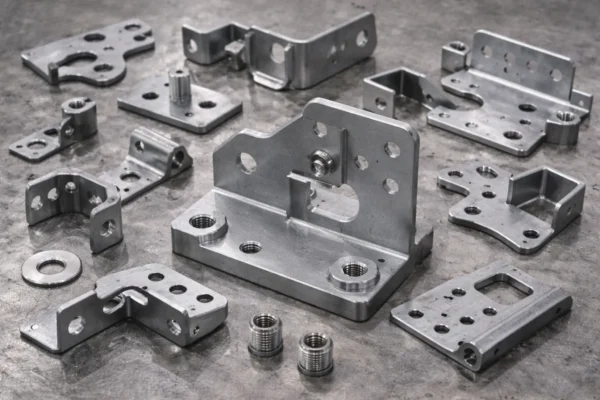
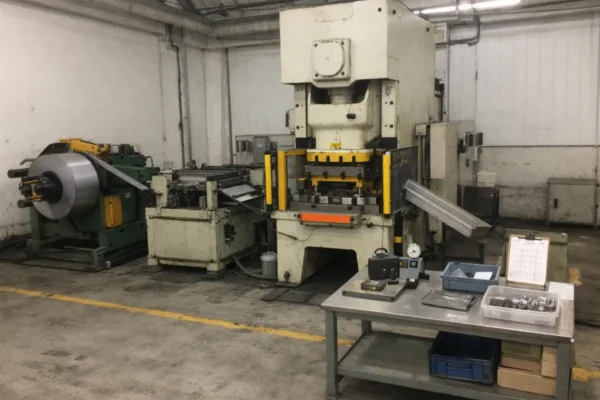
Your stamping RFQ can look perfect on screen. But small gaps still trigger weeks of delays. So I will show the 12 mistakes, and the fixes.
A quote-ready stamping RFQ defines material and temper, grain, burr side, CTQ tolerances, inspection method, finish, revision freeze, and packaging.
I write this from a buyer’s view and a factory workflow view. So I focus on what stops delays and rework.
Why do stamping RFQs fail before the press even starts?
You may send a clean CAD model. But production still needs shop-floor truth. So suppliers guess, and schedules slip.
If you want a fast custom metal stamping quote, lock material grade and temper first. Also state grain direction, burr side, and edge rules. Then mark what tolerances matter most.
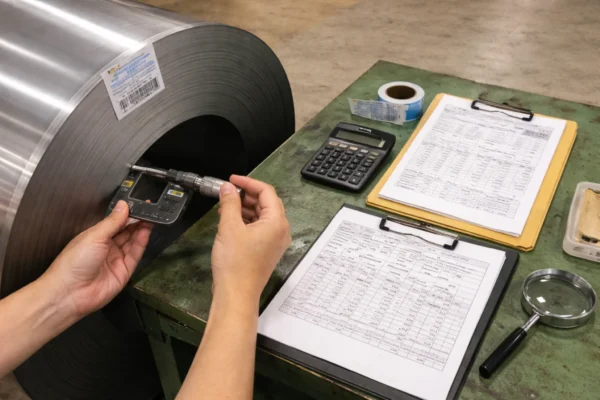
Most delays begin with the first four RFQ mistakes. So I look for them before I price anything. And I push back early, because tooling decisions start here.
-
Vague material spec You write “stainless steel” only. So I must ask grade, spec, and thickness tolerance.
-
Missing temper or hardness range Temper changes springback and cracking risk. So die angles and tonnage estimates drift.
-
No grain direction rule Grain affects bend cracks and fatigue. So parts vary across lots and suppliers.
-
No burr side requirement Burr location affects safety and fit. So you may reject good parts later.
Buyers often compare materials too late. So the tool design starts with assumptions. Also, a small temper change can shift springback.
| Material family | Common buyer use | Forming behavior | Typical RFQ risk | Cost trend | What I ask you to specify |
|---|---|---|---|---|---|
| Low carbon steel | Brackets, covers | Easy forming | Rust and dents | Low | Grade + coating plan |
| HSLA / high strength | Structural parts | Higher springback | Bend cracks | Medium | Yield range + min radius |
| Stainless | Corrosion parts | Work hardens fast | Burr and wear | Medium-high | Grade + temper + surface |
| Aluminum | Light housings | Soft, dents | Galling, scratches | Medium | Grain rule + handling |
| Copper alloys | Conductive parts | Burr sensitive | Edge disputes | Medium-high | Burr limit + edge rule |
I buy stamped parts like you do. So I hate email ping-pong. Because of that, I use a short “truth box.”
I keep it short and visible. Then engineering, QC, and the press operator share one target. And your custom stamping parts supplier can quote with fewer questions.
- Material: standard name + grade + spec number
- Temper: code or hardness range
- Thickness: nominal + tolerance range
- Grain: rule for the key bend
- Burr: allowed side + max burr height
- Edge: “no sharp edges” or numeric rule
Here is my first-gate checklist. So you can catch ambiguity before quoting. And you can cut rework before tooling starts.
| RFQ field | Minimum detail | What it affects | My “30-second” test |
|---|---|---|---|
| Material | Grade + spec | Tool wear and price | Can IQC verify quickly? |
| Temper | Range or code | Springback | Can we predict bends? |
| Thickness | Nominal + tolerance | Clearance and burr | Can we set clearance? |
| Grain | Direction rule | Cracks and strength | Can operator follow it? |
| Burr | Side + limit | Safety and fit | Can QC check fast? |
Real-world consequence buyers feel immediately
When you leave these items open, you pay in weeks and emails. Also, you risk tool changes after purchase. So I quantify the typical impact.
| RFQ mistake | Typical buyer impact | Why it happens |
|---|---|---|
| Vague material | 1–2 weeks delay | Material confirmation loop |
| Missing temper | 2–6 weeks delay | Springback drives rework |
| Missing grain | Scrap spikes | Cracks appear in bends |
| Missing burr side | Sorting at receiving | Assembly rejects vary |
At Prime, I run this gate before I approve any quote. Also, ISO controls force clean records. And our 10 production lines help me validate routes fast.
How do you make inspection and PPAP simple, fast, and repeatable?
Buyers lose time in inspection disputes. So they sort parts instead of building products. Also, suppliers waste time chasing “nice-to-have” tolerances.
Define CTQ features, state the gauge method, and set a sampling plan. Also describe flatness support points and finish thickness, if fit matters.
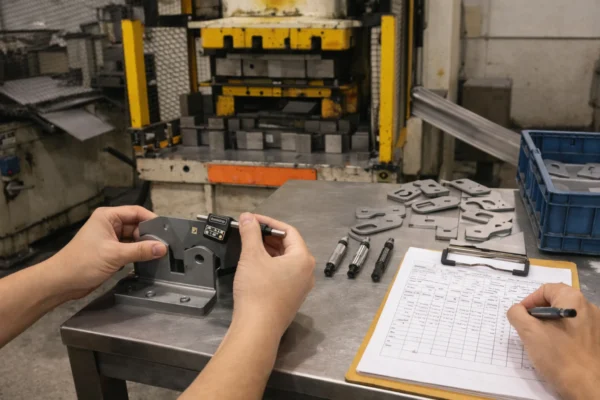
The next four mistakes cause most rework after production starts. So I treat them as PPAP risks. Then I solve them inside the RFQ, not after first samples.
-
No CTQ list You tighten everything. So cost rises, and lead time slows.
-
Flatness callout without a method Flatness depends on support and force. So two inspectors get different results.
-
Hole tolerances ignore tool life Punch wear shifts hole size. So you stop the line or scrap parts.
-
Finish rules do not match fit needs Plating adds thickness. So assemblies bind even with “good” metal size.
Buyers want speed and repeatability. So I align tolerance, function, and inspection method. Then I can build a control plan that makes sense.
| Feature type | What buyers often do | Better buyer action | Benefit |
|---|---|---|---|
| Fit holes | Tight everywhere | Tight only on CTQ holes | Lower cost and less rework |
| Flatness | Numeric only | Numeric + method | Repeatable results |
| Burr | “Deburr” only | Burr side + burr limit | Safer assembly |
| Finish | “Zinc plated” only | Type + thickness + areas | Fewer fit surprises |
I use one rule from the shop floor. If the RFQ cannot answer “how do we inspect in 30 seconds,” trouble follows. So I write an “inspection recipe” before tooling starts.
I also keep it buyer-friendly. Because PPAP should reduce risk, not add drama. And it should match real production speed.
- Gauge: caliper, pins, go/no-go, or CMM
- Setup: support points and clamp force
- Sampling: first-off, hourly, and last-off
- CTQ: 3–7 features tied to assembly risk
Flatness causes fights more than any other line item. So I pin it down with method details. Then your QC team and mine can repeat results.
| Flatness method | Best for | What to define in RFQ | Buyer risk if missing |
|---|---|---|---|
| Free-state on plate | Thin parts | Support points | Results drift |
| Fixture-state | Assembly-critical | Fixture datums | Receiving disputes |
| CMM with fixture | PPAP | Datums + clamps | GR&R fails |
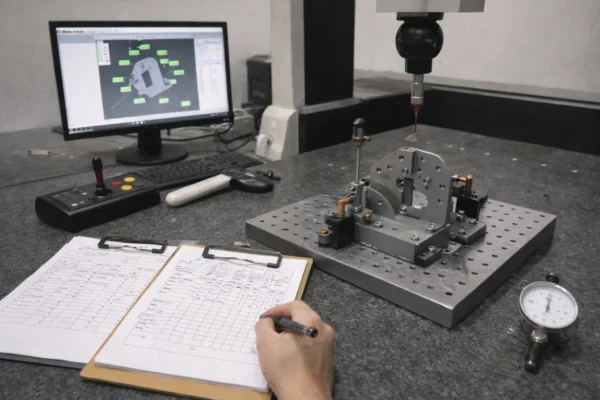
A real case that changed how I write RFQs
We supported a buyer making server chassis slide rails. Their drawing called 0.5 mm flatness. But they skipped the measurement method. So we measured free-state on a granite plate.
They measured on an assembly fixture with clamps. So 20,000 pieces stopped at their receiving dock. Then their line risked downtime within two days.
So I sent an engineer to align the method on-site. We agreed fixture datums, clamp force, and acceptance rules. Then we updated their work instruction and our control plan.
Since then, I treat “flatness method” as mandatory for every new RFQ. This one change prevents repeat rejects. And it turns PPAP from stress into a checklist.
PPAP items I prepare, and what you should request
Buyers often ask for PPAP support. So I keep the request list clear. Also, I tie each item to your real risk.
| PPAP element | What it proves | Common buyer mistake | What I recommend in RFQ |
|---|---|---|---|
| Control Plan | CTQ control logic | CTQ not defined | List CTQ + gauge method |
| PFMEA | Risk thinking | No use-case detail | Share failure concerns |
| MSA / GR&R | Gauge reliability | Wrong gauge choice | Agree gauges early |
| Dimensional report | Print compliance | Too many tight dims | Tag CTQ, relax others |
| Material certs | Spec compliance | Spec incomplete | Add grade, spec, temper |
| Packaging approval | Transit safety | Pack rules missing | Add pack spec + labels |
Prime holds ISO certification, so we keep traceability tight. Also, we build PPAP timing into the tooling plan. So your approval cycle runs faster.
How do revision control, finish, and packaging decide your delivery date?
Late changes do not hurt the press first. They hurt tooling, plating, and logistics. So you lose weeks while teams re-align.
Freeze revision, finish, and packaging before quoting. Also set a clear change rule for price and lead time. Then your supplier can order tool steel safely.
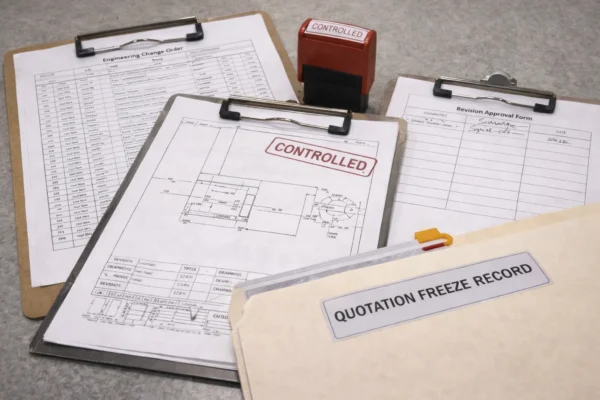
These four RFQ mistakes create the biggest schedule slips. So I watch for them with every buyer. And I push for a “freeze block” before any tool purchase.
-
Finish changes after tool steel orders Finish changes thickness and friction. So a late change can force tool edits.
-
Drawing revision drifts during quoting You send Rev A, then you expect Rev C. So we re-quote and re-plan.
-
Lead time and shipping method stay unclear Air and sea need different packaging. So late decisions break schedules.
-
Packaging and labels are missing Bad packing causes dents and mixing. So you sort parts instead of receiving them.
I learned this as a buyer first. So I now run it as a factory habit. Also, it keeps arguments out of the project.
Here is the freeze block I put on page one. It makes quoting clean. And it protects your delivery date.
- Quote basis: revision + date
- Finish: type + target thickness range
- Packaging: inner protection + carton limits
- Labels: part number + revision + lot code
- Change rule: what triggers re-quote
Finish deserves early attention. Because finish changes fit and rework risk. So I ask buyers to decide it before tool steel orders.
| Finish | Typical buyer goal | What changes in production | RFQ note that prevents surprises |
|---|---|---|---|
| Zinc plating | Corrosion control | Added thickness | Define thickness + faces |
| Nickel plating | Wear and look | Fit tightens | Define mask areas |
| E-coat | Coverage | Edge build-up | Define holes + grounds |
| Passivation | Stainless protection | Surface change | Define cosmetic level |
| None / oil | Low cost | Rust risk | Define storage time |
Real-world consequence buyers can measure
A buyer once changed zinc to e-coat after we ordered tool steel. So we had to adjust clearances on fit features. That change added four weeks and a tooling change cost.
So now I use the freeze block. If you change finish after freeze, we re-quote. Then you avoid hidden schedule surprises.
Packaging also decides delivery success. Because damage claims waste weeks. So I treat packaging like a process step.
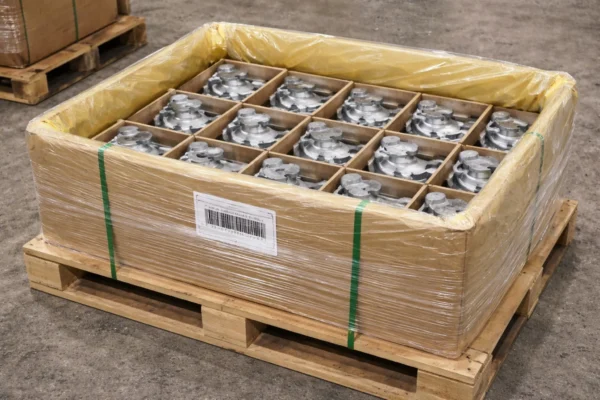
| Shipping scenario | Main risk | Packaging choice | Label choice |
|---|---|---|---|
| Sea freight | Rust and moisture | VCI + sealed carton | Lot code + date |
| Air freight | Handling shocks | Foam + corner guards | “Fragile” + SKU |
| Plated cosmetic parts | Scratches | Trays + dividers | “Do not stack” |
| Mixed SKUs | Mixing | Inner boxes per SKU | Big revision label |
Prime ships to North America, Europe, and the Middle East. So we plan packaging and logistics early. Also, our one-stop capability supports stamping, welding, and fasteners.
If you need machining support, I link it here: CNC parts precision machining. If you need welded assemblies, use: Welding parts. If your project includes castings, use: Casting parts.
FAQs: stamping RFQ questions buyers search before they send inquiries
Q1: What should I include for a fast custom metal stamping quote? A: Include 2D drawing, 3D CAD, and the frozen revision ID. Then add material grade, temper, and thickness tolerance.
Q2: What is the best precision stamping RFQ checklist for buyers? A: Use a truth box for material, temper, grain, burr, and edge rules. Then add CTQ features, gauges, sampling, and a quote freeze block.
Q3: Why does grain direction matter in stamped components? A: Grain changes crack risk and springback in bends. So you must state grain direction on the key bend features.
Q4: How do I specify burr side and edge quality clearly? A: State the allowed burr side using side A/B or assembly direction. Then add a max burr height or “no sharp edges” rule.
Q5: How do I avoid flatness disputes during FAI and PPAP? A: Define the flatness measurement method first. Then define support points, clamp force, and the gauge tool.
Q6: What PPAP items should I request for stamped parts? A: Request Control Plan, PFMEA, MSA, dimensional report, and material certs. Also request packaging approval when you ship long distance.
Q7: Does ISO certification help stamping buyers in real projects? A: Yes, it improves traceability and consistent controls. So you spend less time on audits, claims, and repeat disputes.
Q8: How do finish choices like zinc, nickel, and e-coat affect stamping? A: Finish adds thickness and changes friction on fit surfaces. So you should lock finish before we order tool steel.
Q9: Can one supplier handle stamping plus CNC and welding? A: Yes, and it reduces handoffs and mismatch risk. So I suggest one control plan across processes.
Q10: How do I compare a custom stamping parts supplier beyond price? A: Compare revision control, PPAP readiness, inspection speed, and packaging discipline. Then test how they clarify RFQ gaps.
Conclusion
Clear RFQs reduce ambiguity, protect PPAP success, and keep deliveries on time, because every team follows one measurable target.
Upload RFQ / Contact Prime
If you want fewer delays, upload your RFQ and drawings to Prime today. So I can mark missing specs and CTQ risks fast. Then I will return a cleaner RFQ draft, a quote plan, and a PPAP-ready checklist. And I will support quick delivery with stable ISO-controlled quality from our 10 production lines.