
Sourcing solar road studs that fail too soon? This hurts your projects and your reputation. I'll show you what to look for beyond the spec sheet. To find a reliable supplier, you must ask about the three "silent killers": thermal stress mismatch1, dynamic shear force, and internal heat management2. An expert manufacturer can explain their engineering solutions for these issues, while a simple assembler or trader cannot.
Sourcing solar road studs that fail too soon? This hurts your projects and your reputation. I'll show you what to look for beyond the spec sheet.
To find a reliable supplier, you must ask about the three "silent killers": thermal stress mismatch1, dynamic shear force, and internal heat management2. An expert manufacturer can explain their engineering solutions for these issues, while a simple assembler or trader cannot.
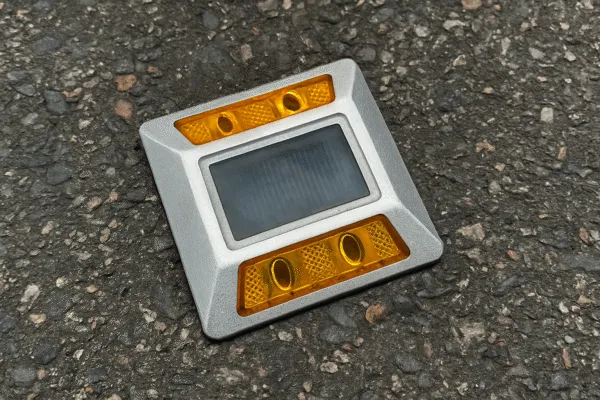
I want to share something with you that goes beyond the "paper specs." You won't find this in any product catalog or on an Alibaba page. My team and I have learned these lessons through countless failures, long nights in the lab, and thousands of failed samples sent back from all over the world. We call it "The Silent Killers: The Triangle of Failure Theory." A truly professional manufacturer is defined by how they systematically fight these forces. Let’s dive in.
Why Does Your "IP68" Road Stud Leak After Just One Year?
You bought road studs with a top waterproof rating1. But they are filling with water in the field. The constant replacements are costing you time and money.
The root cause is Thermal Stress Mismatch2. The different materials inside the stud expand and contract at different rates. This daily micro-movement slowly tears rigid seals apart, breaking the initial waterproof barrier and letting moisture seep in, causing failure.
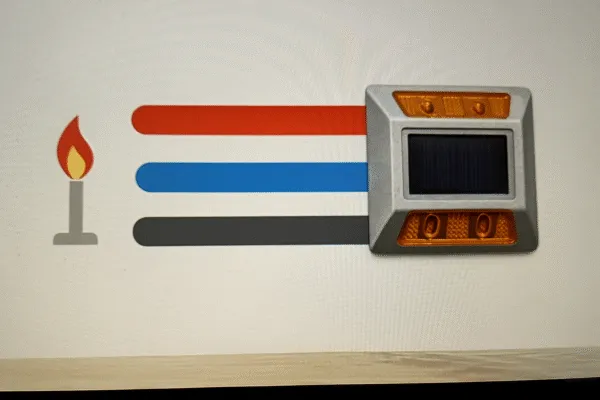
A road stud isn't one solid piece. The shell is die-cast aluminum, the lens is polycarbonate (PC), and the inside is filled with epoxy resin. Imagine it installed near the equator. The road surface heats up to 70°C during the day and drops to 20°C at night.
Here's what happens inside:
- Aluminum's expansion coefficient is 23×10⁻⁶ /°C
- PC plastic's expansion coefficient is 70×10⁻⁶ /°C
- Epoxy resin's expansion coefficient is about 55×10⁻⁶ /°C
This means every component "breathes" at a different speed. Day after day, this mismatched movement creates huge internal stress. It slowly tears apart the bonds between materials. This is the real reason an IP68 rating fails in the real world. Our solution is different. We use a dynamic stress-buffering structure1 and an aerospace-grade elastic silicone sealant2 as a second line of defense. This allows materials to "breathe" freely without breaking the overall seal. It adds a tiny amount to the cost but more than doubles the product's life in the field.
Is Your Supplier's 40-Ton Pressure Test Misleading You?
You see impressive videos of trucks parking on top of road studs. But out on the road, the studs get twisted and torn apart. You're left wondering why the tests don't match reality.
The 40-ton static pressure test is misleading. The real killer is the dynamic shear force1, or twisting force, from a heavy vehicle's tires when it turns or brakes. This horizontal torque2 can easily rip a poorly designed stud apart.
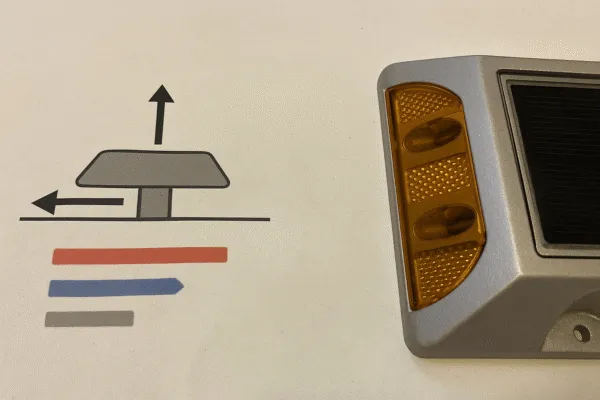
Almost every supplier boasts about passing a 40+ ton "static pressure" test. This is easy to achieve in a lab, but it doesn't represent real-world conditions. The true destroying force comes from a turning or braking vehicle. Imagine a 20-ton truck turning its wheel while on top of a stud. That momentary twisting force is enough to separate the lens from the base of any product with a weak structural design.
This is why we focus on more than just vertical pressure. Using Finite Element Analysis (FEA)1, we optimized the mechanical interlock between the lens and the aluminum base. It's not held by glue; it's joined together like precise woodwork. This design effectively spreads the horizontal shear force across the entire base and into the road surface. So, the next time you see a pressure test video, ask the supplier: "Can you show me a torsional failure test2?"
What Is the Hidden Killer Destroying Your Road Studs From the Inside?
Your road studs are failing, even in perfect weather. The batteries are dying an early death and the LEDs are dimming. You can't figure out what's going wrong.
The hidden killer is internal heat1. A solar road stud2 is a sealed black box that gets extremely hot under the sun, easily exceeding 85°C inside. This temperature is deadly for batteries and electronic components, causing them to fail prematurely.
This is a blind spot for almost everyone in the industry. Under a hot sun, the dark casing absorbs a massive amount of heat. This extreme internal temperature is fatal for the electronics and battery inside. It will:
- Drastically shorten the life cycles of LiFePO4 batteries1.
- Cause the LEDs to dim much faster.
- Make electronic components drift or fail completely.
We are one of the few companies that treat thermal management2 as a core design requirement. The epoxy resin we use for potting is a high-thermal-conductivity grade. It quickly pulls heat from the circuit board and battery to the entire aluminum shell. At the same time, special fins on the bottom of the casing, while buried, transfer that heat into the ground. We have designed the whole product to act as one efficient heat sink.
Conclusion
Finding the right supplier means asking the right questions. Look beyond the flashy specs and ask about their engineering solutions for thermal stress, shear force, and heat management.
Only a true engineering-focused manufacturer will have the answers. We don't sell a simple block that lights up; we deliver a precision-engineered system designed to work reliably for over 5 years in the world's harshest road conditions.
Ready to talk to an engineer who understands these challenges? Let's connect for a free 15-minute technical consultation and find the right solution for your project.