
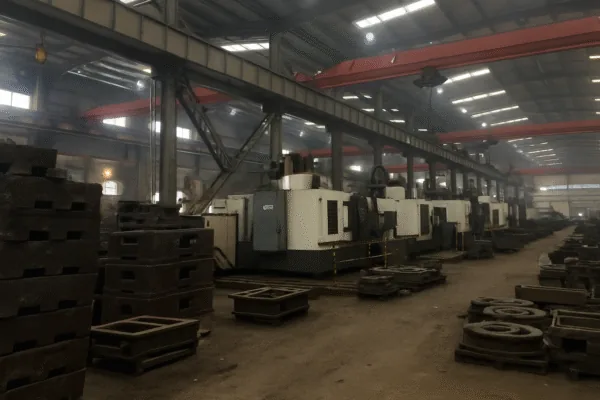
You want low cost castings from China. But you fear bad quality, delays, and stress. I show you how to stay in control.
US buyers can control China casting projects by managing four stages very clearly. You define a complete RFQ and process choice. You approve tooling, samples, and PPAP with data. You demand an ISO control plan1 in mass production. You lock packaging, shipping, and claims in writing from day one.
In this guide, I speak as a China factory insider. I work at Shandong Prime International Trade Co., Ltd. in Shandong, China, and we usually call it Prime. We run ten production lines for castings, stamping, and CNC parts. We only work B2B with OEMs and traders, so I write this guide for owners and buyers like you. Most of my projects ship to North America, Europe, the Middle East, and Australia.
How should I write an RFQ for custom castings2 in China?
You maybe send RFQs that feel clear to you. But Chinese factories still guess many details. Then cost, quality, and lead time move in the wrong way. I show you how to write an RFQ that locks these three points.
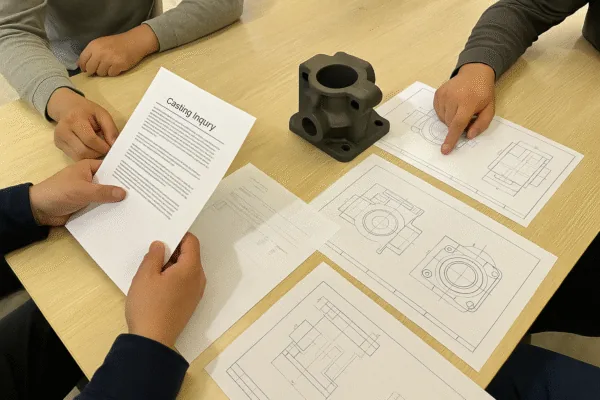
A good RFQ for custom castings2 includes drawings, 3D models, material standards, volumes, and critical features. You also define surface finish, machining allowance, packaging, and target lead time. This detail lets a custom casting supplier in China select the right process and quote stable pricing. Without it, factories guess and you lose control.
What information must my RFQ include?
First, you give clear drawings and models. You send 2D PDFs with dimensions and tolerances1. You add 3D STEP files2 for complex shapes. You write exact material names with global standards3, for example ASTM or DIN grades. You state surface finish, heat treatment, and any coating. You share the estimated annual usage and normal order size. With this package, I can read your real needs instead of guessing.
Next, you add simple commercial data. You write target lead time4 and preferred delivery terms, like FOB or CIF. You mention your quality system5, for example IATF or ISO, if it exists. You tell me if you need PPAP6, material certificates, or pressure tests. You give your warehouse city, so I can plan the best port. When you share this now, I can plan cost, timing, and risk in one picture.
For a strong casting RFQ7, you normally attach:
- 2D drawing in PDF with full dimensions and tolerances.
- 3D model file for complex geometry, for example STEP.
- Material grade with global standard, like ASTM or DIN.
- Surface finish, coating, and any heat treatment needs.
- Estimated annual usage and normal order quantity.
How do I mark critical features and tolerances?
Then, you mark what really matters. You use a simple CTQ symbol on drawing views. You flag sealing faces, mounting holes, and safety features. You call out tighter tolerances only where function needs them. You define surface roughness and flatness on these key zones. You state which faces will see machining later. This clear focus stops cost from rising everywhere.
Because you do this, I can design casting stock and fixtures correctly. I place parting lines and gates away from CTQ faces. I keep extra machining allowance on high risk areas. I also suggest design tweaks when I see risk. In many projects, one small change removed a whole machining step. That saved my US customers both money and lead time.
How does process choice affect cost and lead time?
For custom castings, process choice decides both cost and schedule. I normally compare sand casting, investment casting, and die casting. Each process fits a different mix of volume, size, and tolerance. You do not need to know every detail. But you should understand the tradeoffs before you accept any quote. I always explain this during our first call.
| Item | Sand casting | Investment casting | Die casting |
|---|---|---|---|
| Tooling cost | Low | Medium | High |
| Part cost | Higher | Medium | Lowest at high volume |
| Best volume | 1–5,000 pcs | 100–10,000 pcs | 10,000+ pcs |
| Surface finish | Rough | Very good | Excellent |
| Typical metals | Iron, steel, stainless, bronze | Steel, stainless, alloy steels | Aluminum, zinc, magnesium |
When I read your EAU and drawing, I match you with the right route. This one step already avoids many future fights. It also supports clear SEO phrases like “ISO certified casting manufacturer” or “ISO certified casting parts manufacturer” when you search online. We do the same for custom stamping, so many clients call us their “Custom stamping parts supplier” in China. You see me not only as a cheap factory, but as a long term process partner.
How do I control tooling, samples, and PPAP6 with my China supplier?
You maybe approve nice samples from China. But later batches suddenly fail your line. Then you lose trust and fire fight with customers. You avoid this when you treat tooling, samples, and PPAP6 as a gated project.
You first request a clear DFM review and mold design before anyone cuts steel. You then approve samples together with full dimensional reports and material certificates. You ask for a simple PPAP6 pack that shows process flow, control plan, and key risks. This way the approved “golden sample” links to a stable process, not to luck.
Why does the DFM review matter?
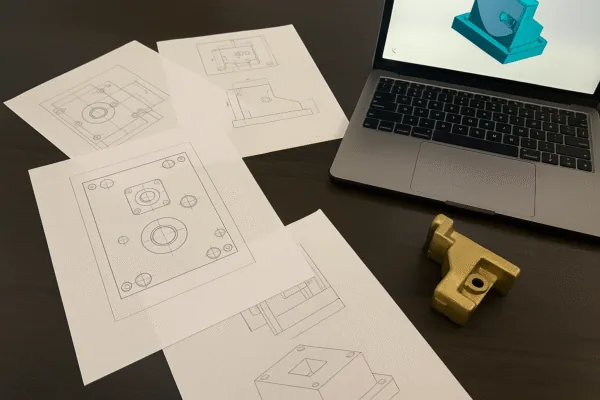
First, you never skip DFM. I ask my engineers to study wall thickness, hot spots, and draft angles. We simulate metal flow when the part is complex. We choose parting lines and gate points that avoid your CTQ faces. We also review ejector pin marks and engraving. When you see this DFM report1, you can raise questions early.
Because you sign this design, we both freeze the mold layout. My team then makes tooling that matches your agreed risks. You know where small marks will appear. You know which features maybe need later machining. This step feels slow at first. But it saves many weeks of rework and travel later.
What should a golden sample pack include?
Next, you define what “approval” means. You do not only look at a shiny sample on your desk. You also ask for a full dimensional report2, often called ISIR. You compare every CTQ dimension with the drawing. You review material certificates from an accredited lab. You confirm surface finish and coating meet your spec. Then you sign one physical part as the golden sample.
To keep things simple, I often build a small PPAP pack3.
| PPAP item | What you receive | Why it matters |
|---|---|---|
| Process flow | Simple steps from raw metal to packing | You see how we make each part |
| Control plan | Checks, tools, and frequency for CTQ points | You know how we hold tolerances |
| FMEA summary4 | Main process risks and actions | You see we thought about failures |
| Sample data | ISIR and material certs | You link drawing to real parts |
This table shows you do not need a huge car style PPAP. You just need enough data to trust the process. Many US OEM buyers tell me this pack feels very clear. It also supports your own ISO system at home. You can file the pack and show it during audits.
How do I use PPAP without big bureaucracy?
Some buyers fear PPAP because they link it with heavy forms. Instead, you can request only the key parts that add value. You focus on control plan5, sample data, and problem reaction rules. You agree with me how often we review data. We maybe hold a short review after the first three batches. This way you get control without drowning in paperwork.
Here, Prime acts as your “Precision machining of CNC parts” and casting partner, not just a simple vendor. You gain one team that understands both castings and precision CNC parts machining in China. You also cut handoffs between several small workshops. That gives you more control over both cost and timing.
How can I keep mass production stable and predictable?
Maybe your first two shipments looked perfect. But the third container arrived with drift and scrap. Then you spend nights sorting parts and calming your own customers. You avoid this when your China supplier runs a real ISO control plan6n](https://quality-one.com/control-plan/)%%%FOOTNOTE_REF_5%%% with data.
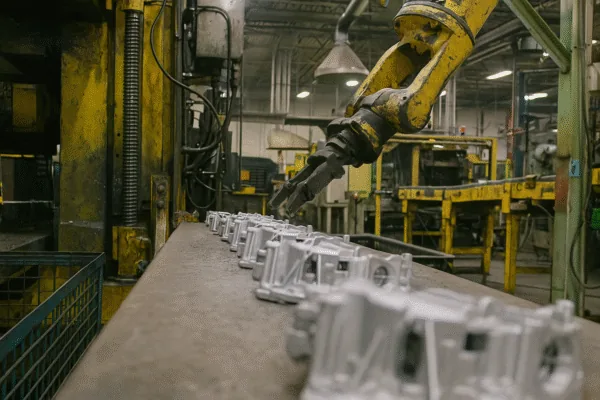
Mass production stays stable when the factory follows a live control plan5 on the floor. Operators know what to check, how often, and what to do after any failure. Engineers track scrap and rework with simple charts. Managers share this data with you, so you see trends before they hurt your plant.
What does a real control plan look like?
First, the control plan lives on the line, not in a drawer. Each station has clear work instructions with photos. Operators see which CTQ features1 they must check. They know which gauge or fixture to use. They also sign or stamp each check line. My supervisors walk the line and coach when they see mistakes.
Next, we set simple frequencies. For example, we may check one key dimension every hour. We may run a full layout every 500 pieces. We confirm alloy and hardness for each heat or batch. We also log furnace temperature and pouring time. These small habits create big stability over months and years.
How do we use data to prevent drift?
Data turns problems into simple stories. My engineers plot scrap reasons on Pareto charts2. We see which two or three causes drive most waste. We also watch control charts for key CTQ dimensions. When points move toward a limit, we react before parts fall out. We adjust tooling, process settings, or training as needed.
In one casting project for a US pump maker, we saw porosity rise in one corner. We checked the data and found it tied to one mold cavity. We then changed gating there and added a simple chill. After that change, porosity almost disappeared. The buyer later sent us less incoming data, because trust grew.
What reports should you receive from China?
You do not need daily noise. Instead, you ask for simple, regular reports. For example, you receive a monthly scrap summary and key dimension trends. You also get copies of any 8D reports3 for real issues. You can share these with your own customers. This openness makes you feel closer to the line, even from the US.
Here, Prime works as your one stop casting and CNC machining supplier in China, not just as a trader. This same method keeps our precision CNC parts machining in China very stable for repeat orders. You gain a partner who treats your long term program as carefully as a new launch.
How do I protect castings during packaging, shipping, and claims?
You maybe control drawings and tooling very well. But parts still rust or break during long sea trips. Then your profit disappears in sorting, rework, and air freight. You protect yourself when you lock packaging, shipping, and claims rules before the first order.
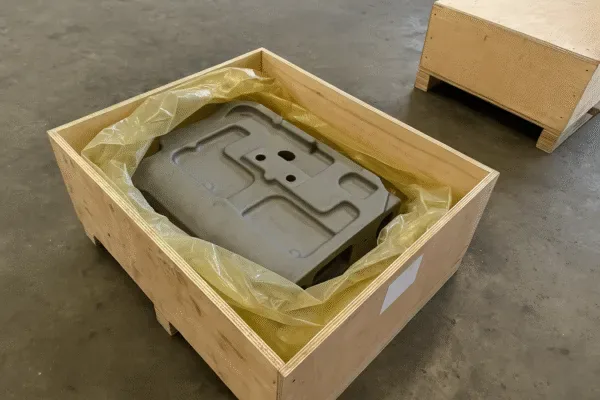
You define rust protection4, packing units, pallet type, and label content in your RFQ or PO. You ask your supplier to send packing photos before shipment. You also agree a simple 8D problem process for any claims. This way you avoid damage and you solve issues fast when they still appear.
How should I specify packaging in my RFQ?
First, you decide how sensitive your parts are. You mark sharp or thin features that bend easily. You tell me if your warehouse is dry, heated, or humid. You share how long parts may stay on a shelf before use. Because I know this, I can choose the right rust protection1 level.
Next, you write clear limits in your RFQ. You state pieces per carton and cartons per pallet. You give a maximum carton weight that fits your staff. You choose pallet type2, for example new fumigated wood that meets ISPM 15. You also request clear labels with part number, batch, and quantity.
In your RFQ, you can write clear packing rules3 like:
- Pieces per inner bag, inner box, and master carton.
- Maximum carton weight that one person can move safely.
- Pallet type, size, and entry side requirements.
- Rust protection method, for example oil, VCI, or desiccant.
- Any special labels, barcodes, or pallet tags.
What does good export packing from China look like?
As an ISO certified exporter4, I follow a simple standard. For castings, we often wrap each part or small group in VCI paper or bags. We then place them in strong cartons with corner protection. We stack cartons in wooden crates or on pallets with stretch film. We strap the load and protect edges with boards.
| Risk level | Rust protection | Outer pack | Typical use |
|---|---|---|---|
| Low | Light oil only | Carton on pallet | Dry, fast moving stock |
| Medium | VCI bag plus oil | Carton in wooden crate | Normal warehouse, 3–6 months storage |
| High | VCI bag, desiccant, sealed crate interior | Heavy crate with inner lining | Humid storage or long sea trips |
Together we choose one level that fits your real use. If your parts support Siemens control panels, you may need higher care. If they go into rough farm gear, medium care may fit. In both cases, I take photos of packing before we load any container. I send these to you for quick confirmation.
How do we handle claims with 8D?
Even with strong packing, things can still go wrong. So we agree a simple 8D claim flow6. You send photos, quantities, and your first view of the problem. I start containment actions at once. We sort and block suspect stock here in China. We also discuss how to protect your line and your own customers.
Then we search for root causes with data. We agree permanent fixes inside tooling, process, or training. We update the control plan and work instructions. Finally, we send you a clear 8D report in English. This calm and open method builds trust and cuts long email fights.
Conclusion
Control RFQs, tooling, processes, and packing with Prime, and your China casting projects stay safe, profitable, calm, for many years.
Now I invite you to send your drawings and RFQ to Prime. You can reach our team through our website contact page. We review your project for free and share clear process ideas. We also send a detailed quote with realistic lead time and stable pricing. Because we control ten production lines and hold ISO quality, we deliver fast and keep quality steady. With casting, CNC, stamping, welding, fasteners, and plastic parts under one roof, you get true one stop support in China.
Explore effective rust protection methods to ensure your parts remain in optimal condition during shipping. ↩
Explore various pallet types to choose the best option for your shipping needs and ensure safe transport. ↩
Discover key packing rules that can enhance the safety and efficiency of your export shipments. ↩
Learn about the benefits and standards of ISO certification for exporters to ensure quality and reliability. ↩
Find out how VCI bags work to protect metal parts from rust during storage and transport. ↩
Understand the 8D claim flow process to effectively manage and resolve quality issues in your supply chain. ↩
Get insights on essential elements to include in a casting RFQ to avoid misunderstandings. ↩