
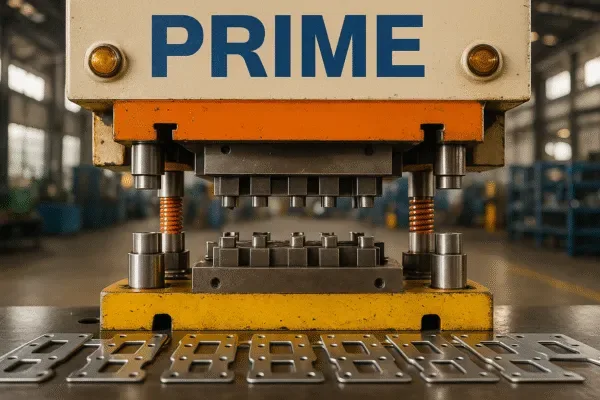
On-site image of a metal stamping process showing the die accurately punching holes into a steel sheet—ideal for high-efficiency mass production of custom stamping parts. Stamping parts often confuse many buyers. Wrong choice leads to delays, quality issues, and cost loss.
Stamping parts are metal components shaped by pressing operations. These include punching, bending, and embossing. Industries use them in electronics, automotive, and machinery. Selecting a reliable stamping parts supplier ensures product durability and fast delivery.
Many buyers struggle with poor quality or delays in delivery. But you don’t need to face that. Read on to learn how to select the right partner and get high-quality stamped parts on time, every time.
Why do industries use stamping parts?
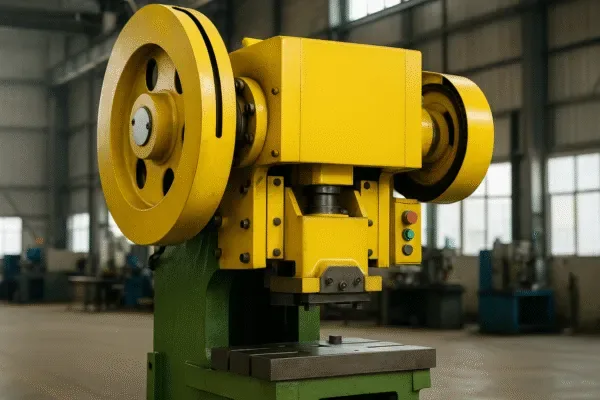
Stamping solves the need for high-volume, consistent, and low-cost metal parts.
Stamping parts offer fast production, consistent quality, and cost-efficiency. They are widely used in automotive, machinery, and electronics. Reliable suppliers provide customized solutions based on the client’s technical drawing.
Stamped parts offer unmatched efficiency. That’s why industries prefer stamping over machining when possible. At Prime, we help global clients meet strict specifications by offering ISO-certified stamping services.
Types of stamping processes
| Process Type | Description | Suitable For |
|---|---|---|
| Progressive Die | Multiple operations in one stroke | High-volume, complex parts |
| Deep Drawing | Forms deep, hollow shapes | Kitchen sinks, housings |
| Blanking | Cuts flat shapes | Flat components, washers |
| Bending | Forms angles or curves | Brackets, supports |
| Embossing | Adds patterns or text | Covers, brand markings |
When should you choose stamping over CNC?
- You need more than 10,000 pieces monthly
- Part geometry is simple or can be formed in one step
- You aim for a lower per-part cost
Choosing stamping requires a well-equipped factory. Prime operates 10 full production lines, supporting both standard and complex stamping projects.
What materials are used in stamping parts?
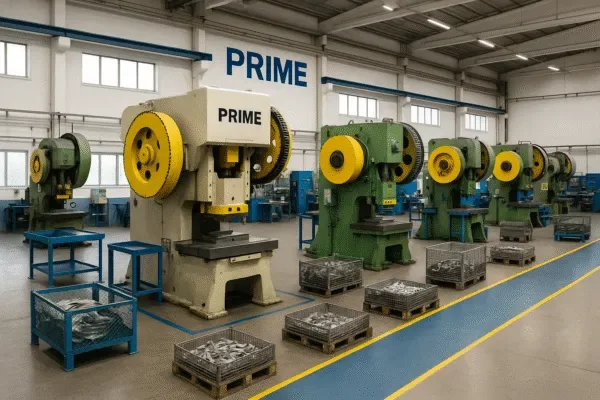
Choosing the right material affects cost, durability, and performance.
Stamping parts are made from steel, aluminum, copper, or stainless steel. Each metal serves a different use. Steel is common for automotive. Aluminum suits electronics due to its lightweight.
Not every material fits every part. Some need corrosion resistance. Others need toughness or flexibility. Prime engineers help you choose the right metal for function and budget.
Popular materials in stamping
| Material | Feature | Common Use |
|---|---|---|
| Carbon Steel | Strong, cost-effective | Brackets, enclosures |
| Stainless Steel | Corrosion-resistant | Food-grade parts for medical use |
| Aluminum | Lightweight, good conductivity | Heat sinks, electronic covers |
| Copper | Excellent conductivity | Terminals, connectors |
How to make the best material choice?
- Define the mechanical load
- Confirm environmental exposure
- Consider appearance requirements
- Consult with a stamping parts expert
We always review customer drawings and suggest improvements. Many clients reduce material costs or improve strength through our advice.
How do I check the quality of stamping parts?
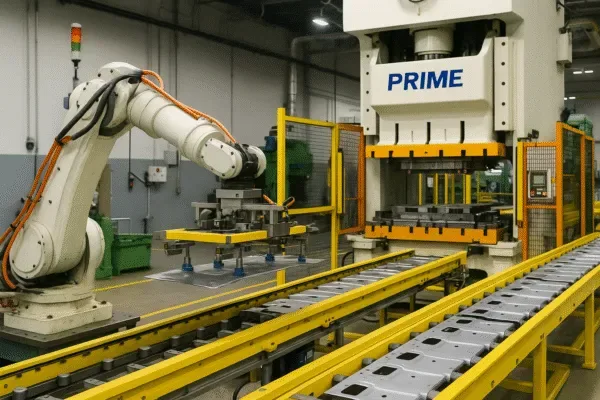
Poor quality leads to broken parts, failed assembly, and returns.
Check quality by reviewing dimensional tolerances, surface finish, and material certificate. ISO certification ensures process control. Always ask for inspection reports and packaging proof.
At Prime, we provide full inspection reports and HD packaging photos before shipment. Our stamping parts meet ±0.01mm tolerances and ship in foam-inlay cartons to prevent damage.
Key quality checkpoints
| Inspection Item | Why It Matters |
|---|---|
| Dimensional Accuracy | Ensures the part fits perfectly |
| Surface Finish | Affects function, especially in sliding parts |
| Material Certification | Verifies composition and standards |
| Packaging Protection | Prevents rust and deformation |
| ISO Certification | Confirms reliable quality systems |
What if quality fails inspection?
- We offer reproduction at no extra charge
- Urgent shipments get priority
- Clients get full visual inspection reports
Quality issues don’t just delay projects—they ruin trust. That’s why Prime invests in QC labs and trained inspectors.
How to choose a custom stamping parts supplier?
Many buyers choose based on price only, then regret it later.
A good supplier offers ISO certification, fast delivery, flexible customization, and consistent communication. Avoid factories without English-speaking engineers or stable logistics.
At Prime, we assign a dedicated engineer to each stamping project. We work with Fortune 500 clients and meet their strict timelines. Our 10 production lines run 24/7 to meet urgent orders.
Checklist for supplier selection
| Criteria | What to Look For |
|---|---|
| Certification | ISO 9001, material traceability |
| Customization Capability | Accepts drawings, modifies the mold quickly |
| Delivery Time | Offers firm lead time with buffer stock |
| Quality Control | Full QC lab, in-process inspection |
| Packaging & Shipping | Proof of secure packaging and on-time delivery |
| Communication | Engineers and sales respond fast and clearly |
Where does Prime stand out?
- Over 20 years of experience
- Clients in the USA, Europe, and Australia
- Accept urgent samples in 7 days
- Flexible MOQ for long-term partners
Our clients include automotive manufacturers, electronics companies, and machinery distributors. They choose us not just for quality, but also for trust and reliability.
Conclusion
Stamped parts are essential for fast, cost-effective manufacturing in many industries.
Need help with custom stamping parts?
Contact Prime today for a free quote, technical consultation, and fast delivery.
We support your growth with reliable quality and responsive service.
Send us your drawings now—we’ll take care of the rest.