
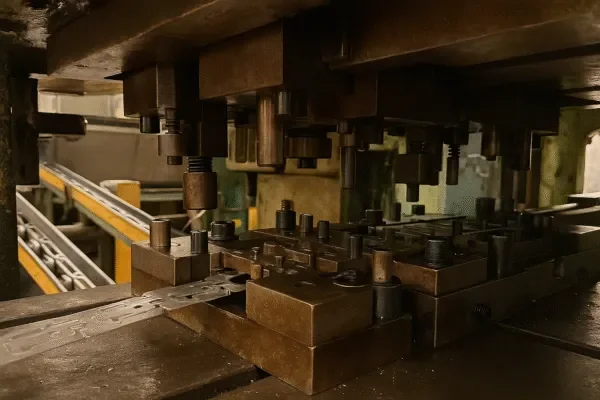
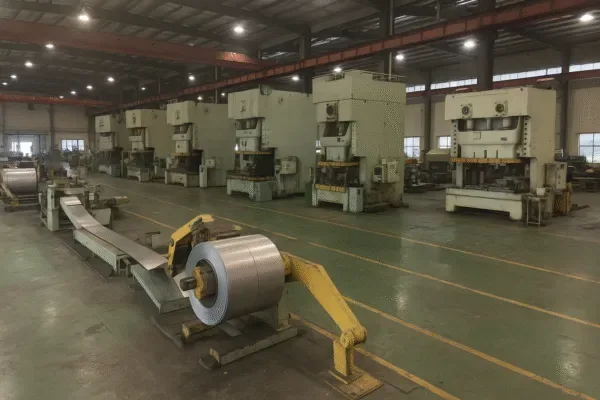
You need a metal stamping supplier in China who reduces your risk and protects your margins, not one who adds new headaches.
A metal stamping supplier in China should give repeatable quality, clear costs, and reliable lead times. You should check factory type, tooling depth, ISO system strength, logistics, and engineering support. This guide gives a practical checklist, real case stories, and RFQ tips, so you can select a stamping parts manufacturer with confidence and filter out weak suppliers fast.
So you do not have time for empty marketing claims. You want clear criteria, proof of capability, and a partner who understands PPAP, SPC, ISO 9001, and delivery pressure. I write this from our factory floor at Prime, and I share what actually works for serious buyers like you.
What types of metal stamping suppliers in China should you compare in 2025?
You see many options when you search for a metal stamping supplier in China. You see trading companies, small workshops, and large metal stamping companies. This mix can waste your time if you do not filter early.
In China you usually meet three core supplier types for metal stamping. You see trading companies, small stamping workshops, and mid to large integrated factories. Each type has different cost, control, and risk levels. You should match supplier type to part complexity, yearly volume, and failure impact before you ask for price.
Supplier types and how they fit your projects
You can use this table to match supplier type to each project.
| Supplier type | Typical profile | Best fit parts | Main risks |
|---|---|---|---|
| Trading company | Office in city, no presses | Many simple items from mixed factories | Extra margin, weak process control |
| Small stamping workshop | Few presses, owner runs shop | Simple brackets, low yearly volume | Limited inspection and documentation |
| Mid / large stamping factory | 10+ presses, toolroom, ISO 9001 system | Progressive tools, tighter tolerances | Higher MOQ, more formal process |
| One-stop metal stamping company | Stamping, CNC, casting, welding in one | Assemblies, multi-process industrial projects | More setup work at project start |
So first you should ask who owns the presses and the tools. You should also ask if you speak with a trade office or a stamping parts manufacturer. Clear answers here will remove many later surprises.
If you want to see what a one-stop setup looks like, you can review our stamping parts capability, CNC machined parts, and casting parts pages inside the site.
How I match supplier type with buyer risk
When you send me drawings, I first rate project risk and yearly volume. Then I share this logic with you in simple words.
| Question you ask | Low risk side | High risk side |
|---|---|---|
| How critical is the part function? | Simple support, cosmetic only | Safety, sealing, precision assembly fit |
| What yearly volume do you expect? | Small, irregular batches | Stable, high volume, long project life |
| How complex is the tooling and process? | Single hit or simple line die | Multi station progressive or transfer tooling |
| What impact does failure have on your customer? | Low impact, easy field replacement | High impact, penalty, or recall risk |
If your answers sit on the right side, you should choose a mid to large ISO certified metal stamping company in China. You can see the logic behind this on the official ISO 9001 quality management page. Strong factories build systems first, then talk about quality.
How should you evaluate a metal stamping supplier in China with a clear checklist?
You already saw enough claims like “world-class quality” and “best price.” These lines do not help you choose. You need a hard checklist that turns talk into visible evidence.
You should use a structured evaluation checklist for every metal stamping supplier in China. The checklist should cover factory basics, tooling and engineering, quality systems, export readiness, and communication style. When you ask the same questions to each metal stamping company, you can score answers and compare suppliers on facts instead of feeling.
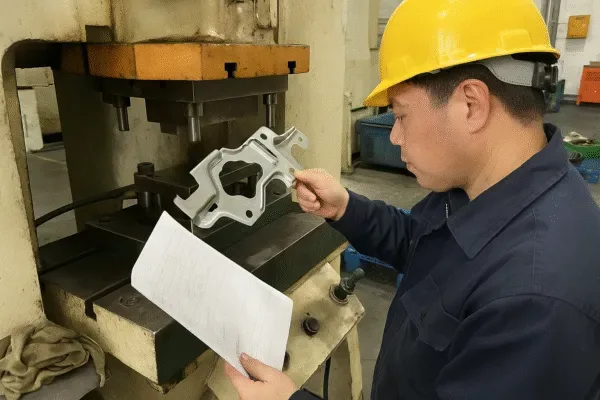
Tick-box supplier evaluation checklist
You can paste this checklist into Excel or your supplier portal and tick each box during audits.
Factory basics
- [ ] You confirm this is a real stamping factory, not only a trading office.
- [ ] You see presses that match your tonnage and part size.
- [ ] You see coil feeding lines for progressive die work if needed.
- [ ] You confirm they can run at least two shifts in peak seasons.
Tooling and engineering
- [ ] Your supplier designs tools in-house with CAD and tryout presses.
- [ ] Your supplier shows sample progressive and transfer tools from past projects.
- [ ] You confirm clearly who owns the tool after full payment.
- [ ] You see CNC machining and EDM for die inserts and punches.
Quality and systems
- [ ] You verify a valid ISO 9001 certificate from an accredited body.
- [ ] You see control plans and FMEA, based on AIAG PPAP thinking.
- [ ] You check they record key dimensions for every batch and keep reports.
- [ ] You visit a separate room for gauges, projectors, and CMM.
Export readiness
- [ ] You see export packing, pallets, and carton labels ready for shipping.
- [ ] You confirm they already ship to North America or Europe.
- [ ] You discuss normal lead time, peak-season plans, and backup capacity.
- [ ] You check if they send inspection photos and packing photos before loading.
How to score suppliers with simple numbers
Then you can turn this checklist into numbers for final decisions.
| Category | Checks covered | Score meaning (1–5) |
|---|---|---|
| Factory basics | Presses, shifts, stamping focus | 1 = weak, 5 = excellent |
| Tooling and design | Toolroom depth, experience | 1 = basic, 5 = expert |
| Quality system | ISO, PPAP style control, records | 1 = risky, 5 = very robust |
| Export capability | Packing, logistics, customs experience | 1 = basic, 5 = advanced |
| Communication | English level, response speed, clarity | 1 = slow, 5 = proactive and technical |
So you can sort suppliers by total score, not by unit price alone. When you want a factory side view, you can send your table and some audit photos and ask for our comments.
What quality issues in stamped parts should you control and how do we prove capability?
You have seen burrs, twisted brackets, and rusted parts in your career. These problems hurt your brand and take your time away from real work. You want a metal stamping supplier in China who prevents issues, not one who just sorts bad parts.
Typical issues in stamped parts include burrs, warping, cracks, dimensional drift, surface damage, and corrosion. Many problems come from weak tooling, wrong material, poor lubrication, or loose process control. You should define critical features and packing rules, and your stamping parts manufacturer should use ISO 9001, IATF 16949 ideas, SPC, and real tool maintenance to prevent defects.
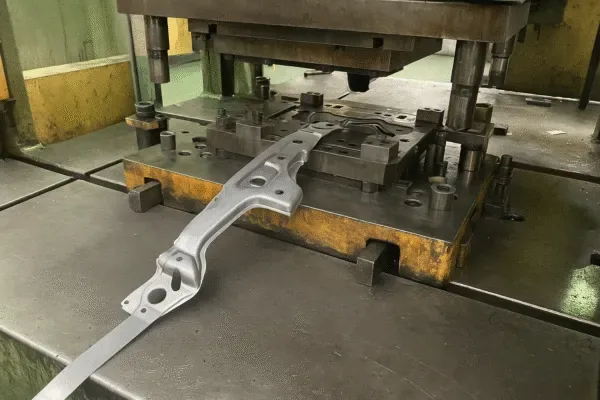
If you work in automotive or similar sectors, you may know IATF 16949 rules. We use the same mindset even if your project does not require full certification.
Typical defects and how your supplier should prevent them
You can use this table at incoming inspection, so your team stays aligned.
| Defect type | What you see | Likely causes | What your supplier should do |
|---|---|---|---|
| Burrs | Sharp edges that cut or snag | Dull punches, wrong clearance | Sharpen tools, reset clearances |
| Warping or twist | Part does not sit flat on plate | Wrong forming sequence, poor support | Adjust stages, add supports |
| Cracks | Lines or breaks near bends | Tight bend radius, hard material | Change radius, adjust material grade |
| Dimensional drift | Hole pitch or slot position off | Tool wear, feed slip | Use pilots, tune feed, maintain tools |
| Scratches and dents | Visible lines, marks, or hits | Rough handling, dirty bins | Use trays, soft layers, clean bins |
| Rust or stains | Brown spots or film | No oil, humidity, slow shipping | Use rust oil, sealed bags, desiccant |
For a process overview, you can also read the general metal stamping article. We then translate those concepts into hard data for your own drawings.
Case study 1: Cracking and warping on an automotive bracket
A German Tier 1 sent us a high strength steel bracket with cracking and twist issues. Their old supplier shipped parts with about seven percent scrap and constant sorting. Assembly plants rejected full batches during audits.
We reviewed the tool layout, material grade, and bend radii. Then we added one extra forming stage, increased the bend radius slightly, and changed the die insert material. We also set SPC on two critical dimensions with Cpk targets above 1.33.
Within two trial loops, we cut cracking scrap from seven percent to below 0.1 percent. Warping also dropped, and the customer stopped emergency sorting. This result came from combining stamping practice with ideas used in SAE and AIAG process manuals, applied in a simple way on the shop floor.
What should you include in a stamping RFQ for a China supplier?
Weak RFQs create weak quotes. Many emails say only “see drawing and quote.” You already know the result: nice prices at the start, then tool changes, delays, and hidden costs later.
A complete stamping RFQ should include clear drawings, 3D files when needed, material grade, thickness, surface treatment, tolerances, annual volume, and packing needs. You should also define sample stages, inspection level, tooling ownership, and required documents. With full data, each metal stamping company can design the right process and give an honest price and lead time.
You should include:
- 2D drawings with all dimensions and tolerances.
- 3D files for complex shapes or deep forms.
- Material grade, thickness, and hardness range.
- Surface treatment, such as zinc plating, nickel, or powder coating.
- Clear notes for deburring, chamfering, tapping, or welding.
You should also mark “critical to function” dimensions. This follows the same thinking used in AIAG control plans and PPAP, but with a light touch.
You can also open material options when possible. This table helps you explain your window.
| Material option | Typical use | Relative cost level | Notes for buyers |
|---|---|---|---|
| Cold rolled steel | General brackets, hardware | Low | Good strength and low cost |
| Stainless steel 304 | Corrosive, food, or medical environments | Medium to high | Strong corrosion resistance |
| Stainless steel 430 | Appliances, decorative parts | Medium | Lower cost than 304, lower corrosion strength |
| Aluminum 5052 | Light weight parts and enclosures | Medium | Easy to form and very light |
| High strength steel | Structural or safety related parts | Medium to high | Needs careful forming and die design |
So we can propose the best option when we study your function, market, and volume.
Business and logistic terms you should define
You should also define business and logistics points inside the RFQ.
| Item you define | Example entry |
|---|---|
| Expected annual volume | 150,000 pieces per year |
| Order pattern | Monthly releases with rolling forecast |
| Project life | Five years, possible extension |
| Sample stages | T0 20 pcs, T1 100 pcs, PPAP 300 pcs |
| Tooling ownership | Buyer owns tool after full payment |
| Required documents | Dimensional report, material cert, photos |
| Packing and label standard | Your part number, PO, batch on each carton |
You can send this RFQ through our contact page together with drawing files and your annual volume. Then we prepare a clear split of tooling cost, piece price, and any gauges. You can compare our offer with your current stamping parts manufacturer and see if we really add value.
If your design is still early, you can also ask for a free DFM review on one key part before you send a full RFQ.
How does Prime handle custom stamping projects and one-stop service?
You need more than a low piece price. You need risk control, engineering support, and on-time shipments. You also want fewer suppliers to manage for one assembly.
A reliable metal stamping supplier in China should follow a clear project flow from RFQ to mass production. Key steps include technical review, DFM, tooling design, tool build, trial runs, sample approval, and stable production. At Prime, we also supply CNC parts, casting parts, welding parts, fasteners, and plastic parts. So you work with one one-stop metal stamping company, under one ISO 9001 system, not with a loose group of shops.
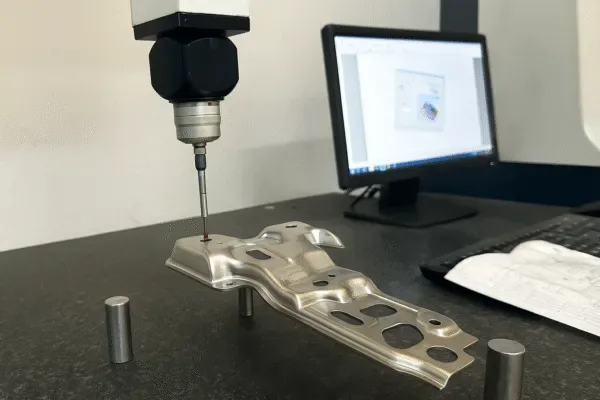
Our standard project flow for custom stamping parts
Here is how a typical project runs in our plant.
| Project phase | What we do at Prime | What you receive |
|---|---|---|
| RFQ review | Check drawings, risk, volume, and material | Questions, DFM advice, risk notes |
| Quotation | Choose process and tooling type, calculate costs | Offer with tool cost and unit cost split |
| Tooling design | Design progressive or simple dies in-house | Tool layout and key comments for your review |
| Tool building | Machine die plates and inserts in CNC and EDM | Tool build plan and progress updates |
| Trial and tuning | Run first trials, tune clearances and forming steps | T0 samples and improvement record |
| Sample approval | Run stable trial, collect measurements and photos | Final samples, reports, and packing proposal |
| Mass production | Fix process parameters, plan capacity, launch volume | Regular shipments, QA reports, packing photos |
Because we also supply fasteners and plastic parts, you can place one RFQ for full kits or sub-assemblies. You gain one quality system, one project owner, and one combined packing plan.
How one-stop service saves your time and cost
A North American customer sent us a part that used a CNC block plus a welded bracket. Unit cost and lead time were high, and they managed two suppliers for one part.
We reviewed the full assembly and proposed a progressive die stamping solution plus simple tapping. We changed the design to a single stamped part with two threaded holes. We also set shared packing with their other stamping parts.
Total piece cost dropped by about forty percent. Monthly capacity increased. Logistics became simpler, with one shipping plan and one carton label format. This is the kind of DFM and one-stop value we aim to bring to each serious buyer.
FAQs about choosing a metal stamping supplier in China
You still may hold detailed questions even after a long guide. So I answer the ones I hear most from serious buyers who search for a metal stamping supplier in China and for progressive die stamping.
Common questions include how to select a stamping parts manufacturer, how to protect drawings, and how to control lead times. Buyers also ask about progressive die stamping for automotive parts, about ISO 9001 certified stamping factories, and about mixing stamping with CNC or casting projects under one supplier.
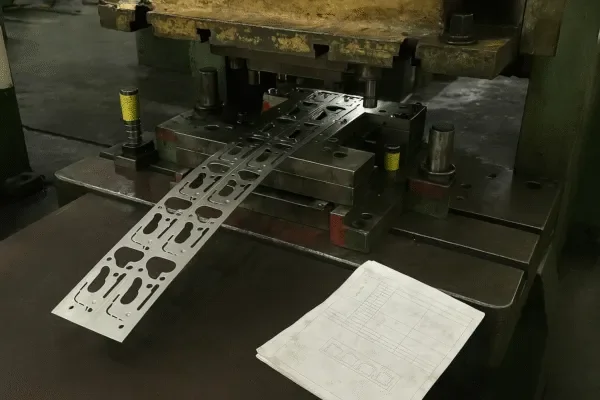
FAQ 1: How do I choose the right metal stamping company in China?
You should confirm the supplier owns presses and tooling. You should verify ISO 9001 certification and export history. You should also test technical communication with real questions, not only price.
| Question you ask | Good answer from supplier |
|---|---|
| Do you own the stamping presses and tools? | Yes, we run our own factory and toolroom |
| Are you an ISO 9001 certified stamping parts manufacturer? | Yes, with regular third party audits |
| Do you support progressive die stamping for automotive? | Yes, with PPAP support when needed |
| Can you also supply CNC and casting parts? | Yes, inside the same group |
At Prime, we meet all these points and show proof during video calls or on-site visits.
FAQ 2: What is your experience with progressive die stamping for automotive parts?
We have supplied brackets, shields, and small structural parts for European and North American automotive programs. For high risk parts, we follow PPAP logic based on AIAG core tools.
We run capability studies and maintain control plans. We share sample reports, Cpk data on key dimensions, and full coil traceability. You can review these before you release volume orders.
FAQ 3: How can I protect drawings and IP with a China supplier?
You should sign an NDA and share full drawings only with short-listed suppliers. You should avoid using your end customer name in file names and part numbers.
At Prime, we store drawings in controlled systems and share them only with assigned engineers and toolmakers. We follow your NDA, and we adapt internal rules for sensitive projects so that only relevant teams see critical data.
FAQ 4: What is a realistic lead time for progressive die tooling?
Lead time depends on complexity. Many medium progressive dies need six to ten weeks from design approval to first samples. Very complex tools need more time, and simple single hit tools need less.
You can help by freezing design early and answering technical questions fast. We then send a clear schedule from design to PPAP and first shipment, so both sides see the same timeline.
FAQ 5: Can I combine stamping parts with CNC and casting parts in one RFQ?
Yes, and this often makes sense. Many assemblies mix stamped brackets, machined inserts, and cast housings. A one-stop metal stamping company like Prime can handle all of them.
You should send separate drawings and one BOM with yearly volume. We then design a combined solution with shared packing and logistics to reduce total landed cost and simplify your supplier panel.
FAQ 6: Do you support low to medium yearly volume, or only big programs?
We focus on industrial buyers, yet we still support low to medium yearly volumes when parts show growth or high value. You should share your best yearly estimate and life volume.
Then we suggest a suitable tool level: soft tool, simple die, or full progressive die. You get a realistic offer based on real factory experience, not theory.
Conclusion
Use this checklist, choose a proven China stamping partner, cut risk, and send Prime your stamping RFQ and yearly volume today.
Upload RFQ / Contact Prime Request Free 15-min Technical Call / DFM Review