
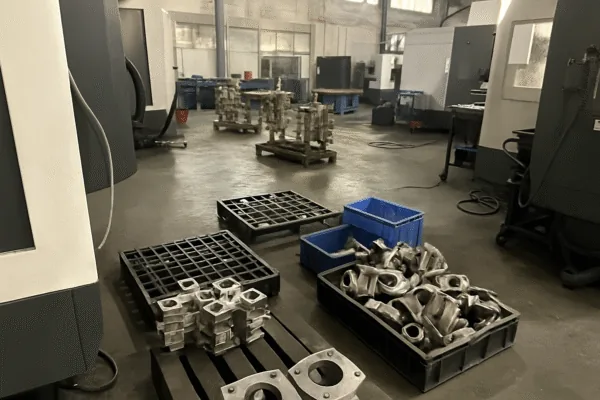
I know many buyers feel tired today, because unstable quality, late shipments, and poor packaging keep burning margin and time.
Industrial buyers choose an investment casting supplier in China1 by checking materials, process window, machining setup, quality systems, engineering support, and delivery history. A clear RFQ, PPAP-style approval2, and structured checklist reduce risk, protect margins, and support long-term programs.
So in this 2025 guide, I share how I, as a factory-side project manager, help OEMs and traders pick the right China partner and avoid expensive mistakes.
Why Are More OEMs Moving Investment Casting to China in 2025?
When I talk with overseas buyers, many already moved some castings to China, but they still wonder how far they should go.
More OEMs move investment casting to China because they gain lower total cost, larger capacity, and broad alloy capability. Buyers still need to control risks like quality swings, communication gaps, and logistics delays with clear rules, PPAP-style approval2s, and regular audits.
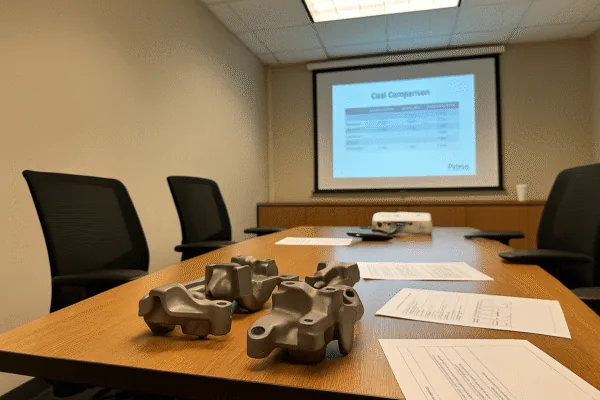
Cost, capacity, and capability from a buyer view
I never look at unit price alone, because investment casting1 is a precision process for complex parts with high dimensional accuracy and fine surface finish. It often cuts machining time compared with sand casting or fabrication. ([Wikipedia][1])
So when I combine this process with a good investment casting1 foundry in China, I usually see gains on three levels:
- Lower piece price2
- Higher installed capacity
- Wider alloy and size range
Most strong China investment casting3g](https://en.wikipedia.org/wiki/Investment_casting)%%%FOOTNOTE_REF_1%%% companies run several shell lines and multiple shifts. They pour stainless steel, carbon steel, and heat-resistant alloys on one site. This mix lets you move one part family first, then scale up when the project proves stable.
Here is how I explain the trade-off to buyers:
| Factor | Local foundry | Investment casting supplier in China |
|---|---|---|
| Piece price | Higher labor and overhead | Lower, with room for tooling and fixtures |
| Capacity | One or two lines, limited overtime | Several lines, flexible shifts |
| Material range | Narrow | Stainless, heat-resistant, and carbon steels |
| Engineering | Good but often costly and busy | Varies, strong at top China foundries |
So the upside is clear when you match the right part with the right plant.
How I control main sourcing risks in China4
Of course, I never tell buyers that China means zero risk. Every region has strong and weak factories.
The main risks I see include:
- Quality changes between lots
- Weak process control and records
- Slow or vague communication
- Tooling delays and hidden changes
- Poor packaging and rust after sea freight
To keep risk under control, I always set a simple plan:
- I request pre-production samples with full dimensional and material reports.
- I ask for a clear process flow, work instructions, and control plan per part.
- I align chemical, mechanical, and NDT checks with your industry level.
- I freeze packaging specs with photos and, when needed, basic tests.
- I run PPAP-style approvals5 on critical programs before any big ramp.
When we do this early, cost and capacity gains from China stay real and long lasting.
Decide which parts move first
I also help buyers choose which parts move first to a China investment casting3g](https://en.wikipedia.org/wiki/Investment_casting)%%%FOOTNOTE_REF_1%%% supplier.
We usually start with:
- Parts with high current machining cost
- Parts with stable drawings and yearly demand
- Parts that do not need ultra short lead time
Then we run one project as a pilot. After PPAP and a few stable shipments, we expand to more items.
How Should You Evaluate an Investment Casting Supplier in China?
Many buyers start with a spreadsheet of prices and freight quotes. They compare numbers but still feel blind on real risk.
Buyers should evaluate an investment casting1 supplier in China by checking eight areas: material range, process window, machining setup, tooling, testing and inspection, quality system, engineering support, and delivery performance. A structured checklist turns a complex choice into a clear, repeatable process.
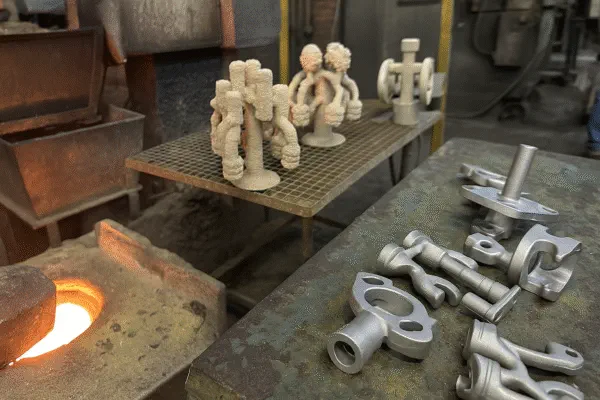
I use the same eight criteria every time I screen a new China investment casting company.
The eight criteria I always use
| Criterion | What I Check First | Why It Matters |
|---|---|---|
| Material range1 | Stainless, carbon, and heat-resistant steels | Covers current and future projects |
| Process and size range | Weight, size, shell system, tolerance window | Matches your drawing and geometry |
| Machining setup2 | In-house CNC and CMM or stable partner | Reduces handling, scrap, and lead time |
| Tooling and pattern making | Tool shop, 3D models, realistic sample timing | Controls launch speed and repeatability |
| Testing and inspection3 | Chemical, mechanical, NDT, dimensional tools | Confirms each batch meets your spec |
| Quality system and certifications4 | ISO 9001, IATF 16949 where needed, traceability | Lowers hidden process risk |
| Engineering and communication5 | DFM quality, response speed, language clarity | Avoids mistakes and redesigns |
| Lead time and OTIF | Standard lead time and on-time delivery records | Protects your selling season |
If you want me to walk through this checklist for your current supplier, you can upload your RFQ on our contact page and mention “casting checklist review”.
Materials, process window, and machining setup
I first ask for a full material list. A strong stainless steel casting supplier can pour CF8M, CF3M, 304, 316L, and other alloys on a daily basis. Then I check if they also handle carbon and low-alloy steels, plus heat-resistant grades for high temperature work.
Next, I check the process window:
- Minimum and maximum part weight
- Maximum overall dimensions and tree height
- Typical surface finish and tolerance range
- Water glass or silica sol shell system
I match this with your part family. If a plant usually runs small precision parts, I do not send heavy valve bodies there.
Then I look at machining. At Prime, we run our own CNC lines, so we supply both cast and machined parts. You can see how we work on our CNC parts product page and our stamping parts page. For any investment casting foundry, I ask who owns final dimensional responsibility and how they prove it.
Quality systems, ISO, and automotive style thinking
I treat ISO 9001 as a basic requirement, not a nice-to-have. ISO 9001 is a global quality management standard that helps companies build repeatable systems and improve performance. ([iso.org][2])
So I check:
- Current ISO 9001 certificate
- Internal audits and corrective action practice
- How they connect customer complaints to real root cause
For automotive or similar sectors, I also look at IATF 16949. It is the international standard for automotive quality management systems, with strong focus on defect prevention and variation reduction. ([nsf.org][3])
Prime holds ISO international quality certification and uses PPAP, control plans, and PFMEA on high-risk items. When I talk about these tools, I do not mean theory. I mean real documents that passed customer audits.
Which Red Flags Matter Most When You Source Investment Castings in China?
Every year, I help at least one buyer move away from a failing supplier. In almost every case, early red flags already appeared months before.
The main red flags for a China investment casting supplier include vague technical answers, missing inspection data, very low prices, unsafe lead times, weak PPAP discipline, and poor packaging. Buyers should act when they see these signs instead of waiting for a major failure.
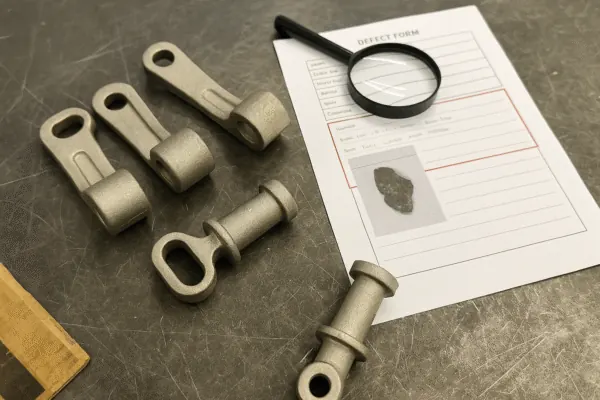
Red flags from RFQ to mass production
I watch red flags1 across the full project life:
| Stage | Red Flag Example | Likely Result Later |
|---|---|---|
| RFQ | “No problem” to every question, no details | Hidden risks and scope gaps |
| RFQ | Prices far below market peers | Weak process or later price increase |
| Sampling / PPAP2 | Copy-paste inspection reports | Low measurement discipline |
| Sampling / PPAP2 | Process changes without new approval | Drift between samples and mass production |
| Mass production | Rising defects and new defect modes | Firefighting and extra sorting |
| Packaging / shipping | Rust, crushed cartons, mixed labels | Extra cost and lost trust with end users |
So when I see more than one strong red flag, I advise buyers to slow down or rethink the project path.
How I read red flags1 in real projects
At RFQ stage, I expect curiosity from a serious China investment casting3 company. Strong engineers ask about function, loads, assembly, and safety class. If a supplier only talks about price and never asks questions, I mark this as a risk.
During PPAP2, I look at documents and behavior. If a plant refuses to share a real process flow or PFMEA, or if they change gates or shell process without notice, I know they treat control lightly.
In mass production, I track defect data, sorting hours, and on-time delivery month by month. Many investment casting3 plants focus on pouring speed and forget packaging. That is why I insist on export-grade cartons, inner bags, desiccant, and labels for each project.
For wider industry best practices, I also follow updates from the Investment Casting Institute, which is the main trade association for the investment casting3 sector. ([INVESTMENT CASTING INSTITUTE][4])
Their events and technical notes help me challenge suppliers with fresh ideas, not only old habits.
What Does a Strong RFQ for China Investment Casting Parts Include?
Many RFQs I see each week are too short. Suppliers then guess details, and both sides feel unhappy later about quality, price, or timing.
A strong RFQ4 for investment casting3 parts includes clear drawings, 3D models, material and heat treatment specs, surface and tolerance requirements, annual volume, inspection plan, packaging rules, Incoterms, and timeline. This clarity helps investment casting3 suppliers in China quote accurately and reduces later disputes.
RFQ structure I use with overseas buyers
Here is the RFQ structure I like to use:
| Section | Content You Provide |
|---|---|
| Header | Project name, contact, revision date |
| Technical | 2D drawings, 3D models, material, heat treatment |
| Quality | Inspection plan, PPAP level, certificates |
| Logistics | Target Incoterms, port, batch size |
| Packaging | Box design, pallets, labels, barcodes, stacking rules |
| Timeline | Tooling, samples, PPAP, SOP dates |
I also add one or two clear sentences, such as:
- “Process: investment casting1 with full machining and passivation.”
- “Inspection: 100% visual, sampling dimensions per ISO 2859, full CMM layout on first shipment.”
If you want to see how we describe services, you can check our investment casting1 service page and our investment casting1 project cases.
How a good RFQ filters suppliers for you
A clear RFQ turns into a powerful filter.
Strong suppliers will:
- Return detailed technical comments, not just price.
- Raise clear questions about wall thickness and machining stock.
- Suggest small design tweaks that reduce risk and cost.
Weak suppliers will:
- Skip half of your requirements.
- Avoid firm answers on inspection and traceability.
- Focus only on unit price and short promises.
If you want a quick sanity check, you can send your RFQ draft to me through our contact page. I can mark missing parts and adjust it before you send it to any China investment casting1 foundry.
How Does Prime Support Long-Term Investment Casting Projects from China?
Most of my best customers do not chase one-off deals. They plan three to ten year programs and want a stable China team that really understands their end users.
Prime supports long-term investment casting1 projects from China with audited foundry partners2, in-house CNC machining3, ISO-based quality systems4, PPAP-style approvals5, strong packaging, and proactive engineering support. This structure lowers total cost of ownership and reduces risk for OEMs, traders, and system integrators.
One-stop support across processes
Prime started in 1993 and now runs ten production lines for stamping parts, CNC parts, welding parts, casting parts, fasteners, and plastic parts. We work only B2B and wholesale.
So my team can:
- Help you select and audit the right investment casting1 supplier in China.
- Manage tooling design, simulation, and sampling on site.
- Machine castings on our own CNC lines when needed.
- Combine castings with stamping parts, CNC parts, and fasteners in one shipment.
For one European power customer, we moved a stainless steel casting project from a local foundry to a China investment casting1 foundry in our network. Within three shipments, defect rate dropped from about 2.3% to 0.4%, and landed cost fell by roughly 18%, while air freight emergencies disappeared.
Quality, ISO, PPAP, and delivery focus
Prime holds ISO international quality certification and follows the principles of the ISO 9001 quality management standard, which defines requirements for a repeatable quality management system6. ([iso.org][2])
For important programs, we also align with the IATF 16949 automotive quality standard, which focuses on defect prevention7 and reduction of variation in the supply chain8. ([International Automotive Task Force][5])
In practice, this means:
- We define control plans and sampling plans per part.
- We run PPAP-style packages with flow charts, PFMEA, and full layouts.
- We link each batch to heat numbers, test reports, and photos.
- We track OTIF, defects, and customer complaints, then act on root cause.
Soft CTA: If you want us to review one live project, you can upload your drawings and basic volume plan on our contact page. Please note “investment casting1 long-term plan” in the message, and I will pick it up.
Are You Ready to Evaluate a China Investment Casting Supplier Today?
At this point, you know what to ask and what to avoid. The next step is to turn all this into a simple daily tool.
Buyers who want to evaluate a China investment casting1 supplier should use a checklist that covers materials, process window, machining, inspection, quality systems, communication, delivery, and packaging. This checklist supports fair comparison, better negotiation, and clearer reporting inside your company.
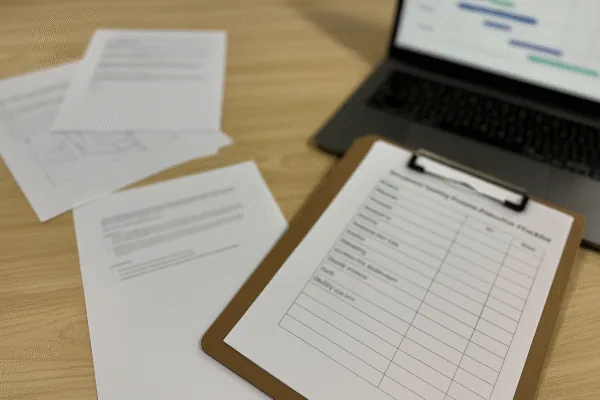
Practical evaluation checklist you can print
You can copy this checklist into Excel and use it during factory visits or video audits.
| Area | Key Question | OK / Risk |
|---|---|---|
| Materials | Do they cover your stainless, carbon, and heat-resistant grades? | |
| Process and size | Do they handle your weight, size, and tolerances every week? | |
| Machining | Do they have in-house CNC and CMM1, with clear datums and fixtures? | |
| Tooling | Do they design and maintain tools with realistic timing? | |
| Testing and inspection | Do they run chemical, mechanical, and NDT tests2 per your plan? | |
| Quality system | Do they follow ISO 90013 and keep traceable batch records? | |
| Engineering | Do they give honest, clear DFM feedback within short time? | |
| Delivery performance | Do they share on-time delivery data for the last twelve months? | |
| Packaging and logistics | Do they design export packaging and support your Incoterms? |
For general background on the process, you can see public resources like the investment casting4 overview on Wikipedia, which explains how lost-wax casting produces complex metal parts with high accuracy and good surface finish. ([Wikipedia][1])
Strong CTA: Use this checklist with your current suppliers, then upload the same drawings and notes to Prime. I will benchmark your situation, highlight risks, and send a clear 2025 sourcing plan for your investment casting4 parts.
FAQ: Key Questions About China Investment Casting Suppliers
What MOQ do China investment casting4 suppliers usually ask for? In most of my projects, MOQ starts around 200–500 pieces per order, per part. For large complex castings, we can discuss lower volumes. For small simple parts, higher MOQs often make more sense.
What lead time5 should I expect for tooling and mass production? Typical timing looks like this: tooling and first samples need about 25–35 days after drawing approval. Normal mass production takes about 25–30 days, depending on part size, machining time, and line loading.
How do you handle inspection for each shipment? We always run 100% visual inspection6. We then add dimensional checks based on the control plan, plus chemical and mechanical tests as agreed. For safety or pressure parts, we include NDT such as dye penetrant or X-ray when you request it.
Which Incoterms do you support? Most customers use FOB main China ports and work with their own forwarders. We also ship under CIF or DAP when you prefer a door solution. We fix this already at quotation stage, so cost and responsibility stay clear.
Can you ship investment casting4s with other metal parts in one container? Yes. Prime often consolidates investment casting4s with CNC parts, stamping parts, fasteners, and plastic parts. This combined load can cut logistics cost and reduce customs work.
Conclusion
Upload your RFQ and contact Prime today for stable China investment castings, fast delivery, and practical engineering support on every project.
Explore the advantages of investment casting to understand its efficiency and cost-effectiveness in production. ↩
Find out how audited partners can ensure quality and reliability in your supply chain. ↩
Understand the process of CNC machining and its applications in modern manufacturing. ↩
Learn how ISO standards enhance quality management and operational efficiency in manufacturing. ↩
Discover the significance of PPAP in ensuring product quality and compliance in manufacturing. ↩
Explore the role of quality management systems in maintaining product standards and customer satisfaction. ↩
Learn about effective strategies for defect prevention to enhance product quality and reduce waste. ↩
Discover best practices for optimizing your supply chain to improve efficiency and reduce costs. ↩