
Stamping seems simple, but its hidden challenges often lead to project delays and high costs. I will explain why this process is so complex and how you can master it.
Stamping is one of the most difficult industrial sectors. It demands a high level of precision and expertise. The process involves complex molds, a huge variety of materials, and powerful machinery. Success requires balancing quality, speed, and cost, making it extremely challenging to get right.
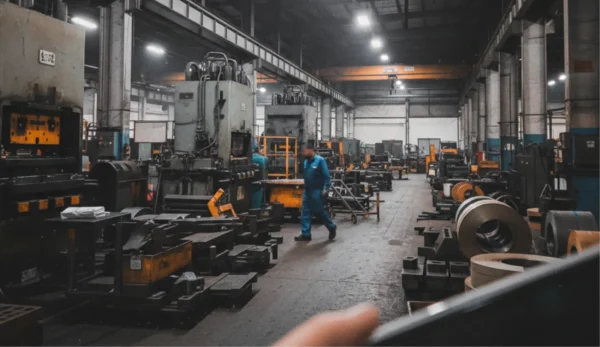
For over 30 years, I've seen many buyers underestimate stamping. They see a machine pressing metal and think it's straightforward. But the reality is that every successful part is the result of deep engineering knowledge and experience. The details are what separate a good part from a bad one. It's not just about force; it's about control and precision. In this article, I will break down these challenges for you. We will look at the real difficulties and how to solve them.
Stamping: Is it really that difficult, or are we just not good at solving the problem?
You might feel stuck when facing stamping problems. These issues can seem impossible to solve, leading to frustration and delays. The real problem is often how we approach the challenge.
The difficulty in stamping is not just the process itself, but our approach to it. Many people focus on a single issue, like a machine problem. But stamping is a system where molds, materials, and machines all work together. We must address it as a whole system.
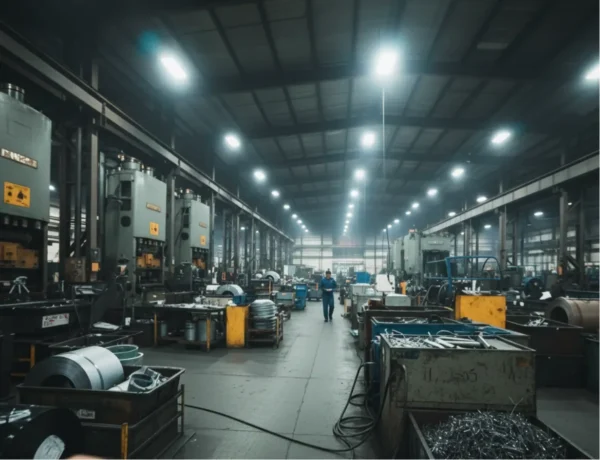
Stamping is a game of precision, and there is very little room for error. The challenges are real, but they are not impossible to overcome. I believe the main problem is a lack of system-level thinking. People tend to isolate problems. For example, a customer once came to me with a part that kept cracking. Their old supplier blamed the material. But we looked at everything. The mold design, the press speed, and the material. The real issue was a small error in the mold design that put too much stress on the metal. Fixing the mold solved the problem completely.
The Three Pillars of Stamping Difficulty
The complexity of stamping rests on three main pillars. Each pillar requires significant investment and expertise.
- High Upfront Investment1: Stamping requires powerful presses and custom-made molds. A single mold can cost thousands, even tens of thousands of dollars. This is a big financial risk before you even produce one part.
- Deep Technical Skill2: You need skilled engineers to design the molds and experienced technicians to operate the machines. It takes years to learn how different metals behave under pressure and how to adjust the process for perfect results.
- Unforgiving Process3: Small mistakes have big consequences. A minor error in mold alignment or a slight variation in material thickness can lead to thousands of defective parts. There is often no easy fix once the production run starts.
This table compares stamping to other common manufacturing methods.
| Feature | Metal Stamping | CNC Machining | Die Casting |
|---|---|---|---|
| Tooling Cost | Very High (Custom Molds) | Low to Medium (Standard Tools) | High (Custom Dies) |
| Production Speed | Very Fast (Parts per second) | Slow (Minutes per part) | Fast (Parts per minute) |
| Material Wastage | Medium (Scrap from sheets) | High (Chips from block) | Low (Recyclable sprues) |
| Required Expertise | Very High | High | High |
As you can see, stamping offers incredible speed but demands the highest level of expertise and initial investment.
Uncovering the Process Bottlenecks: Molds, Materials, and Production Capacity4 – Three Hidden Killers?
Your production line is running slow, and you cannot figure out why. These hidden bottlenecks are killing your efficiency and profits. Let's find these hidden killers in your process.
Yes, molds, materials, and production capacity are the three biggest bottlenecks. A poorly designed mold creates defects. An incorrect material choice causes failures. And a mismatched machine capacity will jam the entire workflow. These three elements must be perfectly balanced for smooth production.
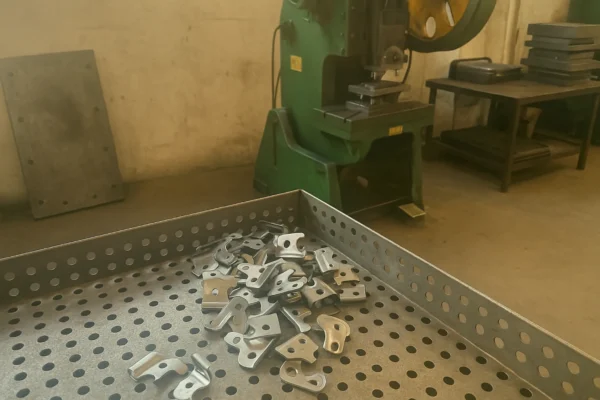
In my experience, about 90% of production problems come from one of these three areas. They are linked together. You cannot change one without affecting the others. I call them "killers" because they can silently destroy your project's budget and timeline if you ignore them. For example, trying to save money with a cheaper material might seem smart. But if that material isn't strong enough, it could wear out your expensive mold much faster or lead to a high defect rate. You saved a little on material but lost a lot more on tooling and wasted parts. It's a classic mistake. Now, let's dive deeper into each killer.
Killer: The Mold
The mold is the heart of the stamping process. Its design and quality determine the final part's accuracy and consistency. A complex part requires an equally complex mold, often with multiple stages. Maintenance is also critical. A worn or damaged mold will produce bad parts. We check our molds constantly to ensure they remain in perfect condition.
Killer: The Material
There are hundreds of different metals we can use for stamping. Each one has unique properties. Some are strong, some are flexible, some are resistant to heat. As my notes say, we work with over 100 common types of metal. Choosing the correct one is a science. You must consider the part's function, the stress it will endure, and the cost.
Here is a simple table showing a few common materials and their uses.
| Material | Key Property | Common Application |
|---|---|---|
| Cold Rolled Steel | Low Cost, Formable | Automotive Body Panels, Appliances |
| Stainless Steel | Corrosion-Resistant | Kitchen Sinks, Medical Tools |
| Aluminum | Lightweight | Electronic Casings, Aircraft Parts |
| Copper | Conductive | Electrical Connectors, Terminals |
Using the wrong material is like building a house on a weak foundation. It is destined to fail.
Killer: Production Capacity4
This refers to your machinery. Do you have the right press for the job? A press needs enough force, or tonnage, to form the part correctly. But it's not just about power. The speed of the press and the size of the bed must also match the mold and the production goals. Using a press that is too big is inefficient. Using one that is too small is dangerous and produces bad parts.
Automation + Data5: Can Stamping Transform from "Heavy Labor" into "Highly Intelligent Manufacturing"?
Many people see stamping as dirty, old-school work. This image makes it hard to attract new talent and improve processes. But technology is changing this perception and the reality of the work.
Absolutely. Automation and data are the future of stamping. Robots can handle dangerous and repetitive tasks with perfect consistency. Sensors and data help us predict problems and optimize every single step. This transforms the old factory into a modern, smart-manufacturing operation.
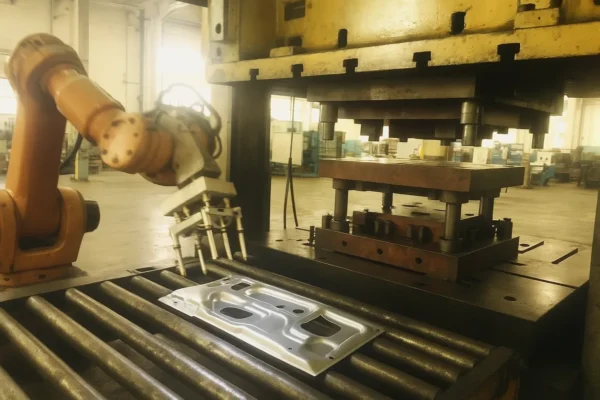
I remember when our factory floor was filled with workers manually loading metal sheets into presses. It was slow, physically demanding, and dangerous work. Today, robots do much of that work. This change wasn't just about replacing people. It was about creating a better, safer, and more efficient process. Automation removes human error from repetitive tasks, so our quality is more consistent. Data gives us insights we never had before. We can now see exactly how a machine is performing in real-time. This is not the "heavy labor" of the past. This is intelligent manufacturing.
The Power of Automation
Automation in stamping involves more than just robots. It includes automated transfer systems that move parts between presses and automated quality inspection systems that use cameras to check every single part. The benefits are huge.
- Safety: Robots perform the most dangerous tasks, reducing accidents.
- Speed: An automated line can run 24/7 with minimal supervision, drastically increasing output.
- Consistency: A robot performs the exact same motion every time, leading to higher quality and less waste.
The Intelligence of Data
Data is the brain of the smart factory. We put sensors on our presses to monitor temperature, pressure, and vibration. This data tells us if a machine is running correctly or if it needs maintenance. We can predict a failure before it happens, so we can schedule repairs and avoid costly downtime. This is called predictive maintenance. We also use data from our quality checks to spot trends. If we see a small defect appearing more often, we can adjust the process immediately before it becomes a big problem.
Here is a comparison of a traditional versus a smart stamping process.
| Aspect | Traditional Stamping | Smart Stamping (Automation + Data5) |
|---|---|---|
| Material Handling | Manual loading and unloading | Robotic arms and transfer systems |
| Quality Control | Manual spot-checks | 100% automated vision inspection |
| Maintenance | Reactive (Fix when it breaks) | Predictive (Fix before it breaks) |
| Efficiency | Dependent on operator skill | Consistent, optimized, and high-speed |
By embracing technology, we turn a difficult process into a controlled, intelligent system.
Conclusion
Stamping is a tough field, but it is not impossible. Understanding its core challenges and using modern technology is the key to success in this demanding but rewarding industry.
Understanding the financial implications can help you plan better for your stamping projects. ↩
Gaining insights into the skills required can enhance your team's capabilities and project outcomes. ↩
Learning about the challenges can help you avoid common pitfalls in your stamping operations. ↩
Exploring this can help you optimize your machinery and improve production rates. ↩
Discover how technology is revolutionizing stamping for better efficiency and safety. ↩