
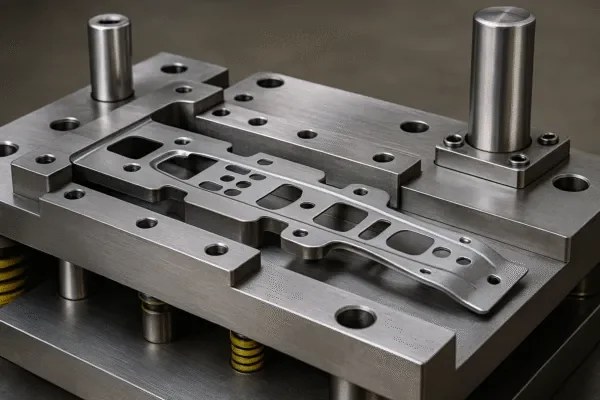
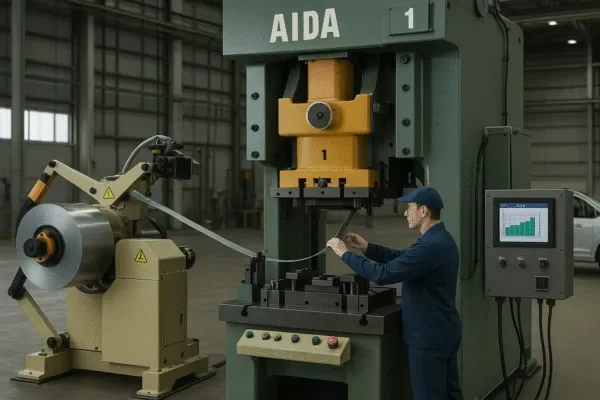
Rising costs hurt margins, and slow lines add risk. I solve both with custom stamping.
Custom metal stamping cuts total cost through higher yield, faster cycles, and less rework. Progressive dies combine steps into one stroke. Tight, repeatable tolerance speeds assembly. Verified data supports predictable savings.
You want proof that scales. I will share methods, numbers, and simple checks. Then you can decide fast with confidence.
Where do real savings actually come from in custom stamping?
Many teams chase a lower unit price and miss total cost. I target hidden losses first and remove them.
Real savings come from material yield, cycle time, and rework. Better nesting lifts yield. Progressive dies compress steps. Proven GD&T control lowers rework below one percent.
Dive deeper: drivers, examples, and quick wins
Cost drivers you can control
I analyze three drivers on day one. First, I model yield from strip width and pitch. Then I time each station for real cycle time. Also, I track rework from burrs, fit, and flatness. So I focus on actions that move numbers, not guesses. As a custom stamping parts supplier, I publish these numbers at kickoff and after PPAP.
| Driver | Typical Loss | My Fix | Expected Impact |
|---|---|---|---|
| Material yield | 8–15% scrap | Tight nesting | 3–6% scrap |
| Rework rate | 3–7% | CpK controls | < 1% rework |
| Cycle time | 1.2 s/part | Progressive die | 0.7 s/part |
| Handling steps | 3–4 | In-die ops | 1 step |
How the die creates compounding gains
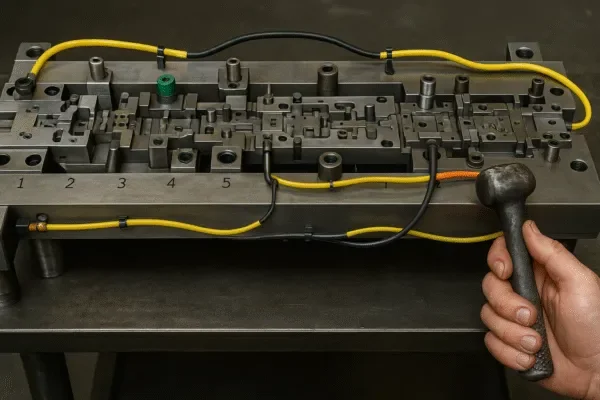
I design progressive dies that pierce, form, and coin in one pass. Then I add in-die sensors to stop faults before damage. Also, I select tool steels that hold sharp edges longer. Therefore burrs stay low, and edges stay clean. These improvements compound with volume. So unit cost trends down as runs grow.
A short story from my line at Prime
I shifted a telecom bracket from stage tooling to a progressive die. Strokes per minute rose from 60 to 90. Scrap fell from 10% to 2.8% with tighter nesting. Labor per thousand parts dropped by 35%. The buyer saw custom metal stamping cost savings within eight weeks. Then we scaled across three presses without delays.
- Choose progressive dies when yearly volume exceeds 50,000.
- Add sensors when ribs are thin or slots are narrow.
- Track CpK on hole-to-bend, not only outer profiles.
How do material choices and nesting reduce waste quickly?
Material waste hits margins first. I treat it as a direct loss, and I design yield and function together.
Better nesting improves utilization and lowers cost. Correct grade prevents cracks and overengineering. Exact strip width reduces bridge scrap. These simple choices protect quality and budget together.
Dive deeper: yield math, coil rules, and tolerance links
Simple yield math that guides smart decisions
I start with net part area and add web, pilots, and carrier. Next, I tune pitch in 0.5 mm steps to test strength and yield. Then I simulate burr direction to support assembly flow. Therefore upstream choices help downstream speed. As a China custom stamping factory, I share this sheet with buyers. So decisions stay clear and fast.
| Item | Standard Setup | My Custom Setup |
|---|---|---|
| Material utilization | 82% | 92% |
| Strip width | 58 mm | 54.5 mm |
| Pitch | 36 mm | 34 mm |
| Carrier removal | Offline | In-die cut |
Coil quality rules that save real time
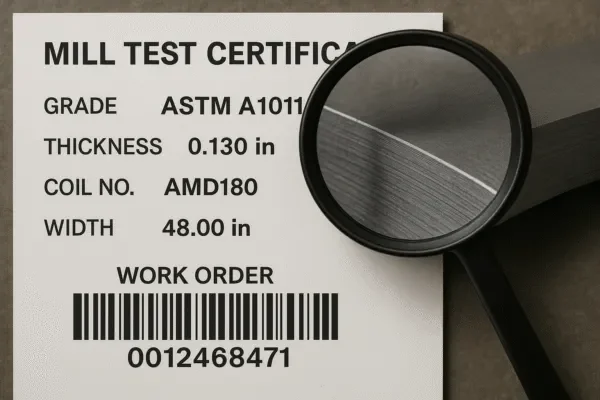
I require flatness, thickness tolerance, and camber limits from the mill. So the strip feeds true at speed. Then I lock supplier lots to work orders. Also, I inspect edges for nicks before threading. Therefore I stop downtime spikes that inflate labor.
I connect GD&T to real capability. Positional tolerance follows CpK history, not guesswork. Then I match bend allowance to our press and tooling. Also, I move holes away from tight bends when possible. Thus, I avoid cracked corners and late rework. When tight bores matter, I add CNC parts precision machining only where needed.
- Ask for coil camber under 0.7 mm per 5 meters.
- Align grade with forming ratio, not habit.
- Use pilot patterns that tolerate slight camber.
Can tooling costs pay back faster than you expect?
Upfront tooling often scares teams. I remove that fear with a simple, open ROI plan.
Tooling can pay back within months. Cycle time falls. Scrap drops. Rework ends. Unit cost savings offset the die price quickly. Clear math reduces risk and speeds approval.
Dive deeper: ROI math, modular dies, and maintenance plans
Straightforward ROI you can verify quickly
I compare current cost with target cost. Then I amortize the die by forecast volume. I compute breakeven parts and months.
| Term | Value | Notes |
|---|---|---|
| Tooling cost | $28,000 | Progressive die |
| Unit cost delta | $0.18 lower | Labor and scrap |
| Monthly volume | 40,000 | Two shifts |
| Breakeven | ~155,556 parts | Under four months |
Modular dies reduce change cost later
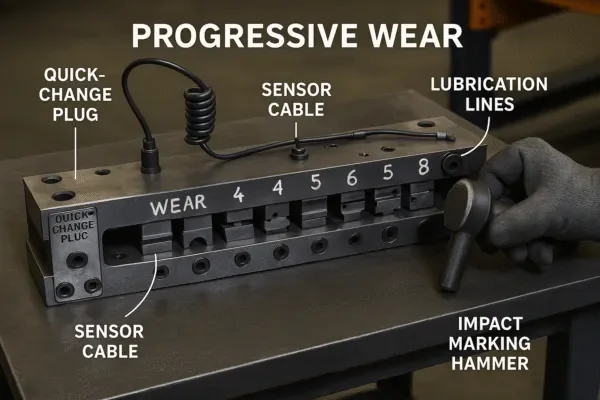
I design quick-change inserts for wear zones. Then I keep family tools at one shut height. Therefore press changeovers stay fast when you scale.
Maintenance protects uptime and tolerance
I schedule PM by stroke count, not calendar time. Then I log burr height and hole drift weekly. As an ISO-certified casting parts manufacturer and stamping expert, I apply the same system across lines with one integrated control plan.
- Stock spare punches for two PM cycles.
- Use modular pilots for quick threading.
- Monitor hole-to-bend CpK and flatness weekly.
How do quality, packaging, and logistics protect your margin?
Great parts still fail in transit if packaging is weak. I design quality and packaging as one continuous system.
Strong quality gates and robust packaging save money. In-line checks reduce defects. Rigid cartons and foam stop dents. Predictable logistics prevent delays and missed seasons.
Dive deeper: standards, checklists, and freight choices
ISO, PPAP, and traceability that buyers trust
I work under ISO 9001. Then I support PPAP for automotive and energy buyers.
| Control | What I Do | Why It Matters |
|---|---|---|
| Incoming check | Verify coil and hardware | Prevent feed issues |
| In-process | 100% sensor checks | Stop die crashes |
| Final audit | AQL S2 plus key dims | Catch late drift |
| Traceability | Lot IDs and barcodes | Faster root cause |
Packaging that meets tough buyer demands
I use VCI bags, foam trays, and corner guards. For Siemens-related brackets, I add anti-static wraps when needed.
Logistics plans that keep schedules safe
I plan lead time with buffers. I coordinate stamping with plastics and welding when kits save freight. So your landed cost falls while quality stays stable.
- Use VCI for carbon steel and long sea routes.
- Add foam trays for sharp edges and plated parts.
- Print outer labels with PO, lot, and QR code.
When should I pick stamping, CNC, welding, or casting for lower cost?
Not every part belongs in a press. I compare options before I lock the route, and I favor total cost.
Choose stamping for thin profiles and repeat volume. Use CNC for complex pockets and tight bores. Pick welding for assemblies. Select casting for thick shapes.
Dive deeper: simple selection rules and hybrid routes
| Process | Best For | Typical Range | Notes |
|---|---|---|---|
| Stamping | Thin shapes, high volume | 0.2–6 mm | Lowest unit cost |
| CNC | Complex pockets, threads | Any | Add precision only where needed |
| Welding | Brackets, frames | N/A | Join stamped or cast parts |
| Casting | Thick shapes, high stiffness | 3–50 mm | Combine with machining |
A short example that saved real money
I supported a U.S. buyer who sells Siemens accessories. He cut total cost by 18% using a single-supplier plan.
- Compare total cost, not unit price alone.
- Use hybrid routes for the last 10% tolerance.
- Keep one packaging spec across all parts.
Conclusion
Custom stamping reduces scrap, labor, and rework; smart materials, modular dies, and strong packaging deliver fast, measurable savings.
Contact Prime today for a free consultation, a fast quotation, and a tailored plan. We ship quickly, and we hold stable quality. We operate ten production lines and ISO systems. We serve B2B wholesale only across North America, Europe, the Middle East, and Australia. Send your inquiry now on our website, and get clear numbers within days. As your progressive die stamping supplier, we deliver reliable value from the first sample to full scale.