
I face rising costs and tight deadlines. Budgets slip and targets move. I remove waste and pick better methods. I then protect margins fast.
I compare methods by cost, speed, and scale. I map volume, resin, and tolerances. I model tooling, cycle time, scrap, labor, and logistics. I then choose the best route for each stage.
I will show clear steps with math. I will share field notes from Prime. I will add checklists you can use now. I will help you act with confidence.
Injection molding vs. CNC machining: which gives lower cost and faster scale?
I see teams choose by habit. Budgets then drift off plan. I match volume, tolerance, and launch window. I choose fit, not habit.
Injection molding wins at scale with short cycles. CNC machining wins on flexibility with zero tooling. Break-even shifts with volume, tolerance, resin, and geometry.
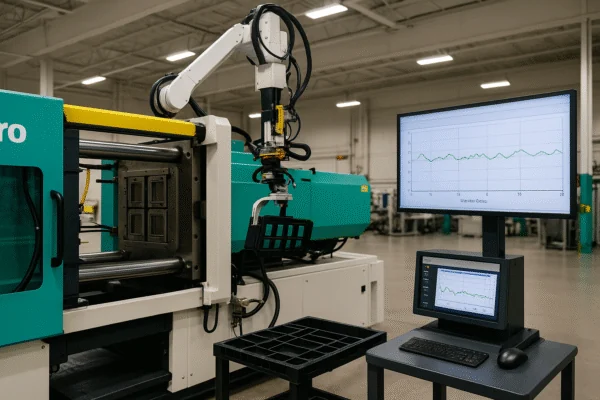
Dive deeper: choose by break-even math, not preference
I start with a simple break-even model. I include tooling amortization and maintenance. I add machine rate, crew size, and uptime. I track scrap, rework, QA time, and packaging. I then draw cost curves over a 12-month forecast. I run low, base, and high cases to test risk. I decide only after I compare the full picture.
I verify design for molding before I cut steel. I set even walls, rib ratios, and draft. I balance gates and add vents at thin ribs. I pick resins that fill well and shrink predictably. I validate with short shots and pressure traces. I track Cpk by cavity, not by batch. I plan CNC post-ops for tight bores or slots. I place those datums early, so fixtures stay simple. I also hold a CNC path as a bridge during tool build. I keep revenue moving while steel finishes.
Break-even model inputs
| Input | Why it matters | Typical range |
|---|---|---|
| Tooling cost and life | Controls payback at volume | $5k–$80k, 100k–1M shots |
| Machine rate | Real hourly burden, not list | $30–$80 per hour |
| Cycle time | Drives unit cost at scale | 10–60 seconds |
| Scrap and rework | Hides early costs and delays | 0.5–5% |
| Setup and batch size | Impacts changeovers and WIP | 1–8 hours |
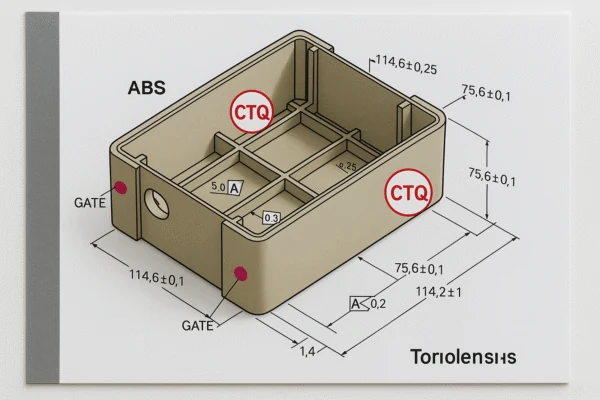
Pro tip: As a custom plastic parts supplier, I share the model file and assumptions. I align numbers before we move. I keep trust strong and changes smooth.
3D printing for prototyping and low-volume production: when is it cheaper?
I waste money when I tool too soon. I waste weeks when I machine too slow. I print first to learn fast. I then freeze the design before tooling.
3D printing cuts early cost while designs change. It shines on complex shapes and quick trials. It loses on high volume and narrow resin needs.
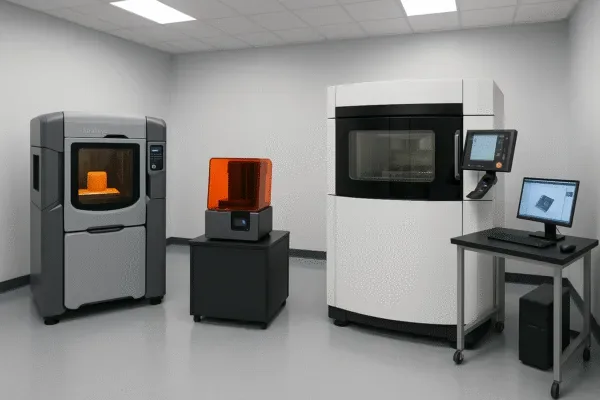
Dive deeper: pick the right print tech and set a clean exit
I begin with a tight test plan and clear targets. I define function, tolerance, loads, look, and tests. I pick FDM, SLA, or SLS to match the job. I print samples and run dimensional checks. I load parts in jigs and record results with photos. I approve drawings only after parts meet targets. I plan the exit to molding or CNC on day one. I set volume, unit cost, and lead time triggers. I move when two triggers fire, so costs stay under control.
Print tech quick guide
| Need | FDM | SLA | SLS |
|---|---|---|---|
| Cost | Lowest | Medium | Higher |
| Surface | Rough | Very smooth | Matte |
| Strength | Layer-dependent | Moderate | Good isotropy |
| Tolerance | Moderate | Fine | Moderate |
| Best use | Jigs and big housings | Appearance parts | Nylon functional parts |
Hybrid manufacturing approaches: can I combine methods for maximum savings?
I hear debates about one “best” method. I stop that debate. I mix methods by feature and phase. I gain cost, speed, and options.
A hybrid plan often wins on total cost. I print, machine, and mold different features or stages. I match each task to its best process.
Energy and cycle time reduction: which levers control process cost the most?
I treat seconds like money. I track energy like cash. I cut cycle time first. I then lock energy gains with stable rules.
FAQs
Q1: When does injection molding beat CNC on cost?
After the break-even point, often near 1,000–3,000 units.
Q2: Can you hold tight tolerances on molded parts?
Yes, with strong DFM and tooling.
Q3: What tolerances can you hold on CNC plastic parts?
Typically ±0.02 mm.
Q4: Do you support ISO and audits?
Yes, Prime holds ISO certification.
Q5: What lead times do you offer?
CNC: 1–2 weeks. Molding: 3–6 weeks after tool approval.
Q6: Which payment methods work best for B2B orders?
Wire transfer and L/C.
Q7: Where do you ship?
North America, Europe, Middle East, Australia, and more.
Conclusion
I cut cost by matching methods, modeling break-even, and reducing cycle time across your full flow.