
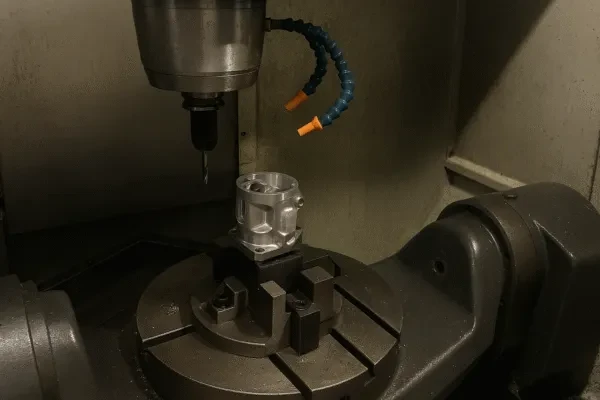
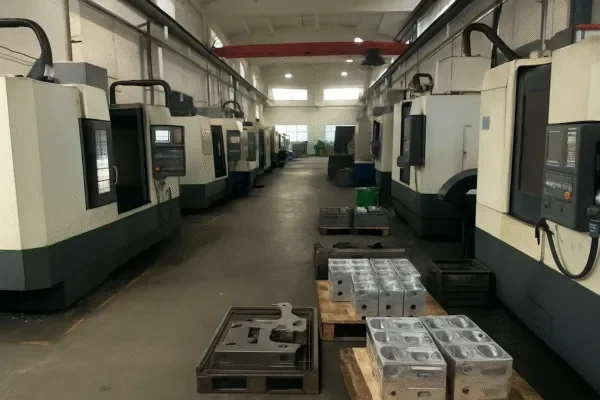
I have bought custom machined parts for thirty years. I know one bad supplier can ruin a full season.
To choose a CNC machining supplier in China, define a clear request for quotation (RFQ) and quality target. Then check each supplier's CNC capacity, ISO 9001 system, and communication. Finally, run a controlled trial order with strict packing rules, inspection points, and delivery milestones before shifting large volumes.
As a senior purchasing manager, I always look at risk first, then price. In this guide, I share the exact checks I now use. I apply them when I source from China and when I choose Prime as a long-term partner.
Here is the five-step method I use in real projects:
- Shortlist three to five CNC machining suppliers in China.
- Send a detailed RFQ with drawings, tolerances, and packing rules.
- Compare capacity, equipment, ISO systems, and response quality.
- Audit at least one factory on-site or through a full video walk-through.
- Place a trial order with strict quality and delivery targets.
If a supplier passes these steps, I feel safe to move more parts and build a long-term plan.
Why do overseas OEMs still choose a CNC machining supplier in China in 2025?
I remember when I first added China to my supplier list. At that time, we chased cost only. Now I need cost, but also engineering support, delivery security, and one-stop capability.
Overseas OEMs still choose CNC machining suppliers in China because they gain lower unit cost, flexible capacity, and access to many related processes. A strong CNC machining company in China offers precision machining services, casting and forging options, stamping, welding, and surface finishing in one industrial cluster. When buyers set clear requirements and manage quality, they gain both savings and stable supply.
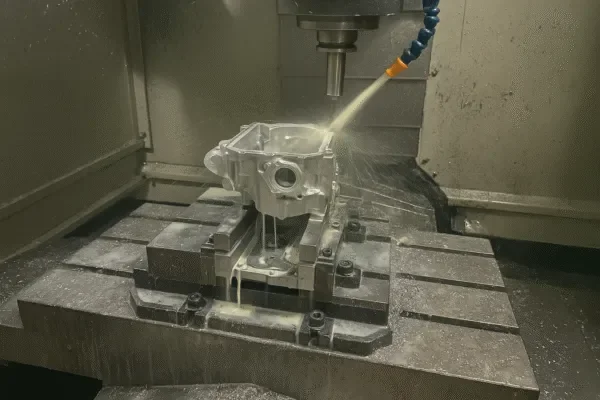
Today I see China less as a low-cost source and more as a deep process base that supports redesign of parts and supply chains.
How do cost and value really compare?
I never compare hourly rates alone. I always look at total landed cost and risk, and I keep design for manufacturability (DFM) in mind whenever I change drawings or processes.
| Cost factor | Local supply impact | China supply impact |
|---|---|---|
| Machining rate | Higher hourly rate | Often lower rate for similar complexity |
| Material utilization | Similar, less pressure to reduce scrap | Strong push to reduce scrap on large volumes |
| Tooling and fixtures | Medium to high | Competitive, often lower on complex fixtures |
| Logistics and duties | Shorter transport, lower freight | Higher freight, but lower piece price |
| Quality risk | Easier visit, less language risk | Needs strong QC system and clear documents |
In many cases, heavy or complex parts become cheaper in China, even after freight and duty. Simple, low volume plates sometimes stay with local shops. So I always run both options before I decide.
For background on how CNC itself drives cost, you can also review how DFM for CNC machining links design choices to cycle time and setups.
How do materials affect CNC cost and performance?
Material choice changes cost, lead time, and risk. So I never leave material decisions only to engineers.
| Material | Typical use case | Cost impact | CNC machining notes |
|---|---|---|---|
| Aluminum | Housings, brackets, covers | Medium, efficient | Fast cutting, ideal for casting plus CNC |
| Carbon steel | Shafts, flanges, structural parts | Medium to high | Needs control of distortion and hardness |
| Stainless steel | Food, medical, outdoor parts | Higher | Tough to cut, high tool wear |
| Brass / Copper | Fittings, connectors, precision inserts | Higher but stable | Excellent machinability, clean surfaces |
| Engineering plastics | Insulators, covers, light parts | Medium | Needs correct clamping and sharp tools |
Many times I move a part from “full solid CNC” to “casting plus CNC” or “forging plus CNC.” Prime supports both CNC machining services and casting parts, so I can test several routes inside one RFQ.
Why does the Chinese industrial base still matter?
China gives me process depth and clustering. In one region, I can find CNC machining, stamping, welding, casting, forging, surface treatment, and even fasteners. This cluster lets me design parts around the best process, not force one process to fit all.
At Prime, the team runs CNC, stamping, welding, and plastics in-house, and works with long-term casting and forging partners nearby. They bring cast or forged blanks back into their CNC lines for precision machining services. So I can design a one-stop chain and still speak with one project owner.
If you want neutral background on CNC itself, you can check the article on computer numerical control. It explains how CNC machines follow programmed tool paths for precise cutting.
For a broader view of manufacturing in general, U.S. readers can also look at the NIST Manufacturing Extension Partnership and Manufacturing.gov, which explain how modern manufacturing ecosystems are supported.
What criteria should I use to evaluate a CNC machining supplier in China?
After thirty years of buying, I never trust nice photos or a quick quote alone. I use a fixed checklist for every CNC machining company in China, no matter who introduces them.
Buyers should evaluate CNC machining suppliers in China by capacity, equipment, quality systems, engineering strength, communication, and one-stop scope. A serious custom CNC parts manufacturer shares real machine lists, ISO certificates, and sample inspection reports. Good suppliers reply quickly, provide DFM feedback, and show how they integrate casting, forging, stamping, and finishing around CNC machining.
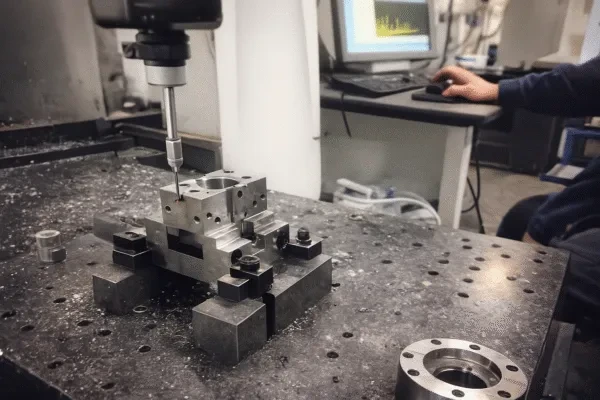
I use this framework on every visit and every video audit.
How do I review capability and equipment?
I first check whether the factory can physically handle my parts.
| Capability area | Questions I always ask |
|---|---|
| Machine list | How many machining centers and lathes run every day? |
| Size range | What is your maximum part envelope and weight? |
| Materials | Which steels, aluminum grades, and plastics do you cut? |
| Tolerances | What tolerance do you hold in volume for similar parts? |
On Prime’s CNC machining service page, I can see machine types and typical parts. I compare those with my drawings before I even request a quote.
If my drawings use geometric dimensioning and tolerancing (GD&T) based on ASME Y14.5, I also ask whether the factory can read those symbols correctly.
How do I confirm the quality system?
Next, I check whether the supplier runs a real quality system, not just a slogan. I care about ISO 9001 because it gives a common language for quality management. You can see the standard summary on the official ISO 9001 page, and review what a quality management system (QMS) actually means for day-to-day operations. For a more general explanation, the QMS overview from ASQ and the QMS article on Wikipedia are also helpful.
When I review a CNC machining supplier in China, I ask for:
- ISO 9001 certificate and expiry date.
- A sample control plan for a similar part.
- Recent full inspection reports, including CMM data.
- A gauge list and the calibration method they use.
Prime explains their method on their own quality control page. For automotive-style projects, they also support PPAP. If your customer uses PPAP, you can first read the overview of the Advanced Product Quality Planning (APQP) framework to align terms inside your team.
Why do engineering and communication matter so much?
A factory may have good machines and ISO, yet still fail because people do not talk clearly. So I test communication before I send big orders.
| Area | What I test |
|---|---|
| Response speed | Do I get clear answers within one working day? |
| Technical clarity | Do engineers ask smart questions about tolerances? |
| Project owner | Do I have one owner and at least one backup contact? |
| One-stop scope | Can they manage casting, forging, finishing, assembly? |
At Prime, I speak with one project engineer who coordinates CNC, stamping parts, casting parts, and plastic parts. This setup saves me from chasing many different people.
If you want a broader view of manufacturing best practices, you can also read the overview from the Society of Manufacturing Engineers (SME) and the Association for Manufacturing Technology (AMT). Their resources explain how modern factories combine technology, process, and people.
What problems do buyers face with CNC suppliers in China, and how can I avoid them?
I have made mistakes with suppliers in many countries, not only in China. The failure patterns repeat almost every time. So now I design those risks out before I sign any purchase order.
Common problems with CNC machining suppliers in China include quality drift after good samples, late shipments, weak export packaging, and slow replies during problems. These issues usually start from unclear RFQs, weak process control, and no real project ownership. Buyers can avoid many of these problems by using clear drawings, FAI or PPAP, fixed packing standards, and written escalation paths.
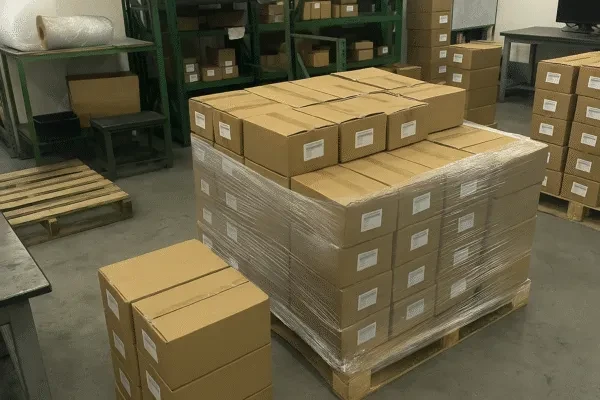
When I started with Prime, I checked each of these risk points before our first order.
What are the most common failure modes?
Here is the simple risk map I now use for every CNC machining supplier in China.
| Problem type | Main cause | My preventive action |
|---|---|---|
| Quality drift | No locked process or tool life control | Fix control plan and tool change rules |
| Late shipments | Overloaded capacity and weak planning | Check capacity, freeze realistic dates |
| Packing damage | Thin cartons or no moisture protection | Define export packing with photos |
| Slow responses | Only one sales contact and no backup | Ask for project owner and backup engineer |
Prime shared their internal control plans and packing photos before the first container. That step gave me more confidence than any price discount.
For acceptance sampling, I also align with Acceptable Quality Limit (AQL) standards so both sides know how pre-shipment inspection will work.
How do I protect quality over time?
I do not care only about first samples. I care about month twelve and year five. So I ask how the supplier locks process after approval.
For many projects, I require First Article Inspection (FAI) style checks up front, even if the parts are not aerospace. That gives a structured baseline for later audits.
At Prime, we agreed to:
- Lock CNC programs, tools, and fixtures after FAI or PPAP.
- Fix inspection frequency for each critical dimension.
- Track scrap and issues inside their internal system.
- Keep retention samples and reports for each lot.
One European project needed PPAP Level 3. Prime prepared drawings with numbered balloons, a control plan, process flow, and capability data. That package matched what my OEM customer expected and passed their audit.
How do I secure packing, labels, and after-sales support?
Bad packing once cost me an entire selling season. Now I never skip this topic. I treat packing as part of the product.
| Topic | What I request from any CNC supplier in China |
|---|---|
| Inner packs | PE bags, VCI bags, dividers, or foam trays |
| Cartons | Specific wall thickness and maximum box weight |
| Pallets | Fixed pallet size, wrap type, and corner protection |
| Labels | Layout with logo, part number, quantity, barcodes |
| After-sales | Clear rules for NG parts and complaint handling |
With Prime, we also agreed on basic after-sales rules. For confirmed quality issues, they send 8D-style reports, propose rework or replacement, and support third-party inspection when needed. If you are new to the method, you can review ASQ’s summary of the Eight Disciplines (8D) problem-solving process or the 8D article on Wikipedia. This clarity helps me sleep much better.
What should my CNC RFQ to a supplier in China include?
Many RFQs I see in my own company are too simple. They have only a drawing and a quantity. Suppliers then guess many details, and later everyone argues about these guesses.
A complete RFQ for a CNC machining supplier in China should include drawings, 3D models, materials, finishes, tolerances, and quantity. It should also define quality level, packing rules, logistics terms, and any casting, forging, or stamping steps before machining. A structured RFQ helps each CNC machining company quote accurately and reduces future disputes.
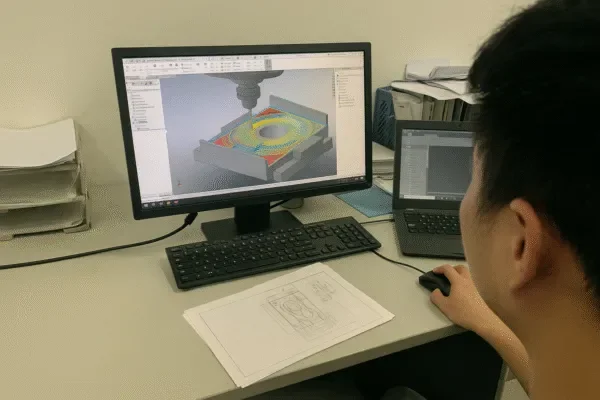
Now, when I send RFQs to Prime or any other supplier, I follow a fixed template.
What should I put in the technical package?
I always collect all technical details in one folder. So the CNC supplier does not guess.
| RFQ section | Items I include |
|---|---|
| Drawings | 2D drawings with full dimensions and tolerances |
| 3D models | STEP or IGES files, plus a quick PDF |
| Material | Exact grade, standard, and hardness if needed |
| Finish | Anodizing, plating, coating, or painting requirements |
| Critical areas | Marked faces, bores, or threads with extra notes |
If drawings use GD&T, I make sure both sides follow ASME Y14.5 rules consistently.
Prime often suggests whether full CNC, casting plus CNC, or forging plus CNC suits each part best. That feedback helps me improve both cost and quality before we cut any metal.
What commercial, quality, and payment details should I define?
I also describe how we will buy and how we will judge quality.
- Annual volume and realistic batch sizes.
- Sample and mass production lead time targets.
- AQL levels or PPAP levels if required.
- Needed reports like material certificates and CMM data.
- Preferred payment terms and options.
Here is how I usually frame cost and payment topics:
| Item | How I discuss it with suppliers |
|---|---|
| Unit price | Separate machining and finishing if possible |
| Tooling / fixtures | State if cost spreads or sits as one-time charge |
| Sample cost | Ask if it can offset future orders |
| Third-party inspection | Clarify who pays when we need it |
| Payment terms | Start with T/T 30/70, then review after trust |
Prime stayed flexible on small trial batches and sample charges. That flexibility made my internal approval process easier.
How do I cover packing, logistics, and one-stop scope?
Finally, I describe what happens after machining. Many cost and risk points sit here.
| Area | RFQ details I always include |
|---|---|
| Logistics | Incoterm, port, and shipping mode |
| Packing | Carton size, inner bags, pallets, and label rules |
| Process scope | Need for casting, forging, stamping, welding, or assembly |
| Finishing | Anodizing, zinc plating, powder coating, or other finishes |
When I define trade terms, I check the official Incoterms® 2020 rules from ICC and the practical Incoterms overview from U.S. Trade.gov so our contracts use the right wording.
I often send mixed RFQs that include CNC parts, casting parts, stamping parts, and even plastic parts. Prime can quote these as one set, which reduces my supplier count and improves my overall control. For complex finishing requirements, I also reference their surface treatment service page.
How do pricing, cost structure, and payment terms work with Chinese CNC suppliers?
After three decades in purchasing, I know price always appears first on the agenda. But the structure behind that price decides whether a project really works for everyone.
CNC pricing from China usually includes machining cost, raw material, finishing, packing, and sometimes tooling. Buyers should ask suppliers to separate key cost elements and clarify sample fees, tooling charges, and third-party inspection costs. Payment terms often start with deposits and balances before shipment but can improve as trust grows. Transparent cost structure and fair payment terms support long-term cooperation.
I no longer accept quotes that show only one number without breakdown.
How do I read and compare CNC quotes?
I like to see a simple cost breakdown sheet.
| Cost element | Why it matters |
|---|---|
| Machining cost | Shows impact of cycle time and complexity |
| Material cost | Helps compare different grades and blank types |
| Finishing cost | Reveals effect of coating or plating choices |
| Tooling / fixtures | Tells me how much startup cost I carry |
| Packing cost | Confirms if export-grade packing sits inside price |
Prime often shows separate lines for machining, casting or forging, finishing, and packing. That structure lets me redesign parts for better profit instead of asking only for discounts.
What payment terms and trade rules do I discuss?
I always try to keep payment and risk balanced for both sides.
Common patterns I use include:
- For first orders: T/T 30% deposit, 70% against shipping documents.
- For repeat orders with good records: more flexible terms by agreement.
- For big projects: clear credit limits and delivery commitments in writing.
I also align payment with milestones like FAI approval and shipment readiness. With Prime, we started with standard terms and then adjusted after several successful deliveries and on-time shipments.
For teams that are new to international trade, guides like the Incoterms® rules overview or independent explainers such as this 2020 Incoterms guide can be useful training material.
How does Prime manage CNC machining projects from RFQ to mass production?
When I move work to a new CNC machining supplier in China, I want a clear project map. I do not want to chase updates every week or guess status.
Prime manages CNC machining projects with a fixed workflow from RFQ to shipment. They review drawings, suggest process routes, and often combine CNC machining with casting, forging, or stamping. Their ISO-based quality system defines control plans before cutting metal. They then support FAI or PPAP, lock the process, and plan capacity across their production lines to protect delivery dates.
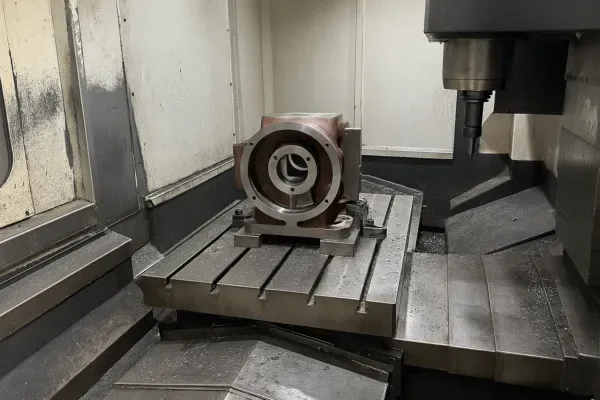
This structure matches the project methods I see from many OEM customers and industry groups such as SME and AMT.
What project stages do I see in a real Prime project?
We follow a simple, visible flow that my team understands easily.
| Stage | What Prime does |
|---|---|
| RFQ and DFM | Review drawings, suggest process and material options |
| Quotation | Give detailed prices, tooling, and lead time |
| Sampling and FAI / PPAP | Produce samples, run full inspection, share reports |
| Pilot and mass | Run controlled lots under locked process parameters |
| Packing and shipment | Pack as agreed and ship with all documents |
This flow lines up with ISO 9001 ideas for process control and PPAP for part approval. At the same time, Prime keeps the language and steps clear for busy buyers like me.
How do they use one-stop capability in real projects?
Here is one case from my own work with Prime. A customer needed a steel housing with tight bores and a coated exterior.
- I sent a drawing that assumed full CNC from solid bar stock.
- Prime proposed “casting plus CNC plus coating” as an alternative.
- Their casting partner produced rough blanks to a controlled drawing.
- Prime machined all critical faces and bores on their CNC lines.
- Their finishing partner coated parts, and Prime packed them with matching CNC components.
The result for my business:
- Piece cost dropped by around twenty to twenty-five percent.
- Lead time stayed stable after the first two lots.
- Complaint rate dropped to zero after we locked the control plan.
This kind of one-stop design is why I now keep Prime as a core CNC machining supplier in China. If you want to see their cross-process approach, you can browse their casting parts, stamping parts, plastic parts, and surface treatment pages.
How do they keep me informed from start to finish?
I ask for simple, regular communication. Prime now gives me:
- One project engineer and one backup contact for each project.
- Weekly timing updates for all open orders.
- Photo reports from machining, finishing, and packing stages.
- Access to inspection data before shipments leave the plant.
We also review KPI data together every few months. We talk about on-time delivery, PPM, and new cost-down ideas. This rhythm feels very close to the best practices promoted by Manufacturing USA and the NIST Office of Advanced Manufacturing for long-term supplier relationships.
How can I get a CNC machining quote from China in three simple steps?
I know busy buyers do not want a long, unclear quote process. So I now use one simple three-step path when I work with Prime or any serious CNC machining company in China.
Buyers can get a CNC machining quote from China in three steps. First, prepare a clear RFQ with drawings, materials, finishes, and quantities. Second, send files to a one-stop CNC machining supplier in China and review their DFM suggestions. Third, compare the structured quote, confirm terms, and approve sampling under clear quality and packing rules.
This method saves me time and removes many email loops.
Step 1: Prepare and upload my drawings
I collect:
- 2D drawings and 3D models.
- Material, finish, and tolerance requirements.
- Volume plan and target delivery dates.
- Notes on casting, forging, stamping, or welding if needed.
Then I upload these files through the Prime contact and RFQ page. I mention whether I need only FAI or a full PPAP set, so the team can plan documents.
For teams building their first RFQ workflows, resources on DFM and GD&T can help standardize internal drawing practices before you approach suppliers.
Step 2: Review DFM suggestions and quotation
Prime’s engineers then review my RFQ and propose process options.
| Option | When they suggest it |
|---|---|
| Full CNC machining | Low volume, frequent changes, or simple shapes |
| Casting plus CNC | Complex, heavy parts with stable yearly volume |
| Forging plus CNC | High strength parts like shafts and brackets |
| Stamping plus CNC | Plate parts that need tight holes or countersinks |
They send a quote that separates machining, casting or forging, finishing, and packing. They also show expected sample and mass lead times. This level of detail helps me build a business case for management.
Step 3: Approve, sample, and lock the process
If I accept the quote, we move to sampling.
- Prime prepares CNC programs, fixtures, and tooling.
- They run samples and complete full inspections.
- They pack parts to the agreed export standard.
When I approve samples and reports, they lock process parameters and packing rules. We then move to repeat orders with stable timing and clear expectations.
You can start this same three-step path now by using the Upload RFQ / Contact Prime form on their contact page. You only need to attach your drawings and basic RFQ details.
FAQs about working with a CNC machining supplier in China in 2025?
Even with thirty years of experience, I still ask many questions when I add a new supplier. These FAQs reflect the topics I hear most inside buyer teams that look for a stable CNC machining supplier in China.
These FAQs cover lead time, tolerances, process choice, MOQ, safety, IP protection, and problem handling. They help buyers understand how to work with CNC machining suppliers in China and how Prime handles common concerns from overseas OEMs and distributors.
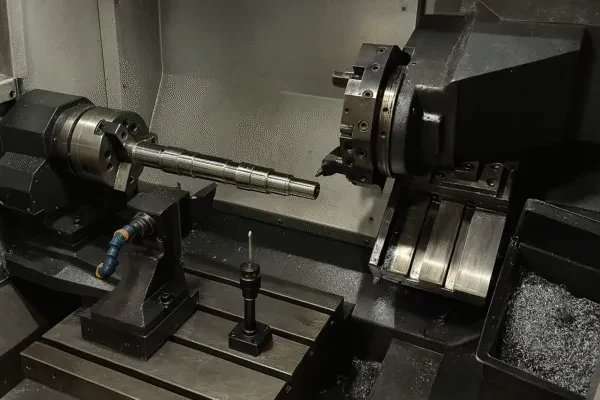
You can keep this section as a quick checklist when you speak with your own colleagues.
How long do precision machining services from China usually take?
Lead time depends on complexity and volume, but these patterns match what I see most often.
| Stage | Typical timing with a prepared RFQ |
|---|---|
| DFM and quotation | 2–5 working days |
| Samples / FAI | 7–20 days, longer if casting or forging involved |
| First mass order | 25–45 days, including finishing and export packing |
| Repeat orders | Often shorter once tools and gauges are ready |
When I share forecasts, Prime reserves capacity on their production lines. That planning keeps my on-time delivery rate high and reduces end-of-quarter stress.
What tolerances can a Chinese CNC machining company hold?
Tolerances depend on design, size, fixturing, and material. But these ranges match what I see in stable production.
| Feature type | Common realistic tolerance range |
|---|---|
| General machined faces | ±0.05 mm |
| Critical diameters | ±0.01–0.02 mm with proper setup |
| Precision bores | ±0.005–0.01 mm with fine boring |
| Flatness / parallelism | Size dependent, often under 0.02 mm |
For more background on CNC, you can read the article on computer numerical control. I always ask Prime to confirm what they can hold in stable volume, not only in one sample batch.
Is it safe to buy CNC machined parts from China?
In my view, it is safe when I treat the project as a controlled process, not just a cheap purchase.
I reduce risk by:
- Auditing at least one factory or using a detailed video walk-through.
- Working only with suppliers who hold valid ISO 9001 certificates.
- Starting with one or two pilot items and tracking PPM closely.
- Using clear RFQs and written quality agreements for key parts.
To understand how structured programs support manufacturers, you can also look at the U.S. NIST MEP National Network for examples of best practices in supplier development and risk reduction.
What is the minimum order quantity (MOQ) for CNC machining?
MOQ depends on part type and process choice.
- Full CNC parts can start with very small batches.
- Casting plus CNC or forging plus CNC needs higher volumes.
- Mixed orders with many part numbers can share one shipment.
For trials, Prime accepted small lots so I could test quality and logistics. Once projects proved stable, we moved to more economic batch sizes that matched my sales patterns.
How do I choose between CNC machining, casting, and forging?
I use a simple rule-set whenever I review a new drawing.
| Process | Best for | Notes |
|---|---|---|
| Full CNC machining | Small batches and frequent design changes | Higher material waste but maximum flexibility |
| Casting plus CNC | Complex shapes with stable yearly volume | Good cost and strong design freedom |
| Forging plus CNC | High strength, safety critical parts | Best grain flow and fatigue resistance |
Prime often runs cost and risk comparisons for my drawings. I then choose the route that protects both margin and reliability for my customer.
How do I protect my drawings and IP with a CNC supplier in China?
I treat drawings and models like cash. I never share them without structure and clear rules.
I always:
- Sign non-disclosure agreements (NDAs) that name my company and the supplier.
- Use my own part numbers, not end-customer names.
- Limit drawing access inside my own team as well.
If your team is new to IP basics, articles such as “Does an NDA Cover Intellectual Property Rights?” or NCSes’ report on NDAs and IP protection help explain why confidentiality and IP management go together.
Prime also manages documents under their ISO-based control system. That structure helps protect drawing versions and access rights at both sides.
How does Prime handle quality problems or delays?
Problems sometimes happen with any supplier. I focus on how they react and how quickly they stabilize the issue.
With Prime, we agreed that:
- They reply within twenty-four hours when I raise any claim.
- They send a short interim action plan within forty-eight hours.
- They follow up with a full 8D-style report in an agreed time frame.
- They propose rework, replacement, or credit based on clear data.
For delays, they share early warnings and new dates, and they help adjust shipment plans and split loads when needed. This behavior matters more to me than perfect marketing messages, and it lines up well with the 8D corrective action guidance used in industry.
Conclusion
A clear RFQ, a structured evaluation, and a one-stop CNC machining supplier in China let you protect quality, delivery, and profit at the same time.
Upload RFQ or Contact Prime now to share your drawings, get a free DFM review, receive a detailed CNC machining quote within a short time, and see how a one-stop machining, casting, and finishing team can support your next project.