

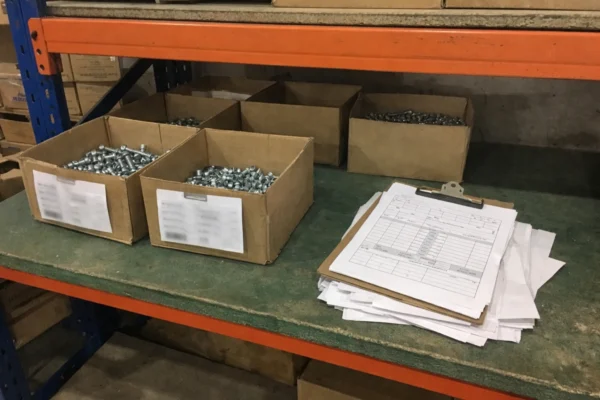
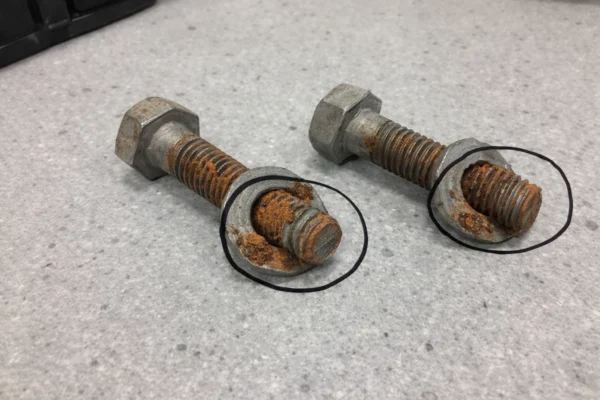
I see buyers pick coatings by salt-spray hours. Then the joint still loosens or rusts at the washer line. So I wrote this guide from a buyer’s risk view.
Zinc plating fits light duty and indoor use, but you must manage hydrogen embrittlement and torque scatter. Salt spray alone is not a joint spec. Zinc flake systems like Geomet or Dacromet fit outdoor and chassis use, yet you must lock friction class to protect clamp load. Black oxide helps assembly feel, but it needs oil and dry service to avoid rust.
If you want fewer claims, you need a repeatable coating spec. So I will show what I ask suppliers to prove. And I will show what I document at Prime under our ISO 9001 system.
Why do salt-spray hours fail to predict joint rust and loosening?
I once reviewed a 720-hour salt spray spec. Yet the field parts rusted in six months. So I now start from the joint stack, not the test hours.
Salt spray tests like NSS help compare coatings, but they do not model crevice water at washer lines. Joint loosening also comes from friction scatter, not only corrosion. So you must specify friction targets and verify torque–tension behavior.
H3: What salt spray really tells you
Salt spray is a screen, not a guarantee. So I treat it as one input. I align it with the real environment and design.
| Test / reference | What it helps you compare | What it does not prove |
|---|---|---|
| Neutral salt spray (NSS) per ISO 9227 | Coating ranking in a controlled cabinet | Field crevice corrosion at washer lines |
| Salt spray practice per ASTM B117 | Repeatable lab exposure method | Real cyclic wet/dry, mud, fertilizer, UV |
| Torque/clamp force test per ISO 16047 | Torque–tension repeatability window | Long-term relaxation from embedment |
H3: My “washer-line rust” checklist
I check the “washer line” first. Then I check edge coverage and top coat. And I check if the supplier controls friction.
- Washer type, hardness, and coating match
- Bearing surface roughness and paint thickness
- Coating edge coverage and cut-thread behavior
- Top coat or sealer consistency
- Torque–tension data and friction window
H3: What I require from a supplier file
I do not accept “meets 720h” alone. So I request a full coating control pack. And I keep it in a PPAP-style folder.
| Document | What I look for | Why it matters |
|---|---|---|
| Control plan (coating line) | Bath checks, cure temp, dry film checks | Prevents drift week to week |
| Torque–tension report | μ window, sample size, lots | Protects clamp load |
| Salt spray report | Method, panels, rating method | Confirms baseline corrosion |
| Thickness report | Range, min/max by location | Avoids thread gauge issues |
| Restricted substances | RoHS, REACH statements | Avoids customs and compliance risk |
At Prime, we store these under our Quality Inspection workflow. So I can trace lots, dates, and process windows. And I can answer buyer audits fast.
When should I choose zinc plating for fasteners?
Many buyers default to zinc. That can work, but only in the right duty. So I define zinc as “indoor or mild outdoor.”
Zinc plating is best for indoor or light-duty use where cost matters. But you must manage hydrogen embrittlement risk on high-strength bolts and control sealers or lubricants to reduce torque scatter.
H3: Zinc plating buyer rulebook
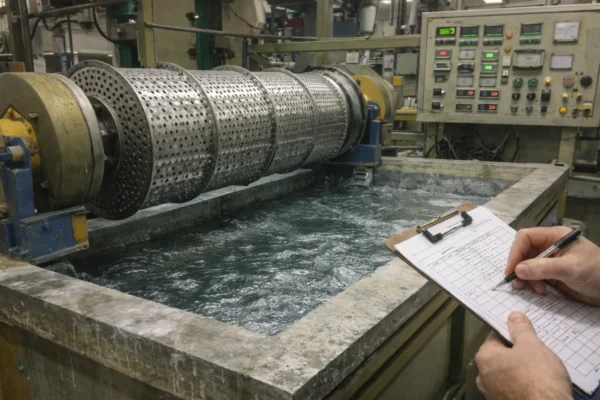
I use zinc when the environment is controlled. And I avoid it for harsh cyclic salt. I also watch aluminum contact.
| Use case | Zinc plating fit | Buyer note |
|---|---|---|
| Indoor machinery | Yes | Low cost, fast lead time |
| Sheltered outdoor | Sometimes | Add trivalent passivation + sealer |
| Chassis / underbody | Often no | Prefer zinc flake for edges |
| Aluminum mating parts | Risk | Manage galvanic couples and sealers |
H3: Hydrogen embrittlement and high-strength bolts
This is the silent failure. So I never “assume it is fine.” I require process proof for grades 10.9+.
| Risk item | What I specify | Standard reference |
|---|---|---|
| High-strength steel | Identify property class per ISO 898-1 | Mechanical baseline |
| HE prevention | Pretreatment and process controls | ISO 24251-1 |
| Electroplated fasteners | Coating system + HE guidance | ISO 4042 |
H3: Torque scatter is the real zinc problem
Corrosion is visible. But clamp loss is costly and hidden. So I lock friction in writing.
| Zinc variable | What changes | What I ask Prime to control |
|---|---|---|
| Passivation type | Corrosion and friction | Same chemistry by lot |
| Sealer / top coat | Big friction swing | Same supplier and viscosity checks |
| Added lube | Assembly feel | Mass per part target |
| Thickness | Thread fit | Gauge plan and min/max |
For zinc, I also link coating work to our Surface Treatment controls. So buyers see one owner for process + inspection. And they avoid hand-offs between factories.
When should I choose Geomet or Dacromet zinc flake coatings?
Buyers like “more hours” here. But I care more about edges and friction. So I treat zinc flake as a system, not a label.
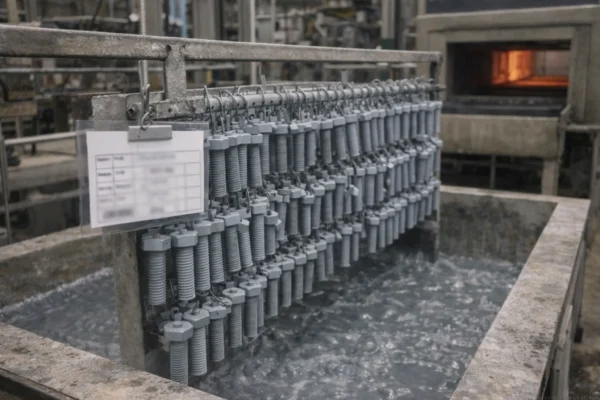
Geomet and Dacromet zinc flake coatings fit outdoor, chassis, and high-edge-risk parts. They offer better edge coverage and less galvanic headache with aluminum, but you must specify friction class or clamp load can drift.
H3: Geomet vs Dacromet in buyer terms
Both are zinc flake families. So I focus on performance windows. And I ask the supplier to name the exact system.
| Item | Geomet (typical) | Dacromet (typical) | Buyer action |
|---|---|---|---|
| System family | Zinc flake + top coat options | Zinc flake + legacy variants | Specify approved brand/system |
| Edge coverage | Strong | Strong | Verify on cut edges |
| Friction behavior | Needs class control | Needs class control | Lock μ range + testing |
| Aluminum pairing | Often better than zinc | Often better than zinc | Confirm galvanic plan |
H3: The spec line that prevents clamp-load drift
I always add a friction line. Because “flake coating” alone is vague. So I require torque–tension data per lot.
| Spec line | Example you can copy | Why it works |
|---|---|---|
| Friction window | μ = 0.12–0.18, tested per ISO 16047 | Reduces torque scatter |
| Coating family standard | Zinc flake per ISO 10683 | Aligns to fastener coating rules |
| Salt spray method | NSS per ISO 9227 | Defines cabinet method |
H3: What I audit on the factory floor
I look at cure control first. Then I look at film build and top coat. And I check lot traceability.
- Dip-spin viscosity checks and pot life logs
- Cure oven profile records
- Film thickness plan and sampling points
- Thread gauge checks after cure
- Lot labels that match packing list
At Prime, we tag lots from coating to packing. So we can support PPAP and containment fast. And we can share a buyer-ready pack on request.
When should I choose black oxide for fasteners?
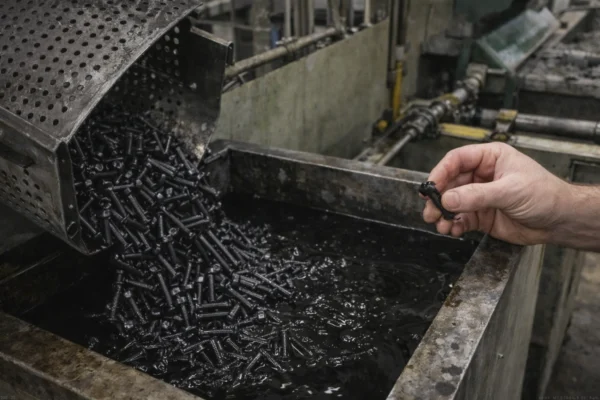
Black oxide looks “clean.” So buyers think it protects like plating. But it does not, unless oil and dry service are real.
Black oxide is assembly-friendly and helps thread gauging and feel. But it offers minimal corrosion protection, so use it only with oil, dry indoor storage, and strict process control.
H3: Where black oxide truly fits
I use it for indoor assemblies. And I use it when thread feel matters. But I avoid it for outdoor exposure.
| Use case | Black oxide fit | Buyer note |
|---|---|---|
| Dry indoor machinery | Yes | Add oil film requirement |
| Tooling and jigs | Yes | Good fit and feel |
| Outdoor equipment | No | Rust risk is high |
| Marine / coastal | No | Choose flake or better system |
H3: The “oil film” clause buyers forget
Oil choice changes rust risk. So I specify storage and packaging too. And I require clean thread gauging.
| Item | What I specify | What it prevents |
|---|---|---|
| Oil type / film | Light rust preventive oil, defined | Dry spots and flash rust |
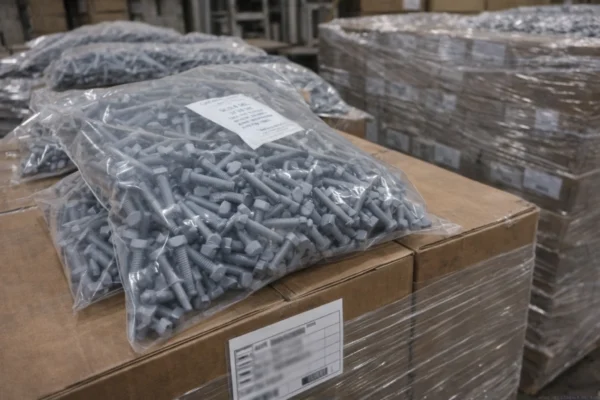
| Packaging | VCI + sealed bag where needed | Warehouse corrosion |
| Thread gauging | Go/No-Go after finish | Assembly jams |
My 5-minute fastener coating selection checklist
I use this before I quote any coating. So I do not waste time on wrong options. And I align engineers and buyers fast.
- Service environment and wet/dry cycle
- Joint stack and washer-line risk
- Bolt property class and HE risk
- Required friction window and torque method
- Thread gauge impact and thickness limits
- Compliance needs: RoHS / REACH
- Packaging and shipment conditions
FAQs
Q1: What is the difference between Geomet and Dacromet?
Geomet and Dacromet are zinc flake coating families. So performance depends on the exact system and top coat. You should specify ISO 10683 plus a friction window.
Q2: Is zinc plating good for outdoor fasteners?
Zinc plating can work in mild outdoor zones. But it struggles with edges and crevices. So I prefer zinc flake for chassis and harsh cycles.
Q3: Does black oxide prevent rust?
Black oxide alone does not prevent rust well. It needs oil and dry service. So I use it mainly for indoor assemblies.
Q4: How do I control torque scatter with coatings?
Torque scatter comes from friction variation. So I lock μ targets and verify per ISO 16047. I also control sealers and lube mass.
Q5: What should I ask for in a PPAP for coated fasteners?
I ask for a control plan, MSA, and test reports. I also ask for torque–tension and thickness data. For PPAP structure, I reference AIAG PPAP-4.
Q6: How do I reduce hydrogen embrittlement risk on plated bolts?
I start by confirming the bolt class per ISO 898-1. Then I align prevention guidance to ISO 24251-1. And I require the coating system rules in ISO 4042.
Q7: Which coating is safest when fasteners touch aluminum?
Galvanic risk depends on the full stack. But zinc flake often reduces headaches versus bare zinc. So I still require joint review and field condition notes.
Conclusion
Pick coatings by joint risk, not hours. Control friction, HE risk, and packaging. Then your field failures drop.
Ready to eliminate field rust, torque scatter, and late deliveries?
Send your drawing, environment notes, and assembly torque method. We will return a coating recommendation and a buyer-ready spec pack. We also support PPAP-style documents and stable lead times from our 10 production lines.
Upload RFQ / Contact Prime Reference supplier: stamped edges and sheet metal context