
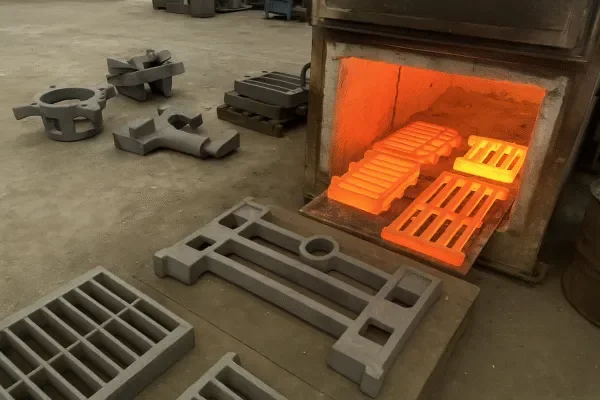
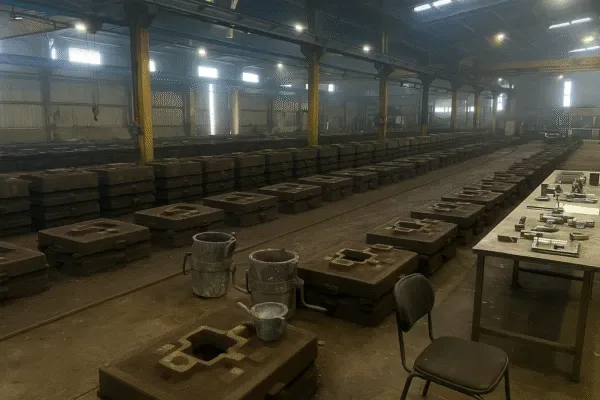
High temperature parts often fail early, so you feel strong pressure when you choose casting grades.
The main difference between 1.4823 and 1.4743 heat resistant steel casting lies in application temperature and wear resistance. 1.4823 is an austenitic heat resistant stainless steel casting grade for very hot gas zones up to about 1100°C. 1.4743 is a high carbon chromium steel casting grade for hot wear zones up to about 900°C with solids and ash. Engineers and buyers choose between these grades based on service temperature, atmosphere, load, and required lifetime.
I am Liang, a senior casting engineer at Prime, and I have worked on heat resistant castings for many years. I talk every week with buyers and engineers who live with furnace performance, not just with datasheets. In this article I share how I really compare 1.4823 and 1.4743, how I see failures, and how we design solutions at our ISO certified factory. You can use this guide as a buying tool before you upload your RFQ to Prime.
What Is Heat Resistant Stainless Steel Casting and Why Does Grade Choice Matter?
Many drawings only say “heat resistant steel” or “heat resistant stainless steel casting”. You then see warped grids and cracked grate bars after a few months. So the term sounds right, but the result looks wrong. I always start with a clear definition that links material choice to real furnace conditions.
Heat resistant stainless steel casting means cast steel grades that keep strength and resist scaling above about 600°C. These alloys use chromium and silicon to form a protective oxide layer and often use nickel to support an austenitic matrix. In EN type systems, 1.4823 and 1.4743 belong to this family. 1.4823 suits very hot oxidizing gas zones, while 1.4743 suits hot wear zones that see solids, ash, or bed material.

I explain heat resistant steel in three simple points when I speak with buyers. First, the steel must carry load at high temperature, so creep and distortion stay under control. Second, the surface must resist scaling, so section loss stays low over many cycles. Third, the structure must survive real plant handling and thermal shock. For basic background on stainless steels you can read the neutral overview on Wikipedia’s stainless steel page, then you can return to this page for casting and buying details.
Composition and property comparison for 1.4823 and 1.4743
I always look at chemistry first, because composition drives microstructure and service window. The table below uses typical EN 10295 data for both grades.
| Parameter | 1.4823 heat resistant steel casting | 1.4743 casting | Effect in service |
|---|---|---|---|
| EN name | GX40CrNiSi27-4 | GX160CrSi18 | Both are heat resistant steel castings |
| Carbon C % | 0.30–0.50 | 1.40–1.80 | Higher carbon gives more carbides and hardness |
| Chromium Cr % | 25–28 | 17–19 | Chromium supports oxidation resistance |
| Nickel Ni % | 3.0–6.0 | ≤1.0 | Nickel supports austenite and toughness |
| Silicon Si % | 1.0–2.5 | 1.0–2.5 | Silicon boosts scale resistance |
| Typical tensile strength MPa | about 500–600 | about 650–800 | 1.4743 often shows higher room strength |
| Typical hardness HB | about 180–220 | about 220–260 or higher | 1.4743 gives better hot wear surfaces |
| Typical service temp in air °C | up to about 1050–1100 | up to about 850–900 | 1.4823 suits hotter gas zones |
You can see a clear trade off. 1.4823 heat resistant steel casting uses nickel and high chromium, so it keeps an austenitic matrix at very high temperature. 1.4743 casting uses much higher carbon and less nickel, so it forms more carbides and behaves closer to a high chromium cast iron. When you share your working temperature and load data, I can quickly suggest whether 1.4823 castings or 1.4743 castings fit better.
Where Do 1.4823 and 1.4743 Castings Work Best in Real Furnaces?
Datasheets help, but you still need to place each grade inside real equipment. Many lines use one “safe” alloy everywhere, and you then pay extra or accept hidden risk. So I walk through the furnace or incinerator zone by zone and map grade to position.
Engineers use 1.4823 heat resistant steel casting for the hottest, most oxidizing zones. Typical parts include furnace grids, hangers, radiant tube components, and burner nozzles. They use 1.4743 casting for hot wear zones with solids and ash, such as grate bars, side plates, ash paddles, and kiln wear blocks. Both alloys can support heat treatment fixtures, but 1.4823 fits higher gas temperature windows.
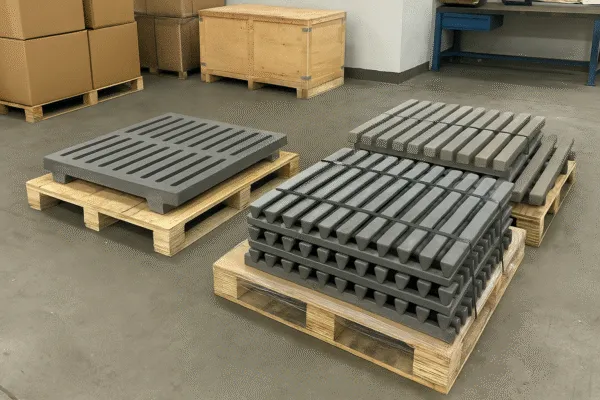
In our daily work at Prime, we see these alloys repeat in similar applications again and again. The table below summarizes typical uses.
| Industry or process | Typical parts | Preferred grade | Main reason |
|---|---|---|---|
| Annealing and heat treatment lines | Grids, fixtures, baskets, rollers | Mostly 1.4823 | High gas temperature and creep load |
| Waste and biomass incineration | Grate bars, side plates, wear blocks | Mostly 1.4743 | Hot abrasion and impact |
| Tunnel and shuttle kilns | Rails, skid blocks, car supports | 1.4823 or 1.4743 | Mix of temperature and wear |
| Petrochemical heaters | Burner tiles, nozzles, brackets | Mostly 1.4823 | Oxidation and thermal cycling |
| Powder metallurgy and ceramics | Kiln furniture, trays, frames | 1.4823 for hot zones, 1.4743 downstream | Temperature gradient along the line |
If you also need precision machined supports or brackets around these hot zones, you can source them together. Our CNC machined metal parts often bolt directly to these castings, so one supplier covers the whole assembly.
How I match grade to temperature and atmosphere
When we design a new part together, I first ask for a simple line sketch. Then we mark gas temperature, expected metal temperature, atmosphere type, and cycle pattern. If the part runs in air or flue gas near 1050–1100°C, I almost always choose 1.4823 heat resistant steel casting. If the part sees hot solids at 750–900°C, like bed material or ash, I usually pick 1.4743 casting.
I also ask about start and stop patterns. Faster cycles and quenching raise thermal fatigue risk, so 1.4823 with its austenitic matrix handles those moves better. This zone by zone mapping rarely takes long, but it prevents many surprises later on your line.
What Casting Challenges Come With These High Temperature Steels?
High alloy grades look strong on paper, but they punish loose foundry practice. I have seen first trial lots from inexperienced shops full of hot tears and shrinkage. Buyers then lose trust in the grade instead of improving the process. So I want you to see where the real risks sit and how we control them at Prime.
1.4823 and 1.4743 belong to high alloy heat resistant steel casting grades, so they need tight melting, feeding, and heat treatment control. High chromium and silicon raise liquidus temperature and increase hot cracking risk. High carbon in 1.4743 encourages carbide networks in thick sections. 1.4823 heat resistant steel casting needs clean deoxidation and controlled heat treatment to avoid gas porosity, distortion, and residual stress.
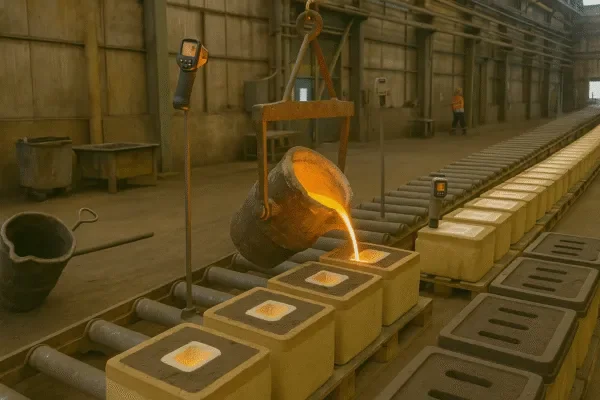
When we melt these alloys, carbon and chromium quickly form carbides. In 1.4743 casting, high carbon pushes many carbides to grain boundaries, especially in heavy sections. So I ask our pattern team to avoid sharp corners and sudden section changes in these parts. For 1.4823 heat resistant steel casting, the nickel rich austenitic matrix improves toughness, but it also holds gas more easily if practice stays weak.
Typical defects and controls for 1.4823 and 1.4743 castings
I share this simple defect matrix with new engineers in our plant, and buyers also find it helpful.
| Defect or risk | Main cause | Control action |
|---|---|---|
| Hot tears at ribs | High restraint and poor feeding | Add fillets, adjust gating, and control cooling rate |
| Center shrinkage in hubs | Late feeding or undersized risers | Use simulation and larger risers |
| Carbide networks in 1.4743 | Very slow cooling in thick sections | Limit section size or change mold material |
| Gas porosity in 1.4823 | Poor deoxidation or wet molds | Improve ladle practice and mold drying |
| Machining cracks | Residual stress after heat treatment | Use fixtures and controlled furnace cooling |
We run casting simulation for all new heat resistant stainless steel casting jobs, not only for very large parts. So we see feeding behavior and hot spots on the screen instead of guessing at the melting floor. This reduces weld repairs and scrap in PPAP and series runs.
After casting and cleaning, we send parts to heat treatment. Our quality system follows the ISO 9001 quality management standard, so we record furnace curves and keep traceable data. If you work in automotive or similar sectors, we can also prepare PPAP style documents, including process flow, control plan, and dimensional results. That way your auditors see a clear system behind each 1.4823 or 1.4743 casting.
How Should You Choose a Supplier for 1.4823 and 1.4743 Castings?
You now understand the materials, but supplier choice still decides real success. Many foundries say “yes” to these alloys but pour them only once in a while. You need a partner who lives with heat resistant casting every month, not once a year.
A strong supplier for 1.4823 heat resistant steel casting and 1.4743 casting combines alloy experience, ISO based systems, and clear process control. Buyers should check grade history, simulation practice, heat treatment capacity, machining, NDT, export packing, and documentation support. They should also confirm whether the supplier can provide PPAP style packages and respond quickly during shutdown windows.
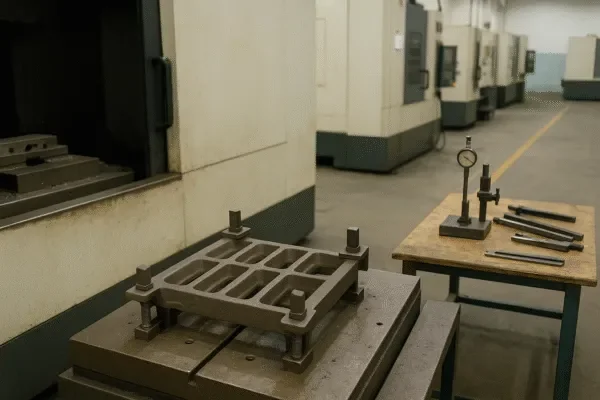
When I introduce Prime to new buyers, I walk through a simple checklist. You can use the same list with any supplier and compare answers.
| Check point | Questions you ask | How we answer at Prime |
|---|---|---|
| Alloy experience | How many 1.4823 and 1.4743 jobs per year? | We cast heat resistant alloys for more than twenty years |
| Quality system | Which quality standard guides your system? | We run an ISO 9001 based QMS with documented procedures |
| Engineering support | Who reviews drawings and runs simulations? | Our in house engineers own designs and simulations |
| Heat treatment | What furnaces and controls do you use? | We use calibrated furnaces with recorded data |
| PPAP and documentation | Can you supply PPAP or similar packages? | We provide PPAP style files when customers request them |
| Machining and assembly | Can you deliver fully machined assemblies? | We integrate CNC machining, welding, and finishing |
| Export logistics | How do you pack and ship castings to my region? | We design export crates and use stable forwarders |
For global steel context and neutral statistics, many of our customers watch the World Steel Association. That site gives a macro view, while this page gives you a micro view focused on 1.4823 and 1.4743 castings for your own lines.
We also support broader industrial hardware supply. You can see more on our heat resistant steel casting overview and related metal stamping parts. Many buyers prefer one partner for castings, stampings, CNC parts, and fasteners to simplify supplier management.
Cost drivers for high temperature steel casting projects
Price always matters, but it should follow technical decisions, not lead them blindly. I stay open about cost drivers, so you can adjust early and avoid last minute surprises.
| Cost factor | Impact on price | How you can optimize |
|---|---|---|
| Alloy level and grade choice | Higher alloy content costs more | Match grade to real temperature and atmosphere |
| Casting weight and geometry | Heavier parts cost more | Remove dead mass and avoid very thick hubs |
| Tolerances and machining | Tight tolerances raise machining time | Use tight tolerances only where function needs them |
| Tooling and core complexity | Complex cores raise tooling cost | Simplify parting lines and core design |
| Inspection and NDT scope | More tests add direct cost | Focus NDT on critical surfaces and welds |
| Lot size and yearly volume | Small lots cost more per piece | Plan yearly demand and batch orders smartly |
During RFQ calls, I often suggest small design tweaks. We may open a radius, move a boss, or merge two parts into one casting. These changes reduce tooling or machining cost. Then you can invest some savings into better alloy choice or stronger inspection where uptime really depends on the part.
As one European maintenance manager told us after a project:
“Prime’s 1.4823 grids changed our furnace uptime. Their engineering support and documentation gave our team real confidence.”
We earned that line after we solved his failure problem, not before.
What Does a Real 1.4823 European Project Look Like?
Stories show how numbers play out on a real line. So I share a project from a European customer. I change names for privacy, but the technical steps and results stay true.
A European steel service center suffered repeated failures on a continuous annealing furnace. Existing support grids used a generic heat resistant stainless alloy and warped under high temperature cycles. Prime proposed redesigned 1.4823 heat resistant steel casting grids with improved rib layout and radii. After installation, grid life increased several times and unplanned shutdowns dropped sharply.
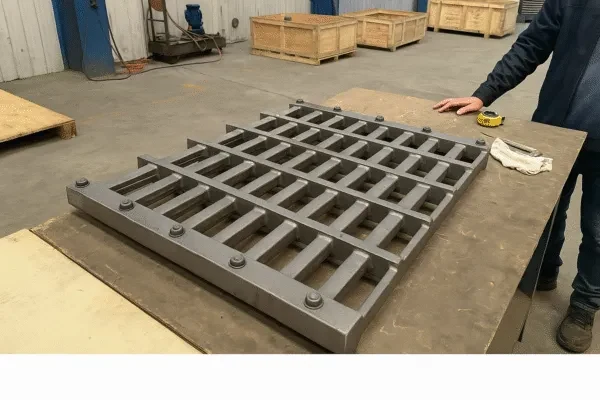
The furnace ran with gas temperatures near 1080°C in the hot zone. Old grids sagged in the center and cracked at corners after a few months. The buyer sent us drawings, temperature logs, and failure photos. Our team reviewed load, span, and supports, then we suggested 1.4823 heat resistant steel casting with thicker beams and smoother junctions.
We ran casting simulation, cut patterns, and poured sample grids on one of our dedicated lines. For approval we followed a PPAP style process with:
- Chemical and mechanical test certificates
- Dimensional reports for all key features
- Microstructure photos from our lab
- Process flow and control plan documents
The table below compares the situation before and after our solution.
| Item | Before change | After Prime 1.4823 solution |
|---|---|---|
| Grid material | Generic heat resistant stainless grade | 1.4823 heat resistant steel casting |
| Average grid life | About 6–8 months | Over 24 months and still running |
| Main failure mode | Sagging and corner cracks | Normal wear with limited distortion |
| Unplanned shutdowns per year | Several | Strongly reduced |
| Documentation level | Basic certificates | Full ISO and PPAP style package |
The buyer told me later that three things convinced his management. First, the technical result and longer life were clear. Second, the ISO and PPAP documentation made internal approval easier. Third, our communication during tooling and shipping reduced risk during their shutdown window. After this, they also asked us to quote 1.4743 grate bars for another site.
How Can You Start an RFQ for Heat Resistant Steel Castings Today?
You now have a clear view of 1.4823 and 1.4743, their risks, and supplier checks. The next step is simple. You prepare a focused RFQ package and send it to Prime. Then we move together from drawings to samples and series.
A strong RFQ for 1.4823 and 1.4743 heat resistant stainless steel casting should include drawings, working temperature, atmosphere, load data, and lifetime targets. It should also define grade, tolerances, machining, NDT scope, packing rules, and yearly volume. With this information, Prime can quickly propose a technical solution, quotation, and delivery plan.
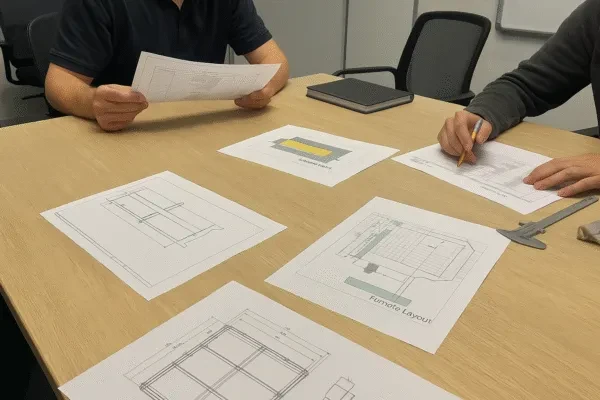
I recommend this simple seven step RFQ flow. Many long term customers follow the same pattern.
| Step | What you send or decide | What we do at Prime |
|---|---|---|
| 1 | 2D drawings and, if possible, 3D models | Review geometry, wall thickness, and critical areas |
| 2 | Working temperature range and atmosphere | Choose grade, often 1.4823 or 1.4743, or propose options |
| 3 | Load case, support points, and lifetime target | Check stress and propose design tweaks if needed |
| 4 | Tolerances, machining, and NDT scope | Plan process route, machining, and inspection |
| 5 | Yearly volume and order pattern | Plan capacity on our ten production lines |
| 6 | Packing rules and destination port | Design export crates and logistics route |
| 7 | Feedback on our offer | Finalize drawings, tooling, sampling, and documentation |
We treat all drawings as confidential and we can sign an NDA if your company requires it. Our engineering team usually answers new RFQs within one working day, so you do not wait long for feedback.
For basic background on heat treatment, you can read the heat treatment article on Wikipedia. Then you can return here and use our RFQ checklist to move your own project forward.
FAQs that match common search questions
Here I answer questions that engineers and buyers often type into Google about these grades.
Q1: What is the main difference between 1.4823 and 1.4743 steel casting?
The main difference lies in temperature and wear. 1.4823 heat resistant steel casting suits very hot gas zones up to about 1100°C. 1.4743 casting suits hot wear zones with solids up to about 900°C.
Q2: Can Prime supply fully machined 1.4823 and 1.4743 castings?
Yes, we can cast, machine, weld, and assemble parts in house. Our CNC lines and inspection team support tight tolerances and detailed reports.
Q3: Do you support PPAP for high temperature steel casting projects?
Yes, we can supply PPAP style packages, including process flow, control plan, FMEA, and dimensional results. Many automotive and equipment buyers use this to qualify Prime.
Q4: How do you protect my drawings and technical data?
We treat your drawings as confidential information. We can sign NDAs, restrict access inside our team, and store data under our ISO 9001 quality system.
Q5: How do I contact you and upload my RFQ files?
You can use our contact page for simple questions and the RFQ form for full projects. For drawings and detailed specs, please use the Upload RFQ form so you can attach files securely.
Conclusion
Prime helps you choose between 1.4823 and 1.4743, then casts, machines, and delivers stable high temperature parts worldwide.